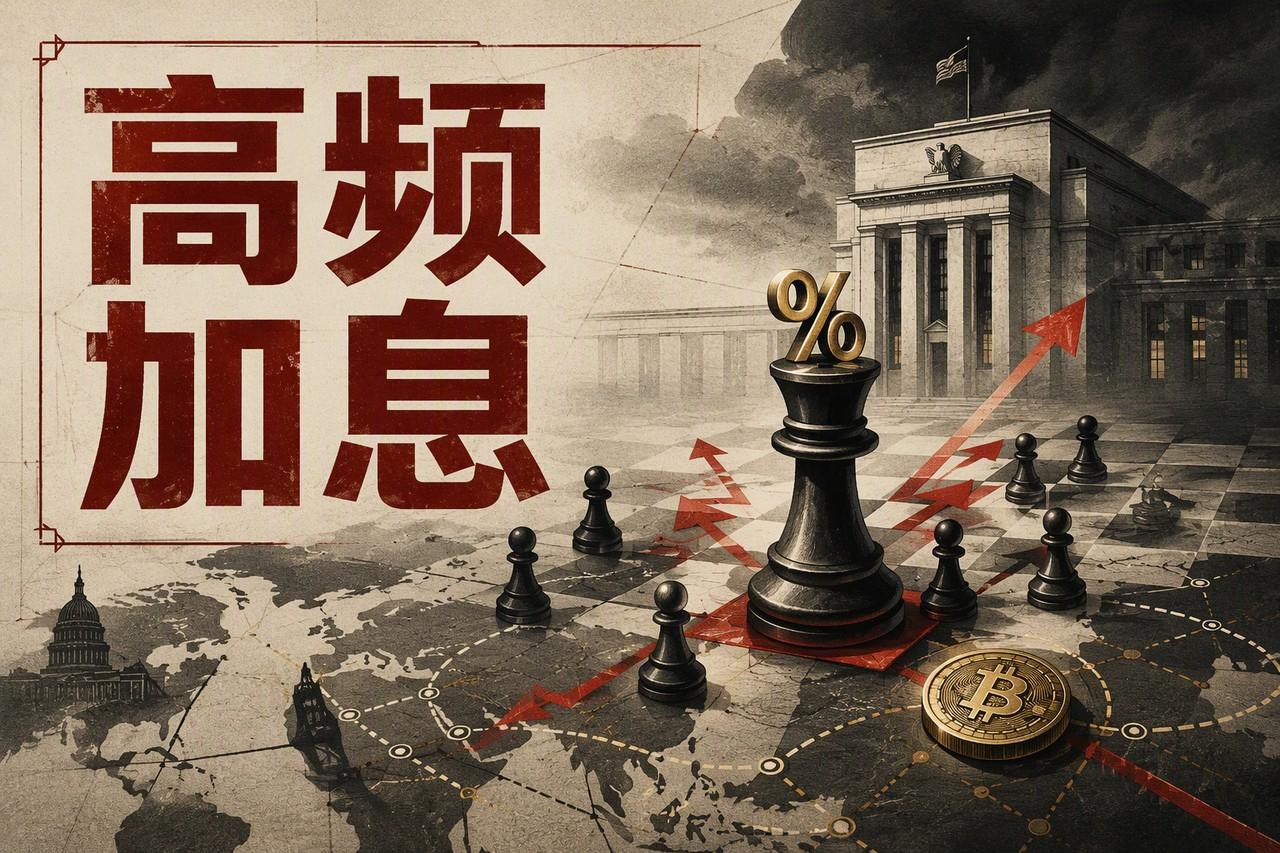
Recently, according to a single source report, in a public speech on October 11, U.S. Treasury Secretary Bessent placed three clues on the same table: on one side was the "absolute isolation action" against Iran, which not only continues pressure in the financial and energy sectors but also clearly named the continuation of the seizure of Iran's cryptocurrencies, formally incorporating digital assets into the sanctions toolbox; on the other side, he defended diesel transactions with Russia, claiming that this trade "is beneficial to the American people," and emphasized the use of all legal authorities to advance it, seeking buffer space for domestic energy prices and inflation expectations. More market-oriented was Bessent's reiteration of Trump's judgment—that there is likely to be no military conflict before the midterm elections, which equates to releasing a time window for traders: geopolitical risks are unlikely to be ignited before the elections. The escalation of sanctions runs parallel to energy realism, tightening funding channels related to Iran in one hand, while seeking price stability in Russian oil and gas on the other, as the expectation of "no wars before the election" temporarily lowered geopolitical premiums, leading global funds to recalculate their balance between safe havens and risks. Risk assets, including cryptocurrencies, received a momentary "breather" emotionally in the short term, but this buffer itself also became a trading assumption that needed constant reevaluation.
Absolute Isolation of Iran: Crypto as the Battlefield of Sanctions
In this recent round of statements, Bessent concretized the "absolute isolation action" into a new dimension: not only continuing to cut off Iran's funding channels through the traditional financial system but also clearly stating the intention to "continue to seize Iran's cryptocurrencies." Even though the briefing did not provide any monetary, timing, or address details, this sentence itself is sufficient to formally bring crypto assets into the U.S. sanctions toolbox—henceforth, on-chain assets are no longer just the "spillover effects" of sanctions but are written into the script as a direct battlefield. For the market, this action tore open the narrative crack of "borderless assets are inherently safe": when sovereign nations string together judicial jurisdictions, cooperative exchanges, and custodial institutions into a web, the boundaries of what is "seizable" are no longer determined solely by technology but are dictated by the projection of geopolitical considerations. More subtly, basic indicators like the waiting time for Iranian gasoline queues and military production losses in the brief were marked as lacking independent verification, and the opacity of the information environment further reinforced one signal: prices no longer reflect "data" but fluctuate based on speculations about policy intent.
Following this line, the transmission path of the crypto market is clear. Compliant exchanges, on-chain service providers, and custodians, in order to avoid the risk of "standing on the wrong side," must self-impose an additional layer of "over-compliance" manual blacklists beyond the sanctions list: any regional addresses suspected of having financial, trade, or familial ties with Iran are likely to face preventive freezes, increased scrutiny thresholds, or outright denial of account openings. Regional funds bordering on sanction risks are forced to choose between two paths: either fully embrace dollar-pegged tokens and compliant on-chain liquidity influenced by U.S. judiciary, accepting higher transparency and account freeze risks; or migrate deeper into the on-chain grey area and self-custody, attempting to bypass sanction tentacles through main chain assets like BTC and ETH and non-U.S. jurisdiction platforms. The result is that liquidity is rigidly split between "clean addresses" and "high-risk addresses," with compliant BTC/ETH gradually seen as risk assets highly tied to fiat currency channels, while off-chain BTC/ETH are labeled with thicker compliance discounts and liquidity discounts. For all participants, this round of seizing Iranian crypto assets is not just an individual country's story but a collective re-evaluation of "to what extent borderless assets can detach from state power."
Diesel Transactions with Russia: Energy to Ease Inflation
As the U.S. boldly announces plans for an "absolute isolation action" against Iran and continues to seize its crypto assets, Bessent recently openly defended the diesel transactions with Russia, claiming they are "beneficial to the American people," shifting the narrative focus from "values-based sanctions" to the naked "politics of inflation." While overall sanctions against Russia still hang in the air, the Treasury Department still intends to "utilize all legal authorities" to facilitate this sensitive diesel transaction, which itself is an indirect acknowledgment of the price elasticity of energy: amidst the highly politicized backdrop of the Russia-Ukraine conflict, the U.S. is still willing to open a grey valve for real fuel supply to hedge against the risks of rising domestic fuel and transportation costs. The briefing did not provide details on the transaction scale, execution mechanisms, or legal basis, leaving behind a clear signal—under the shadow of inflation, energy is no longer just a geopolitical chip, but also a fuse for voter sentiment and price expectations.
From the perspective of macro variables, if the diesel import channel is reopened at the margins, even if only symbolically, it is sufficient to guide the market to make slight adjustments to its expectations for future fuel prices in the U.S. As diesel is the cost benchmark for transportation and production, if its price expectations are suppressed, the forward pricing of overall inflation in the market may marginally ease, leading to a compression of the inflation premium and the geopolitical premium required from risk assets. In this narrative, the coordinates of BTC and ETH may also experience subtle shifts: on one hand, the cooling of inflation panic reduces the narrative tension of the "digital gold" against price risks; on the other hand, if the market believes inflation is manageable and the macro environment is stable, the discount rates for high-beta assets and risky on-chain positions have reasons to adjust downward, reigniting risk preferences, with funds more willing to shift from cash and dollar-pegged on-chain assets to higher volatility targets like BTC and ETH. For the crypto market, this politically striking and economically realistic Russian diesel transaction fundamentally changes the "dual risk premium of inflation and geopolitics," and each bend of this curve will leave a clear shadow in the pricing of BTC, ETH, and the structure of on-chain funds.
No Wars Before Midterm Elections: Easing of Risk Premium
In the same round of statements, Bessent threw another "reassuring pill," suggesting that Trump expects there will be no military conflict before the midterm elections. The briefing did not specify which part of the map this statement referred to or what type of conflict, but for price setters, details are less critical—what matters is that this is an "absence of war baseline" coming from the core decision-making circle, sufficient to press down the geopolitical risk curve in the current political cycle. Traditional markets instinctively interpret such signals as a downward adjustment of short-term conflict probabilities: the geopolitical premium on risk assets is thinned, and the relative appeal of safe havens (cash, short-term treasury bonds, defensive assets) passively declines, causing positions previously prepared for "tail risks of conflict" to start loosening.
For the crypto market, the phrase "no military conflict before the midterm elections," combined with the seizing of Iranian crypto and the greenlighting of the Russian diesel transaction, forms a complex signal package: on one side is the long-term threat of a sanctions toolbox extending to on-chain assets, while on the other side is a temporary easing of geopolitical hedging demand in the election cycle, pressed on pause for now. The result is that the volatility structure of BTC and ETH in this time window may lean more towards the beta of "risk assets"—funds being withdrawn from dollar cash and dollar-pegged on-chain assets, hedging buy orders weakening, and the proportion of pro-cyclical and trend positions increasing. However, the path for conflict after the midterm elections remains completely open, which means this round of easing risk premium feels more like a marked "expiration date" discount rather than a safety voucher for long-term holding.
Splitting of Compliant Funds and Grey Funds
After Bessent released signals of "absolute isolation action" and "continuing to seize Iranian cryptocurrencies," the behavior paths of the funds holding BTC and ETH were forced to divide into two: one must explain its sources and disclose beneficiaries as compliant funds, and the other bears the labels of sanctions and seizure risks as grey funds. The former, in an environment where the U.S. Treasury has officially included crypto assets in the sanctions framework, is more inclined to concentrate positions on compliant custodians and trading platforms that penetrate through to the beneficial owners, treating "auditable" and "frozen" as the "entrance ticket" into the traditional financial system; the latter, however, is directly named as a potential seizure target, only able to passively move assets from custodial accounts and centralized platforms to self-custodial addresses, decentralized protocols, and cross-border on-chain tools to reduce the probability of being frozen or seized with one click. As the briefing did not provide real-time chain data, this differentiation is more a logical deduction of behavior in anticipation of sanctions rather than verified flow facts.
This division affects BTC, ETH, and the main on-chain fund structures, raising both the "compliance premium" and "regulatory discount": on one hand, compliant funds are willing to pay higher financing costs and custodial fees for "clean sources + compliant custody" BTC and ETH, as long as these chips can safely appear on balance sheets, being audited and recognized, which manifests as compliant BTC and ETH in pricing being closer to the valuation logic of traditional risk assets; on the other hand, any addresses and liquidity pools tagged with sanctions and seizure risk, even if holding the same BTC and ETH, will suffer from "regulatory discounts" due to limited fiat entry and exit and passive liquidity declines, with their implied discount rates rising. The more funds that are affected by sanction risks, the more they will rely on decentralized, self-custody, and cross-border on-chain tools to maintain the functions of cross-border settlement and value storage. The result is that the curves of the same asset under different custody forms and compliance attributes will be further widened, and this round of differentiation will ultimately reflect in the price differences of BTC, ETH, the concentration degree on-chain, and the distribution of liquidity.
From Sanctions to Elections: Trader's Observation Checklist
Putting together the seizure of Iranian crypto, the U.S.-Russia diesel transaction, and "no military conflicts before midterm elections," BTC and ETH face a risk-return structure of "limited upside and unsealed downside" in the short to medium term: geopolitical conflicts are temporarily suppressed, which helps lower panic premiums, but crypto assets being formally included in the sanctions toolbox makes on-chain funds face higher policy discount rates. Traders need to monitor three types of signals next: first, whether Bessent's rhetoric will move from principled statements to executable details, such as new seizure cases or adjustments to compliance guidelines, determining which on-chain paths will be repriced; second, the pathway from the announcement of the Russian diesel transaction to its realization, including how the U.S. will use "all legal authorities," which will influence market imaginations of energy costs and inflation pathways, thereby changing demand curves for macro hedging assets like BTC and ETH; third, whether Trump's expectation of "no military conflicts before midterm elections" shows any deviation; should signs of geopolitical tension emerge, risk assets will react price-wise ahead of real-world situations. Current public information is limited to Bessent's principled statements, lacking quantified data on seizure scales, diesel transaction mechanisms, and specific military scenarios, and in such a high-uncertainty parameter space, any position and leverage choices must embed a higher safety margin within pricing.
Join our community, let's discuss and grow stronger together!
AiCoin exclusive Hyperliquid benefits: https://app.hyperliquid.xyz/join/AICOIN88
AiCoin exclusive Aster benefits: https://www.asterdex.com/zh-CN/referral/9C50e2
On-chain Telegram community: https://t.me/AiCoinWhaleData
On-chain community: https://www.aicoin.com/link/chat?cid=N6OVMor5g
AiCoin on-chain Twitter: https://x.com/aicoinwhaledata
免责声明:本文章仅代表作者个人观点,不代表本平台的立场和观点。本文章仅供信息分享,不构成对任何人的任何投资建议。用户与作者之间的任何争议,与本平台无关。如网页中刊载的文章或图片涉及侵权,请提供相关的权利证明和身份证明发送邮件到support@aicoin.com,本平台相关工作人员将会进行核查。