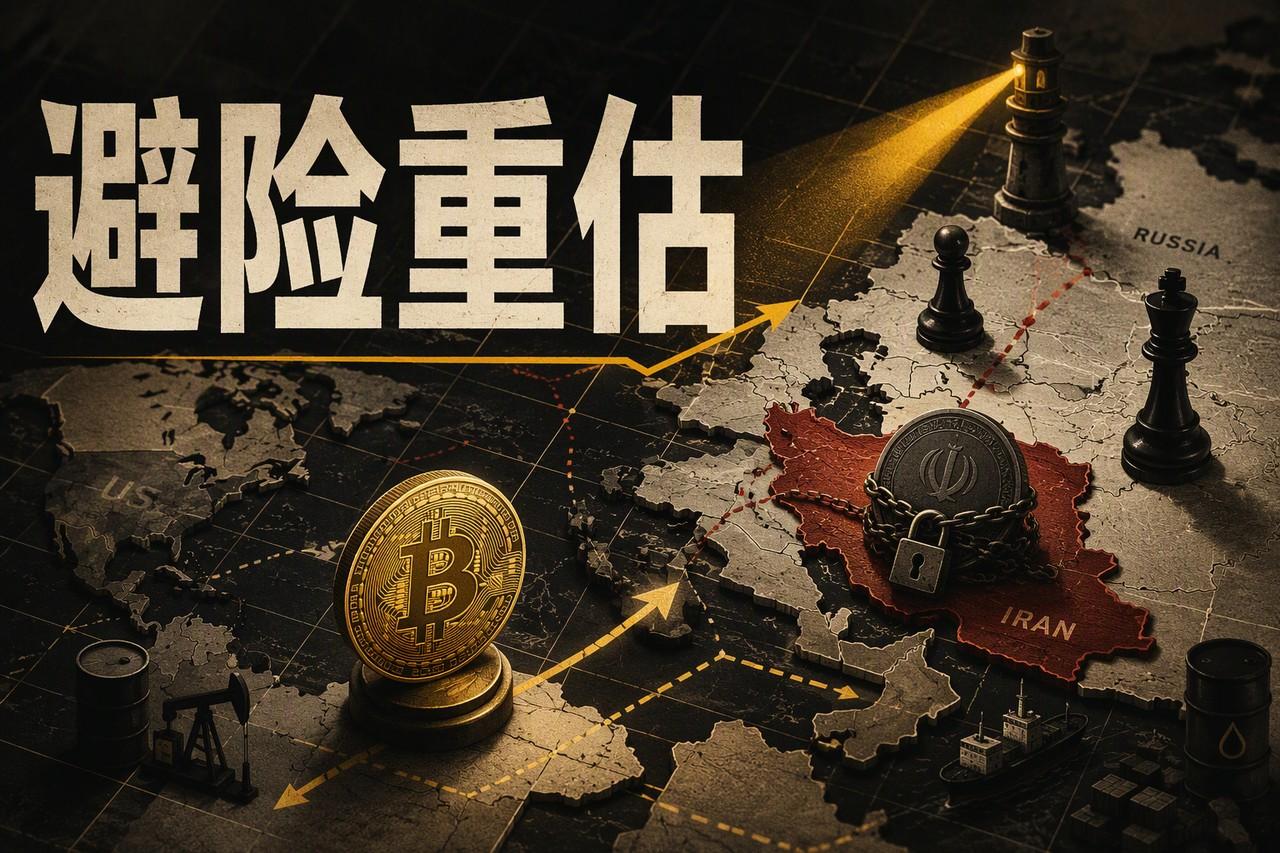
Russian miners and AI developers had their respective "risk switches" flipped in the same week. In February this year, the Russian government established a fourth category for electricity supply reliability, and recently the Ministry of Energy further required that all mining facilities connecting to the grid must apply under this category, meaning that proof-of-work mining power such as Bitcoin can be directly cut off at any time in Russia without prior negotiation; almost simultaneously, Microsoft CEO Satya Nadella called on X to view powerful AI models as potential internal threats, assuming they are already compromised and establishing an "emergency stop" system within enterprises that can shut down with the push of a button when needed. One concerns electricity, the other algorithms; fundamentally, both are tightening control over "infrastructure switches," locking it in the hands of the state and tech giants. Under such a systemic framework, the crypto market is forced to view the same set of assets with a new discount rate: the geopolitical distribution of computing power, the operational uncertainties of miners being cut off at any time, and the regulatory expectations surrounding the AI narrative will all lead to a reordering of the relative pricing among BTC, ETH, and AI-themed tokens, reflected in higher risk premiums and more selective funding preferences.
Mining Facilities that Can Be Cut Off at Any Time: Russia Installs a Master Switch for Mining
The fourth category of electricity supply reliability established in February essentially represents a system where connectivity is "technically possible, but politically can be unplugged at any time": in areas where energy shortages have been announced and mining is prohibited, authorities allow mining facilities to connect to the existing electrical grid, but it is explicitly stated that miner users can be directly cut off at any time without prior notice or negotiation with enterprises. Recently, the Ministry of Energy's new regulations have elevated this requirement from localized pilots to a nationwide mandate— all digital currency mining facilities must apply as fourth-category consumers, effectively acknowledging at the contractual level that they are at the bottom of the electricity supply priority chain, embedding "residents first, then miners cut off" into the infrastructure rules.
For proof-of-work mining that heavily relies on stable and continuous electricity supply, this is not a simple cost increase, but rather an institutional interruption of operational certainty. No matter how much a mining facility optimizes electricity prices or negotiates long-term electricity agreements, the master switch ultimately remains in regulators' hands: once a region is determined to be under electricity strain, miners can be physically cleared before the blockchain difficulty has a chance to adjust. The result is that Russia's mining environment has shifted from a source of "available and reliable" marginal computing power to a typical "available but unreliable" region—while the threshold for connecting to the grid remains, the right to cut off power has been fully nationalized. For the layout of newly added computing power in the future, this means that capital must assess the hash contribution from Russia with a higher discount rate; in the global Bitcoin hash power landscape, it becomes more like a selectable option that could be turned off at any moment, rather than a cornerstone for long-term betting.
Fluctuations in Computing Power and Selling Pressure Expectations: How BTC Prices in Response to Russian Power Cuts
As the hash region in Russia that "could be turned off at any time" frequently experiences power cuts, the first to be affected is the hash power curve of the Bitcoin network. Regional mining facilities going offline in batches will temporarily lower the overall network hash rate, actively extending block interval times, raising fees when the memory pool becomes congested, until the difficulty is passively adjusted down in the next cycle, thereby pulling the block generation pace back to the design target. In other words, the fourth category of electricity supply reliability does not lead to a continuous collapse of hash power, but rather to more frequent disruptions of hash power, with the network layer absorbing shocks through difficulty adjustments, although on-chain fees and confirmation times will amplify within these power cut windows. When the market prices this volatility, it is more like weighing "hash power volatility" rather than reassessing the security of Bitcoin's consensus itself.
For miners, income is denominated in BTC, while costs are calculated in local currencies and electricity prices. The authorities can cut power at any time, which means cash flow could be abruptly severed, directly altering their holding paths: the holding period shortens, hedging ratios increase, with more BTC from future output locked in the derivatives market ahead of time, and spot BTC converted back to cash more quickly to hedge against the risk of production disruption due to power cuts. This behavior manifests in the price as "marginal selling pressure" from the Russian mining community—raising the baseline of daily sell orders and hedging positions, but it is difficult to evolve into a single decisive impact in the context of global liquidity. In contrast, ETH, which has transitioned to proof of stake, no longer relies on mining electricity; directly exposed to the risk of Russian power cuts are the asset prices of on-chain validators rather than on-chain security itself; however, when the market views "energy geopolitics + policy arbitrariness" as a signal for rising risk premiums, both BTC and ETH will be re-evaluated in terms of correlation and leverage contraction. The difference lies in the fact that the former tells the story through "hash power volatility + miner selling pressure," while the latter reflects price elasticity more through tightening overall risk appetites.
The Emergency Stop for AI Agents: Tech Giants Certifying Safety
When Russia installed a "master switch" on miners at the grid level, Nadella pressed the warning brake for AI at the software level. He emphasized on the X platform that companies should view powerful AI models as potential internal threats, assuming these models are "default compromised," and limit their capabilities from the outset rather than outsourcing safety to model developers. This zero-trust approach redefines large models from "productive black boxes" to internal assets requiring strict supervision, implying that AI infrastructure must reserve a "power cut switch" at the design stage, and enterprises must have the right to shut down at the push of a button.
The "emergency stop" he proposed is essentially a rewriting of governance structures: when an agent's behavior is abnormal, reliance on vendor patches is no longer expected; instead, deploying parties must possess institutional and technical capabilities to cut off models and isolate operations at any time. This statement will be interpreted by the market as a prelude to regulatory narratives around AI—if even leading tech giants proactively declare high levels of protection, the likelihood of regulators incorporating a "stop system" into compliance checklists will significantly rise, increasing the safety investments and compliance costs for AI-related enterprises. For tech stocks and AI-themed tokens surrounding the AI narrative, this means an additional layer of regulatory discount on top of high valuations, with risk appetites shifting from "unlimited expansion" to "controlled growth." On-chain funds pursuing the "AI + chain" story will increasingly depend on fundamentals and cash flow support, while BTC and ETH are expected to once again play the role of core assets absorbing liquidity and hedging risk premiums amid fluctuations in AI risk sentiment.
From Mining Machines to AI Tokens: A New Risk Premium for Intermittent Infrastructure
Russia's unified categorization of miners under the fourth category for electricity supply reliability is not complicated: authorities can cut off electricity at any time during energy shortages, with miners having no negotiation power; Nadella's call for an "emergency stop" means enterprises must preset paths for shutting down at the push of a button. Both matters point to the same structural change—whether it is Bitcoin's hash power or enterprise-level AI, the master switch for key infrastructure is concentrating in the hands of a few grid operators and tech giants, rewriting the narrative of "never shutting down" technology into "can be interrupted at any time" regulatory infrastructure. For capital betting on the expansion of computing power and continuous deployment of models, this means that the originally linear projection of growth curves could be interrupted at any moment by a "manual power cut."
Under such a framework, crypto investors must shift their focus downward to the layers of the grid and cloud services: mining facilities, validating nodes, and exchange servers are all connected to the switches of national power grids and large cloud providers, with Russian miners being classified under the fourth category of immediate power cut supply; this merely formalizes this dependency into institutional terms. The result is that the geopolitical concentration of computing power, electricity costs, and supply stability are recalibrated into risk models; for chains and projects that are highly reliant on a single region or single cloud service, the market will demand a higher discount; conversely, assets with more dispersed computing power and lower reliance on a single power grid are likely to obtain a premium. ETH's transition from proof of work to proof of stake means that in terms of "power cut risk," it is naturally easier for institutions to view it as a hedging asset. Correspondingly, for AI-themed tokens, as regulation and safety switches are seen as necessities, the speculative space for the "AI + chain" story will be compressed in the short term, leading to lower speculative premiums; however, if companies and regulators define the risks of AI through mechanisms like the "emergency stop," it may, in the mid to long term, increase institutional willingness to allocate resources to compliant and controllable AI narrative assets. For traders, new variables will no longer be just the growth of AI and computing power, but rather who holds these master switches, when they are triggered, and how the market reassesses this intermittency.
Trading-Level Responses: Observing the Resonance of Geopolitical Computing Power and AI Regulation
For BTC and other PoW assets, it currently resembles a repricing of "geopolitical power options": close attention must be paid to the implementation scale of Russia's new regulations and whether other energy-stressed regions adopt the fourth category supply model, because once more mining facilities are included in the "can be cut off at any time" category, the regional concentration and volatility of the overall network’s hash power will increase, and miners are more likely to increase selling pressure during rising electricity prices and power cut risks, creating additional pressure on prices. For ETH and AI narrative assets, traders should view Nadella's call for an "emergency stop" as the starting point for policy and industry self-regulation, continuously tracking new rules and implementation rhythms from enterprises and regulatory agencies on AI safety: if regulatory expectations tighten but the paths are clear, sector risk premiums may converge after high volatility; if sudden regulatory brakes occur akin to trading halts, then space must be reserved for higher volatility and valuation discounts. In a phase where uncertainties from energy and tech regulation are rising, large capital is more likely to reduce leverage and trim exposure to long-tail tokens, shifting towards higher liquidity and compliance assets like BTC and ETH, and increase the weight of futures, options, and cross-asset hedges in trading structures, considering the "power cut switch" and "AI stop" as new macro factors in correlation management and risk budgeting.
Join our community, let’s discuss together and become stronger together!
AiCoin exclusive Hyperliquid benefits: https://app.hyperliquid.xyz/join/AICOIN88
AiCoin exclusive Aster benefits: https://www.asterdex.com/zh-CN/referral/9C50e2
On-chain Telegram community: https://t.me/AiCoinWhaleData
On-chain community: https://www.aicoin.com/link/chat?cid=N6OVMor5g
AiCoin on-chain Twitter: https://x.com/aicoinwhaledata
免责声明:本文章仅代表作者个人观点,不代表本平台的立场和观点。本文章仅供信息分享,不构成对任何人的任何投资建议。用户与作者之间的任何争议,与本平台无关。如网页中刊载的文章或图片涉及侵权,请提供相关的权利证明和身份证明发送邮件到support@aicoin.com,本平台相关工作人员将会进行核查。