CoinW Research Institute
Abstract
On October 6, OpenAI released 722 AI-assisted mathematical research manuscripts, sparking discussions in the market regarding P=NP, AI cryptanalysis, and blockchain security. Although there is currently no evidence that mainstream cryptographic algorithms have been broken, the improvement of AI's mathematical capabilities has prompted the Crypto industry to reassess future security risks. Conceptual coins like STRK, QRL, and QTC, which are resistant to quantum threats, have risen against the trends, reflecting a concern for cryptographic security among investors. However, there remains a significant gap between technical routes, practical implementation, and market valuation. Compared to short-term trends, what deserves real attention is whether public chains can timely upgrade their signing algorithms, complete account migrations, and whether quantum-resistant projects can establish ongoing user demand.
1. From 722 Mathematics Manuscripts to "Bunker Mode": Why Crypto is Suddenly Nervous
On October 6, OpenAI publicly released a batch of mathematical research results completed with the assistance of internal AI models, releasing 722 manuscripts at once, covering 372 groups of research results across various fields such as number theory, geometry, and theoretical computer science. According to data disclosed by OpenAI, the model attempted about 4,000 unresolved mathematical problems, with the average reasoning computational power required for each set of results equivalent to about 3 hours of ChatGPT Pro. In the past, some high-difficulty mathematical problems could take mathematicians months or even years to study; now AI can quickly attempt proofs, find counterexamples, and even propose new research results, which is truly astonishing. However, the 722 manuscripts do not mean that AI has solved 722 mathematical problems all at once. Many manuscripts belong to the same group of research results, including supplementary proofs, corollaries, or different methods of argumentation, and not all results have undergone rigorous validation. The day after the release, OpenAI withdrew 3 related manuscripts due to a symbolic error and revised another 14, reducing the number of manuscripts to 719. Although AI can quickly produce a large number of mathematical research results, the extent to which these results are valid still requires further verification.
What truly made the Crypto industry nervous was a warning issued by Ethereum researcher Justin Drake on October 7. He expressed concern that with the rapid enhancement of AI's mathematical capabilities, it might not be necessary to wait for powerful quantum computers to emerge; AI could potentially help humans find new mathematical methods to derive private keys from public keys. If such a method becomes efficient enough, widely used elliptic curve digital signature algorithms (ECDSA) in networks like Bitcoin and Ethereum could be threatened. In the extreme scenario Drake envisioned, this risk might be calculated in "months rather than years." Therefore, he proposed the need for early planning of "Bunker Mode," simply put, it is to have large holders and institutions prepare for asset protection in advance, such as migrating assets to new addresses that have not exposed public keys under applicable circumstances, thereby minimizing the risk of future private key compromise.
Although Drake did not state that existing cryptographic systems have been compromised, nor did he suggest ordinary users immediately transfer assets, this warning quickly sparked industry debate. Ethereum co-founder Vitalik Buterin asserted that AI could indeed accelerate cryptographic research, but hurriedly migrating wallets might also create new security issues. Coinbase's chief cryptographer, Yehuda Lindell, believed there is currently no evidence that the foundational security of elliptic curve cryptography has been shaken. Dragonfly Managing Partner Haseeb Qureshi emphasized the significance of proactive prevention, stating that blockchains should prepare emergency recovery mechanisms so that if cryptographic vulnerabilities truly arise in the future, risks can be timely controlled, and assets migrated. The real concern arising from this debate is that AI is accelerating the pace of mathematical research; will cryptographic breakthroughs once thought far off in the future appear sooner than expected? If one day existing signing algorithms are no longer secure, which blockchains will be able to timely upgrade and protect user assets? This has become a question worthy of serious consideration by the Crypto industry in this incident.
2. P=NP, AI Cryptanalysis, and Quantum Computing Are Not the Same Thing
To understand this concern about cryptography, we first need to clarify three concepts that are often confused: P=NP, AI cryptanalysis, and quantum computing. They may all affect the security of crypto assets, but the principles and risks behind them are not the same. First, let's discuss P=NP. This is a significant unsolved problem in computer science. Simply put, some problems are difficult to find answers for, but easy to verify whether the answers are correct. For example, when cracking a password lock, facing numerous password combinations, finding the correct password may require countless attempts, but if someone tells you the password, verifying its correctness takes only one attempt. P=NP discusses whether problems for which answers are easy to verify also have fast methods to find those answers.
This is closely related to the security logic of modern cryptography. Taking an encrypted wallet as an example, users can generate a public key from a private key and easily complete transaction signing and verification, but deriving a private key from a public key using currently known methods is almost impossible to accomplish in real time. If someone proves P=NP in the future and finds sufficiently efficient cracking algorithms, the security foundations of numerous cryptographic technologies like modern digital signatures may be threatened. However, even if P=NP indeed holds true, it does not mean that Bitcoin can be cracked the next day. Mathematically proving the existence of a certain algorithm is very different from actually finding a set of cracking tools that can run on real computers.
AI cryptanalysis, on the other hand, is something else. It does not need to first solve the P=NP problem; rather, it may discover previously unnoticed weaknesses in existing cryptographic algorithms through extensive mathematical reasoning, pattern recognition, and attempts at different proof methods. You can understand it as AI not necessarily needing to find a universal key that unlocks all locks, but if it finds that a certain type of lock has specific vulnerabilities, it could lead to serious consequences. What Justin Drake is truly worried about is exactly this situation. AI may find new methods to crack elliptical curves and other cryptographic algorithms where traditional mathematical research has not yet achieved breakthroughs. Currently, there is no evidence that such practical attacks have emerged, but OpenAI's demonstration of mathematical research capabilities has begun to attract more attention to this possibility.
The threat of quantum computing is even more clear-cut. Scientists have long known that, theoretically, Shor's algorithm can be used to crack RSA and elliptic curve cryptography, including some digital signature schemes used by Bitcoin and Ethereum. The problem is that such an attack requires sufficiently powerful fault-tolerant quantum computers, and current hardware does not yet possess large-scale practical cracking capabilities. Recent years have seen a focus on post-quantum cryptography, which aims to design cryptographic algorithms that can withstand known quantum attacks in advance to prepare for future security upgrades.
Therefore, quantum resistance does not equal resistance to P=NP, nor does it mean being able to withstand all mathematical attacks discovered by AI in the future. Whether it be lattice cryptography, hash signatures, or STARK proofs, each depends on its mathematical security assumptions. For the Crypto industry, beyond selecting more secure algorithms, another consideration is whether blockchains can timely upgrade signing systems, migrate wallets, and protect user assets if some day existing algorithms truly have vulnerabilities.
3. If Cryptographic Security Fails, What Will BTC, ETH, and ZK Face?
If new algorithms capable of cracking elliptic curve cryptography indeed emerge in the future, the most immediate risk is that the assets in wallets could be stolen. Bitcoin and Ethereum currently widely use elliptic curve signature technology, with Ethereum ordinary accounts primarily adopting ECDSA, and Bitcoin using both ECDSA and Schnorr signature schemes. Although the technical names differ, they both rely on one important premise, namely that even if others know your public key, it is almost impossible to derive your private key. Once this premise is broken, attackers could forge transaction signatures and transfer assets without user consent.
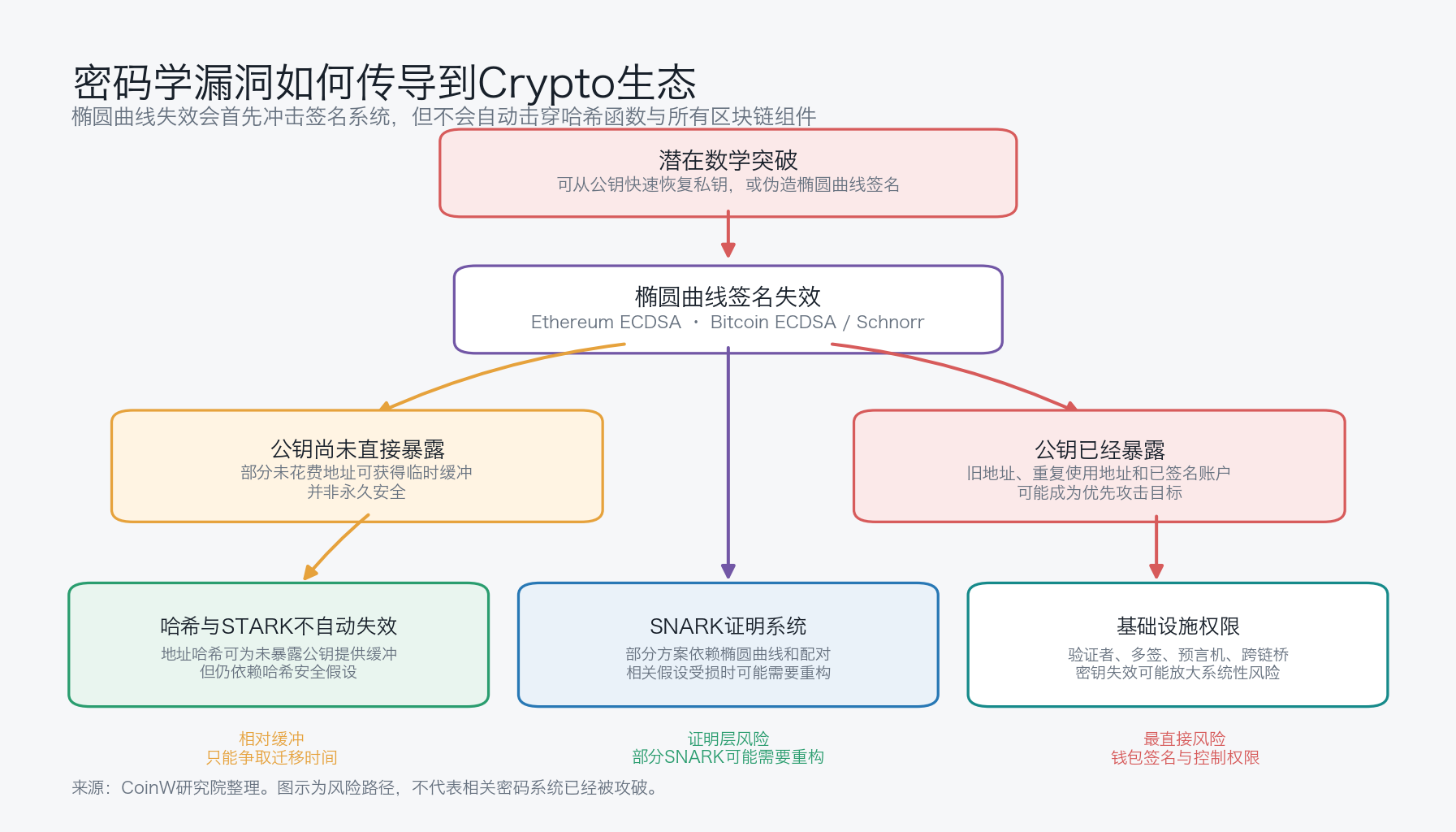
Figure 1: How Cryptographic Vulnerabilities Could Transmit to the Crypto Ecosystem. Source: CoinW Research Institute
However, not all wallets will face the same risk simultaneously. Taking Bitcoin as an example, some addresses still keep their public keys hidden behind hash values before spending their assets for the first time, making it impossible for attackers to directly access complete public keys; while risks for some Taproot addresses, addresses whose public keys are exposed, and reused old addresses differ. For Ethereum ordinary accounts, the public key is usually also not publicly exposed before initiating a transaction for the first time. Therefore, moving assets to newly created addresses that have not exposed public keys in advance may buy some time against specific attacks that require obtaining public keys, but this is only a temporary protection and cannot fundamentally resolve the problem of the cryptographic algorithm being compromised.
Risks do not solely exist in wallets. Blockchains also rely on a full suite of security mechanisms such as hash functions, transaction verification, cross-chain bridges, and multi-signature wallets. You can think of wallet signatures as the locks protecting assets, while hash functions are like the anti-counterfeiting fingerprints of data, used to help verify whether the information has been tampered with. The mathematical principles they rely on differ, and even if elliptic curve signatures reveal vulnerabilities in the future, it does not imply the entire blockchain will fail simultaneously. However, if new mathematical attacks further impact hash functions or other verification mechanisms, risks could expand to on-chain data, cross-chain assets, and infrastructure security.
The realm of zero-knowledge proofs (ZK) also needs to be reassessed. Many SNARK proof systems rely on elliptic curves and bilinear pairings; if the underlying mathematical foundations come under attack, malicious participants could forge proofs that should not have passed. In contrast, STARK is primarily based on hash functions and does not require a trusted setup, thus having certain advantages against known quantum attacks. This is also an important reason Starknet has attracted attention. However, STARK also relies on underlying cryptographic assumptions, and this does not mean it can withstand every future mathematical attack.
An even trickier issue is that even if developers find new secure algorithms, the entire Crypto ecosystem cannot easily complete upgrades overnight. Public chains need to modify verification rules, wallets and exchanges need to support new signing methods, and cross-chain bridges, stablecoin issuers, and custodians must synchronize adjustments. What about old wallets that have not been modified for years, addresses for which private keys have been lost, and smart contracts that cannot be easily upgraded? If compatibility problems arise during the upgrade process, it could even lead to network forks, asset freezes, or new security vulnerabilities. Therefore, once cryptographic security is truly threatened, networks that can complete algorithm upgrades, account migrations, and asset protections more quickly are more likely to minimize losses. This has led to public chains capable of cryptographic upgrades and projects specializing in post-quantum security receiving more attention.
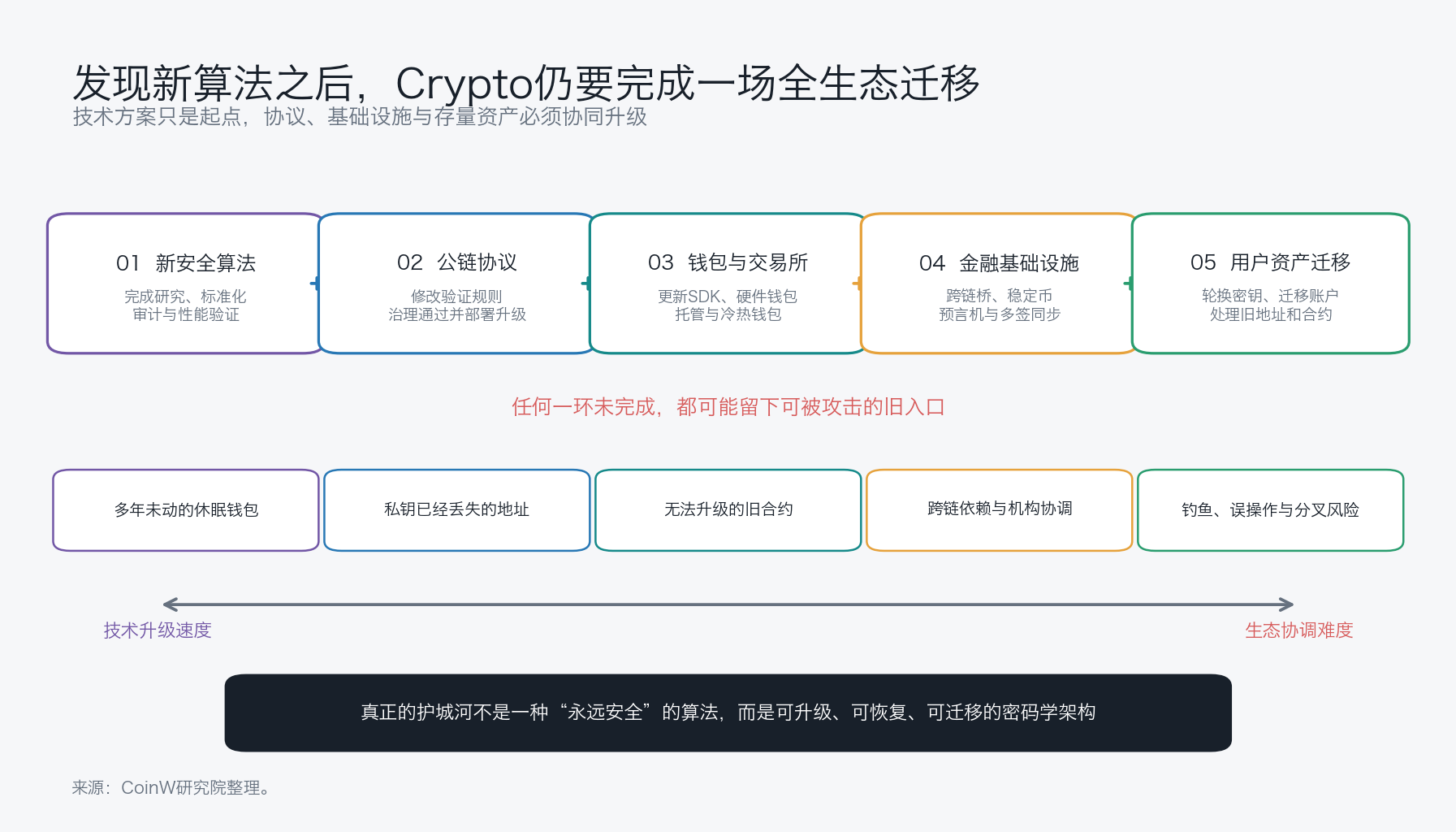
Figure 2: The Full Ecosystem Migration Chain for Crypto Cryptographic Upgrades
4. From Starknet to Quantus: Who Might Benefit from the Reassessment of Cryptographic Security?
In light of potential cryptographic risks, the market has started paying attention to which blockchains possess the ability for proactive prevention and quick upgrades. Starknet's advantage lies in its already operational network and its technical foundation for upgrading signature mechanisms; projects like Quantus (QTC), QRL, and QANplatform (QANX) are more focused on post-quantum security. However, there are significant differences in the technological maturity and practical implementation situations of these projects, and market attention does not equate to real security capability.
4.1 BTC, ETH, and Solana: How Are Mainstream Public Chains Preparing for Quantum Resistance Upgrades?
In the face of potential cryptographic risks, Bitcoin, Ethereum, and Solana have begun to research post-quantum upgrades, but their technical approaches differ. Bitcoin tends towards gradual transformation. The community proposed the BIP-360 plan, which introduces a new type of address called P2MR, to reduce the risks associated with long-term exposure of public keys and reserving space for future use of post-quantum signatures. However, this plan is still in the proposal stage and cannot independently solve all quantum attack risks. The real challenge for Bitcoin is how to promote vast ecosystem migration without jeopardizing existing consensus and user asset security. On the Ethereum side, the Ethereum Foundation has formed a dedicated team for post-quantum security research, planning to support users in gradually switching signature algorithms through account abstraction EIP-8141, while also researching replacing the BLS signatures used by validators with leanXMSS and upgrading components such as data commitments and zero-knowledge proofs. Its core post-quantum infrastructure is planned for around 2029, but this does not imply that all wallets and applications can complete migrations by then. Solana is examining post-quantum signature schemes like Falcon, with experimental vaults based on Winternitz one-time signatures already in the ecosystem. Development teams such as Anza and Firedancer are also working on wallet migration paths, but a full network post-quantum upgrade has not yet been implemented.
The recent controversy between the Ethereum and Starknet communities reflects the differences between upgrade routes. StarkWare CEO Eli Ben-Sasson believes Ethereum's speed of quantum resistance upgrades may struggle to meet future demands; hence, Starknet is considering transforming into an independent L1 to take control of its own security upgrade pace. This statement has drawn dissatisfaction from some Ethereum supporters, questioning Starknet’s portrayal of the upgrade pace as an obstacle to its own development while relying on Ethereum’s security. Nevertheless, Ethereum has not overlooked quantum risk, and its account abstraction and cryptographic migration research have been ongoing. The core of the dispute between both sides is whether to prioritize gradual upgrades based on mature ecosystems or to pursue faster transformation speed through independent networks. In comparison, Bitcoin emphasizes consensus stability and gradual migration, Ethereum stresses full protocol collaborative upgrades, while Solana explores new signature schemes and wallet migration tools. Starknet hopes to leverage more flexible account structures and autonomous upgrade capabilities to create differentiated advantages, but whether it can truly achieve comprehensive quantum security remains to be validated through technical implementation and actual operation.
4.2 Starknet: Advantages Not Just in STARK, But in the Ability to Change "Locks"
Starknet has recently become the focus of the quantum resistance race, with its token STRK rising against trends. On October 8, STRK surged over 40% within 24 hours, reaching approximately $0.0684, while during the same period, BTC and most mainstream crypto assets faced pressure. Besides the security concerns triggered by OpenAI's mathematical research, the news that Starknet is considering transforming from Ethereum Layer2 to an independent Layer1, aiming for comprehensive quantum upgrades by 2027, has also served as an important catalyst. In contrast to the gradual transformation approach adopted by mainstream public chains, Starknet aims to accelerate cryptographic upgrades by independently mastering the underlying security mechanisms. However, this still belongs to a direction under discussion and has not yet become a formally implemented plan.
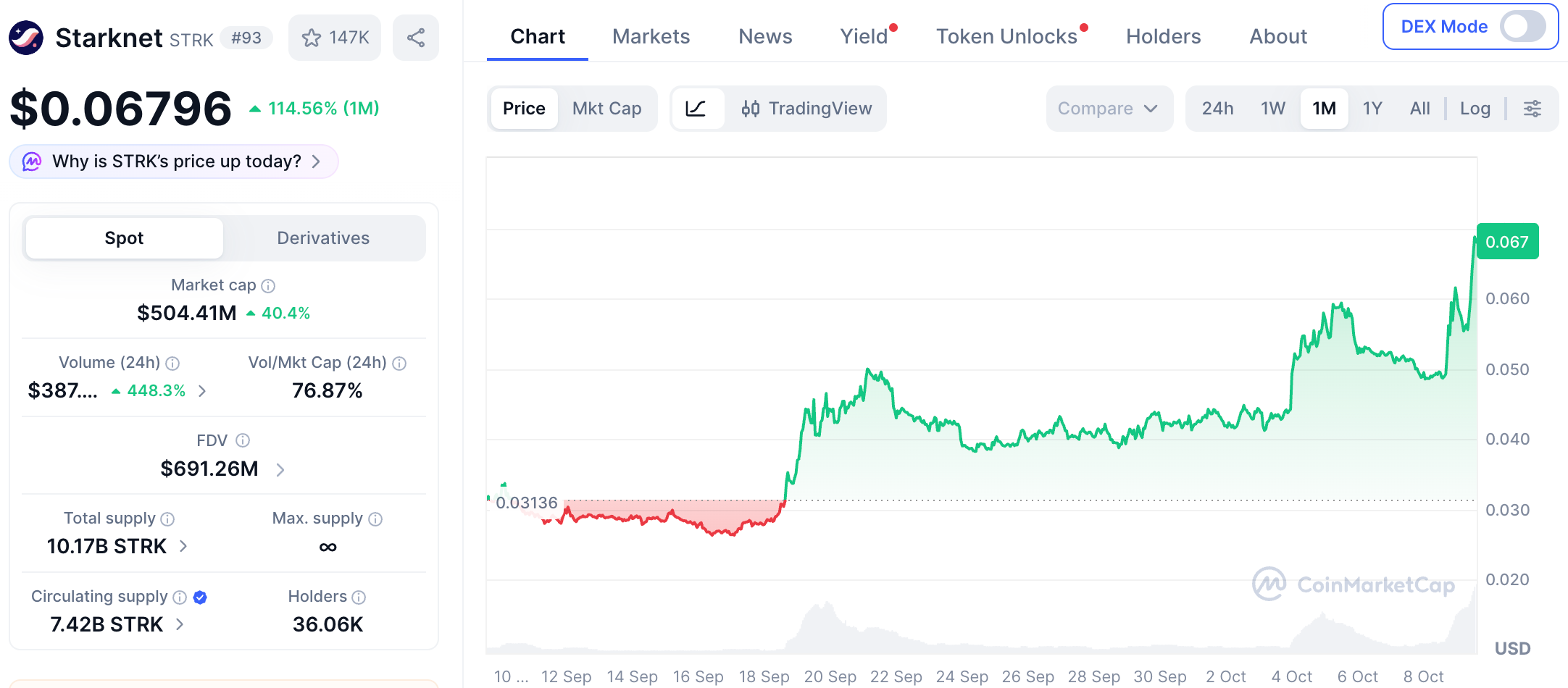
Figure 3: STARK Token Price Performance. Source: https://coinmarketcap.com/currencies/starknet-token/
Why does Starknet have the confidence to propose this goal? Firstly, it employs STARK zero-knowledge proof technology. Zero-knowledge proofs allow the network to verify whether a batch of transaction results is correct without re-executing all calculations. Unlike some systems that rely on elliptic curve cryptography (SNARK), STARK primarily relies on hash functions to ensure proof security, thus providing certain advantages against known quantum attacks. However, securing the proof system does not mean the whole chain is secure. Starknet’s ordinary accounts still primarily use elliptic curve signatures, which carries similar potential risks.
Starknet’s more significant advantage lies in its native account abstraction. We can think of traditional wallets as a safe with relatively fixed locks, whereas Starknet's accounts resemble safes that can change their locks. If the old signature algorithm becomes unsafe in the future, developers can introduce new post-quantum signature methods by upgrading account contracts without necessarily requiring a hard fork of the entire network. This capability has already made some practical progress. OpenZeppelin and S2morrow previously demonstrated Falcon-512 post-quantum signature accounts, with OpenZeppelin's experimental accounts completing real transfers on the Starknet mainnet, with fees of about $0.06. However, this is still an unaudited experimental implementation, and there remains a distance before ordinary users can widely adopt this.
Starknet's post-quantum upgrade efforts also face obstacles. Wallets, existing smart contracts, and other cryptographic components of the network still require gradual transformation, and as an Ethereum L2, cross-chain communication and data availability still rely on Ethereum. Thus, even if it transitions to an independent L1 in the future, it does not imply that comprehensive post-quantum transformations across the entire ecosystem can be completed immediately.
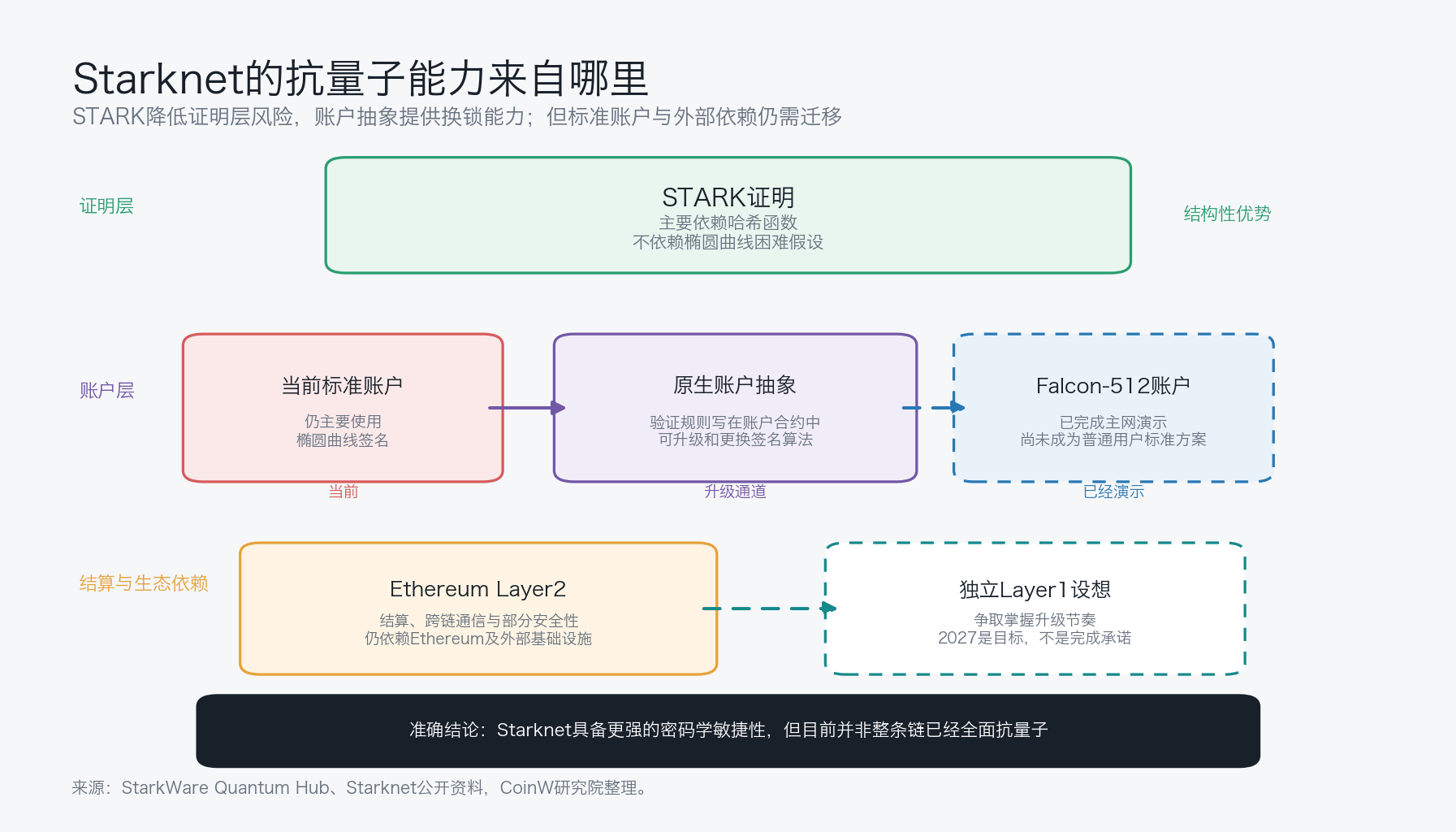
Figure 4: Where Starknet's Quantum Resistance Comes From. Source: CoinW Research Institute
From a market performance perspective, STRK's rise has attracted considerable trading capital. According to data from CoinMarketCap, on October 8, it had a 24-hour trading volume of about $388 million; another snapshot from CoinGlass shows contract trading volume at about $1.02 billion, 6.45 times the spot trading volume, with open interest at approximately $143 million. Active derivatives trading amplified market elasticity, also increasing the risk of pullbacks and liquidations. Meanwhile, Starknet's 24-hour network fee income was only about $88,000, with its on-chain activity not yet showing growth matching the intensity of token trading. For STRK, a more important future verification point is whether quantum-resistant accounts can transition from experimental to widespread adoption and whether technological upgrades can bring in more applications, users, and actual network demand.
4.3 QTC (Quantus): Is the Post-Quantum Mainnet Online, and Can the Price Stabilize?
Quantus aims to create a native post-quantum public blockchain from the ground up, with its mainnet launched on September 9, 2026, employing a proof-of-work (PoW) mechanism, with a maximum supply of 21 million QTC tokens. Unlike public chains that focus on DeFi and smart contract ecosystems, Quantus emphasizes asset scarcity, transaction privacy, and long-term security, hoping to become a cryptocurrency network that remains secure in the era of quantum computing. Technically, Quantus has introduced post-quantum cryptography into transaction signing and node communication. It utilizes NIST standardized ML-DSA digital signatures combined with ML-KEM-768 to protect node communication, and the privacy transaction scheme Wormhole Addresses incorporates zero-knowledge proofs to reduce the exposure of sensitive transaction information. Simply put, Quantus aims to preemptively replace the “security locks” for wallets, transfers, and network communications to address future quantum threats. However, there are discrepancies in the official technical documentation regarding the use of ML-DSA-65 and ML-DSA-87, and the actual mainnet configuration needs further clarification.
The market performance of QTC has already drawn funding attention. According to a snapshot of prices from CoinGecko on October 9, QTC price was approximately $135.9, with a 24-hour trading volume of around $36 million, and a market cap of about $36.85 million, with a trading volume to market cap ratio close to 1, indicating highly active short-term trading. Notably, QTC's current circulating supply is only about 271,000 tokens, accounting for roughly 1.3% of the maximum supply of 21 million; based on the current price, the theoretical valuation corresponding to the maximum supply is about $2.854 billion, significantly higher than the circulating market cap. The low circulating ratio amplifies the short-term price volatility and indicates that future token releases and mining output could create new supply pressures. The launch of the mainnet is just the beginning of Quantus's acceptance to real-world testing. Currently, its wallet, mining, and trading functions are operational, and some cryptographic and consensus modules have completed audits, but components like zero-knowledge circuits are still under audit, with some reports yet to be publicly released. Given the short operation time of the mainnet, network stability, security, and real user demand will require ongoing observation. QTC's future performance depends not only on the post-quantum narrative but also on the progress of technical audits, miner participation, and whether actual transfer demand can sustain growth.
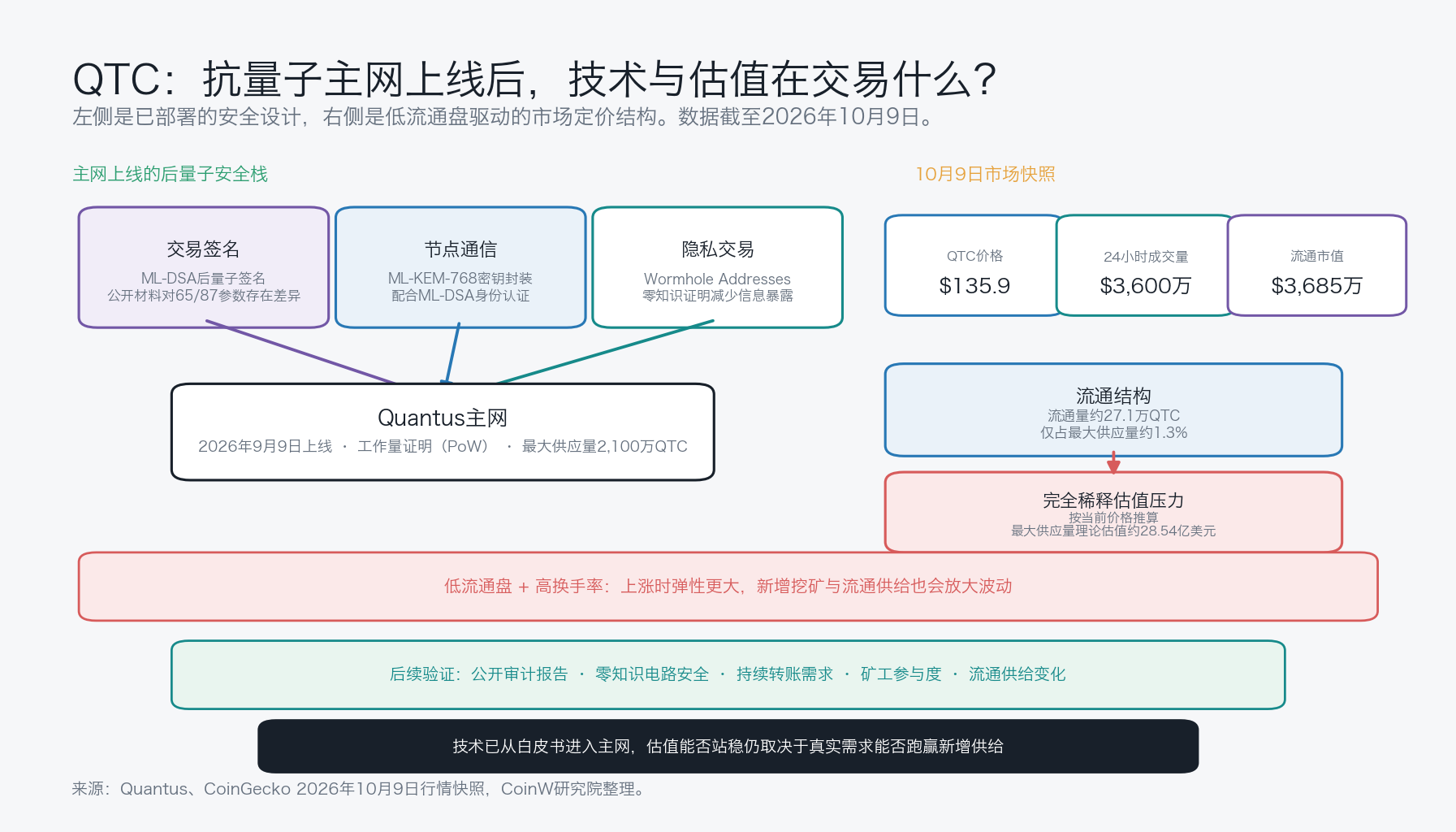
Figure 5. Post-Quantum Security Designs and Market Pricing Structure After QTC Mainnet Launch. Source: CoinW Research Institute
4.4 QRL, QANX, and Other Projects: Having Quantum Resistance Labels Is Not Enough; They Also Need to Supplement Applications and Liquidity
Among the other noteworthy projects, QRL (Quantum Resistant Ledger) can be regarded as a "veteran" in the post-quantum space. As early as 2018, QRL's mainnet was launched, using XMSS signatures based on hash functions to protect account security. While many projects are still in the roadmap stage, QRL has demonstrated through years of operation that post-quantum signatures can be applied to public blockchains. However, XMSS requires managing signature counts, and the user experience is not as straightforward as that of standard Ethereum wallets. Consequently, QRL is developing QRL 2.0, which is compatible with the Ethereum Virtual Machine (EVM), introducing NIST standardized ML-DSA signatures along with a proof-of-stake mechanism. Currently, its testnet is live, and the mainnet awaits audit and testing results. QRL’s next challenge is whether it can transform its technical advantages into real developer adoption, DeFi applications, and actual users.
QANplatform, on the other hand, has chosen a different route, hoping to combine quantum security with the Ethereum ecosystem, with its token being QANX. The project introduces ML-DSA post-quantum signatures through QAN XLINK, while also supporting EVM compatibility and multi-language smart contracts, thereby lowering the migration barriers for developers. Currently, its private chain and testnet are open, and the virtual machine module has undergone third-party audits, but the public mainnet has not yet officially launched. The key moving forward is whether it can attract enterprise adoption and establish a lasting demand for the QANX token. It is evident that Starknet focuses on cryptographic upgrades within existing ecosystems, Quantus and QRL have applied post-quantum technologies to running mainnets, and QANplatform seeks to balance post-quantum security with EVM compatibility. The development stages and technological routes of each project differ; one cannot judge value based solely on the "quantum resistance" label. The key to distinguishing technical potential from market speculation lies in the actual deployment, independent audit completion, and sustained utilization.
5. The Market for Quantum-Resistant Concept Coins is Heating Up: Technical Revaluation or Short-Term Speculation?
This round of the quantum-resistant market has clearly created distinct market hotspots, but capital has not flowed comprehensively into the entire sector. As of October 9, CoinGecko data shows that STRK rose about 41.3% over the past week, QRL increased by 59.7%, and QTC grew by 40.8%, while the global crypto market dropped approximately 4.4% in the same period. During a weak overall market, these tokens still rose against the trends, indicating that concerns about cryptographic security risks are becoming a new trading theme. However, QANX, which also emphasizes post-quantum security, has not seen a similar rise, reflecting the market's preference for those assets with clear recent catalytic events, better liquidity, or higher community attention, as a comprehensive revaluation of the entire sector has yet to occur. From the trading structure, this uptrend is also characterized by significant short-term capital features. The active derivatives trading of STRK mentioned in Chapter Four, QTC's low circulating supply and high turnover rate, and QRL's relatively limited trading depth could all amplify short-term price fluctuations. The market is preemptively trading future demands for cryptographic security, but the speed of certain projects' price increases has already significantly outpaced technical implementation and ecosystem development. Once the hype cools, projects lacking real users and network income support may face greater valuation adjustment pressures. Therefore, determining whether this round of market activity can transition from speculative hype to a long-term value reassessment hinges on whether post-quantum technologies can be genuinely implemented, whether on-chain users and network activity can sustain growth, and whether token demand can absorb future unlocks and new supply. In the short term, the market is betting on potential winners under future cryptographic risks, while for the long term, practical applications and economic models must prove these expectations.
6. What Truly Needs Revaluation Is the Ability to Migrate Cryptography
The mathematical research results that OpenAI publicly released do not prove P=NP, nor do they directly break existing cryptographic systems, but they remind the Crypto industry that AI may accelerate mathematical breakthroughs and alter the past timing judgments regarding cryptographic security risks. For BTC and ETH users, there is currently no need for panic asset transfers due to market rumors; however, public chains, wallets, exchanges, and custodians do need to pre-plan for upgrading signature algorithms, account migrations, and protecting old addresses. In the future, what will be more worth observing is "cryptographic agility," that is, whether networks can quickly switch security schemes when existing algorithms face threats and coordinate wallets, applications, and infrastructure to complete migrations. AI may both help discover cryptographic vulnerabilities and accelerate the validation and deployment of new algorithms. Truly competitive networks will need to possess the capacity to continuously respond to security changes. We believe post-quantum security deserves long-term attention, but the market needs to distinguish between technical breakthroughs and risk expectations. Future focus should track whether AI cryptanalysis leads to reproducible practical breakthroughs and the upgrade progress of Bitcoin, Ethereum, and other mainstream networks towards post-quantum security. Compared to short-term gains of concept coins, who can complete security migrations at a lower cost and continuously protect user assets will be the deeper significance of this cryptographic reassessment.
References
1. Starknet: https://www.starknet.io/
2. QRL: https://www.theqrl.org/
3. QANplatform: https://www.qanplatform.com/en
4. Quantus: https://www.quantus.com/zh-CN/
5. OpenAI Mathematical Research Manuscripts GitHub Repository: https://github.com/openai/math
6. OpenAI Mathematical Research Results Report (The Verge): https://www.theverge.com/ai-artificial-intelligence/1005004/openai-math-release-github
7. Starknet Post-Quantum Account Technical Analysis: https://starknetthesis.io/quantum
8. Quantus Post-Quantum Cryptography Technical Documentation: https://docs.quantus.com/deep-dives/pqc/
9. Quantus Security Audit and Progress: https://docs.quantus.com/reference/audits/
10. Quantus Whitepaper: https://www.quantus.com/whitepaper/
11. NIST Post-Quantum Cryptography Standards: https://csrc.nist.gov/projects/post-quantum-cryptography
12. Starknet (STRK) CoinMarketCap Market Data: https://coinmarketcap.com/currencies/starknet-token/
13. Quantus (QTC) CoinGecko Market Data: https://www.coingecko.com/en/coins/quantus
14. QRL CoinGecko Market Data: https://www.coingecko.com/en/coins/quantum-resistant-ledger
免责声明:本文章仅代表作者个人观点,不代表本平台的立场和观点。本文章仅供信息分享,不构成对任何人的任何投资建议。用户与作者之间的任何争议,与本平台无关。如网页中刊载的文章或图片涉及侵权,请提供相关的权利证明和身份证明发送邮件到support@aicoin.com,本平台相关工作人员将会进行核查。