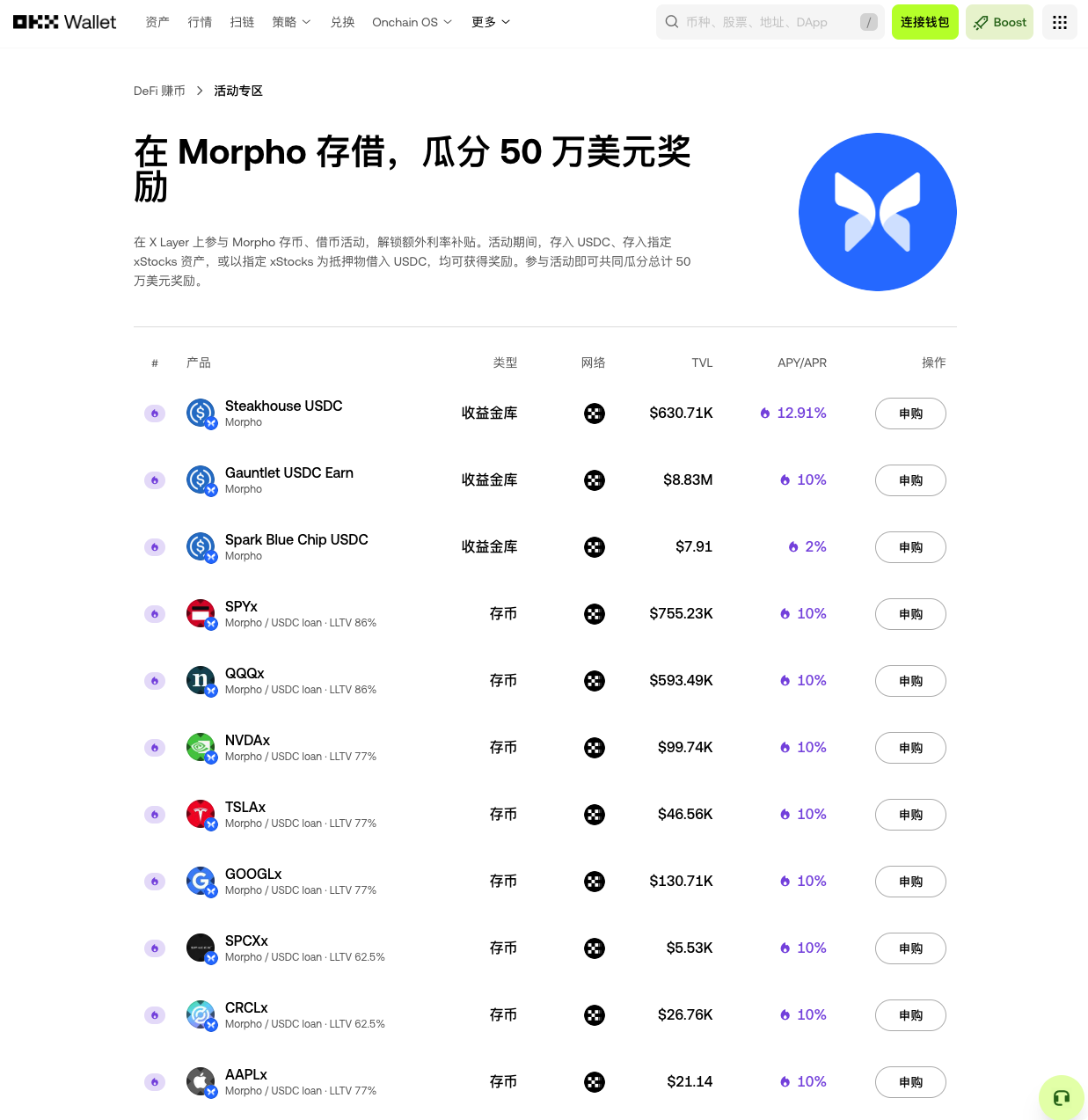
When trading Meme coins on-chain, many people experience the same problem:
When the price goes up, they feel it can continue to rise and are reluctant to sell; when the price falls, they begin to regret not taking profits in time. When the price drops, they think “just wait a bit, it will rebound,” but when they really want to sell, the price may have already declined rapidly.
Recently, OKX Wallet highlighted this pain point with a simple phrase: “Reluctant to sell when Meme rises, too late to sell when it falls? Set take-profit and stop-loss in advance and let preset strategies handle your emotions in the moment.”
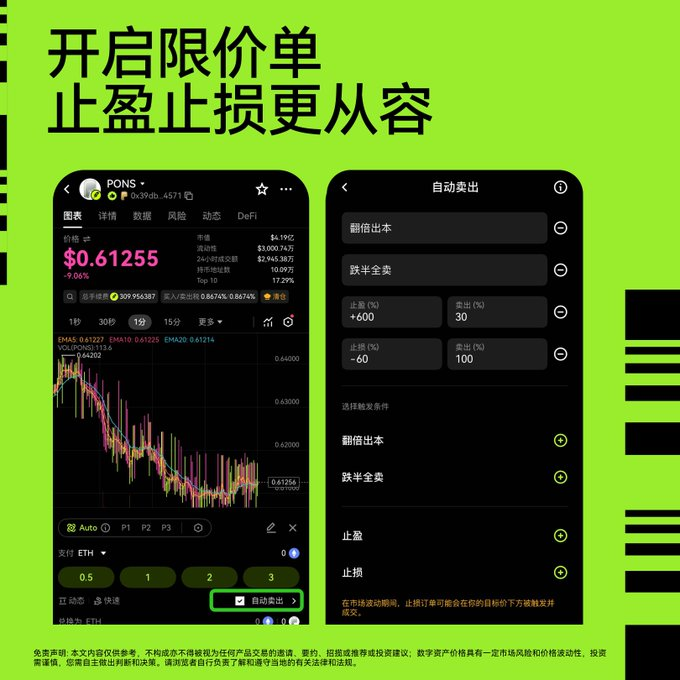
The focus of this update is not to add another complicated indicator, but rather to let users set exit conditions before trading. With OKX Wallet, users can use limit orders and set take-profit, stop-loss, double sell, and half sell conditions within automatic sales, making each buy and sell more planned.
Why does on-chain trading need take-profit and stop-loss more?
In traditional markets, users can typically manage trades using limit orders, stop-loss orders, and conditional orders. However, in the on-chain Meme market, price fluctuations are faster, liquidity is thinner, and trading times are not constrained by traditional trading hours.
This introduces three problems:
First, price fluctuations may occur when you are not monitoring the market. Meme coins can rapidly surge or retreat within minutes, and manually monitoring the market is hard to cover all time periods.
Second, emotions can affect execution. Greed during rises and the hope of a rebound during declines often invalidate original trading plans.
Third, there are many on-chain trading opportunities. Users may focus on multiple tokens simultaneously, and if managing each position manually, they are likely to overlook, miss, or delay actions.
The significance of take-profit and stop-loss is to predefine the “when to sell” as rule-based. Once the price meets the conditions, the system will attempt to execute according to preset strategies, reducing user pressure from on-the-spot judgment.
Limit Orders: No more trading only at market price
The core logic of limit orders is quite simple: the user first sets a desired transaction price, and the order will only potentially execute when the market price meets the conditions.
For example, if a particular asset is currently at a high price and the user does not want to buy at that price, they can set a buying price below the current market price; if the asset has already risen, the user can also set a selling price above the current price and wait for the market to reach the target.
This type of tool is suitable for the following scenarios:
- Not wanting to chase higher prices during rapid surges;
- Hoping to buy after a pullback to a certain price;
- Already having a target selling price and not wanting to constantly monitor the market;
- Wanting to turn trading plans from “feels about right” to explicit prices.
Limit orders do not guarantee execution. If the market does not reach the set price, the order may not execute; even if it does, on-chain liquidity, price fluctuations, and trading conditions can also affect the final execution result. Therefore, when setting prices, one must consider pool depth and slippage.
Take-Profit: Turning paper profits into realized results
The value of the take-profit function lies in helping users define in advance “how much profit to take before selling.”
For example, after a user buys a Meme coin, they can set a take-profit condition to sell a portion or all of their holdings when the target price or target profit is reached. The benefit of this approach is that users do not have to make on-the-spot decisions about cashing in profits when the asset rises.
The screenshot of the auto-sell interface displays various parameter combinations, including “double sell,” “half sell,” and setting sell conditions by quantity or percentage. Users can also set take-profit trigger conditions and sell percentages based on their strategies.
Take-profit does not mean selling at the highest point. Its role is to shift trading goals from vague “hoping for a little more rise” to actionable profit plans. For highly volatile assets, taking profits in stages is usually easier to execute than betting the entire position on one highest point.
Stop-Loss: Controlling the loss from a single erroneous judgment
The logic of stop-loss is the opposite of take-profit: when the price or position performance reaches the preset loss conditions, automatically sell a specified percentage to prevent users from continuously enlarging losses due to hesitation.
For example, users can set during order placement: if the price falls to a certain level, sell 50%; if it further drops below another level, sell the remaining position. They can also set to sell the entire position if a certain percentage of loss is reached.
Stop-loss does not guarantee that the executed price will exactly equal the trigger price. During rapid declines, insufficient liquidity, or network congestion, actual execution may experience slippage. Its core value is to establish risk boundaries, not to eliminate risk.
For Meme coins, stop-loss is particularly important, as prices may be affected by large wallets, changes in liquidity, contract permissions, and market sentiment. If users do not pre-set exit rules, it is easy for them to continuously modify their judgments during a decline.
Auto-Sell: Handing position management to preset conditions
The auto-sell function of OKX Wallet combines take-profit and stop-loss in the same operation interface. Users can set:
- Trigger prices or conditions;
- Sell quantities;
- Sell percentages;
- Take-profit conditions;
- Stop-loss conditions;
- Whether to sell all.
This makes trading strategy more like a complete plan: determine the maximum acceptable loss before buying, and then set target profit and exit percentage after buying.
For users focusing on multiple tokens, auto-sell can reduce instances of “forgetting to sell,” “not being able to sell in time,” and “emotional plan changes.” For users who are just starting to engage in on-chain trading, it also provides a more disciplined approach to position management.
An Easier-to-Execute Trading Plan
Users can build a basic strategy with the following thoughts:
Step One: Determine Maximum Loss First
Do not ask “how much can I earn” first, instead ask “if I make a wrong judgment, how much loss am I willing to accept at most.” The stop-loss position should be set considering asset volatility, pool liquidity, and personal tolerance.
Step Two: Set Tiered Take-Profits
Rather than waiting for an unpredictable peak price, it is better to split the position into several parts. For example, sell a portion at the first target price, sell another portion at the second target price, while keeping a small amount to observe subsequent trends.
Step Three: Control Sell Proportion
Both take-profit and stop-loss do not necessarily require selling all at once. Staged operations can reduce the impact of a single price point on the outcome, but they also increase the number of trades and costs.
Step Four: Check Liquidity and Slippage
Meme coins and small-cap assets may have very low liquidity. Even if auto-sell is triggered, the final execution price may still be affected by pool depth and slippage. Before setting strategies, one should check the liquidity and expected execution of the trading pair.
Step Five: Confirm Authorizations and Network
On-chain automatic trading involves wallet authorization, contracts, and networks. Users must confirm token contracts, trading networks, and execution conditions to avoid losses due to incorrect networks or unknown contracts.
The Product Value of OKX Wallet: Making Complex On-Chain Execution Closer to Trading Software
Star previously stated that on-chain trading should not imply complex wallets, cross-chain, and gas operations; what users really need is to complete price checking, order placing, take-profit and stop-loss, and DEX operations within a familiar trading interface.
The recent limit order and auto-sell features are a reflection of this product concept. Users are not required to rely solely on manual market orders, nor must they continuously monitor price charts; they can write trading plans into the system in advance.
The value of OKX Wallet is not only to provide more assets but to integrate market data, orders, and risk management into one on-chain entry. For users looking to participate in RWA, mainstream coins, and Meme trading, “whether it can be executed more disciplined” is often more important than “whether more coins can be discovered.”
Conclusion: Set Exit Rules First, Then Consider Upside Potential
The easiest mistake in Meme trading is focusing solely on buying without planning ahead for selling.
The limit orders, take-profit and stop-loss, and auto-sell functions of OKX Wallet provide a more disciplined approach: clarifying target prices, maximum losses, and sell proportions before trading begins. Doing this cannot guarantee profits and cannot eliminate on-chain trading risks, but it can help users reduce on-the-spot emotions and execution delays.
Exclusive Benefits for AiCoin Users
Use OKX Web3 Wallet to “invest in assets around the world”!
Bind the invitation code 【AICOIN88】 to enjoy a 20% reduction in trading costs (such as gas optimization and other benefits)!
Download/upgrade OKX Web3 Wallet now to catch the trend:
https://jump.do/xlink?checkProxy=true&proxyId=24
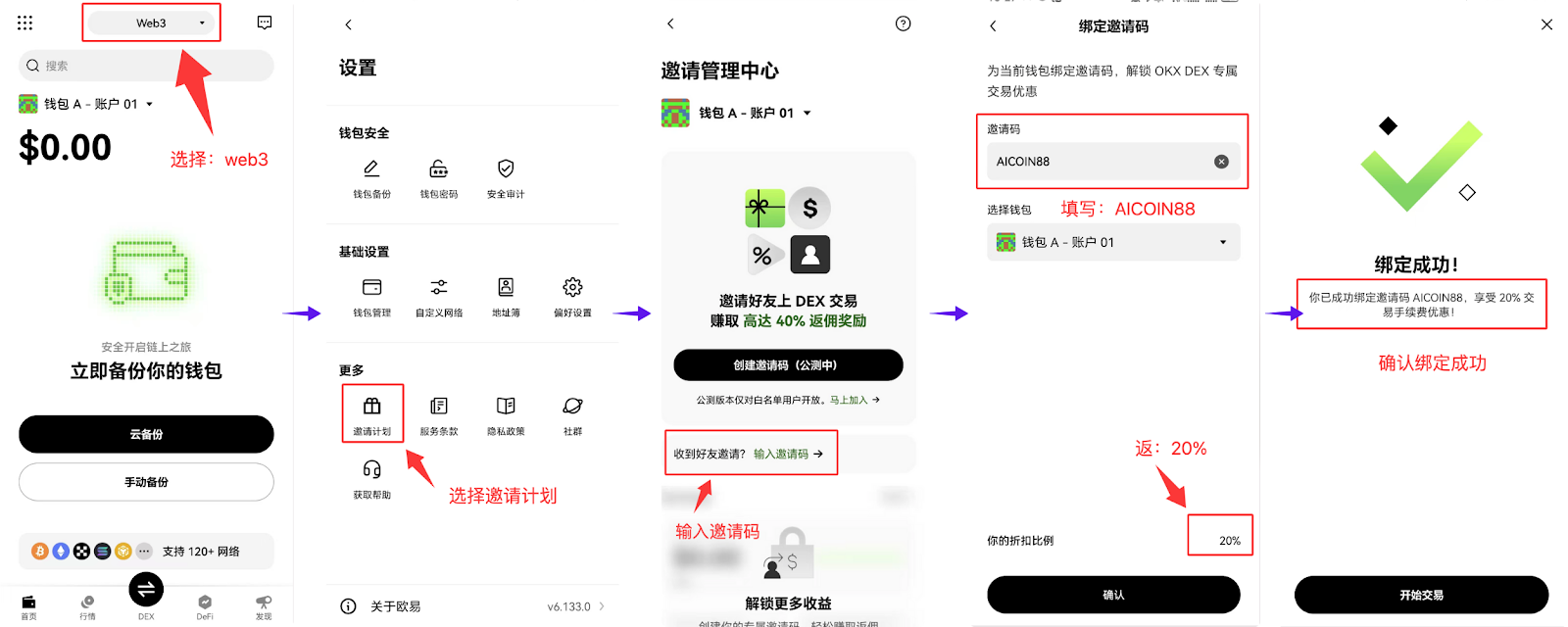
Use the exclusive invitation code 【AICOIN88】 to bind to OKX Wallet, the web version is also easy to operate!
https://web3.okx.com/ul/joindex?ref=AICOIN88
Don't wait, set up your OKX Wallet, bind the benefits, and gain new wealth!
免责声明:本文章仅代表作者个人观点,不代表本平台的立场和观点。本文章仅供信息分享,不构成对任何人的任何投资建议。用户与作者之间的任何争议,与本平台无关。如网页中刊载的文章或图片涉及侵权,请提供相关的权利证明和身份证明发送邮件到[email protected],本平台相关工作人员将会进行核查。