In the past two years, the US stock market has almost followed a single main line.
If you break down the returns of the US stock market from 2024 to 2026, you will see a very narrow engine. The index hits new highs, but the weight is highly concentrated on "who sells shovels, who buys shovels, and who stabs the shovel into data centers."
The seller of shovels is Nvidia. For the fiscal quarter ending July 26, 2026, total revenue was approximately $96.2 billion, up about +106% year-on-year; the data center revenue was about $89 billion, up about +117%. The revenue from hyperscale cloud customers was about $48.7 billion, and AI cloud and government enterprises accounted for about $40.3 billion. Chips, systems, and networks translate capital expenditures into a company's revenue.
The ones buying shovels and laying tracks are Microsoft, Google, Amazon, and Meta. The public compilation of 2026 capital expenditure guidance for the four companies totals approximately $72.5 billion to $73 billion, which is about 70% to 80% higher than the record of approximately $41 billion in 2025. Itemized estimates will vary with financial reports: Amazon once saw its guidance revised from about $200 billion to about $220 billion, Alphabet revised up to about $195 billion to $205 billion, Microsoft to about $175 billion to $190 billion, and Meta to about $130 billion to $145 billion. The funds are mainly going to GPU clusters, self-developed chips, and data center construction.
Next to this, there are custom chips from Broadcom, advanced processes from TSMC, cloud and debt expansion from Oracle, and the premium of government and enterprise software from Palantir. The new highs in the Nasdaq and S&P are largely a market capitalization-weighted addition from this list, rather than a uniform advance of 500 companies.
On September 28, the S&P fell 0.77% to 7683.69, not far from the August peak. The yield on the ten-year Treasury is about 5.2%, oil prices are slightly strong due to disturbances in the Straits, and gold has pulled back. The main line is still in place, and the discount rate is not cheap. After hitting a new high, asking "should we still invest" actually questions: whether this only main line is still worth pursuing with the same position.
Who is Michael Burry, and what layer is he shorting?
Michael Burry became famous for shorting mortgage-backed securities from 2005 to 2008, a story later turned into "The Big Short." He is not a professional short-seller who merely plays the role, but someone who reads accounting notes to an unsettling degree. Starting in the third quarter of 2025, he expanded his bearish positions from Nvidia and Palantir to Micron, Oracle, Nebius, CoreWeave, and semiconductor ETFs. In late September 2026, he advanced his timeline in communications, believing the bubble "could burst earlier than previously thought," and replaced some stock shorts with more put options. For the companies on the list, sell-side ratings still mostly suggest a buy. Both bears and consensus coexist.
He made another colder observation: For the White House, AI spending is "one of the few positive forces sustaining this economy," and "they cannot afford for it to collapse." Political needs to extend cycles and investor needs for returns are not on the same page.
The technological direction may be correct, and capital investment may be wrong. Large models, recommendations, programming assistants, cloud inference—demand is not zero. The controversy lies in—how much depreciation, electricity, memory, and construction has been pre-paid to seize computational power this year; if the economic lifespan of chips is only two to three years, whether the financial reports depreciate over a longer term; and whether uninitiated leasing and procurement commitments count as hiding leverage off-balance sheet. Burry estimates that there are trillions of dollars in commitments and leases among hyperscale cloud vendors and criticizes depreciation assumptions that make profits appear prettier than real consumption. These are boundaries, not pre-determined collapses.
Both the US and China are cementing "future demand."
On the US side, the numbers have grown so large that they must be understood in terms of infrastructure, rather than just "software stories." Nvidia predicts that the capital expenditures of five hyperscale clouds will reach nearly $800 billion in 2026 and about $1.3 trillion in 2027 (the company's own summation, not a simple addition of individual guidance). Backorders in the cloud industry have been said to exceed a trillion dollars. Money is turning into cabinets, electricity, cooling, optical modules, and land. Alphabet's free cash flow turned negative in a single quarter, and Amazon's rolling free cash flow also experienced a negative shift—this is not because the companies have no business, but because expenses are outpacing operational cash flow.
On the Chinese side, the public financial reports that can be verified are from Alibaba, Tencent, and Baidu. As of the quarter ended June 30, 2026, the combined capital expenditures of the three were approximately 131.9 billion yuan, up about +114% year-on-year: Alibaba about 67.7 billion, Tencent about 52.8 billion, Baidu about 11.4 billion. Tencent has also turned to the bond market for financing, while Alibaba has raised funds through a public offering in Hong Kong, specifying that it is aimed at capabilities and data centers. ByteDance is a private company and does not disclose capital expenditures to the same standard as publicly listed companies; Bloomberg reported in May that insiders claimed it was discussing expenditures of up to $70 billion in 2026, and in September there were reports of approximately $29.6 billion in unsecured syndicated loans, which the market understands as supporting AI expansion. Comparing unaudited rumors with publicly listed company financial reports lacks precision, but the direction is consistent: the domestic leaders are also using cash and debt to acquire computational power, though their scale still significantly lags behind the combined total of the four US companies.
The infrastructure level is the foundation of this debate. Without electricity and chips, models are demonstrations; with electricity and chips, if inference orders do not keep up with depreciation, cement and cabinets will first become sunk costs. The supercycle's establishment depends on whether enterprises and consumers continue to pay in the coming years; the bubble's formation depends on whether today's input has already purchased the demand for the next decade.
Could it repeat the year 2000?
Let's start by mentioning the similarities. Both feature a single technical main line absorbing almost all of the risk budget; both have discounted valuations today using the "everyone will use it in the future" narrative; both see companies behaving as if "without it, one falls behind"; and a few names in the index determine most of the gains; bears speak out early while the index can still continue to reach new highs. In 2000, there was genuine demand—broadband and e-commerce eventually arrived, but those that fell first were the sites and providers without cash flow.
The differences are equally clear. In 2000, many publicly listed companies had little to no profit and relied on storytelling for financing. In 2026, payers like Microsoft, Google, Amazon, and Meta are global cash machines; even with increased spending, they are betting using operational cash flow, not going public with a single PPT. Nvidia sells systems that have already been delivered, with quarterly revenues measured in billions, rather than "waiting for users to come before monetization" click commitments. The fiber optics from 2000 sat idle for many years; today’s GPU iterations are fast, so the idle risk turns into "this generation of chips won't be worth much in three years," which constitutes a different type of depreciation bubble—not the same picture.
Objective views can rest on three statements without needing to take sides.
Demand Side: Programming, customer service, search, advertising placement, industrial quality inspection have already generated billable revenues, not zero.
Supply Side: Capital expenditure growth is far exceeding the majority of downstream software revenue growth, with the gap relying on "next year will accelerate" to fill it. The gap can be covered by orders within two years or turn into a write-down in the same timeframe.
Market Side: The index can continue to hit new highs because giants are still making profits, while individual stocks may split open due to depreciation and debt near peaks. Burry is betting on the latter layer; those holding broad indices are buying the former layer. The two layers do not cancel each other out.
For ordinary people, "after reaching new highs, should we still invest?"
What should continue to be invested is the planned US stock market risk position, not "doubling down on Nvidia." Broad indices already include AI; satellite positions consider individual stocks. Money that cannot accept a 20% drawdown within a term shorter than three years shouldn't first enter the market near the peak.
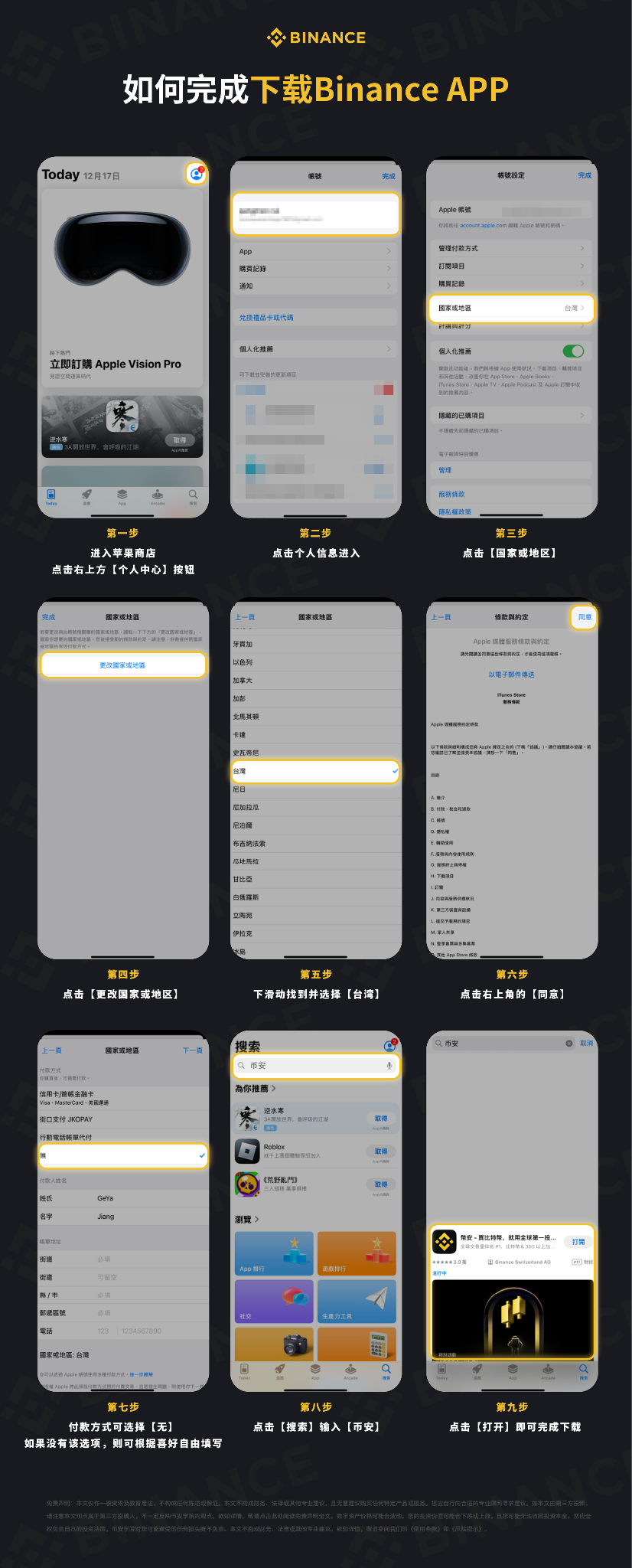
On the platform, eligible non-US users can trade over 7,000 US stocks and ETFs through brokerage channels on Binance, with some assets also having bStocks tokens (such as NVDAB, TSLAB), available for 24-hour trading, where what is held is a financial exposure certificate, not a shareholder voting right. OKX provides over 40 tokenized US stocks and broad indices priced in USDT in regions like Southeast Asia, Northeast Asia, and the Middle East, including Nasdaq and S&P receipts along with Nvidia, with availability limited in the US and Europe as per announcements. Both sides must first confirm regional switches, first understand the difference between tokenized assets and real shares, and start with small transactions to navigate buying and selling.
Binance registration link:
https://jump.do/zh-Hans/xlink-proxy?id=3
Or log in to the Binance app and directly enter the invitation code aicoin668. The following are the generous registration benefits exclusive to AiCoin invitation codes:
Benefit 1: New customers can get up to 440U
1. Deposit 100U + trade 100U → receive a 100U position voucher
2. Deposit 1,000U + trade 50,000U → receive an additional 300U position voucher
3. Deposit 3,000U + trade 200,000U → receive an additional 40U cash voucher
Three tiers can be stacked; by simply depositing 100U, you can obtain the first tier
Benefit 2: Open mystery boxes, up to 25 RE
1. Register + deposit 50U + trade 100U + log in to the App
2. After completing the above activities, receive one mystery box, randomly drawing RE tokens, with a maximum of 25 tokens
This means a new user can achieve dual benefits after completing the task.
OKX registration link
https://jump.do/zh-Hans/xlink-proxy?id=2
Or log in to the OKX app and directly enter the invitation code aicoin20 to enjoy a permanent 20% fee rebate.

The main line is still there, and the boundaries are also there. AI can continue to be laid as a tool; AI as the only holding can become very expensive at peaks. New highs lower future earnings expectations but do not automatically turn allocations into mistakes. Registration resolves whether one can buy receipts for US assets. Whether to buy shovels, lay tracks, or buy the entire index still needs to be written down before increasing positions.
The risk disclaimer remains at the end of the article: does not constitute investment advice; may lose all principal; comply with local laws; do not use leverage, borrow, or participate with living expenses.
免责声明:本文章仅代表作者个人观点,不代表本平台的立场和观点。本文章仅供信息分享,不构成对任何人的任何投资建议。用户与作者之间的任何争议,与本平台无关。如网页中刊载的文章或图片涉及侵权,请提供相关的权利证明和身份证明发送邮件到[email protected],本平台相关工作人员将会进行核查。