Two types of people, in a short timeframe, cannot be distinguished.
First-year traders often spend their time on the same types of actions: flipping K-lines into highs and lows, calculating targets from rises and falls, treating news as a switch. Looking closer will reveal two diverging paths.
One path is the precise prediction camp. Their task is "this point is a top / this point is a bottom / target price must reach 100 dollars." Tools used include patterns, Fibonacci retracement, and dot charts from specific interest rate meetings. Self-evaluation is tied to individual trades: if correct, they understand the market, if wrong, they haven't analyzed enough.
The other path is the trend speculation camp. Their task is "as long as the direction is right, hold on; let the market tell when to turn." Tools include moving averages, new highs, and macro themes (interest rates, USD, risk appetite). Self-evaluation is tied to "am I aligned with the big picture?" This appears more mature than guessing tops and bottoms, yet the pressure is not less—when the trend shakes, they may interpret normal pullbacks as "my narrative has collapsed," and exit midway through an upward trend.
In a short cycle, the performance of both can be very close, yet both can be very misleading.
Guessing correctly once that HYPE rose from around 77 dollars to 94 dollars, or correctly predicting during the week before a spot listing, can yield over twenty percent profit in an account, providing enough evidence in social circles to prove "predictions are useful." Conversely, those who only do "buy when prices hit new highs, sell when they fall" may achieve part of that move but can't articulate how they are superior to those guessing tops. To make it even shorter: within a specific 15-minute candlestick, if a red circle drops to 89 and buys at 90.66—those in the prediction camp might say, "I calculated the support," while those in the trend camp would say, "I don't need to pretend there's a top here." Both explanations can be self-consistent because the sample is just a single trade.
Long cycles separate these two types, usually not by intelligence, but by three more basic factors: trading frequency, missed significant days, and whether they dare to return to the rules after being wrong.
In long-term statistics from organizations like the American Association of Individual Investors and DALBAR, the actual returns of equity fund investors have been consistently lower than the indices they invest in—often due to timing of inflows and outflows. Academically, Barber and Odean’s study of retail accounts is straightforward: the higher the turnover, the worse the net returns; costs eat away at any advantages. Broad indexes like the S&P 500 have annualized nominal returns in the high single digits to just above ten percent over the past few decades (including dividends, depending on start and end years); missing a handful of the largest trading days can lead to significantly lower returns over a ten-year period. The implication is specific: you don't have to guess the wrong direction; simply waiting for "more accurate entry points" while being out of the market during those few days can lead to long-term results lagging behind those who never predict turning points and invest regularly.
The same logic applies even more sharply in crypto. Bitcoin, over a ten-year horizon, is one of the best-performing assets historically, but the path is steep: some call the top at 10,000 dollars and exit permanently, while others wait for 40,000 dollars after 80,000 dollars and dare not buy. In mid to late September 2026, when Bitcoin reclaims around 81,000 dollars, account differences often hinge less on "who accurately stated the 81,000 figure" and more on whether the position was cleared in fear during 2022-2025 and whether there are rules allowing buying back afterwards. HYPE during spot listings is also a textbook case for short timeframes: prices had already moved in anticipation before announcements, retreating to about 91 dollars post-opening—those predicting "listing must pump" could incur short-term losses; while those buying in based on volatility and setting exit points view losses as samples, not as issues of character.
A rough comparison can be made, focusing only on scale, not predictions.
Assuming two individuals each prepare 100,000 dollars, observing over ten years.
Individual A: Timing the market monthly, judging "it will fall," so they go cash, judging "it will rise," so they go fully invested. Even if directional judgment is correct half the time, just a few empty positions coinciding with significant index rally days, or being fully invested on steep declines but too scared to buy back, could mean after ten years, the principal might still be around the original amount, or even less—because missing opportunities and friction act as the opposite of compounding.
Individual B: Not guessing monthly tops and bottoms, regularly buying the same amount of broad index or Bitcoin spot each month, with the rule to buy whether prices fall or rise, and rebalancing annually. B may experience years where performance looks very poor, with net value halving; but as long as the underlying asset remains over the ten-year dimension, B's endpoint distribution usually aligns more closely with the asset itself, rather than the emotions of A.
In the short term, A can easily outperform B, using that to prove the superiority of predictions. In the long term, the competition is about who remains in the game. If trend followers interpret "I understand the big cycle" as "during pullbacks, I must be cash and wait for the perfect point," the long-term performance will slide toward A. If predictive traders treat every top and bottom as an exam they must get right, trading frequency will inflate, and costs—both monetary and emotional—will dull expectations.
The pressure from predictions, along with practices to alleviate it
The source of pressure often is not the loss amount but identity. Predictive traders equate being right or wrong with intelligence and personality; trend traders equate pullbacks with "their worldview being challenged." Both types may double down after losses to prove themselves, or increase positions after profits to "let the market compensate."
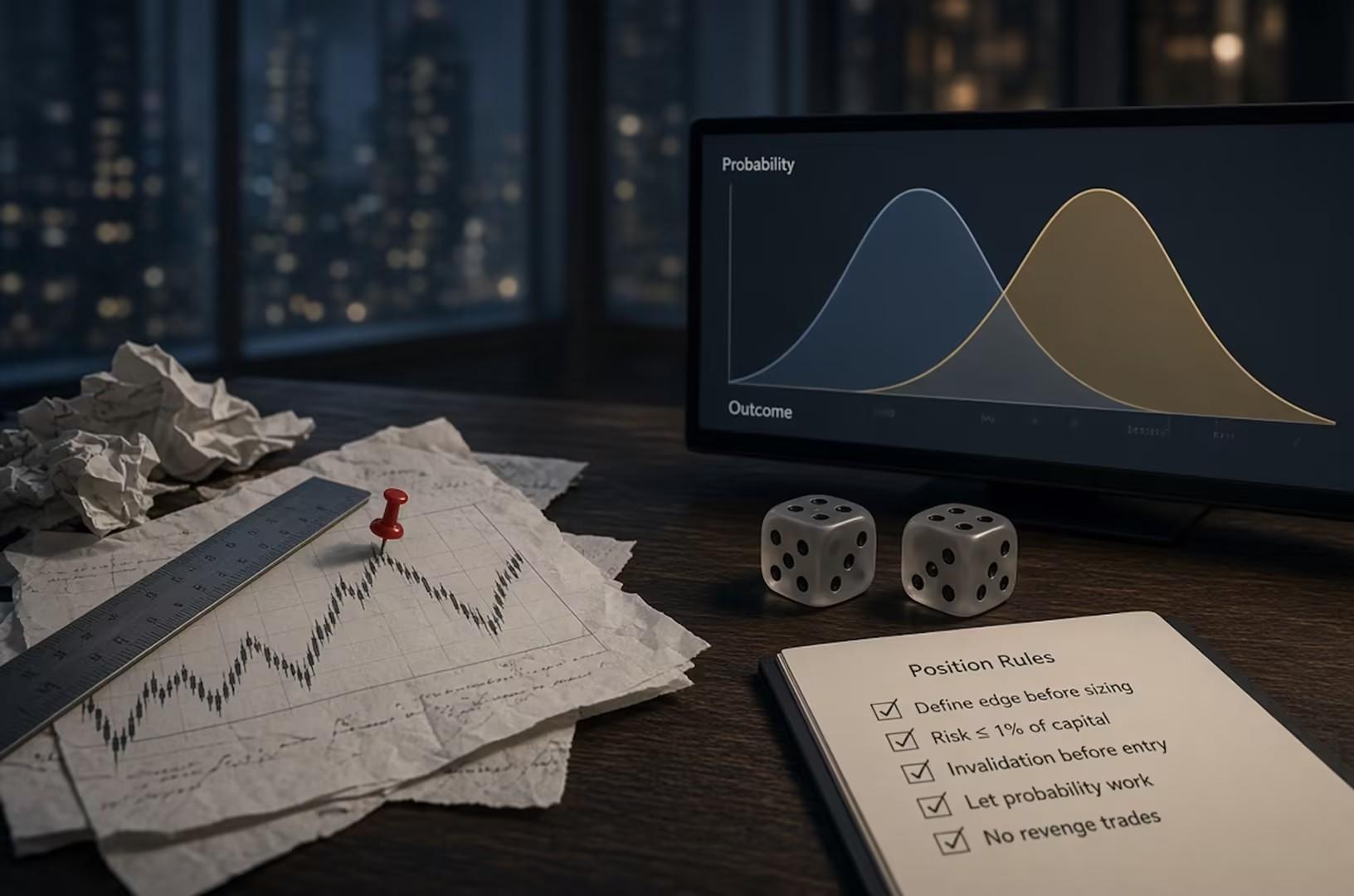
Alleviation does not come from looking at another chart, but changing the decision-making from "Am I right?" to "The sample size under the rules just increased."
There are very few actionable correct methods, and they are not glamorous.
First, write down expectations, then the direction. This trade, when winning, can win how much, and when losing, can lose how much, and roughly how often it appears. If you can't articulate it, then don't open the position.
Second, derive position size using "can still sleep after three mistakes," rather than "how certain am I?" The stronger your sense of certainty, the more you should examine if your position size is too large.
Third, separate core positions from satellite positions. Cores: broad US equity exposure, Bitcoin, Ethereum spot, using time to gain depth. Satellites: single stocks, familiar leading Hong Kong stocks, tokens from exchanges with income loops but high volatility, where the maximum loss would not impact your life significantly.
Fourth, reduce decision-making frequency. Systematic dollar-cost averaging is closer to probabilities than searching for turning points daily; seeking turning points every day expands emotional errors within the sample.
Fifth, downgrade news to environment, not as buttons. Monetary policy decisions, zero listing fees, or specific large orders can alter short-term distributions, seldom constituting sufficient conditions for "must be fully invested/must liquidate."
Learning techniques should also be specific, avoiding theoretical overload.
Use paper to record if each position's "entry reason falls within the rules," not "I have a feeling it will rise."
Practice three types of cycles using the same asset: following only weekly trends, only daily trends, only intraday—mixing types is a source of pressure.
Mandatory cooling: if experiencing two consecutive losses following the rules, take a day off; only review positions, do not open new ones.
Turn "reading the trend correctly" into an assignment: define "trend" as "closing above a certain moving average and maintaining for N days," rather than "I feel a bull market is still here." When definitions are ambiguous, pressure will emerge because any pullback can be interpreted as both "should exit" and "should remain."
Review: if I did it right, what’s to fear? If I did it wrong, what should I check?
A review without data is just a diary. A data-driven review should have at least four columns: entry reason, position size, holding duration, exit reason. Add a column for "within rules / outside rules." Price fluctuations are outcomes, not the focus of the review.
If done correctly. First assume the trade was lucky, then seek evidence proving otherwise. Ask: if the same conditions occur ten times, would I still enter this way? Did the position size increase because "I was right"? Was the exit triggered by rules, or because the profit felt sufficient thus fearing to give back? If immediately increasing the next position after a profit, this treats random rewards as capability upgrades—this is a common chronic injury for prediction traders. The pitfall for trend traders when correct is thinking "since I was right about the direction, there’s no need to reduce during pullbacks"—this might work during the main ascent but will give back a large portion of profits after the ascent ends. The output of a correct review should reveal which rule was validated and which was just coincident.
If done wrong. First, categorize mistakes: do not conflate as "I lost again."
Rules-compliant mistakes: opening, position size, exit as planned, but the market did not move in the expected direction. This is a sample, so keep it. It adds a point to expectation statistics, checking if consecutive losses have reached the "stop-loss threshold," rather than changing the rules to prove oneself right.
Rules-violating mistakes: premature entry, temporary increase in positions, moving stop-loss further away, changing direction due to news. This is an execution fault. The action should only modify execution, not the worldview— for instance, ensuring the next trade can only be executed via a checklist rather than learning a new pattern.
Regardless of right or wrong, write down "if given a second chance, should rules change?" Most times, the answer should be "no." Those who frequently change rules are still chasing precise predictions, only transferring the predictive object from price to the system itself.
Do not interpret "hot" as "should be fully invested." "Hot" merely indicates temporary pricing power is here and suggests congestion.
Where the currently hottest markets are globally, and what newcomers should check first:
US Stocks. The pricing axis remains centered around interest rate paths and tech capital expenditures. Broad indices—like QQQ, which tracks the Nasdaq 100, or various tools that follow the S&P—represent the layer with the least friction when newcomers discuss "holding US stocks long term": diversified components, without needing to first learn the earnings rhythms of individual companies. Individual stocks, meme stocks, and unlisted tokens can exhibit higher volatility, making them closer to trading rather than investing. Tokenized stocks (like on-chain receipts for QQQ) allow stablecoin accounts to trade index exposure around the clock, yet they are not shareholder accounts, with price discrepancies, halts, and jurisdictional limitations. They work well as conduits but are not suitable as "I'm now proficient in US stocks."
Hong Kong Stocks. Southbound capital, the revaluation of Chinese assets, and the liquidity of leading tech and financial companies are recurrent themes in this market. For newcomers, more stable observations should focus on large-cap stocks with thick trading volumes and relatively complete information disclosure rather than small stories that spike with a rumor. Hong Kong stocks follow their own trading hours, stamp duties, and exchange rates; do not apply after-hour practices from US stocks directly.
Cryptocurrency. In 2026, there will be three layers existing simultaneously: Bitcoin as a macro risk asset; on-chain perpetuals (like Hyperliquid) as high-turnover casinos; tokenized US stocks as the night market for stablecoin accounts. In long-term discussions, Bitcoin and Ethereum still hold the best liquidity, being the oldest narratives and the least likely to "zero out"—this is not a guarantee of price movements but a reflection of market depth and holder structure. Platform tokens, high-volatility newly listed varieties, and assets marked as Seed can have income stories (for instance, the fee buyback for HYPE), but for newcomers, they resemble satellite positions: their stake should be minimal enough that going to zero doesn’t impact daily life, and one must distinguish between spot and perpetual. Utilizing "zero listing fees" and "tight trading volumes" as reasons for long-term holding equates to treating distribution news as fundamentals.
A succinct newcomer map can be framed as:
Core observation position—broad US equity exposure + Bitcoin/Ethereum spot;
Satellite—individual stocks, familiar leading Hong Kong company names, selected exchanges’ tokens with income loops;
Do not recommend for the first purchase—high-leverage contracts, memes, or pre-listing tokens with incomprehensible mechanisms.
At the conclusion, return to the platforms. Two platforms: what do they cover, and what safety promises can they offer?
There is no "absolutely safe exchange." What can be compared is: licensing and geographical isolation, reserve disclosures, history of incidents, whether withdrawals can be processed in your location, and whether products sufficiently distinguish between spot and contracts.
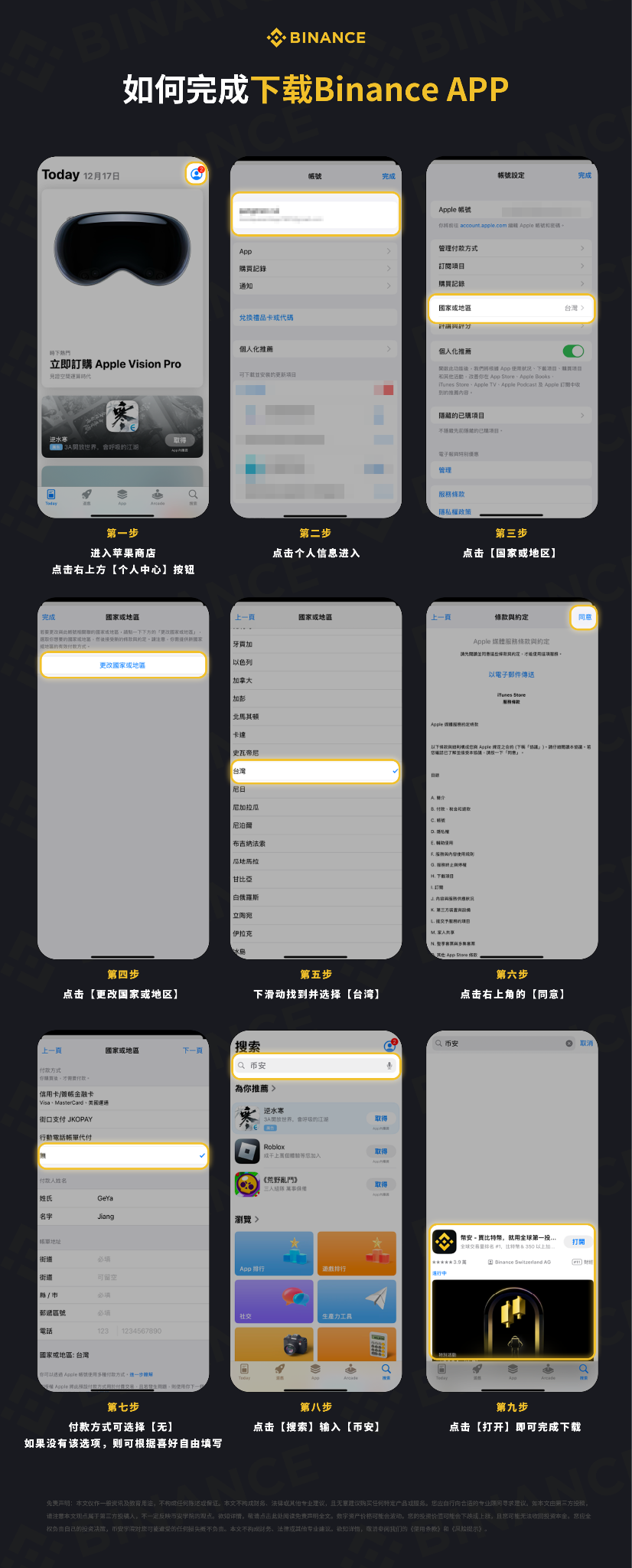
Binance. Its spot depth remains among the world's top tiers, with stablecoin transactions being the primary method for most people. The same account in qualified regions can access crypto spot, some US stocks/tokenized stocks (bStocks), and a large amount of perpetuals. Those holding corresponding assets long-term mainly include Bitcoin, Ethereum spot, and—if your location permits—broad tokenized receipts. The advantages include a full range of products, thick stablecoin orders, and the ability to switch seamlessly between spot and futures within the same app. On safety, public statements include reserve proofs, narratives around SAFU-type insurance funds, and regional product switches. These reduce risks related to platform bankruptcy and mismatches but do not mitigate risks regarding coin prices or the danger of submitting your verification code to phishing sites. Products available in the US and other regions are not the same as those in international versions.
Binance registration link:
https://jump.do/zh-Hans/xlink-proxy?id=3
Alternatively, log into Binance via the app and directly enter the invitation code aicoin668. Below are the exclusive and generous registration benefits for AiCoin invitation codes:
Benefit 1: New users can get up to 440 USDT
1. Deposit 100 USDT + trade 100 USDT → receive a 100 USDT position coupon
2. Deposit 1,000 USDT + trade 50,000 USDT → receive an additional 300 USDT position coupon
3. Deposit 3,000 USDT + trade 200,000 USDT → receive another 40 USDT cash coupon
Three tiers can stack, and you get the first tier with just 100 USDT deposit.
Benefit 2: Open a blind box, up to 25 RE tokens.
1. Register + deposit 50 USDT + trade 100 USDT + log into the app
2. Upon completion, you receive a blind box and randomly receive RE tokens, up to 25.
This equates to a new user completing their tasks and receiving dual benefits.
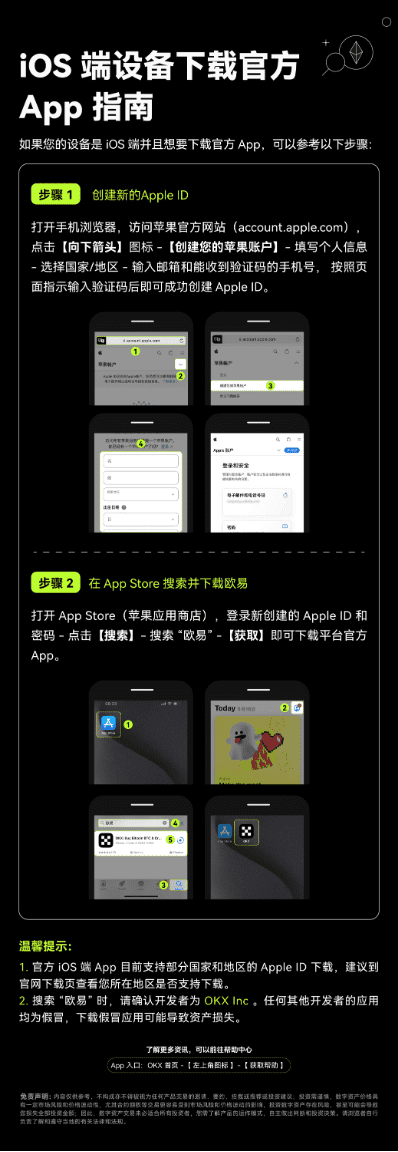
OKX. Its selling points include spot, perpetuals, on-chain, and unified accounts, allowing eligible users to use stablecoins for Bitcoin and Ethereum as well as participate in mainstream contracts. In some areas, they are also rolling out tokenizations or TradFi entrants, usually with narrower coverage than Binance’s stock/bStocks menu, but the trading interface and unified margin are reasons many traders stay. On safety, ongoing reserve proofs, wallet stratification, and regional compliance are the main narratives presented externally. Again: these prove asset mapping, not profitability.
OKX registration link:
https://jump.do/zh-Hans/xlink-proxy?id=2
Alternatively, log into OKX via the app and enter the invitation code aicoin20 for a permanent 20% fee rebate.
Common reasons for opening two accounts are practical: backup for withdrawal channels, better depth for certain tokens on one side only, and avoiding keeping the entire balance on one login. This is not "it's safer to open both." Two accounts mean two verification sets, two types of phishing fronts, and two sets of withdrawal whitelists you might forget. Register as needed: first confirm whether you can see the products in your location, then make a small deposit to successfully route through deposit, spot trading, and withdrawal, before deciding whether to place your long-term holdings in.
Execution is a bit more concrete than prediction
If this article can be condensed into actionable points, they could be:
Individual position sizes small enough to still sleep soundly after three consecutive mistakes.
Core positions utilize spot, while thematic satellite positions should be considered.
Rules should be written before trading opens, not after a loss.
Platforms deal with routing and some custodial risks; they do not resolve your fantasies about turning points.
The essence of trading is not predicting the next K-line precisely. It is standing on the side of probability a bit more with repeatable rules amid uncertainty, and then accepting that some months, probabilities won’t side with you. Precise predictions lead people to feel clever; probabilistic thinking allows them to apply that cleverness to position sizing. Registration solves whether you can buy. What to buy, how much, and how to deal with mistakes still must be written on paper first.
Risk warnings retained at the end: not investment advice; you may lose all principal; comply with the laws of your location; do not use leverage, borrowing, or participate with living expenses.
免责声明:本文章仅代表作者个人观点,不代表本平台的立场和观点。本文章仅供信息分享,不构成对任何人的任何投资建议。用户与作者之间的任何争议,与本平台无关。如网页中刊载的文章或图片涉及侵权,请提供相关的权利证明和身份证明发送邮件到[email protected],本平台相关工作人员将会进行核查。