The eleven-day holiday is approaching, people take a holiday, but money shouldn't take a holiday. During these seven days, many targets will enter a low liquidity window, making direction difficult and volatility amplified. Instead of leaving idle funds sitting in wallets waiting, it is better to use low-risk tools to lock in some holiday returns.
Currently, the holiday strategies being discussed in the market mainly focus on four categories:
Funding rate/spot-futures arbitrage, grid trading, copy trading, and interest products from trading platforms.
The logic of earning returns in these four types of strategies is entirely different, and the requirements for market conditions vary as well. What really needs attention is not "which one has the highest yield," but rather what risks the funds are taking on and whether those risks match the intended use of your funds.

1. First Clarify: What money can "lie down" during the holiday, and what money should not be moved
Before configuring any strategy, it is essential to distinguish the properties of the funds. The principle is straightforward—only use idle funds to earn deterministic returns, do not touch contract margins or your core holdings that you are waiting for a pullback on. The risk in the holiday market lies in reduced liquidity, leading to greater volatility for the same trades. Therefore, the theme for these seven days is "defensive returns," not offensive. First, divide the funds into three parts: daily idle cash, short-term vacant trading funds, and medium- to long-term core holdings. The first two portions are truly suitable for "lying and earning."
① Idle funds without recent usage demand
This portion of funds can be considered for low-frequency strategies or income-generating products. For example, funding rate arbitrage, stablecoin yield products, etc.
② Funds originally for short-term trading
If you do not plan to actively trade during the holiday, consider using part of it for grid or other automated strategies. However, this portion of funds essentially still belongs to trading capital and does not mean the risk has disappeared.
③ Medium to long-term holdings and contract margins
In principle, this portion of funds should not be moved around casually in pursuit of short-term returns. Especially when there are already leveraged positions, one should not increase capital usage just to earn additional returns. Therefore, the so-called "holiday fund management" is not about making all funds seek returns, but rather:
First ensure the purpose of the funds, then decide what strategy to use.
2. Strategy 1: Funding Rate Arbitrage (the most stable type)
This is the classic low-risk play for the holiday. The principle is simple: buy the target in spot and simultaneously open an equal quantity of short positions in perpetual contracts to hedge both sides, your net exposure becomes zero, and price fluctuations do not concern you. You earn the funding rate, the "holding cost." When the funding rate is positive and long positions are crowded, shorts earn a fee every 8 hours. This is especially suitable during holidays since you can avoid keeping an eye on the market—both sides are locked in, purely reaping the rate difference.
Key operation points: choose targets with stable positive rates, do not be greedy for high-rate small coins (high rates often come with risks of rapid price surge and drop); keep leverage at 1x or low leverage to avoid liquidation risks; check the rate direction once daily, and do not let one side become the "paying side" without realizing it. Its returns may not be high, but it is almost a "direction-independent" guaranteed cash flow.
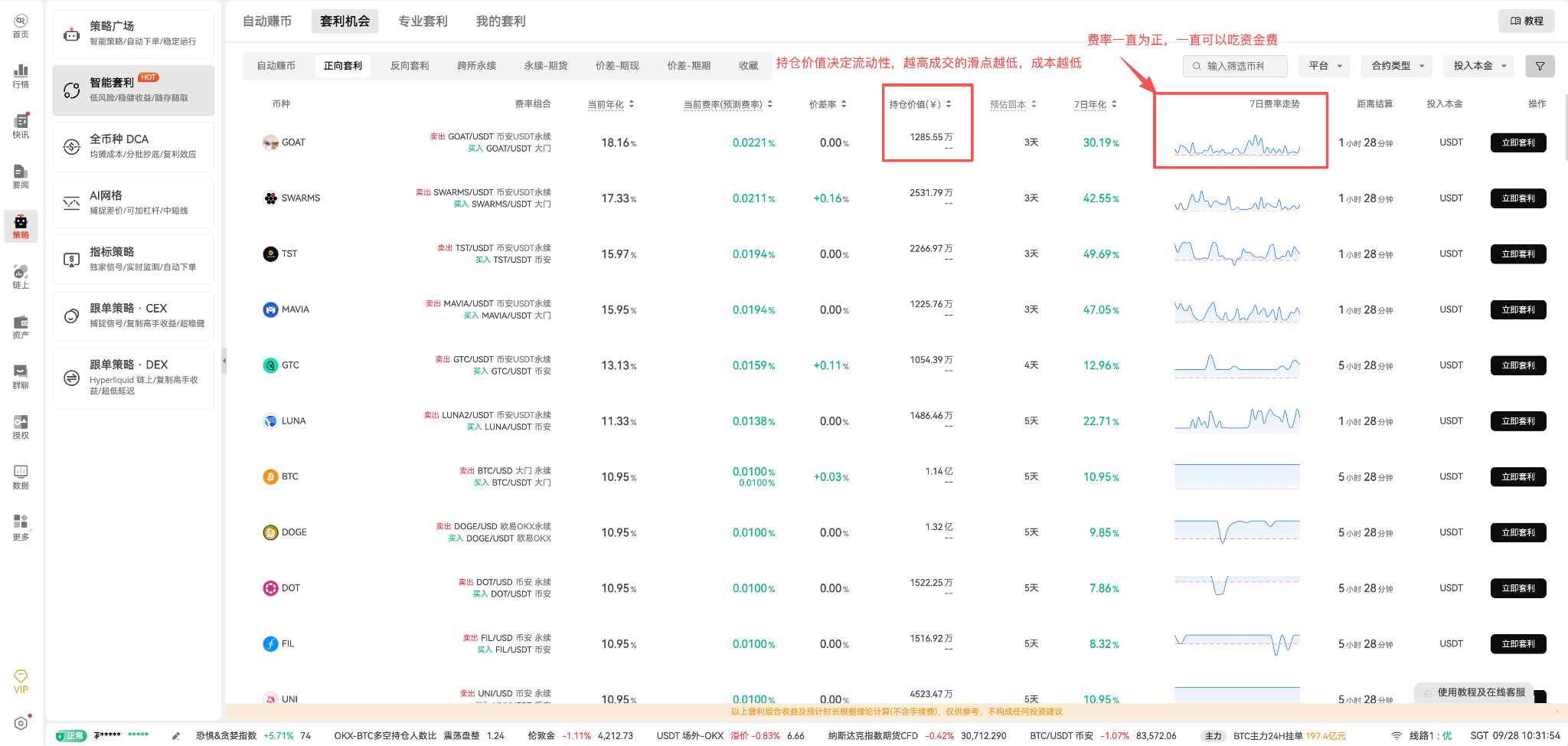
Data from September 28 shows there are many strategies with over 30% annualized returns for the positive arbitrage opportunity over seven days. Choose those with【7-day rate trends】stable above zero; the greater the holding value, the lower the slippage. Newcomers can refer to: easily master funding fee and price difference arbitrage strategy (principle article) - AiCoin
https://www.aicoin.com/article/396797.html
3. Strategy 2: Grid Trading (earning from fluctuations)
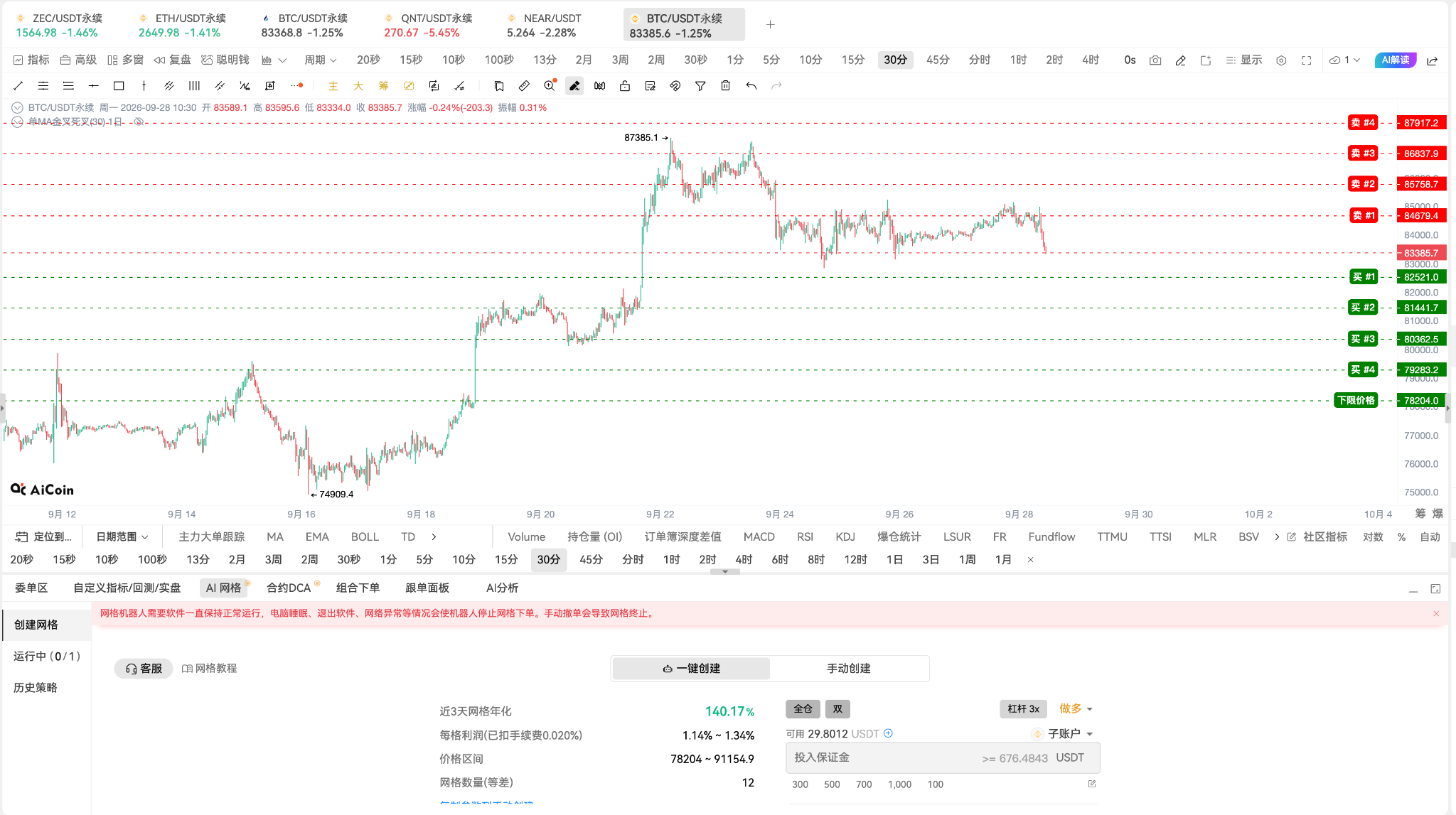
The most common market behavior during the holiday is sideways fluctuation—no direction, but there are ups and downs, which is the perfect environment for grids. You set a price range, and the system automatically "buys when it drops, sells when it rises," repeatedly buying low and selling high, converting the fluctuations into numerous small segments, each delivering a small profit.
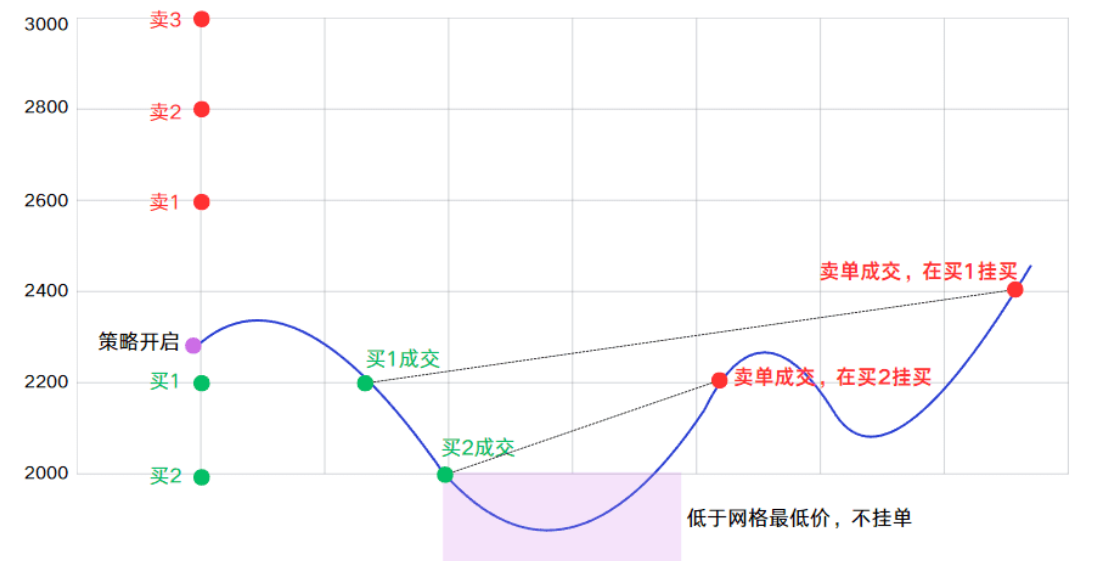
First, determine the range in which the target is likely to move during the holiday (this can be referenced against recent support and resistance levels), set the range a bit wider, better to earn less than to set it too narrow and get "pierced." Grids are most afraid of one-sided movements—if the market breaks through the range and moves in one direction, your positions will become increasingly trapped. Therefore, when doing grids during the holiday, be sure to set a stop-loss line. If it breaks, just stop; don’t expect the grid to recover on its own. If new friends find it troublesome to set ranges, and want to run grids with zero threshold, they can use ready-made AI recommended strategies with maximum operation time recommendations suitable for arranging according to the holiday.
If you haven’t learned about grids yet, read this article first
https://www.aicoin.com/article/360449.html
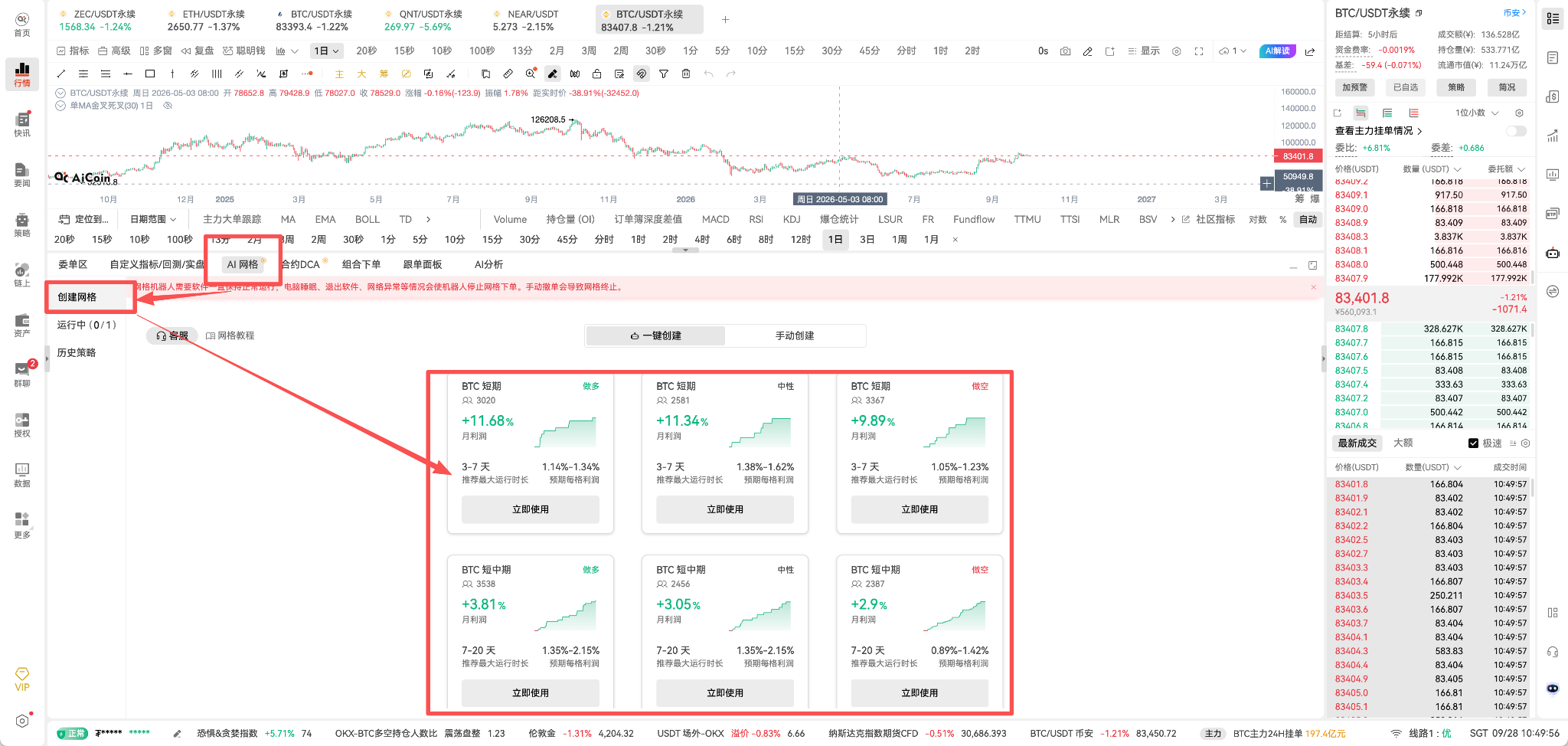
4. Strategy 3: Copy Trading (outsource monitoring)
If you don’t want to monitor during the holiday, you can let the system help you copy—choose quality copy traders on the platform, set the copy proportion, and every trade they open or close will be copied proportionally to your account. This is the best way to combine "people taking a break" and "money earning."
However, copy trading is not about lying back; there are three pitfalls to avoid: first, do not allocate all funds to one person; diversify into 2-3 different style traders to hedge against individual judgment errors; second, focus on drawdown and historical maximum losses, rather than just tracking yield rate rankings—liquidity is poor during holidays, high-yield copy traders can quickly incur drawdowns; third, set reasonable limits on each copy trade and stop-loss, so that one spike doesn’t erase your account. The essence of copy trading is "who you trust for judgment," so selecting people is more important than selecting coins, and letting other traders handle it.
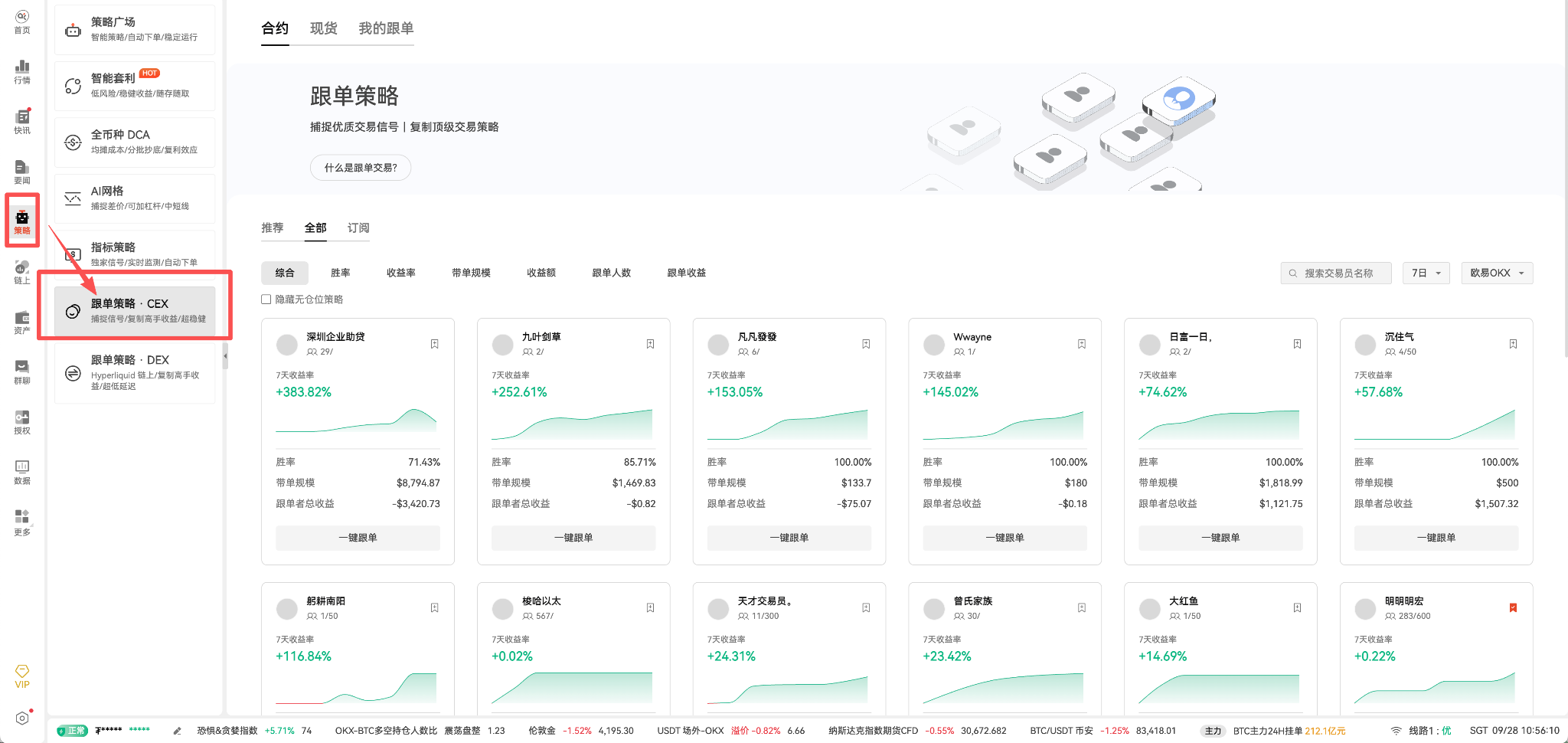
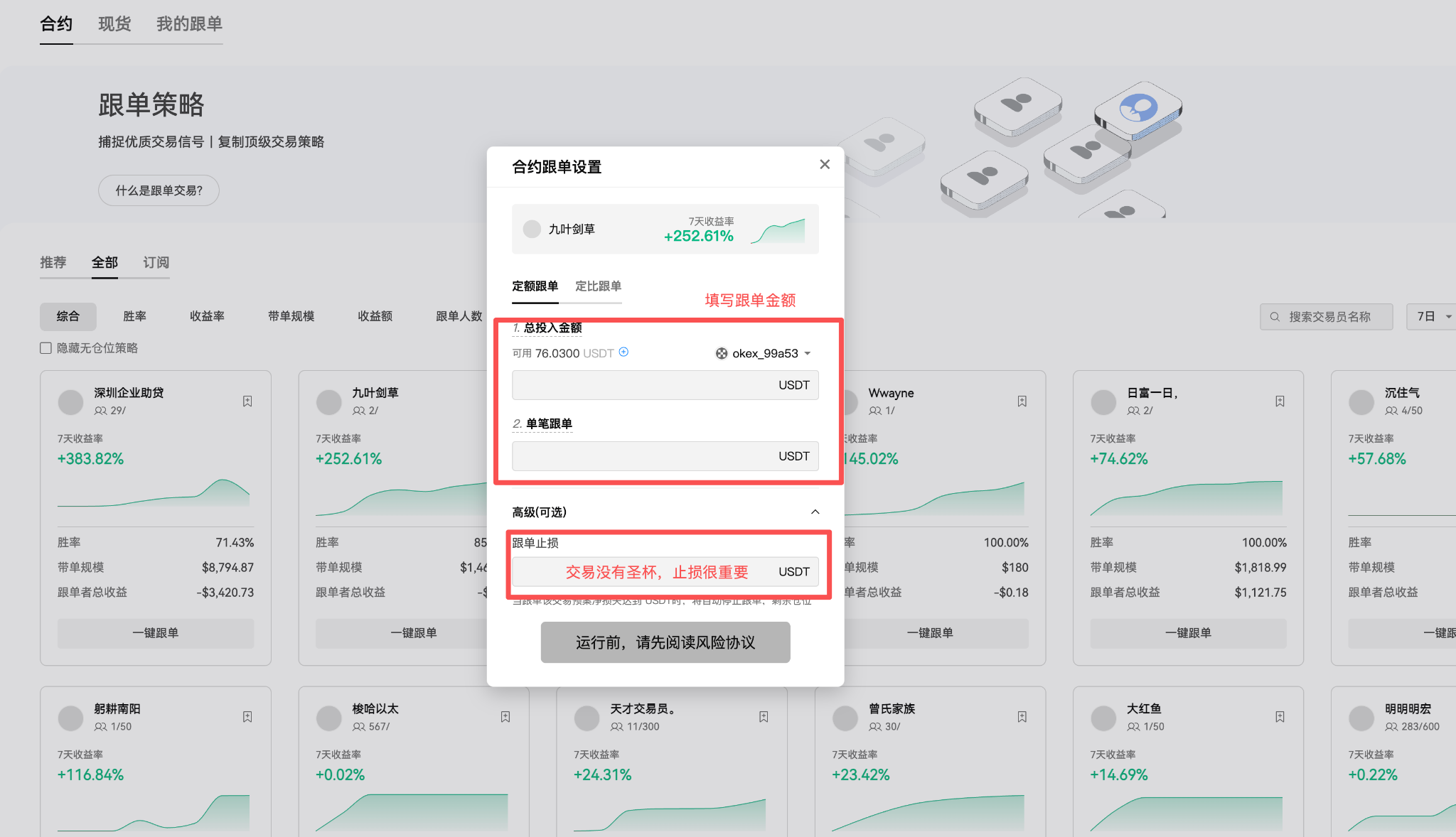
Before starting, you might want to check the guide to the copy trading leaderboard.
- AiCoin https://www.aicoin.com/article/393906.html
5. Strategy 4: Exchange Fixed-term / Flexible Financial Management (the most stress-free)
If you find the first three categories troublesome, the simplest solution is to put idle money into the platform's flexible or fixed-term financial management—essentially lending the coins to the platform to earn interest. Flexible deposits allow deposits and withdrawals anytime, with slightly lower returns; fixed-term deposits lock in for 90 days/30 days, yielding slightly higher rates. For idle funds during the seven-day holiday, a short fixed-term investment is just right.
Note two points: first, clarify whether it’s coin-based or USDT-based—high "interest" in coin-based accounts is often traded off against the risks of coin price fluctuations; it’s better to prioritize USDT/stablecoin bases; second, choose large platforms with risk reserves and a long foundation, don’t squeeze into niche high-interest products just to gain an extra point or two. For those completely uninterested in trading, financial products offered by trading platforms are a more fund management-oriented choice.
Currently viewing major exchanges’ financial products, several are very suitable for beginners and idle funds:
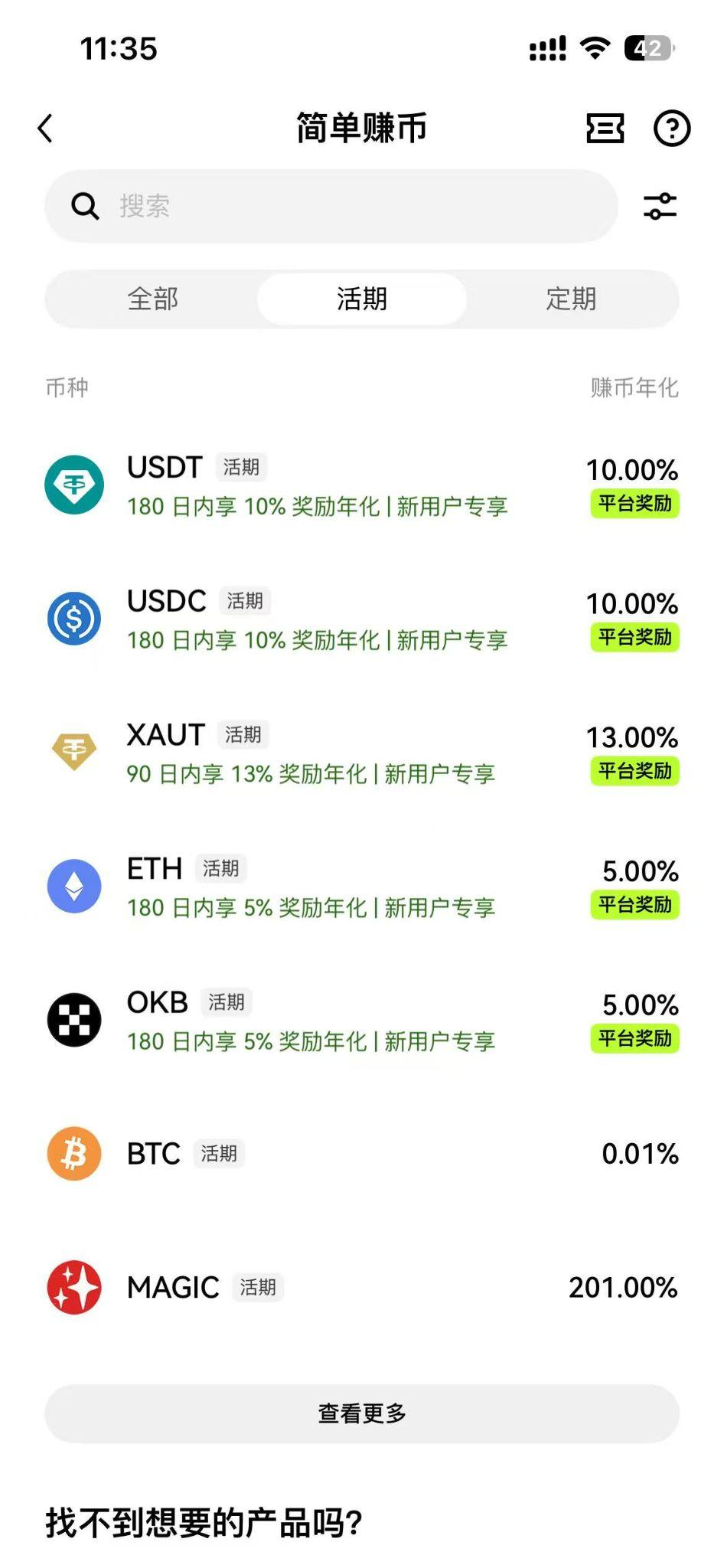
OKX Simple Coin Earning
Flexible—combining platform rewards, annualized returns can reach 13%, fixed-term USDT 90 days annualized at 4% , which is also better than bank financial management.
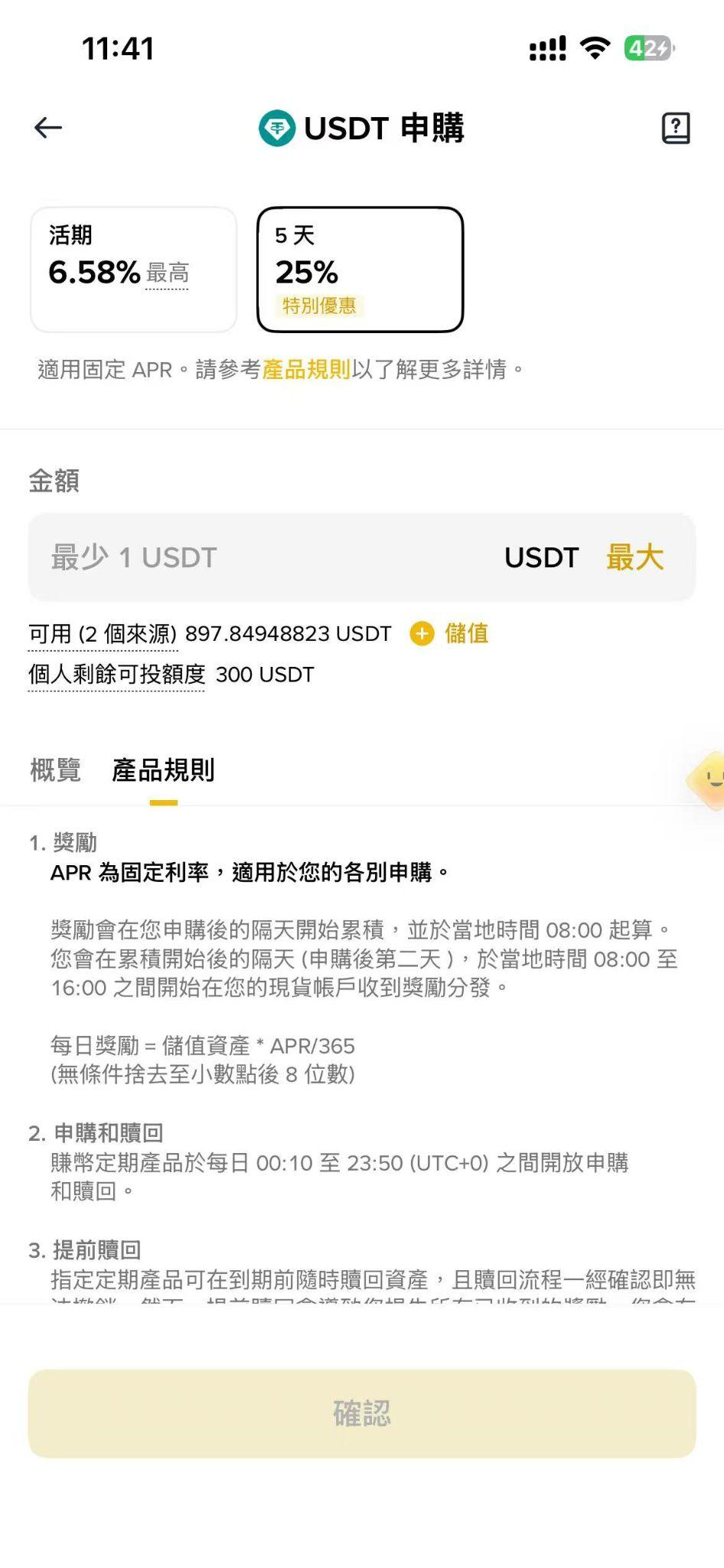
Binance - Stablecoin Financial Management
Annualized returns range from 2.17% to 25%; for instance, my account shows a【special offer】for a 5-day USDT fixed-term with 25% annualized returns—how can this not be a good fund placement?
This type of financial management is like Baidu Treasure, low risk, simple operation, accessible to both beginners and veterans. Newcomers can even register through the following exclusive channels and enjoy discounts:
Binance (invitation code aicoin668), enjoy a 10% rebate on transactions.
Registration link: https://jump.do/zh-Hans/xlink-proxy?id=3
OKX (permanent 20% rebate)
Registration link: https://jump.do/zh-Hans/xlink-proxy?id=2
6. Here’s an actionable holiday fund plan
Suppose you have 30,000 US dollars of idle money, a prudent division could be:
60% (18,000) placed in stablecoin fixed-term or funding rate arbitrage, locking in deterministic returns, basically requiring no management;
25% (7,500) running grid to earn from fluctuating movements;
15% (4,500) to be used for copy trading, aiming for excess returns during the holiday period while accepting its volatility. Overall exposure should be well-controlled, leaving a small portion ready to adjust for market opportunities after the holiday.
Combining four types of strategies, it is clear to see significant differences:
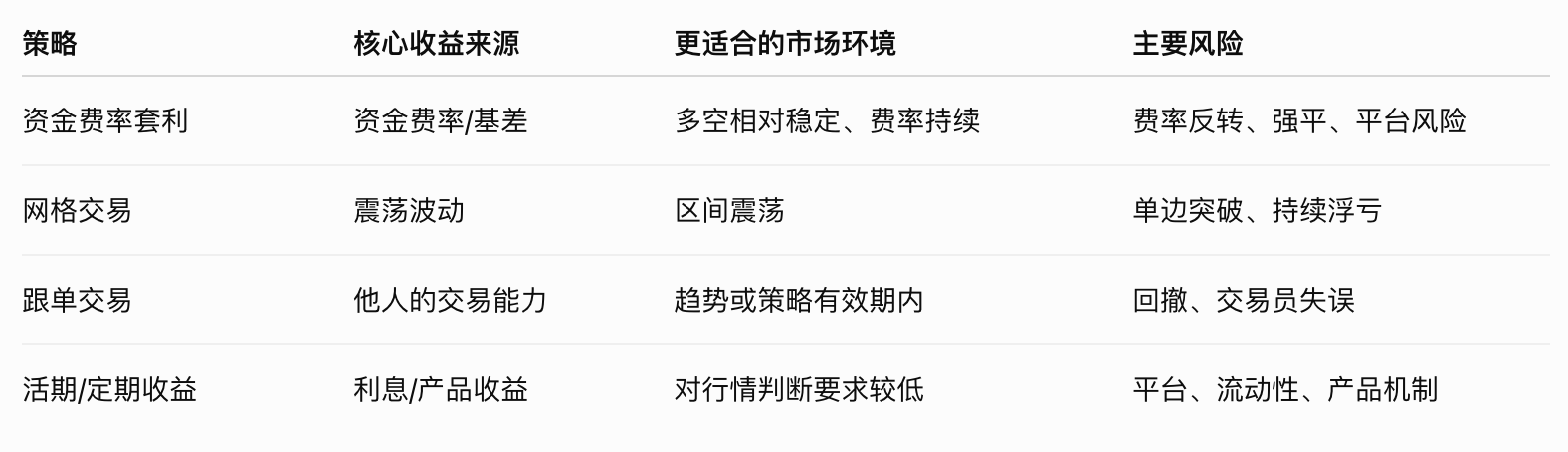
A truly mature holiday strategy is not about finding a tool that offers the "highest seven-day yield," but rather first determining what risks you are willing to take on and then choosing matching sources of returns.
You can take a break during the holiday, but risk management cannot take a holiday.
This article is for discussing strategic mechanisms and risk management and does not constitute any investment advice.
免责声明:本文章仅代表作者个人观点,不代表本平台的立场和观点。本文章仅供信息分享,不构成对任何人的任何投资建议。用户与作者之间的任何争议,与本平台无关。如网页中刊载的文章或图片涉及侵权,请提供相关的权利证明和身份证明发送邮件到support@aicoin.com,本平台相关工作人员将会进行核查。