CoinW Research Institute
Abstract
Variational confirms that it will launch $VAR in the fourth quarter of 2026, with 32% of the total supply allocated for the genesis airdrop, and all of it will be unlocked at TGE. Variational connects liquidity from CEX, DEX, OTC, and traditional financial markets through RFQ inquiry and OLP, covering over 500 cryptocurrencies, stocks, commodities, and Pre-IPO markets in a "on-chain brokerage" model. Zero fees and a rich variety of trading targets are its main advantages, but trading costs are still hidden in spreads, funding rates, and liquidation costs, with current trading volume also affected by point incentives. As the $VAR introduces a protocol revenue buyback and burn mechanism, what Variational truly needs to validate in the next stage is user retention after the airdrop ends, differentiated asset trading demand, and whether real revenue can continue to be converted into token value. Meanwhile, $VAR will also serve as an important validation of this round of Perp DEX point airdrop model, and whether the Arbitrum derivatives ecosystem can continue to grow.
1. What does the 32% genesis airdrop of $VAR confirm for its Q4 launch?
The competition for Perp DEX airdrops has reached an important milestone. On September 24, Variational announced that its token $VAR will undergo a token generation event (TGE) in the fourth quarter of 2026, with 32% of the total supply earmarked for a genesis airdrop. This airdrop is quite substantial. The 32% of the tokens will be distributed according to the proportion of Omni points held by users and will be fully unlocked at TGE, requiring no further waiting for gradual release. Users must hold at least 1 point to be eligible for the distribution; unclaimed tokens will be burned. According to the latest disclosure, Variational will continue to distribute 150,000 points weekly until TGE. Points primarily come from transactions, holdings, invitations on Omni, and the project team will identify non-organic behaviors such as volume manipulation and multiple accounts, adjusting related points accordingly. Of the remaining tokens, 18% will go into an ecological reserve managed by the foundation for subsequent community and ecological development; the team and investors hold a combined 50%, which will be locked for 12 months post-TGE, followed by at least 3 years of linear release. Thus, while community-related allocations total 50%, only 32% directly enters the genesis airdrop, with the remaining 18% being gradually arranged by the foundation.
This allocation method has a dual nature. For point users, the 32% genesis airdrop being fully unlocked at TGE allows them to directly receive their full share; the team and investors being locked for a year reduces selling pressure from internal holders in the early launch phase. This design of "users unlocking all at once while the team and investors are locked long-term" is not without precedent. Early user airdrops from Arbitrum were redeemable upon token distribution, Hyperliquid allocated about 31% of its genesis airdrop directly to early users, and Lighter's 25% airdrop was also fully unlocked at TGE; all three placed major locking restrictions on the team and investors. In contrast, Aster's subsequent airdrop adopted a stronger delayed redemption mechanism, where Stage 6 users could choose to receive 50% immediately or wait about six months to receive 100%, using extra tokens to incentivize users to delay redemption. From these cases, the advantage of one-time unlocking is that the rules are straightforward, and users can immediately obtain full liquidity, but the trade-off is that potential selling pressure after TGE may be more concentrated; delayed redemption might spread some selling pressure over time, but users must sacrifice immediate liquidity. VAR clearly chose the former route, and the 32% genesis airdrop ratio exceeds Arbitrum's 11.62% aimed at users, Lighter's 25%, and is closer to Hyperliquid's approximately 31% genesis airdrop. This makes VAR more attractive to point users and implies that it will face real market price discovery and redemption pressure more quickly after TGE. However, currently, we cannot assess the ultimate airdrop value solely based on the number of points. How many $VAR one point can redeem still depends on the total token supply, effective point total, individual point ratios, and market valuation at TGE. As of September 24, the specific TGE date, point redemption ratio, actual initial circulating supply, and market valuation are still pending announcement. Therefore, the 32% airdrop only addresses the question of “how to distribute $VAR to early users.” A more critical question is how many of these users and trading volumes will remain post-airdrop.
From a broader airdrop cycle perspective, Variational may even become one of the most significant concluding projects in this round of "point farming" models. In recent years, points have become a standard tool for the cold start of Perp DEX, as users accumulate points through trading, holdings, and invitations, waiting for TGE to convert points into tokens. This model is inherently still tied to the issuance of crypto-native primary assets; as long as the market is willing to continue pricing new projects and tokens, points can serve as an effective tool for attracting users and liquidity. However, the market environment supporting this model is changing. Internally, a large number of VC projects from the previous phase adopted a "high FDV, low circulation" issuance structure, with high initial valuations pre-spending part of the secondary market's upward space; on the other hand, the industrialized issuance of Meme Launchpads continues to increase new coin supply, further dispersing funds and attention. Externally, traditional financial assets such as stocks, commodities, Pre-IPO, RWA, are accelerating their entry into crypto trading platforms, competing for trading demand with native tokens. In this context, market focus is shifting from "how much will the next point be worth" to "how many users will remain after the airdrop ends." Variational's offer of a high ratio genesis airdrop, with full unlocking at TGE, and continuous point issuance pushes this model to a higher intensity once again. If such incentives still cannot retain real users post-TGE, then the validation may not just concern Variational, but the entire growth path of "points - TGE - secondary market takeover." From this perspective, VAR is not just an airdrop; it may also become a concentrated validation before the existing native issuance era transitions to a new phase, while the traditional notion of "point farming" comes closer to the twilight of the previous market cycle.
2. What is Variational: More like an on-chain broker than an exchange
Variational has not simply copied Hyperliquid's on-chain order book; instead, it chose to bring in liquidity from centralized exchanges, DEX, OTC institutions, and traditional financial markets, managing margin and settlement through an on-chain system. Variational currently has two main products. Omni is aimed at ordinary users, offering over 500 derivative markets for cryptocurrencies, stocks, commodities, and indices, supporting up to 50 times leverage. Pro is aimed at professional institutions, allowing custom expiration times, margins, and settlement rules for more complex OTC derivatives trading. Both are fundamentally supported by the Variational Protocol for trading records, margin management, and on-chain settlement.
The main difference between Omni and ordinary exchanges is the absence of a public order book. Traditional order books require buyers and sellers to place orders and wait for matching, while Omni uses a request for quote (RFQ) model. After users input the transaction direction and quantity, the liquidity provider (OLP) gives a directly executable price, which users can accept, reject, or set a slippage limit. This process is somewhat similar to exchanging foreign currency at a bank. Users do not have to wait for another person to be willing to trade in the opposite direction; instead, the bank directly provides the buy and sell price. OLP plays this role in Omni, acting as the primary trading counterparty for users. It will reference prices from multiple CEXs, DEXs, and OTC markets, then quote based on its positions, volatility, and liquidity while hedging risks in external markets. The benefit of this model is that new markets do not need to develop an in-depth order book from the outset. As long as there is a reliable price for an asset and OLP can find liquidity to hedge externally, Variational can provide quotes for users.
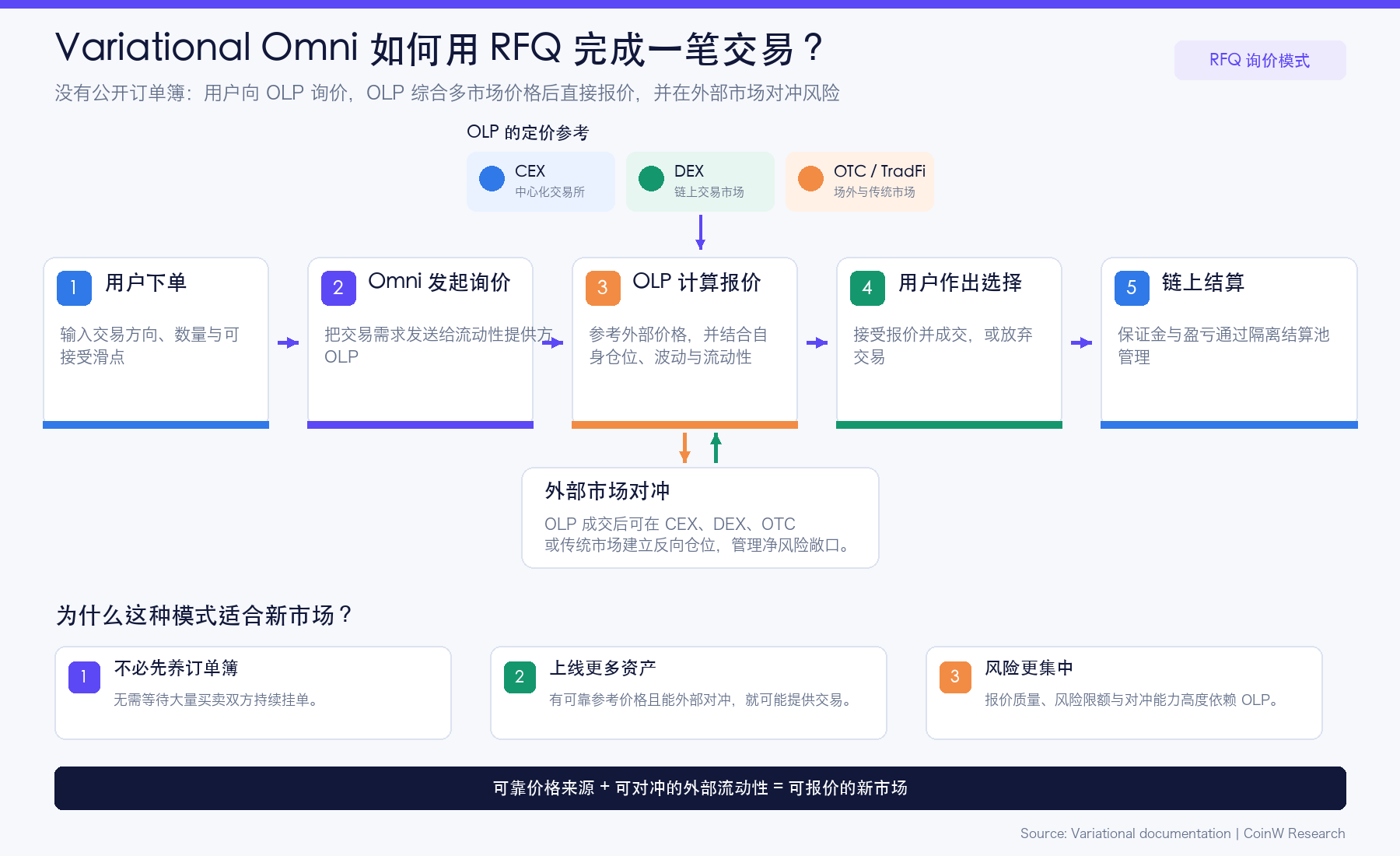
Figure 1. Source: CoinW Research Institute
However, funds are not entirely held off-chain. Users mainly use USDC on Arbitrum as margin, stored in an on-chain settlement pool that is mutually isolated between users and OLP. OLP can use its own funds to hedge in external markets but cannot directly transfer user margins to CEXs. This model also introduces new risks. OLP is responsible for quoting and is the main trading counterparty, thus trading experiences can largely depend on its pricing, liquidity, and risk management capabilities. If OLP reaches its risk limits, some trades may not be possible; in extreme cases, if OLP is unable to pay users' profits, bad debts could occur. Therefore, Variational has not truly eliminated intermediaries but has centralized market-making, brokerage, and part of the clearing functions within OLP, managing margin and settlement through smart contracts. This is also its core distinction from Hyperliquid. Hyperliquid is more akin to moving a high-performance exchange on-chain, relying on the depth of a public order book; Variational functions more like an on-chain broker, connecting liquidity across different markets through unified quotes. One bets on the depth of on-chain order books, while the other bets on cross-market quoting and hedging capabilities.
3. Zero fees and 500+ markets: Variational's advantages also hide costs
"Zero fees" is one of Variational’s most attractive tags for users. This zero fee means that Omni does not charge a fixed percentage trading fee based on the amount of each transaction like ordinary exchanges, but it does not imply that trading is truly costless. Omni’s main source of income comes from buy-sell spreads. After a user submits an order, the OLP provides an executable quote, and the difference between the buy and sell prices constitutes the actual cost borne by the user. This process can still be understood in terms of exchanging currency at a bank. The dollars a bank sells you are usually at a higher price than what it buys back from you, even if the bill does not separately state "fees," trading back and forth will still incur losses. Furthermore, these spreads are not fixed. The worse the market liquidity, the greater the volatility, the higher the trading scale, or if OLP has accumulated many unilateral positions, the spread can widen. Therefore, assessing Omni’s trading costs cannot rely solely on “zero fees” but must consider how much the actual execution price deviates from the market price. In addition, users must also bear funding rates, slippage, and liquidation costs. During rapid market fluctuations, the final quote may deviate from the initial viewable price; Omni can set slippage limits, but overly stringent limits can prevent orders from executing. Currently, the platform charges 0.1 USDC for each deposit or withdrawal; if positions trigger forced liquidation, a 0.5% liquidation penalty will also be charged. For short-term, high-frequency, and high-leverage users, these costs are also worth attention.
However, the benefits of “zero fees + RFQ” are also evident. Variational can lower the threshold for users to trade frequently while not needing to establish deeply rooted order books for every market upfront. As of September 24, the cumulative trading volume disclosed on the project’s official website has exceeded $275 billion, with open contracts exceeding $1 billion and covering over 500 markets. In terms of scale, it has already entered the competitive range of mainstream Perp DEXs. But these figures need to be broken down. Zero fees, point airdrops, and high leverage encourage users to frequently open and close positions; the same capital can generate a significant trading volume repeatedly but does not necessarily represent an equivalent number of new users and long-term funds entering. Therefore, compared to cumulative trading volume, what deserves more attention are open contracts, real active users, average holding time, and how much the platform ultimately made through spreads.
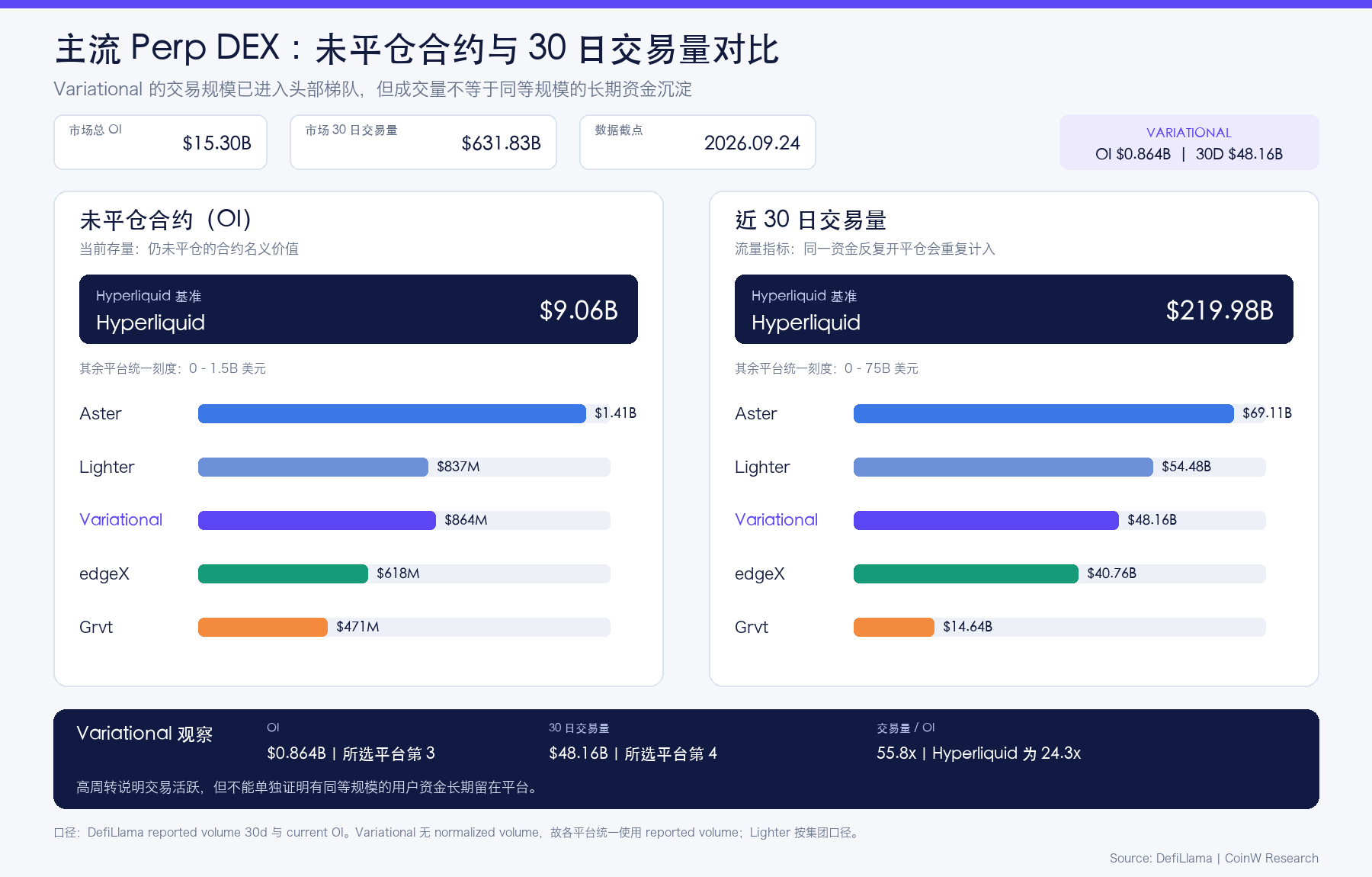
Figure 2. Source: CoinW Research Institute
4. How can Variational break through in the Perp DEX battleground?
Variational is not facing an empty market. Over the past two years, Perp DEX has evolved from the trials of a few protocols to a sector with daily trading volumes in the hundreds of billions of dollars. Hyperliquid occupies a leading position due to its own chain, order book depth, and HYPE value capture; platforms like Aster, Lighter, and edgeX are competing for users through low-cost trading, point incentives, and product differentiation. New platforms wishing to break through can no longer rely solely on "on-chain perpetual contracts." As of September 24, DefiLlama statistics show that the total trading volume of Perp DEX over the past 30 days was approximately $615.6 billion, with open contracts around $15.3 billion. Among them, Hyperliquid had a trading volume of about $212.6 billion in the past 30 days, Aster about $69.1 billion, Lighter about $51.9 billion, and Variational about $48.2 billion. Variational’s open contracts are approximately $861 million, already ranking among the top in the sector, but still significantly less than Hyperliquid's approximate $9.06 billion. It should be noted that DefiLlama currently only lists the trading volume reported by Variational’s platform and has not provided standardized adjusted data. Therefore, this ranking is more suitable for assessing trading activity rather than being directly equated to natural trading demand.
The real difference for Variational is not in replicating a faster order book but in bypassing the cold start problem of order books. For mainstream assets like BTC and ETH, large exchanges already have enough depth in their buy and sell orders, making it challenging for new platforms to catch up in a short time. Variational aggregates liquidity from CEXs, DEXs, OTC institutions, and traditional financial channels through OLP and directs quotes to users. This model has more scope to perform in stocks, commodities, Pre-IPO, and long-tail assets. These assets may have on-chain trading demand, but establishing deep order books for each asset individually is not easy. If it can obtain reliable pricing and find external hedging channels, Variational can provide quotes first and then manage risks in other markets. It does not necessarily need to outperform Hyperliquid on BTC perpetual contracts but may build its position in "markets that are hard for others to provide."
However, this route also makes Variational more reliant on external markets. Whether OLP can continuously obtain reasonable quotes, successfully complete hedging, and whether oracles can accurately reflect stock and commodity prices will all impact the trading experience. During traditional market closures, sudden news, or external liquidity shortages, spreads may widen, and some markets may be subject to risk limits. Therefore, what Variational truly needs to prove is not whether it can become "the largest on-chain exchange," but whether the on-chain brokerage model can accommodate a broader array of assets and real trading demands. If RWA, Pre-IPO, and long-tail markets can develop stable demand, Variational may forge a competitive path distinct from Hyperliquid.
Another layer of significance for Variational is in Arbitrum. The margin and on-chain settlement of Omni are established on Arbitrum One, with users primarily trading using USDC on Arbitrum. If Variational ultimately matures into a leading Perp DEX, it will not only contribute its own trading volume but may also reinforce Arbitrum's presence in the on-chain derivatives market. This is particularly important for Arbitrum. GMX once made Arbitrum an important stronghold of on-chain derivatives innovation in the last round, but since then the market center for Perp DEX has gradually dispersed to Hyperliquid's own chain, Ethereum L2, and other ecosystems. Arbitrum itself has also initiated the DRIP (DeFi Renaissance Incentive Program), seeking to reinvigorate DeFi activity. Variational is not equivalent to the official ecological program of Arbitrum, but if it can rely on RFQ, RWA, Pre-IPO, and cross-market liquidity to create a top derivatives platform, it may become one of the most noteworthy cases in this "Arbitrum DeFi Renaissance." Conversely, if high amounts of airdrops and transactions ultimately fail to retain users, the challenges will not only regard Variational but also Arbitrum's ability to recultivate influential native trading applications.
5. After the airdrop, can $VAR support protocol revenue?
The 32% genesis airdrop can quickly bring $VAR to the forefront of the market, but whether the token can maintain long-term support is crucially dependent on whether the money Variational earns can genuinely flow into $VAR. Currently, the project's direction is a buyback and burn, meaning using some protocol revenue to buy $VAR on the market and then permanently destroying it. This revenue chain is not complicated. When users trade on Omni, they pay the buy-sell spread to OLP, which allocates a portion of that into the protocol treasury, and the foundation will then use this protocol revenue to buy back $VAR according to specified rules. The more active the trades and the higher the spread income, theoretically, the more funds available for buybacks. However, "protocol revenue used for buyback" does not equate to "all trading revenue is used for buybacks." OLP also needs to bear costs such as market making, external hedging, user rewards, and risk provisions. According to the current official documentation, the protocol treasury presently receives a portion of the spread income from OLP; this ratio is still in testing and subject to adjustment. Therefore, the ultimate determinant of the scale of the buyback is not the nominal transaction volume but how much the platform ultimately earned, and how much enters the protocol treasury. Currently, there are also confirmatory aspects regarding the buyback rules. The token information disclosed on September 24 states that the protocol revenue will be used for buybacks and destruction of $VAR; however, the official $VAR documentation still states that the foundation "may" use a portion of fee income for buybacks, retaining the right to adjust ratios, frequency, or even terminate the mechanism. Before the final rules are clarified, buybacks are better viewed as the current design direction rather than an unchangeable hard commitment.
Attention is also needed on the supply side. The genesis airdrop accounts for 32% of the total supply and will be fully unlocked at TGE. Although the team and investors will be locked for a year, airdrop users can directly dispose of their tokens, so during the early stages after the launch of $VAR, there may still be certain redemption pressures. Therefore, assessing the value of $VAR cannot solely rely on the airdrop ratio and trading volume. More crucial metrics to track are the actual revenue of the protocol, the ratio entering the treasury, and the scale of buyback and destruction. If real revenue can continuously convert to on-chain verifiable buybacks and destructions, then $VAR genuinely establishes a connection between business growth and token value; conversely, if the protocol revenue is limited and buybacks remain largely described in the rules, the pricing of $VAR may depend more on airdrops and market expectations.
6. In the next phase, Perp DEX competition is not just about trading volume
The competition among Perp DEXs is entering a new phase. In the early market, the contest was about who could most efficiently bring perpetual contracts on-chain, but now trading volumes and liquidity begin to concentrate at the top. Hyperliquid has already formed a certain Matthew effect, with a deeper order book attracting more traders and market makers, and higher trading volumes further reinforcing liquidity, combined with HYPE, HyperEVM, and its own L1, creating a positive cycle from trading to asset issuance and ecological applications. For latecomers wishing to replicate Hyperliquid in mainstream perpetual markets like BTC and ETH, difficulty is increasing. Hence, the new generation of Perp DEXs is beginning to seek differentiated positioning. Lighter emphasizes low cost, high performance, and zero-knowledge infrastructure; Aster expands across multiple chains and broader asset systems; edgeX enhances professional trading experiences. Variational chooses the RFQ route, aggregating liquidity from CEXs, DEXs, OTC, and traditional financial markets to extend trading ranges to stocks, commodities, Pre-IPO, and long-tail assets. Instead of becoming "the second Hyperliquid," Variational attempts to establish itself as an "on-chain broker" connecting different markets. If these differentiated assets can form continuous trading, holdings, and protocol revenues, RFQ may become an independent growth path beyond the order book model.
Valuation can also be observed along this logic. As of September 24, HYPE's FDV is approximately $88.7 billion; concurrently, Variational's trading volume over the past 30 days was about 23% that of Hyperliquid, with open contracts at about 9.5%. Given that Hyperliquid's valuation includes premiums from its own L1, HyperEVM, spot, and ecological networks, VAR's pricing cannot be simply averaged according to trading volume ratios. If we take 5% to 10% of HYPE FDV as a relative valuation scenario, that corresponds to VAR's FDV of approximately $4.4 billion to $8.9 billion. This range is better suited as a scale for observation rather than as a target valuation; the future ability to narrow the gap will depend on demand for differentiated assets, protocol revenue, and whether VAR's buybacks and destructions can be realized. Therefore, what needs to be validated after the launch of VAR is no longer just trading volume, but user retention after incentive withdrawals, whether differentiated markets like stocks and Pre-IPO can create real demand, whether OLP can continuously provide stable quotes, and how much of the protocol revenue ultimately goes into VAR's buyback. Variational's real opportunity lies not in replicating Hyperliquid in markets where it already holds an advantage but in demonstrating whether RFQ can open up market spaces beyond the coverage of order books.
From a broader market cycle perspective, $VAR may also become one of the important concluding projects in this round of Perp DEX "point farming." High-intensity airdrop incentives have made user retention after TGE a more critical observation metric. If incentives can ultimately translate into real trading demand, it indicates that points can still effectively accomplish user cold starts; conversely, if trading volume rapidly declines after TGE, it suggests that the space for growth relying purely on points and airdrops may be narrowing. Variational's performance is also a significant validation of the Arbitrum derivatives ecosystem. If it can continue to consolidate real trading demand post-airdrop and grow into an industry-influencing leading platform, it might become a key case of re-establishing derivatives ecosystem influence in Arbitrum's "DeFi Renaissance." Therefore, the Q4 airdrop is merely Variational's starting point from "point anticipation" to open market pricing. What truly deserves attention next are trading retention after TGE, differentiated asset trading demand, OLP's operational condition, and the actual scale of buybacks and destructions. For point farmers, this might be the "last dance" of this round of points cycle; for Variational, it's the first tough battle to shake off the airdrop narrative; for Arbitrum, it represents an important validation of whether the DeFi Renaissance can re-establish real users and trading demands.
References
Variational official $VAR documentation: https://docs.variational.io
Variational Omni point rules: https://docs.variational.io/omni/rewards/points
VAR token distribution and genesis airdrop information: https://lookonchain.com/feeds/73916
Overview of Variational Protocol: https://docs.variational.io/variational-protocol/overview
Variational Omni product and operation mechanism: https://docs.variational.io/omni/about-omni
Variational RFQ inquiry mechanism: https://docs.variational.io/variational-protocol/key-concepts/trading-via-rfq
Omni Liquidity Provider (OLP) mechanism: https://docs.variational.io/omni/the-omni-liquidity-provider-olp
Variational fees and revenue mechanism: https://docs.variational.io/omni/trading/fees
DefiLlama Perp DEX market data: https://defillama.com/perps
DefiLlama Arbitrum Perp DEX data: https://defillama.com/perps/chain/arbitrum
免责声明:本文章仅代表作者个人观点,不代表本平台的立场和观点。本文章仅供信息分享,不构成对任何人的任何投资建议。用户与作者之间的任何争议,与本平台无关。如网页中刊载的文章或图片涉及侵权,请提供相关的权利证明和身份证明发送邮件到support@aicoin.com,本平台相关工作人员将会进行核查。