Around September 25, multiple media outlets noticed an unusual massive transfer of NFTs related to Magic Eden. The initial narrative was straightforward—suspected security vulnerabilities had emerged on the platform, and it might have even been attacked. Public information showed that a participant known as Quit transferred a total of 3,832 NFTs from "hundreds" of wallets, all concentrated to the same receiving address 0x71cF3f5724bD2B72Ef6464992aCd26216DE7fe33. Such a volume and concentration led many observers to initially regard it as an ongoing attack event. The plot twist occurred when Yuga Labs intervened: Yuga Labs CEO Michael Figge soon posted on social platforms that their team had detected a vulnerability risk hours earlier and that the actions taken by the internal member Quit through the aforementioned address were a white hat rescue rather than malicious theft, assuring that the affected NFTs "are currently safe." Quit also publicly claimed that address and emphasized, "This is a white hat operation," transforming the narrative of these 3,832 urgently migrated NFTs from "suspected stolen assets" to "assets being safeguarded." However, without public disclosure of the cause of the vulnerabilities, the specific relationship with Magic Eden's technology, and how these NFTs would be handled in the future, this white hat takeover involving 3,832 NFTs, hundreds of wallets, and one address nonetheless placed Magic Eden and Yuga Labs at the center of industry attention.
The Moment 3,832 NFTs Were Transferred
Around September 25, a rather unusual scene emerged on-chain: NFTs from hundreds of different wallet addresses were being batch transferred, pulled as if by an invisible force, steadily flowing into a newly appeared wallet. According to statistics from a single source, a total of 3,832 NFTs were concentrated into this address within a short time. At the moment when the official explanation was yet to be made, this model of "massive, multi-address, one-way aggregation" closely resembled the on-chain trajectory of attackers emptying the victim's assets. From the perspective of external observers, all they saw was a significant amount of NFTs being "liquidated" from their dispersed holding state, lacking prior notice and coinciding roughly with the point in time mentioned by Yuga Labs CEO about "the vulnerability being detected a few hours ago," which naturally led to the interpretation of an ongoing attack rather than a rehearsed rescue operation.
The real turning point in the situation began with the receiving address for these NFTs—0x71cF3f5724bD2B72Ef6464992aCd26216DE7fe33—gradually being labeled with an identity. Yuga Labs CEO Michael Figge subsequently posted on social platforms, defining this transfer as a white hat rescue led by team member Quit, explicitly pointing to this internal member; almost simultaneously, Quit himself emphasized on social media, "This is a white hat operation," and proactively linked himself to the 0x71cF3f… address. The previously isolated and unnamed receiving address suddenly gained an identity in social narratives, and this dual binding of "on-chain trajectory + social statement" shifted the original perception of malicious plunder to one of an urgent custodial takeover within a security window.
Magic Eden Caught in the Storm
Around September 25, the massive transfer of 3,832 NFTs was quickly pointed to the same scene by multiple media: Magic Eden. As one of the current leading NFT trading markets, Magic Eden was identified in reports as the "suspected vulnerability-related platform." Some claims stated that the affected assets were related to series under Yuga Labs, but specific series and the extent of the scope had not been publicly confirmed. In other words, public discourse had already combined the "Magic Eden + Yuga assets" discussion, but the real scope of the disaster remained unclear.
The imbalance in information disclosure further amplified this ambiguity. On one side, Yuga Labs CEO Michael Figge was the first to speak out, detailing how the team discovered the risk hours earlier, led by Quit in executing the white hat takeover, and repeatedly emphasizing the assets were "safe." On the other side, affected Magic Eden still lacked corresponding technical explanations or detailed responses. Existing public materials did not attribute the technical cause of the vulnerability nor clarify whether it stemmed from a platform-level issue at Magic Eden or if it was due to some more complex authorization and interaction risks. This unanswered core question is what kept the market tense.
White Hat Transaction: From Illusion of Attack to Self-Rescue
From the on-chain trajectory itself, this transfer bore no labels of "white hat" or "hacker": a participant quickly swept away a total of 3,832 NFTs from hundreds of wallets, all concentrated into the same address 0x71cF3f5724bD2B72Ef6464992aCd26216DE7fe33. To external observers, this "multiple sources - single point" aggregation transfer pattern bore almost no visible difference from a typical attack scenario: substantial assets were forcibly moved out of their original wallets, with holders completely losing control, leaving only the on-chain path as evidence. Yet after Yuga Labs CEO publicly explained that "the vulnerability was discovered a few hours ago," and identified the actions as a white hat rescue led by team member Quit, the narrative quickly reversed to "proactive custody to prevent a real attack." The technical indicators remained unchanged, but the intent was redefined in discourse.
What truly changed market sentiment was Quit's personal endorsement: he explicitly stated on social media, "This is a white hat operation," and proactively linked himself to 0x71cF3f5724bD2B72Ef6464992aCd26216DE7fe33, coupled with Michael Figge's statement that "assets are currently safe and more information will be released," transforming what was originally seen as "stolen" NFTs into a temporary acceptance of a kind of abnormal risk-hedging custody. This white hat model of "first transferring all assets away, then explaining" is not uncommon in the crypto industry; on one hand, it may genuinely afford users an additional line of defense before the disclosure of vulnerability details and before attackers act; on the other hand, it completely excludes users from decision-making, compressing trust into a one-way bet on a few individuals and institutions, with the enhancement of security intertwined with the loss of agency, becoming the most controversial part of such white hat self-rescue schemes.
Authorization Minefield in the NFT Market
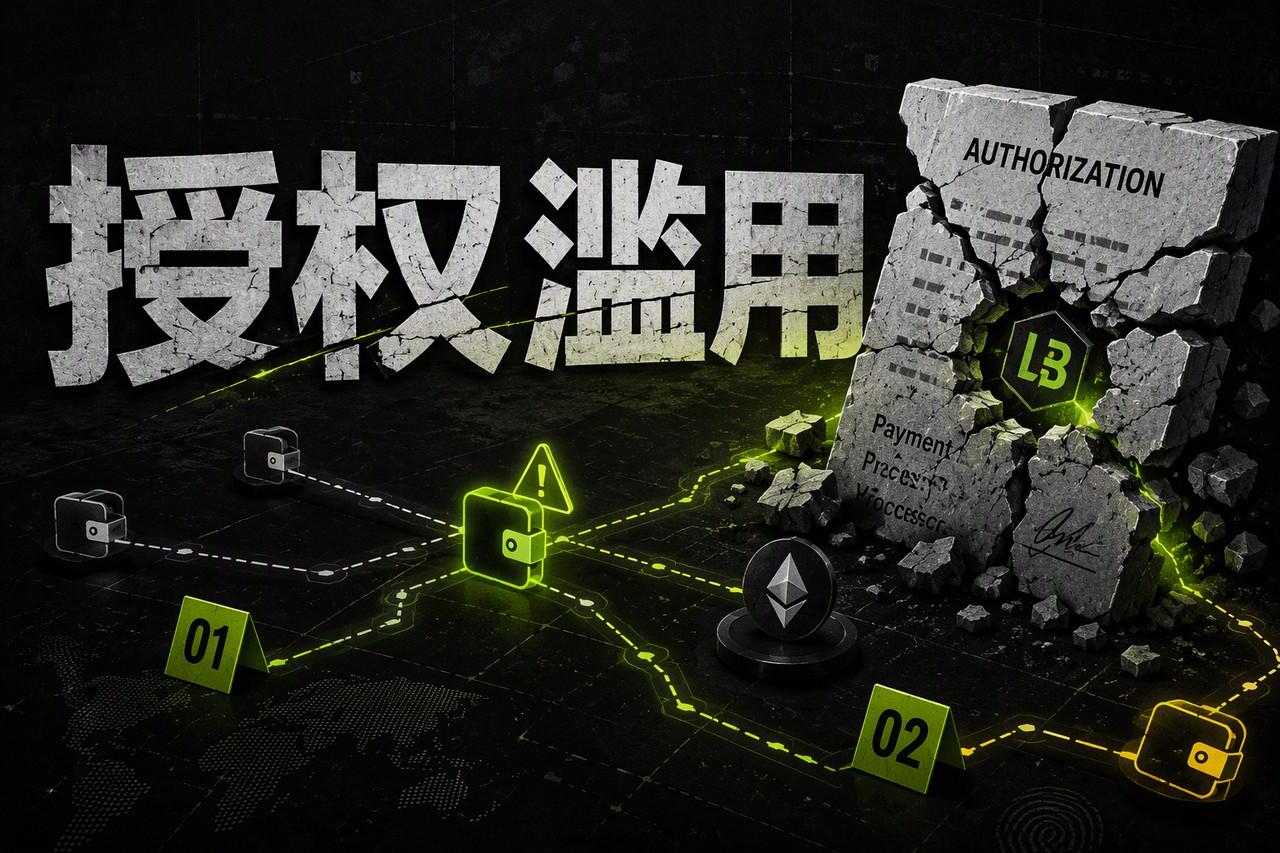
In retrospect, when 3,832 NFTs from hundreds of wallets were rapidly swept into the address 0x71cF3f5724bD2B72Ef6464992aCd26216DE7fe33, whether this was due to contract logic being exploited or specific accounts having batch manipulation permissions, pointed to the same unsettling reality for ordinary participants: beneath what you think belongs to your "own wallet," there already exists an invisible chain of authorization. However, in this incident, the technical details of the vulnerability, the specific contracts or protocols that were affected, have not been publicly disclosed, and media merely mentioned "hundreds of" victim wallets in vague terms. Users could only see assets being taken over by white hats, with Yuga Labs claiming "currently safe," yet were unable to see the path through which the NFTs were transferred away or whether and how they would return to their original addresses, making it impossible to ascertain whether the problem lay in contract design, the trading platform, or each individual’s authorization and operational habits.
This asymmetry of information magnified the authorization risk into a trust gamble. On one end are leading NFT platforms like Magic Eden and project parties like Yuga Labs, and the expectations of the industry before and after risk exposure are dual-fold: hoping they can quickly pull the plug like they did this time through a white hat route to "save the assets" when a vulnerability is discovered, while also not wanting them to easily override user intent in dealing with assets in times of technical detail opacity and unclear boundaries of responsibility. When security crises arise, the instinct of the platform and project parties is to "control the situation before explaining," while the users' intuition is "first understand who has the authority to touch my stuff," and the gap between the two represents the real authorization minefield in the NFT market: who is granted the power to concentrate thousands of NFTs with a single click, and who will be held accountable for such designs afterwards.
Vulnerabilities Not Yet Revealed: What to Watch Next
Returning to what has been confirmed: around September 25, a total of 3,832 NFTs from hundreds of wallets were concentrated into the address 0x71cF3f5724bD2B72Ef6464992aCd26216DE7fe33. Yuga Labs CEO Michael Figge classified it as a white hat rescue led by team member Quit and emphasized that the assets are currently secure; Quit also publicly claimed this action on social media. However, the critical questions still remain in a "pending disclosure" state—the technical cause of the vulnerability, whether the scope of impact is limited to this batch of addresses, how the final ownership and return paths of these NFTs are designed, and the specific relationship to Magic Eden's platform-level technology has not been systematically disclosed. The next areas to watch closely include three clues: first, whether Yuga Labs will provide sufficiently detailed technical reviews and clarify responsibility boundaries in the forthcoming explanations; second, ongoing observations on the 0x71cF3f… address to see if assets flow back to the original wallets in a timely manner, accompanied by clear and transparent disposal plans; and third, whether Magic Eden will adjust permission structures, risk control processes, and other safety strategies after this incident, and provide verifiable improvement commitments in the public domain. Multiple Chinese media outlets have simultaneously amplified this event, indicating that the market has realized: in NFT trading scenarios, the security narrative is no longer merely about "whether there are vulnerabilities," but also about "when vulnerabilities arise, who has the authority to what extent to make decisions on behalf of the user," which will be a key test in determining whether the NFT trading market can establish a credible security narrative.
Join our community to discuss and become stronger together!
AiCoin exclusive Hyperliquid benefits: https://app.hyperliquid.xyz/join/AICOIN88
AiCoin exclusive Aster benefits: https://www.asterdex.com/zh-CN/referral/9C50e2
On-chain Telegram community: https://t.me/AiCoinWhaleData
On-chain community: https://www.aicoin.com/link/chat?cid=N6OVMor5g
AiCoin on-chain Twitter: https://x.com/aicoinwhaledata
免责声明:本文章仅代表作者个人观点,不代表本平台的立场和观点。本文章仅供信息分享,不构成对任何人的任何投资建议。用户与作者之间的任何争议,与本平台无关。如网页中刊载的文章或图片涉及侵权,请提供相关的权利证明和身份证明发送邮件到support@aicoin.com,本平台相关工作人员将会进行核查。