What is really being priced recently is not another new narrative.
In the global market in mid to late September, the heat is unevenly piled on the same macro calendar.
The Federal Reserve meets on September 15–16, with a decision falling on the 16th. The yield on the 10-year U.S. Treasury bond approaches and briefly surpasses 5% that week, gold stands above $4300, the S&P 500 hovers around 7600 points, and Bitcoin recovers to over $81,000 on subsequent trading days. The total market capitalization of cryptocurrencies returns to around $2.78 trillion. On the surface, "risk assets have turned green again," while beneath it, interest rates, inflation, and tech capital expenditure are still chasing the same pool of money.
Regulation is louder than the market itself. On September 15, the Senate voted 49-50 against a procedural motion for the CLARITY Act, far from the 60-vote threshold. The Democrats publicly get stuck on the ethical clauses concerning the President's family's crypto business, and four Republicans did not take a stance. Crypto stocks plummeted that day. The bill intended to draft a complete structural map of the crypto market; its failure does not mean crypto has been condemned, but it does mean that "Congress's pathway to a general charter" is temporarily blocked.
Two days later, on September 17, the SEC released an "Innovation Exemption": granting a conditional five-year license for tokenized securities places, allowing trading of tokenized NMS stocks in a licensed AMM; issuers can oppose listings; if the underlying is suspended, trading for tokenized securities must also cease. Chairman Paul Atkins laid out the timeline clearly: Congress failed to advance Clarity, and within statutory authority, the committee is bringing some stocks onto the blockchain. Robinhood, Coinbase, and Circle immediately rebounded. What the market read was not "meme stocks are back," but rather that the on-chain access to traditional stocks has been slightly opened by an administrative body.
On September 23, a third policy line was surfaced. Bloomberg cited informed sources: the Trump administration is considering promoting the use of dollar-denominated stablecoins abroad to solidify the dollar’s position as a global reserve asset and increase demand for U.S. Treasuries. The discussed approach includes establishing a joint venture with private entities, involving the Treasury Department, State Department, and the U.S. International Development Finance Corporation (DFC). This is not yet a realized executive order, and no specific companies or timelines have been announced, but it elevates stablecoins from being "trading chips in exchanges" to being a policy tool for "foreign circulation of dollars." Treasury Secretary Bessent previously stated that the expansion of stablecoins helps strengthen the international role of the dollar; the GENIUS Act (signed in 2025) requires issuers to maintain a 1:1 reserve of cash in dollars and short-term U.S. Treasuries, and after the postponement of the final rules, the effective date points to January 18, 2027. At the same time, officials from the Bank of England also reminded that global stablecoins amount to about $300 billion, with nearly 98% pegged to the dollar, and reserves have already become actual buyers of U.S. Treasuries; a redemption wave could also impact the bond market in reverse.
Looking at these four events in the same week, the key takeaway for global investors is:
Interest rates determine the cost of money, regulation determines where the channels are opened, dollar stablecoins determine what unit is used to quote overseas accounts, and trading hours determine who gets to place orders first.
If crypto players only focus on the gain charts, they may feel "it's just concepts at play" but if they follow institutional movements, they will find that money is being priced along a very specific track - first in their pockets is dollar stablecoins, followed by the S&P index that can be purchased using these dollars within 24 hours.
The outflow of stablecoins and QQQB are two segments of the same funding chain.
For Washington, the narrative of stablecoins going abroad is about reserve currencies and bond buyers. For those already in exchanges, the story is much shorter: the USDT and USDC in the account are already the means to buy tokenized stocks.
There is no need to first open a dollar bank account, no need to wait for brokers to exchange currency, and no need to wait for the New York opening to transfer fiat money into a U.S. stock account. Stablecoins are the circulating layer of offshore dollars; bStocks are the receipts tied to the prices of QQQ, Nvidia, and Tesla. Should policies push dollar stablecoins into emerging market payments and trade, the outcome won't be "another coin," but rather more people's first dollar balance will first appear on-chain and in exchanges, rather than on traditional cross-border remittance forms. This part of the balance is most easily directed to the already opened spot order books - Bitcoin, tokenized U.S. Treasuries, and QQQB, all competing for the same segment of the dollar track.
Structural limitations must be clearly defined. The GENIUS Act does not permit issuers to pay interest to holders; stablecoins are not high-yield investments. Policy deliberations do not equate to USDT or USDC being endorsed by the U.S. government. bStocks accepting stablecoin settlement does not change that they are still tokenized securities, not shareholder accounts. Misinterpreting "solidifying the dollar's position" as "stablecoins can only go up" or "QQQB must rise" confuses a reserve currency strategy with a K-line strategy.
What is RWA, and why is it finally the turn for stocks?
RWA stands for Real World Assets, referring to on-chain real-world assets. U.S. Treasuries, property shares, gold, and listed company stocks can all be wrapped as on-chain tokens. A few years ago, the active components were tokenized U.S. Treasuries and money market funds - simple structures, clear coupon rates, and the logic of buying bonds with stablecoin reserves is in the same dollar chain. The stock leg only became a talking point in the summer of 2026 because trading times, quoting currencies, and account opening frictions have been dismantled: U.S. stocks rest at night, but tokens are still moving; if there are already dollar stablecoins in the account, there is no need to exchange again.
Scalability needs to be viewed on two charts. Locked positions: Asortino updated on September 23, with tokenized stocks and ETFs totaling about $3.18 billion, with issuers concentrated in Ondo (about 36.6%), Backed/xStocks (about 27.2%), and Binance (about 23.9%). On-chain BNB Chain accounts for about 34%. Trading volume: Binance Research tracked this, with issuance increasing from about $240 million in January to about $7.9 billion in August, over 33 times; bStocks and Robinhood accounted for about 88% of the tracked trading in early September. Talos noted that Binance's tokenized stocks once exceeded $3.7 billion in monthly trading. Locked positions are still small, but order volumes are already high.
The SEC's onshore exemption and the offshore-moving QQQB are not the same legal species. The former is closer to shareholder rights, allowing issuers to exit, while the latter is mostly economic exposure. The two sets of products will coexist long-term.
The price increase of QQQB in the past 30 days is not the most important number in the title.
QQQB corresponds to Invesco QQQ, tracking the NASDAQ 100. The crypto community regards it as "the index skin for U.S. tech stocks." After discussions on interest rate meetings, SEC exemptions, and "overseas using dollar stablecoins," if capital wants to express "the dollar is still here, tech stocks still want to stay, but the accounts are on-chain," index tokens are more convenient than individual stocks.
In terms of price, it is about 4%-5% over the last 30 days, around +4.4% for the week. On September 23, it touched a peak of about $749, with a current price of about $740. The turnover doesn’t resemble an ordinary altcoin; market cap is about $58 million, with daily trading reaching up to $35 million. Thin locked positions and thick trading indicate someone is providing market-making and hedging, making overnight pricing a tool.
The sibling MSTRB has experienced over 30% amplitude in the last month, which is more likely to stimulate emotions. It is a β of Bitcoin treasury stocks and is not on the same risk table as QQQ. Both codes have the suffix B, but the underlying is completely different.
The pain point is not in "not understanding K-lines," but in "the dollars are already in the account, but the U.S. stock button hasn't lit up yet."
A person who has only played with spot and perpetual is usually stuck on the same series of issues when facing U.S. stocks.
Brokers require identification, address, and tax forms to open an account, with audits taking business days.
Trading hours are stuck in New York, while interest meetings and regulatory statements in Asia's early morning must wait until the next day's opening - the most important pricing over these two weeks happens to fall after hours and overnight.
There are already USDT in the account, yet one still has to ask, "How do I get dollars into Interactive Brokers?"
Watching someone in the group post a QQQ night trading screenshot, while you can only continue adding altcoins.
The essence of impatience is: the judgment is made, the settlement currency is already available, but the order button is in another system. What tokenized stocks need to connect to is, precisely, this segment of stablecoins. It cannot buy tickets to shareholder meetings, but it buys price tracking and 24-hour liquidity. Weekend pricing may not align with Monday's opening, and deviation is a risk, as well as a spot where someone specializes in making.
Why this path appears first on Binance
Distribution determines turnover. According to AiCoin's research, the active bStocks traders have reached about 58,000. Roughly 58.5% of early holders have also engaged in perpetual or direct stocks. In July, about 31% of AUM was used as collateral. On September 21, the platform extended bStocks collateral to qualified users, up to about 5 times — this is advancement, not the first step.
Locked positions on Binance account for about a quarter, and the long-term trading volume is in the first tier. Cumulative trading publicly uses the phrase "more than $30 billion in 90 days." Stickiness comes from three very simple things: dollars stablecoins in, dollars stablecoins out; 1:1 exchange between stocks and bStocks with zero exchange fees; the same finger memory for the interface for spot trades and buying altcoins. If stablecoins become "overseas dollars" in policy narratives, this gateway merely connects already existing settlement habits established on the index.
Restrictions should be stated up front. Products are not visible in the U.S. and certain jurisdictions. bStocks are issued by an ADGM entity, with a 1:1 custody, and legal status is tokenized securities. Oracles, suspensions, and fake tokens: any link could cause the price to deviate from QQQ. Only recognize official trading pairs.
How to proceed: deposit with stablecoins, and first you will buy QQQB.
Do not start with contracts. Do not start with codes that say "others made thirty points in a month." QQQB in the last 30 days is suitable as a tutorial subject precisely because it has an ordinary price increase and sufficient order volume.
1. Registration and Qualification
Exclusive Binance registration link for AiCoin:
https://jump.do/zh-Hans/xlink-proxy?id=3
Or log in to Binance via APP and directly enter the invitation code aicoin668. Here are the rich registration benefits exclusive to the AiCoin invitation code:
Benefit 1: New clients can receive up to 440U.
1. Deposit 100U + trade 100U → get a 100U position voucher.
2. Deposit 1,000U + trade 50,000U → get an additional 300U position voucher.
3. Deposit 3,000U + trade 200,000U → get an additional 40U cash voucher.
These three tiers stack, depositing 100U will give you the first tier.
Benefit 2: Open blind boxes, with a maximum of 25 RE.
1. Register + deposit 50U + trade 100U + log in to the App.
2. After completing, get one blind box for the activity, randomly draw RE tokens, up to 25 pieces.
Essentially, a new user can enjoy double benefits after completing the task.
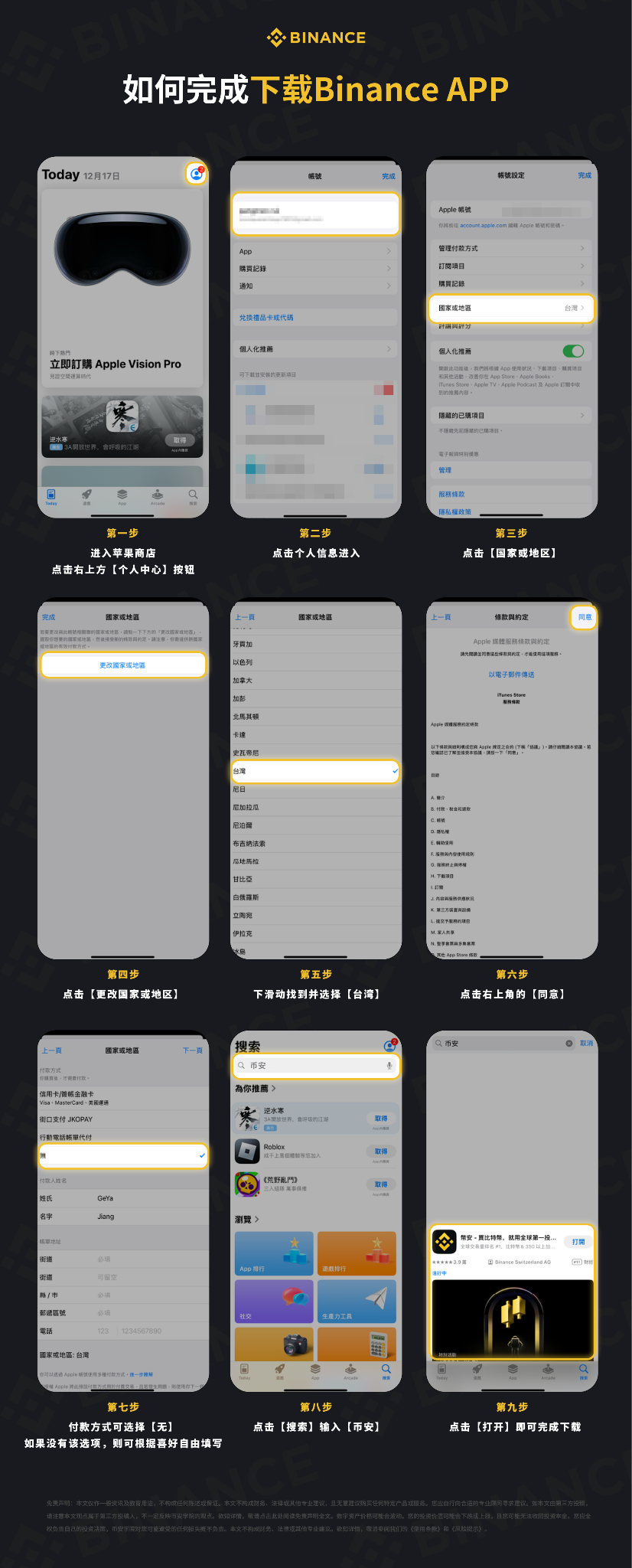
Complete email/phone and identity verification. Go to "Trading → Spot" or "Market → TradFi / bStocks" to check if QQQB appears. If there is no entry, it means your location has not opened; do not seek alternative methods.
2. Deposit with Dollar Stablecoins
USDT and USDC are currently the most direct means of buying bStocks, and also the concrete embodiment of the above-mentioned "overseas dollar track" in trading accounts. Fiat channels or on-chain transfers are acceptable. First, deposit a small amount to confirm you can see the balance in your spot account. Stablecoins can detach, and there are issuance and compliance risks; depositing is not transforming money into risk-free U.S. dollar cash.
3. Place the First QQQB Order
Trading → Spot → Search for QQQB/USDT. Read the risk disclosures. Buy at market price or limit price, with a small quantity so that losses do not impact the rent. The price unit is "one token is approximately equal to one share of QQQ in dollar value." After buying, you can continue to hold it in the spot account or cash it back to the corresponding stock in the open trading hours (based on the page).
4. Compare, not increase positions
Open the on-exchange price of QQQ and QQQB, observe the premiums. During off-hours, the premiums will increase. The ranking in transactions shows that QQQB, SPCXB, and semiconductor-related codes are consistently thicker than obscure newly launched tokens. MSTRB has been even more exhilarating in recent months, and it is not the same transaction as the Nasdaq.
5. Keep the switch off for now
Perpetuals, 5x collateral, grids - wait until you can clearly explain marked prices and liquidations before touching them. The 3x VIP volume activity has already ended; don’t create trading volume just for volume's sake.
The interest rate path is still being revised; Clarity may still retry with a narrower text; the SEC's five-year pilot will expose the price differences between onshore and offshore, and stablecoins going abroad are only currently a policy consideration. The four events indicate not a "win by buying," but an account structure: first, there's a segment of dollar stablecoins, and then decide whether to use it to buy a Nasdaq receipt. After knowing how to buy, the discussion on how much to allocate, for how long, and whether to hedge can begin.
Risks outlined in the guidelines still hold. QQQB can drop with the Nasdaq; stablecoins can deviate from $1; liquidity can thin after subsidy retreated; tokens are not shareholders; leverage can remove participants in the correct direction. Watching others make a profit can cause impatience; converting a small amount of USDT into QQQB and successfully processing trades is truly keeping up. Registration enables access, not profits.
This article is a market observation and product overview, and does not constitute investment advice. Stock and investment functions vary by jurisdiction, with rates, lists, and rules subject to official announcements and in-app displays. U.S. stocks are subject to pullbacks, exchange rate, and platform risks; investing does not eliminate the possibility of losses. Please verify local restrictions and tax requirements before investing.
免责声明:本文章仅代表作者个人观点,不代表本平台的立场和观点。本文章仅供信息分享,不构成对任何人的任何投资建议。用户与作者之间的任何争议,与本平台无关。如网页中刊载的文章或图片涉及侵权,请提供相关的权利证明和身份证明发送邮件到support@aicoin.com,本平台相关工作人员将会进行核查。