Author: AiPlot Research Institute
Focus: RWA / Digital Assets / In-Depth Analysis of Financial Infrastructure
1. Investment Conclusion: The Real New Narrative is the Reconstruction of Financial Tracks
Recently, there has been a noticeable shift in market discussions.
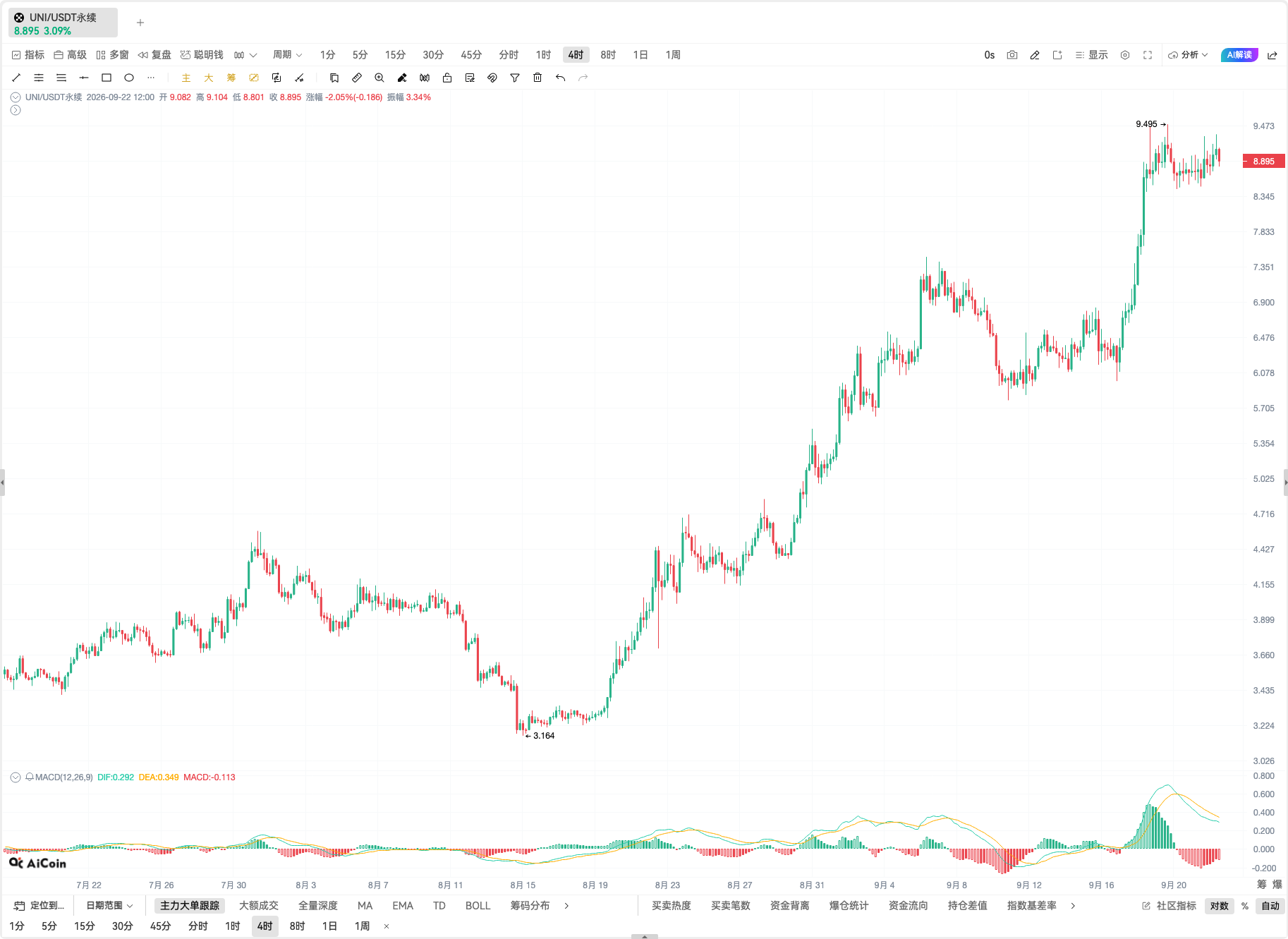
On one hand, the market is still observing whether BTC, UNI, and other veteran tokens are signaling the start of a new cycle, while continuing to search for "worthy old altcoins" to buy. On the other hand, an increasing amount of discussion is shifting towards stablecoins, tokenized deposits, tokenized government bonds, and new RWA assets. Although these seem like different topics, they actually reflect the same question: Will the next wave of crypto asset growth come from the liquidity revaluation of old assets, or from the on-chain migration of traditional financial assets and payment systems?
First, Apple listed stablecoins, tokenized deposits, and blockchain as preferred criteria for roles related to Apple Pay, Apple Card, and Apple Cash; Google Cloud is hiring a Web3 architect targeting institutional clients in Hong Kong, focusing on RWA tokenization, stablecoin payment networks, tokenized deposits, and digital asset custody. This indicates that stablecoins have entered the strategic research scope of major payment platforms and cloud infrastructure companies.
Second, the market is starting to anticipate a form more closely resembling mainstream financial products: users may directly use stablecoins to allocate U.S. Treasury bonds. Compared to stock RWAs, government bond RWAs are closer to a combination of cash management, low-risk investment, and payment settlement. If this product can be realized within a compliance framework, RWA may advance from a tool for professional investors to mainstream financial applications.
Third, regulatory clarity does not necessarily have to wait for a comprehensive bill to emerge. Even without the passage of the “Clarity Act,” regulatory agencies may gradually construct a system boundary for crypto assets and tokenized securities through interpretations, exemptions, enforcement orientations, pilot arrangements, and inter-department coordination. The SEC's statement on tokenized securities in 2026 has clarified that the tokenized form does not automatically change the applicability of securities laws, and tokens issued by third parties may merely represent custodial equity certificates or synthetic exposure, without necessarily equating to the underlying stocks themselves.
Therefore, the core judgment is:
The crypto industry is shifting from "asset narrative competition" to "financial function competition." Stablecoins compete for payment and settlement entry points, RWA competes for asset supply and investment distribution, public chains and cloud vendors compete for underlying financial tracks, but the ultimate value capture still depends on compliance, custody, liquidity, and customer distribution capabilities.
2. How Three Pieces of Information Build an Industrial Chain
1. Apple: Evaluating the Strategic Value of Stablecoins at the Payment Entry
Apple's role is Apple Pay Financial Product Strategy Lead, posted on August 26, 2026, under the Apple Card / Apple Cash team. Responsibilities include evaluating new products, business models, and partnerships, focusing on the mid to long-term strategy for Apple Pay, Apple Card, Apple Cash, and P2P payment businesses.
The most noteworthy aspect is the inclusion of stablecoins, tokenized deposits, and blockchain as preferred capabilities. It’s important to accurately understand the strength of the position signal: this indicates that Apple is seeking individuals who understand these technologies and business models, but it does not imply that Apple has decided to issue stablecoins or that Apple Cash will switch to any public chain soon.
Apple is more likely to first explore three questions:
- Can compliant stablecoins improve the efficiency of fund transfer and settlement in Apple Cash, P2P, or cross-border payments;
- Can tokenized deposits become a new connecting layer between bank accounts, reserves, and payment clearing;
- Which banks, issuing institutions, stablecoin issuers, and payment networks can become partners.
Apple's advantages do not lie in becoming a new blockchain infrastructure provider but in owning payment entry points, device interfaces, user identity systems, and consumption scenarios. If stablecoins eventually enter Apple’s payment products, the most significant change may not be that users suddenly start using crypto wallets, but that on-chain settlements are obscured in the background of Apple Cash or Apple Pay, allowing users to continue using familiar payment interfaces.
This means that if Apple participates, it may act more as a financial product distributor and payment experience controller rather than a direct value capture player of public chain tokens.
2. Google Cloud: Moving from Payment Product Research to Institutional Infrastructure
Google's relevant roles lean more towards infrastructure. Reports indicate that Google Cloud is hiring an Industry Principal Architect for Web3 in Hong Kong, focusing on RWA tokenization, stablecoin payment networks, tokenized deposits, and digital asset custody, targeting banks, exchanges, custodians, and other financial institutions across the Asia-Pacific region.
Google Cloud's official Web3 product positioning aligns with this direction. Its service focus includes blockchain node hosting, low-latency networking, key management, confidential computing, transaction signing, on-chain data analysis, and infrastructure such as BigQuery.
Therefore, Google’s potential role is not simply "to issue a Google stablecoin," but to provide a set of cloud infrastructure that can run digital asset systems for financial institutions. Institutional clients may need:
- To deploy and maintain blockchain nodes;
- To manage private keys, transaction signing, and multiparty computing;
- To connect on-chain assets with banking core systems, custody systems, and risk control systems;
- To handle stablecoin issuance, transfers, redemptions, and reserve management;
- To conduct on-chain data monitoring, auditing, and compliance analysis for RWA assets.
From an industry positioning perspective, Apple is closer to the C-end payment entry, while Google Cloud is closer to the B-end financial infrastructure. The simultaneous appearance of hiring signals from both suggests that major tech companies are viewing stablecoins and tokenized finance as part of payment and financial systems rather than merely trading tools within the crypto industry.
3. Changes in the Role of Stablecoins: From Entry and Exit Tools at Exchanges to Payment Settlement Layers
Stablecoins initially took on the primary role of pricing within exchanges, cross-platform transfers, and substitutes for fiat deposits and withdrawals. However, if major payment platforms, banks, cloud vendors, and financial institutions continue to invest, the functional boundaries of stablecoins may expand into three types of scenarios.
1. Cross-Border Payments and Fund Allocation
Stablecoins can be transferred on-chain around the clock, theoretically reducing multi-layer intermediary banks, weekday restrictions, and some settlement friction in traditional cross-border payments. Their advantages may not necessarily manifest in every retail payment using on-chain assets but might first appear in inter-institutional fund allocation, merchant settlement, cross-border corporate payments, and dollar liquidity management in emerging markets.
2. Programmatic Settlement
Stablecoins can connect with smart contracts, trading systems, and asset issuance platforms. Payments, collateral, redemptions, and profit distributions can be automatically executed according to preset conditions. This serves as a settlement medium for tokenized government bonds, fund shares, and other RWA products.
3. On-Chain Dollar Liquidity
If stablecoins become the base currency for RWA transactions and settlements, the growth of stablecoin supply on public chains will no longer rely solely on trading speculation, but may also stem from asset purchases, profit distributions, collateral financing, and cross-border fund management.
However, it is essential to differentiate between "increased stablecoin usage" and "the public chain token price necessarily rising." Stablecoins can be issued and circulated on multiple chains, and value might be distributed jointly among application layers, issuers, custodians, payment networks, cloud service providers, and public chains. A particular chain accumulating more stablecoin supply does not automatically imply that its native token can capture an equivalent proportion of economic benefits.
4. Why "Buying U.S. Treasury Bonds with Stablecoins" May Be a Key Product for RWA
1. From Stock RWA to Cash Management Products
The appeal of stock RWAs lies in bringing stock price exposure on-chain, but they have higher volatility, complex trading hours, and intricate investor rights. Government bond RWAs, however, possess different product attributes: they are closer to cash management, low-risk yields, and dollar liquidity tools.
If users can purchase short-term U.S. Treasury bonds or fund shares using stablecoins, products can form a simple on-chain financial loop:
Stablecoins as payment mediums → Purchasing tokenized government bonds → Earning interest or profit distributions → Continuing to redeem or conduct on-chain settlements with stablecoins.
The potential value of this structure lies not in turning government bonds into higher-risk crypto assets but in integrating low-volatility, interest-bearing traditional assets into an on-chain fund management system.
2. The True Threshold for the Masses
Currently, there are tokenized products related to U.S. Treasury bonds in the market, but many are aimed at qualified investors, institutional clients, or specific jurisdictions, making it difficult for ordinary users to directly purchase and redeem them. To make "stablecoins buy U.S. Treasury bonds" accessible to the masses, at least the following issues need to be addressed:
- Investor identity verification and geographic restrictions;
- Source of stablecoins and anti-money laundering checks;
- Custody and asset separation of Treasury bonds or fund shares;
- Whether token holders have direct asset rights;
- Interest distribution, tax processing, and redemption timing;
- Stablecoin de-pegging, on-chain congestion, and secondary market liquidity;
- Recourse pathways in case of issuer, custodian, and platform defaults.
Thus, genuine product innovation is not simply about incorporating the words "U.S. Treasury" into the token name, but rather enabling users to convert stablecoin balances into on-chain assets that yield interest, under conditions of compliance, transparency, and redeemability.
3. A Structural Issue Often Overlooked
Questions may arise: If the reserves of stablecoins are already significantly allocated to U.S. Treasury bonds, then when users purchase tokenized government bonds with stablecoins, is it just a "stablecoin collateralizing government bonds, then buying government bonds" cycle?
This question reveals two different levels of asset relationships. The Treasury bonds within the stablecoin reserves are assets held by the issuer to maintain the stablecoin's redemption, whereas the tokenized government bonds purchased by users represent the investment assets that users themselves wish to hold and earn returns from. The former does not typically equate to direct asset ownership for stablecoin holders, while the latter reflects the asset exposure facing investors.
Both are economically related to U.S. Treasury bonds but differ in legal rights, entitlement to income, and risk bearing. Product design must clearly state: whether users hold underlying Treasury bond rights, custody certificates, fund shares, or the issuer's synthetic debt instruments.
5. Regulation is Not a Binary Switch of “Clarity Bill Passed or Failed”
Although the "Clarity Act" has yet to be passed, the SEC and CFTC still have tools to support the crypto industry. The analytical value of this assertion lies in understanding that the regulatory environment does not suddenly change after the passage of a bill; rather, it evolves gradually through interpretations from multiple agencies, enforcement priorities, exemptions, pilot programs, and coordination.
1. The SEC Has Clearly Stated That Tokenized Forms Do Not Change Securities Attributes
The SEC's official statement in January 2026 regarding tokenized securities pointed out that tokenized securities are securities represented in the form of crypto assets, where ownership records are entirely or partially maintained on one or more crypto networks.
This elucidates at least three points:
First, the on-chain form itself does not automatically turn securities into non-securities. Stocks, fund shares, and bonds, even if registered or circulated on blockchains, may still fall under securities laws.
Second, it is necessary to distinguish between issuer-led tokenization and third-party tokenization. Issuer-led models may integrate on-chain records into the main securities holder registration system; third-party models may issue tokens representing rights by managing the underlying assets or issue synthetic products that only provide price exposure.
Third, whether token holders possess rights to underlying assets cannot be determined solely by names. The SEC specifically reminds us that tokens issued by third parties may not represent direct ownership of the underlying stocks and may not confer shareholder rights of the underlying securities; holders may also bear risks related to the bankruptcy of third-party issuers, custody, and performance.
This is equally applicable to stablecoin purchases of U.S. Treasury bonds. Users need to know whether they are purchasing the bonds themselves, fund shares, custody rights certificates, or platform-issued synthetic yield products.
2. “Regulatory Support” Does Not Equal “Regulatory Exemption”
Positive statements from the SEC, CFTC, or other agencies may indicate a willingness to explore clearer and more enforceable frameworks, but this does not mean that all stablecoins, RWA, or on-chain transactions are exempt.
For institutions, crucial regulatory signals often include:
- Which assets qualify as payment stablecoins and which qualify as investment contracts or securities;
- What issuance, trading, and custody activities require licenses;
- How the transfer, redemption, and recording of tokenized assets are recognized;
- How cross-border investors undergo suitability, anti-money laundering, and sanctions screening;
- What responsibilities public chains, wallets, custodians, and intermediaries bear.
Thus, changes in regulation are more likely to lead to “enhanced enforceability” rather than “risk elimination.”
6. From Old Altcoins to RWA: Market Selection Criteria Are Changing
1. Traditional Selection Methods for Old Altcoins
Past altcoin trends often revolved around community size, narrative heat, exchange liquidity, token unlocks, and market sentiment. Price increases themselves could serve as reasons for further increases, but this mechanism can also lead to disconnection between valuation and actual usage.
2. RWA and New Selection Criteria for “Performance Assets”
If the market enters a phase that places greater emphasis on fundamentals, investors may begin to track:
- Whether the protocol generates fees and cash flow;
- Whether tokens have buyback, burn, or distribution mechanisms;
- Whether underlying assets are verifiable;
- Whether asset issuance and redemption have compliant pathways;
- Whether token liquidity comes from actual users rather than short-term incentives;
- Whether the products solve practical problems in payments, settlements, financing, or asset allocation.
In this framework, the appeal of RWA lies not merely in "putting a traditional asset on-chain," but in bringing assets that are verifiable, income-generating, or usable for payments into the on-chain financial system. Assets such as government bonds, money market funds, corporate bonds, fund shares, and receivables may establish valuation anchors more easily than purely conceptual tokens.
3. However, RWA Are Not Innately High-Quality Assets
The "real asset" property of RWA does not replace the issuer's credit, custody arrangements, and legal enforcement. An on-chain token may reference real assets, but if holders lack direct recourse rights, reserves are opaque, and redemption mechanisms are unreliable, the tokens may still carry high intermediary risks.
Therefore, the study of RWA should not only ask "What is the underlying asset?", but also inquire: Who holds the asset, who records the rights, who is responsible for redemption, and who bears responsibility in the event of default?
7. Value Capture: Who Will Benefit from the Growth of Stablecoins and RWA
1. Stablecoin Issuers
Issuers may earn revenue through the yields on reserve assets, issuance and redemption services, institutional settlement services, and network collaborations. Their core barriers are compliance licenses, reserve transparency, liquidity, and distribution channels.
2. Payment Platforms and Distribution Entrances
Apple, payment applications, wallets, exchanges, and financial institutions have user entry points. They may not issue the underlying chain but can obtain value through payment services, conversions, custody, distribution, and customer relations.
3. Cloud Services and Digital Asset Infrastructure
Cloud vendors like Google Cloud can obtain revenue through nodes, key management, data analysis, compliance systems, and enterprise-grade blockchain services. Their business models resemble "selling shovels," avoiding the need to bear the risks of single token price volatility.
4. Public Chains and L2
Networks like Ethereum, Base, Solana, Robinhood Chain may benefit from increased stablecoin balances, higher transaction volumes, and growth in application deployments. However, whether public chain tokens can convert network activity into holder profits depends on fee mechanisms, prioritization rights, value recapture, and ecosystem competition.
5. Custodians, Banks, and Brokers
RWA products must connect to traditional asset custody, fiat settlements, investor identities, and redemption processes. Compliance banks, brokerage firms, and custody institutions may play key roles and obtain income from custody, trading, clearing, and asset management.
From an investment research perspective, it is crucial not just to identify "which chain will rise," but rather to illuminate the entire value chain: Asset Issuer—Custodian—Payment Entrance—Infrastructure—Public Chain—Secondary Market—End User. The revenue models and risks at different layers may vary significantly.
8. Major Risks and Catalysts to Track
1. Major Risks
Hiring Is Overinterpreted. Job postings indicate that companies are researching or building capabilities but do not imply that products have been finalized, much less that revenues have been realized. Apple, in particular, may first conduct strategic research before deciding on partners or product launch.
Regulatory and Cross-Border Complexity. Stablecoin payments, tokenized government bonds, and retail RWA involve multiple jurisdictions. Licensing, sales restrictions, and investor suitability requirements can vary across Singapore, Hong Kong, the U.S., and other regions.
Custody and Third-Party Credit Risk. Tokens issued by third parties may depend on custodians, issuers, and redemption agents. Underlying assets do not equate to direct rights for token holders.
Liquidity Mismatches. While on-chain tokens may trade 24/7, actual redemption and settlement of underlying Treasury bonds, fund shares, or custody accounts are still subject to working hours, compliance reviews, and liquidity constraints. So-called 24/7 trading does not necessarily equate to 24/7 immediate settlement.
Uncertain Value Capture. Growth in stablecoin supply may benefit issuers and payment platforms but does not guarantee proportional advantages for public chain native tokens. Cloud service providers may also secure stable revenues, but their asset price appreciation may not be equivalent.
Macro Cycle Risks. RWA and stablecoin transaction volumes remain influenced by interest rates, dollar liquidity, risk appetite, and crypto market cycles. If U.S. Treasury yields decline, the attractiveness of stablecoin purchases of government bonds may also change.
2. Key Catalysts
What is most worth tracking next is not the vague "more big companies focusing on crypto," but rather evidence that products have transitioned from research to deployment:
- Will Apple announce stablecoin collaborations in Apple Cash, Apple Pay, or cross-border payments;
- Will Google Cloud disclose stablecoin, RWA, or tokenized deposit projects for Asia-Pacific financial institutions;
- Will products emerge allowing compliant retail users to purchase and redeem short-term U.S. Treasury bonds with stablecoins;
- Will tokenized government bond products extend beyond professional investors to a broader user base;
- Will the SEC, CFTC, and banking regulators clarify the applicable boundaries for stablecoins, tokenized securities, and custodial rights;
- Will the actual issuance volume, redemption volume, holder count, and trading volume of RWA products continue to grow;
- Will the stablecoin balance growth in Ethereum L2, Solana, and Robinhood Chain translate into fees, application revenues, or other verifiable value recapture.
9. The Research Value of AiPlot: Transitioning from Single News Stories to Cross-Market Data Validation
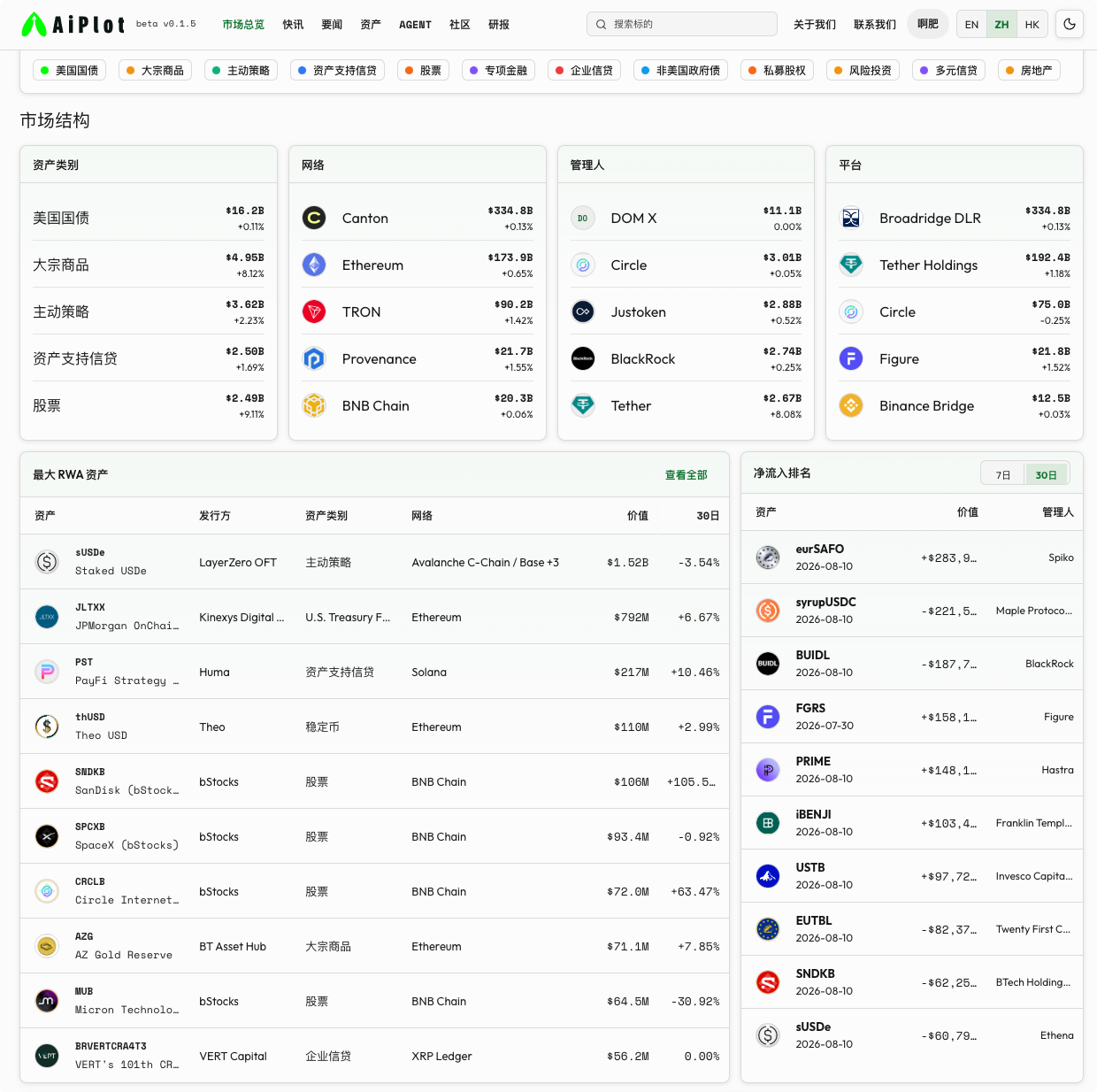
The value of AiPlot lies in its ability to integrate information from traditional markets, on-chain assets, and events into a single asset intelligence system. For the themes of stablecoins and RWA, individual news pieces can only indicate "what the market is discussing," while continuous data tracking can answer "whether this theme has produced real funding flows and asset usage."
10. Conclusion: The Next Phase of Competition is Who Can Turn On-Chain Assets Into Usable Financial Products
For investors, the most crucial change is that asset selection criteria are shifting from merely narrative and community popularity to real usage, cash flow, redemption mechanisms, asset rights, and regulatory pathways. For public chains and infrastructure, the real competition is not about who has more concepts, but rather who can capture stablecoin supply, institutional clients, and sustainable trading activities.
Therefore, stablecoins, RWA, and major company hiring signals currently resemble early signs of a restructuring of financial infrastructure, rather than completed investment conclusions. What needs to be observed next is whether Apple and Google transition from job research to product collaborations, whether regulatory statements evolve into enforceable rules, and whether "buying U.S. Treasury bonds with stablecoins" genuinely becomes a product that ordinary users can use, redeem, and have clear rights to.
For more data and analysis, please follow AiPlot:
https://aiplot.com/
📖 Community Communication:
- Telegram:
https://t.me/+IIYMcJigBAo4Mjg1
The content of this article reflects the author's personal views and does not represent the platform's stance. The perspectives, conclusions, and suggestions in the article are for investor reference only and do not constitute any investment advice related to this platform. The market carries risks, and investment should be approached with caution.
免责声明:本文章仅代表作者个人观点,不代表本平台的立场和观点。本文章仅供信息分享,不构成对任何人的任何投资建议。用户与作者之间的任何争议,与本平台无关。如网页中刊载的文章或图片涉及侵权,请提供相关的权利证明和身份证明发送邮件到support@aicoin.com,本平台相关工作人员将会进行核查。