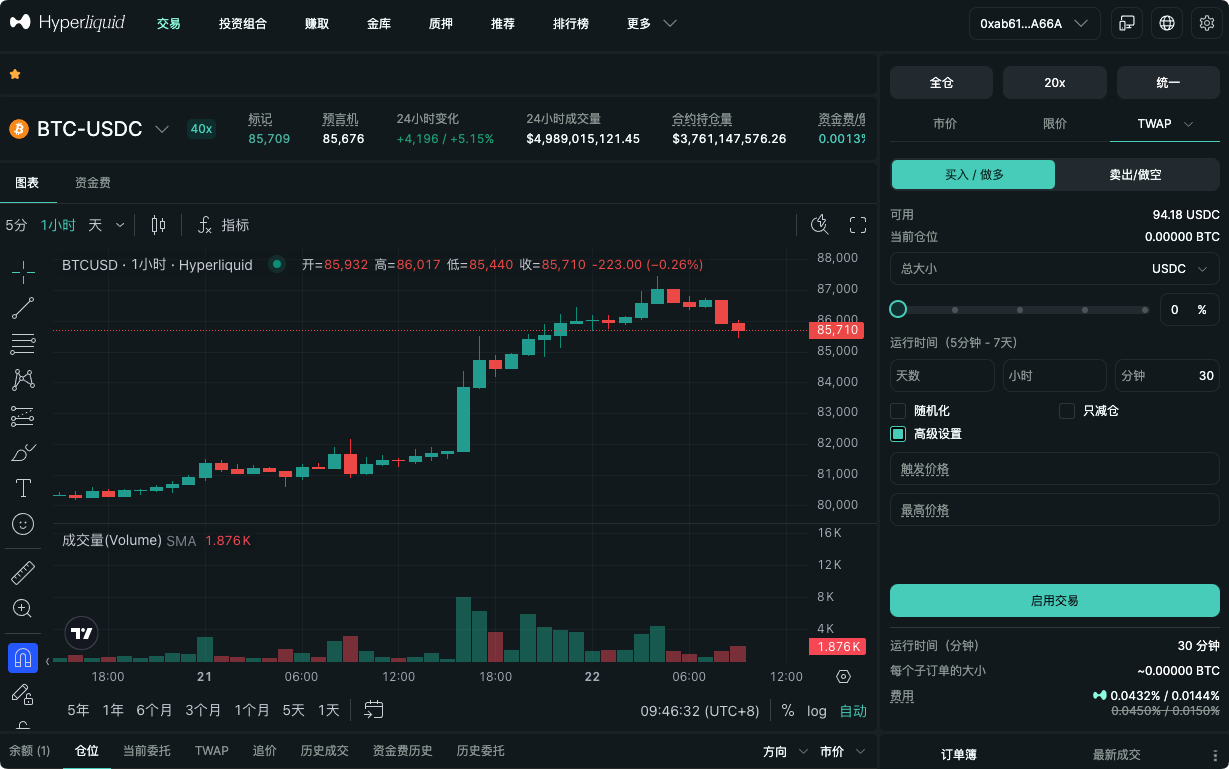
As of September 21, 2026, the S&P 500 was around 7765 points, up about 16.5% year-on-year; the Nasdaq Composite Index was around 27122 points, up about 18% year-on-year; and the Dow Jones Industrial Average was around 52049 points, up about 12% year-on-year. The indexes are still trading near historical highs, but what really matters in the market is not the fluctuations of a specific week, but whether money is still flowing in, whether the main lines of industry are intact, and how ordinary investors should participate.
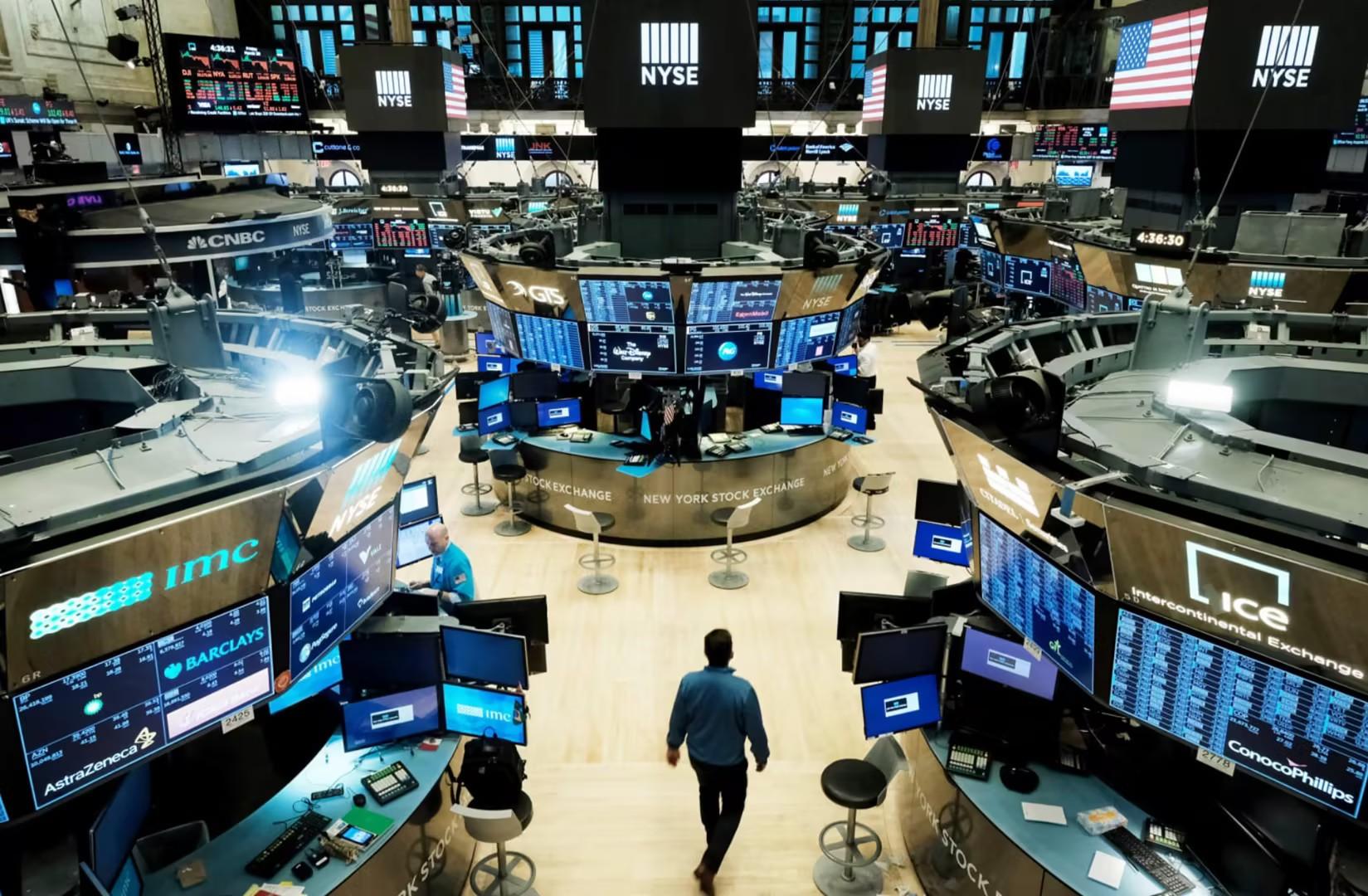
The trading floor of the New York Stock Exchange remains one of the most concentrated pricing venues for global risk appetite. For non-U.S. individual investors, the long-term attractiveness of U.S. stocks persists; what often holds them back is not whether "to buy," but how to buy and whether they can keep buying.
1. U.S. Stocks: Long-term Trend Continues, Global Funds are Still Flowing In
The reason U.S. stocks repeatedly become the core equity holdings for families and institutions is not based on single-year market conditions, but on compound interest. The total return of the S&P 500, including reinvested dividends, has approximately annualized returns of 13%—15% over the past 10 years, and about 9%—11% over the past 20 years; extending to a longer sample, the nominal annualized average is often cited as about 10%, with real returns after inflation around 7%. This does not mean a guaranteed profit of 10% every year. Significant drawdowns, like those in 2008 and 2022, have occurred, but extending the holding period reveals a significantly favorable window for positive returns.
The funding side makes this logic even clearer. As of mid-September 2026, the net inflow into U.S.-listed ETFs has reached approximately $1.47 trillion for the year, nearly matching the record of $1.49 trillion for the whole of 2025; at the current pace, reaching $2 trillion by year-end is not a fantasy. In the most recent week alone, the inflow was $91.9 billion, with U.S. stock ETFs contributing $61.2 billion. Low-cost S&P products like IVV, total market ETFs, and semiconductor-themed ETFs continue to be major contributors.
Looking at longer cycles, since the lows in 2009, this bull market has seen inflation-adjusted gains exceeding 500%. Bull markets will pause, but the main theme of "U.S. corporate profits + deep capital markets + global funds concentrating on dollar assets" has yet to be replaced.
What is more likely to occur in the coming years is not that U.S. stocks suddenly lose their allocation value, but that the pricing environment becomes more challenging. Earnings and capital expenditures continue, valuation expansions will slow down, and style rotations will become faster. For ordinary people, this means "allocating to U.S. stocks" is still valid, but "gambling on buying at the lowest point" will become harder.
2. Current Hotspots: AI Continues to Price, Interest Rates Start to Reprice
The U.S. stock market in September 2026 is not a one-sided carnival, but rather a tug of war between two main lines.
The first line is that the AI infrastructure cycle is not over yet. Nvidia's CEO Jensen Huang has publicly stated that chip sales could double next year compared to this year, with the bottleneck being supply rather than demand. Broadcom, Micron, TSMC, AMD, as well as the storage and optical communication chains, have repeatedly become safe havens in the market. AMD has reached a market capitalization of over one trillion dollars, and heavyweights like Meta have seen significant gains, indicating that the market is still paying a premium for computing power, storage, electricity, and networks. Institutions like Goldman Sachs also believe that a true balance of AI supply and demand may not be achieved until around 2028, and the capital expenditures of large tech companies are far from over.
The second line is that interest rates are becoming tighter again. The Federal Reserve raised the federal funds rate by 25 basis points to 3.75%-4.00% at its September meeting, the first rate hike since July 2023; the dot plot revised the mid-point of rates for the end of 2026, and the 10-year U.S. Treasury yield was once close to 5%. The future cash flows of growth stocks will be compressed under a higher discount rate. This is precisely why there has been internal divergence in tech stocks recently, and why the market is sensitive to "rate hike trades."
For ordinary investors, this combination is very typical:
- Long-term: U.S. stocks remain one of the best equity pools globally, with ETF funds continuously flowing in.
- Short-term: valuations are not low, interest rates are not low, and themes are crowded, making timing more difficult.
The more such an environment exists, the less suitable it is to bet all positions on "I can accurately predict next week." It is more appropriate to turn buying actions from judgment into discipline.
3. Dollar-Cost Averaging: For Ordinary People, It Primarily Represents Forced Savings
The textbook definition of Dollar-Cost Averaging (DCA) is: to buy the same category of assets at fixed intervals and fixed amounts, using time to average out costs. For salaried and freelance workers, a more accurate understanding is —
It transforms "whether to enter the market this month" from an emotional question into an automatic deduction question.
Ordinary people often struggle with timing not because they are not smart, but because three things commonly overlap:
- Cash flow is staggered. Monthly salaries make it difficult to come up with an "ideal position" on a specific day, but it is possible to set aside a fixed amount each month.
- News hijacks decisions. When interest rate hikes, earnings reports, or geopolitical conflicts arise, manually placing orders can easily turn into "let's wait a bit longer." What one often waits for is not a better price, but an empty position.
- Volatility cannot be eliminated. Dollar-cost averaging does not guarantee higher returns; it guarantees that you are buying when the price goes up and also buying when it drops, preventing your average cost from being locked at a single impulsive high point.
Understanding dollar-cost averaging as "forced savings" is more honest than understanding it as a "sure profit technique." Savings accounts combat spending; U.S. dollar-cost averaging combats inflation and being squeezed out by long-term asset price increases. A person who can persist for ten years often earns not from the thrill of hitting the bottom once, but from uninterrupted cash flow.
What is suitable for dollar-cost averaging is usually not "the next month's stock that will double," but things you are willing to hold for more than five years:
- Broad-based: ETFs tracking the S&P 500, Nasdaq 100, or the entire market
- Leading companies you truly understand: Apple, Microsoft, Nvidia, Google, Amazon
- An industry chain you can follow: semiconductors, healthcare, consumer staples
Dollar-cost averaging addresses human issues, not market issues. Whether the market provides high returns depends on earnings and valuation; whether a person can receive those returns depends on whether they consistently convert savings into ownership.
4. The Entry Point is Changing: What Holds Ordinary People Back is Not Commissions, but Account Opening and Wire Transfers
Retail trading of U.S. stocks has already entered an "almost zero commission" phase in earlier years. Companies like Charles Schwab and Firstrade have long offered zero commissions for online trading of U.S. stocks and ETFs, while Interactive Brokers may offer zero commissions or very low fees based on packages or per share trading. For non-U.S. users, the real cost often does not lie in "how much is charged to buy or sell a share," but in how far money needs to travel to get into the account.
The common path remains: opening an overseas brokerage account, submitting a passport and address proof, signing a W-8BEN form, converting currency, international wire transfer, and waiting for 1 to 3 working days for funds to arrive. Wire transfer fees often range from dozens to hundreds of dollars, plus exchange rate differences; some brokerages may charge an additional wire transfer fee of about $10 to $35 when withdrawing funds. If you only dollar-cost average $100 per month and wire funds two to three times a year, the fixed fees quickly become a significant proportion. In 2026, some internet brokerages targeting specific regional users have also tightened account opening and funding processes, making the pathways not smoother but more fragmented.
Therefore, a disconnect arises: global funds are buying U.S. stocks on a large scale through ETFs, while individual investors are stuck in "first becoming qualified cross-border remitters." Whoever can turn "the money already in the account" directly into repeatable U.S. stock buy orders is closer to providing ordinary people with truly usable entry points.
5. Binance Connects Stock Spot Trading and Dollar-Cost Averaging in the Same Account
On June 1, 2026, Binance launched U.S. stock trading, allowing over 7,000 U.S.-listed stocks and ETFs for eligible non-U.S. users, starting at about $5 and supporting fractional shares; orders can be placed using USDC, USDT, BNB, etc., and the system automatically converts to USDC for settlement. Stocks are custodied by U.S. licensed broker Alpaca Securities, and users enjoy economic rights corresponding to price fluctuations and cash dividends, with trading sessions nearly all day from Monday to Friday (including pre-market and after-market).
Three months later, on September 10, the platform introduced stock recurring buy options, initially covering about 100 stocks and ETFs, including Apple, Nvidia, Tesla, Microsoft, Amazon, Meta, as well as SPY, QQQ, VOO. On September 17, over a hundred more were added to the list, including GOOG, IBM, UBER, PDD, NTES, TM, GE, BA, and so on. A plan can include one or multiple stocks, with automatic deductions upon expiration, eliminating the need for manual ordering every time.
This distinction reflects the difference between "being able to buy U.S. stocks again" and what comes next: the product focus shifts from one-time trades to turning account balances into passive allocations executed monthly or weekly. For those whose funds are already in stablecoins and do not want to go through wire transfers again, the path compresses into three steps — choose the target, set amounts and frequency, and ensure there are sufficient funds on the deduction date.
Whether or not the functions are available depends on the country or region. U.S. users are usually restricted by securities regulations from using these services; the execution price may vary considerably from the price when the plan was initiated; insufficient balance may lead to failed deductions. These are not footnotes; they are prerequisites that must be double-checked before use.
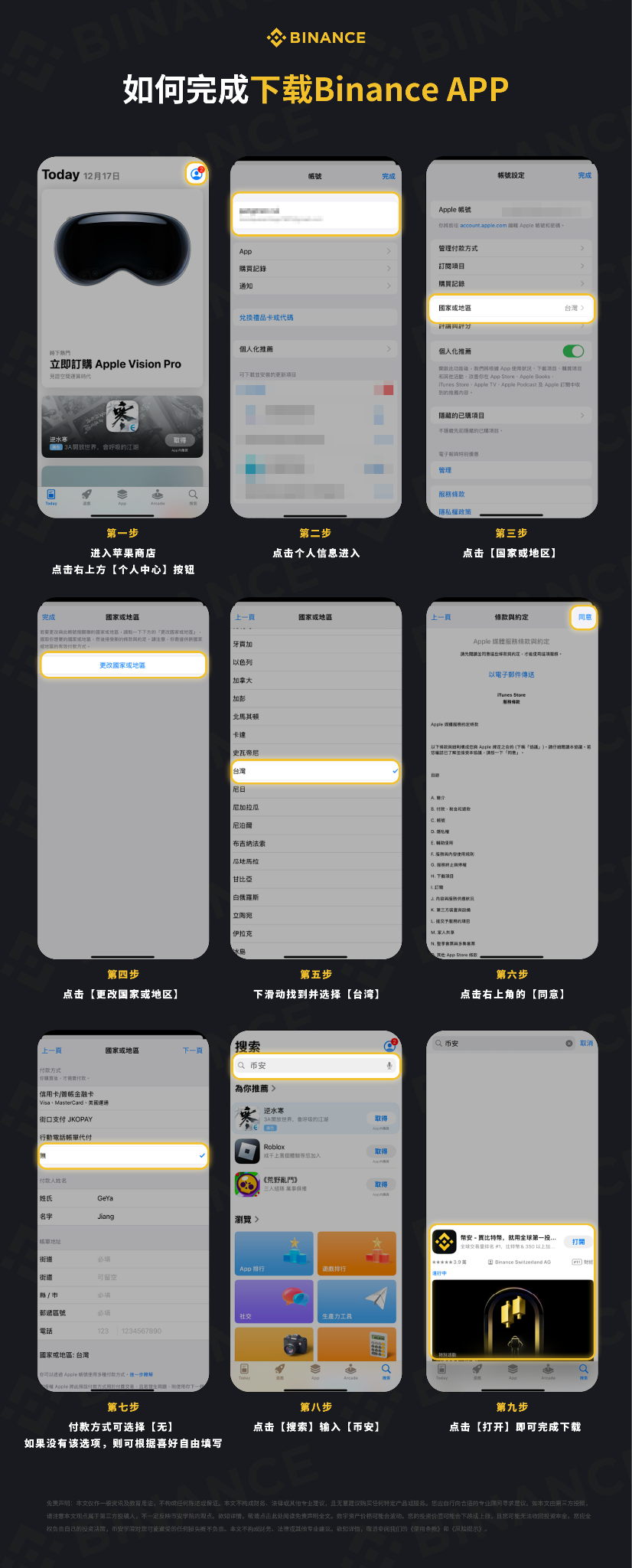
Exclusive Binance registration link for AiCoin:
https://jump.do/zh-Hans/xlink-proxy?id=3
Or log in via the official website/APP and fill in the invite code aicoin668. Below are exclusive generous registration benefits for AiCoin invite codes:
Benefit One: New users can get up to 440U
1. Deposit 100U + trade 100U → receive 100U position voucher
2. Deposit 1,000U + trade 50,000U → receive another 300U position voucher
3. Deposit 3,000U + trade 200,000U → receive another 40U cash voucher
Three tiers can be stacked; just deposit 100U to unlock the first tier.
Benefit Two: Open a mystery box, up to 25 RE tokens
1. Register + deposit 50U + trade 100U + log into the app
2. After completing the above, you will receive one mystery box to randomly draw RE tokens, up to 25.
This means a new user who completes the tasks can enjoy double benefits.
6. Rates, Experience, and Processes: Who It Is More Suitable For, Who It Is Not
Let’s clarify the rates first. Binance stock trading does not charge traditional commissions, but does impose platform fees: for order amounts of $350 and below, the minimum is approximately $0.35; for amounts exceeding $350, it converts to about 0.1%. ADRs may have an annual custody fee of approximately $0.01 to $0.03 per share; account maintenance fees are currently reported as waived. When placing orders using USDT, BNB, etc., these will be converted to USDC at the real-time prices, with market spreads present.
Simply comparing "how much to buy or sell a share," it is not necessarily cheaper for everyone. For larger, lower-frequency trades, or when funds are already in U.S. dollar accounts, traditional zero-commission brokerages often have better rates. Its advantage lies with those making small, repeat purchases, especially if funds are already parked in stablecoin accounts.
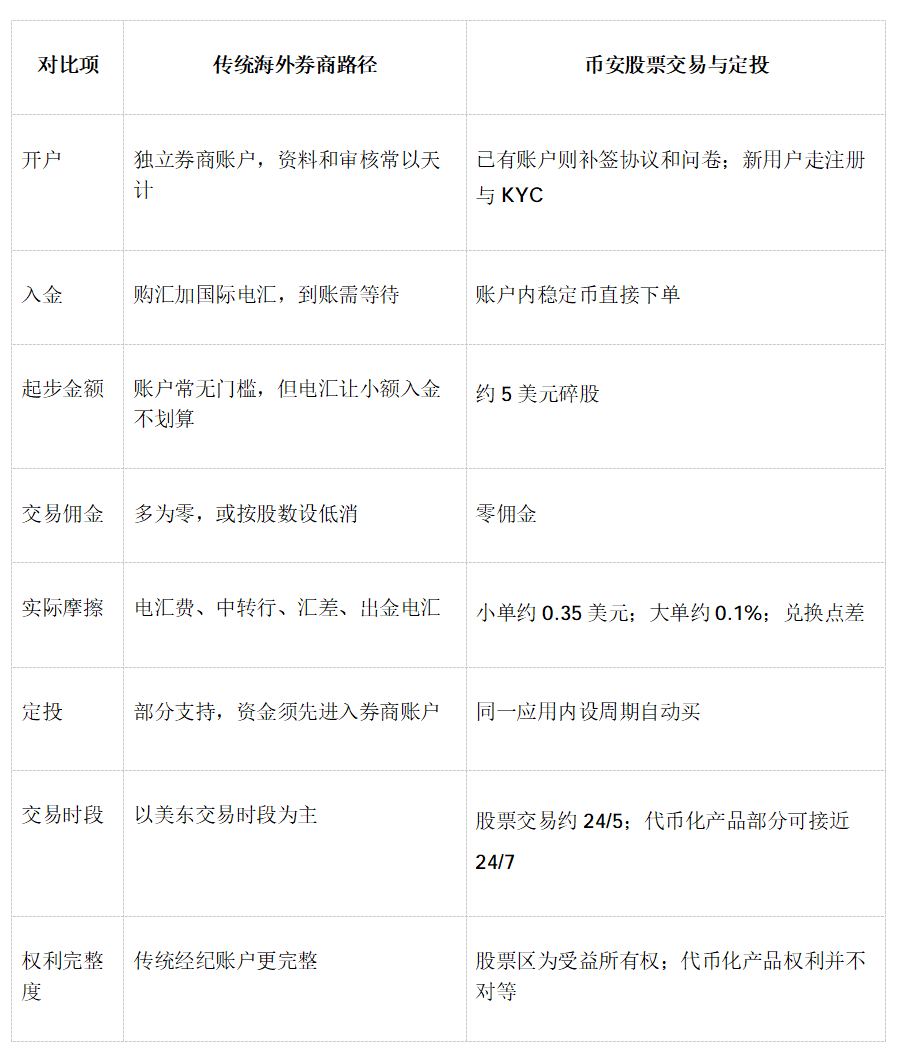
A simple calculation: if you dollar-cost average $100 each month for 12 months a year. If you opt for wire transfers, even if you only transfer twice a year, bank fees and exchange rate differentials can easily eat up dozens of dollars; if at Binance you place 12 small orders with each incurring $0.35, the total platform fee for the year would be about $4.20. The experiential differences are even more direct — traditional methods require two applications, two sets of balances, and a time difference; here, the deduction happens within a single view of funds for both cryptocurrency and U.S. stocks.
The process for existing users is roughly: update the app, enter stock trading, sign the custody and risk agreement, and buy using account balances; for dollar-cost averaging, select targets, cycles, and the deduction account. New users will register, complete identity verification, and prepare stablecoins. For ordinary people, this series of actions feels closer to "buying a token" rather than "first becoming a cross-border remitter."
It is also important to set boundaries clearly. If you want to deal in options, multiple global markets, and very complete tax and shareholder rights, traditional brokerages may still be your main account. This is closer to a low-friction allocation channel, particularly suited for those who already hold stablecoins, wish to start with small dollar-cost averaging, and need to automate forced savings.
U.S. stock-related products on the platform should be divided into three layers, and not mixed. What you buy in the stock trading area are the actual economic rights of stocks under custody, dollar-cost averaging currently falls under this layer; bStocks are tokenized securities, with longer trading hours, dividends more often represented in reinvestment or multiples, and traditional voting rights are not equivalently shared; ETF wealth management tends towards cash management tools like short-term bonds and investment-grade bonds. A simple combination is sufficient: use SPY or VOO for the core holding, QQQ or Microsoft, Nvidia for growth, and add satellite holdings based on your knowledge. The list is still expanding, and dollar-cost averaging and spot trading are not completely synchronized; always check the available options in the app before placing an order.
Discussions on U.S. stocks concern assets: global capital is still pricing U.S. corporate earnings and tech capital expenditures.
Discussions on dollar-cost averaging involve habits: the way ordinary people combat laziness and volatility is often not more accurate predictions, but rather uninterrupted deductions.
The platform only decides one thing: when this discipline is implemented, whether there will be a need to go through the process of opening accounts and wire transfers again.
The entry point is changing, but that doesn’t mean risks have vanished. Prices may pull back, exchange rates may fluctuate, and functions may vary by region. First, confirm whether you can commit this amount long-term, and then decide from which account to make deductions.
This article is a market observation and product overview and does not constitute investment advice. Stock and dollar-cost averaging functions may vary by jurisdiction, and rates, lists, and rules are subject to official announcements and app displays. U.S. stocks face risks of pullbacks, exchange rates, and platform risks, and dollar-cost averaging cannot eliminate the possibility of losses. Please verify local restrictions and tax requirements prior to investing.
免责声明:本文章仅代表作者个人观点,不代表本平台的立场和观点。本文章仅供信息分享,不构成对任何人的任何投资建议。用户与作者之间的任何争议,与本平台无关。如网页中刊载的文章或图片涉及侵权,请提供相关的权利证明和身份证明发送邮件到support@aicoin.com,本平台相关工作人员将会进行核查。