
Text|Wang Xinyi
Editor|Zhang Yuxin
RSI (Recursive Self-Improvement) is all the rage.
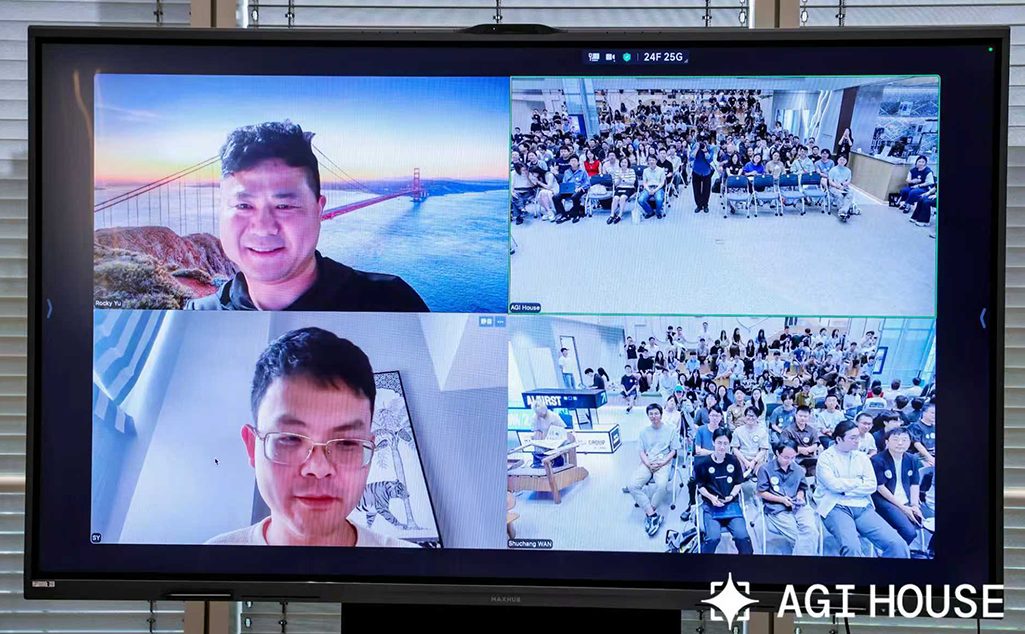
On Saturday, the West Bund of Shanghai gathered a cohort of the smartest human brains and those striving to empower AI with similar cognitive abilities.
Across the ocean, Yao Shunyu, who has not been seen for months and claims that Gemini 3.8 Flash is “a significant step for RSI,” waits on the other end of the phone; the co-founder of Silicon Valley startup Recursive Superintelligence, which has achieved a valuation of $4.65 billion in just six months and is betting on AI self-evolution, Shitianlin, also joins the discussion.
They are here for a common proposition: What is happening in the RSI race with capital flooding in?
RSI, or Recursive Self-Improvement, has become the hottest topic since the middle of this year. It refers to AI's ability to improve itself, proactively writing code, running experiments, adjusting architectures, optimizing weights, and even setting new goals for itself.
The majority present are researchers from various major companies, universities, and laboratories, alongside well-known investment institutions, venture firms, and incubators. We took part in this five-hour event, witnessing visions and debates that surfaced repeatedly.
People are imagining a scenario where humans do not need to be in the loop, meaning humans do not need to intervene in the cycle of model self-improvement, and they are pondering how big companies, laboratories, and startups could explore and realize this endgame.
Differing opinions have emerged—Is self-evolution a pessimistic future? Will it eventually be swallowed by model vendors? Shouldn't RSI be a vertical model that doesn't rely on pre-training?
Regarding how to define, evaluate, and validate RSI, and when it will be realized, we have compiled some viewpoints from Yao Shunyu, Shitianlin, and other Silicon Valley researchers, as well as assistant professors and researchers from Tsinghua University and Shanghai Jiaotong University, for your reference:
1. RSI will happen when AI companies can scale up their capabilities (such as model capability and customer scale) without needing to scale up their team size.
2. RSI is not a single event but a continuous event.
3. Some signs from earlier this year indicate that RSI is achievable. A significant reason is that Coding and Agent Models have matured to a breakthrough point. By employing the Coding Agent approach, AI can train AI, implement its ideas, and improve itself, including its architecture, dataset, and training methods, thereby promoting the realization of RSI.
4. It is difficult to clarify whether the distinction between RSI and model fine-tuning on its generated data is qualitative or quantitative. In a sense, model-generated data is a nascent form of RSI.
5. Data and environment are good business for the realization of RSI.
6. Competing with major companies like OpenAI and Anthropic, the opportunities for entrepreneurs lie not in general intelligence but in specialized knowledge beyond foundational knowledge.
7. There is no need to train the RSI model from scratch; its basic performance is unlikely to exceed that of general large models, and self-iterating to achieve stronger capabilities is also challenging.
8. Evaluating intelligence should focus on how it learns this capability rather than what it has learned.
9. The ultimate form of verification should not rely on human intervention; however, in the short term, human participation must be retained, especially regarding task definitions and quality control, where human experts are still needed to conduct high-quality evaluations.
10. The final version of RSI may be a model that can improve itself; however, in the current preliminary stage, it can rely on external auxiliary models and collect feedback signals.
11. The RSI envisioned in everyone's mind may represent its endgame—where no humans are needed in the entire loop. However, whether we will reach that day and whether it is necessary to truly pursue that outcome remains uncertain.
Below are some key insights from the event co-hosted by AGI House, Sequoia China, and Research AI+ on the theme “When AI Begins Recursive Self-Improvement,” edited for brevity:
Before that, let’s introduce several guests—
Yao Shunyu:Senior scientist and director at Google DeepMind, focusing on Auto-Research exploration, PhD graduate in theoretical physics from Stanford University, previously at Anthropic.
Shitianlin:Co-founder of Recursive Superintelligence, Tsinghua University Yao Class alumnus, former researcher at OpenAI and co-founder of an AI company, Cresta, during his doctoral studies at Stanford University.
Gu Yu:Co-founder of NeoCognition.
Zhou Xuanhe:Assistant professor at Shanghai Jiaotong University, founder of Theseus Labs.
Meng Fanqing:Co-founder of Evolvent AI, first author of RSI Bench Data.
Liu Ziming:Assistant professor at Tsinghua University, founder of YuanHuan AI, focusing on AI for AI.
Mu Yao:Assistant professor at Shanghai Jiaotong University, founder of SeeAct AI, working on embodied intelligence in the context of RSI.
Additionally, other guests include researchers and doctoral students from various domestic and overseas universities and laboratories. Notably, AGI House, the organizer, is active in Silicon Valley as an AI entrepreneurship community and incubator, marking its first event in China.
Now, let’s get to the main topic.

How to Recursively Improve?
Q: How do you define RSI?
Yao Shunyu:RSI may not be one event but rather a continuous series of events. What we can discuss now is where we stand in this continuous event.
For instance, models have been able to start writing their own code for several years now, which has accelerated the research loop, marking a portion of RSI that has occurred; later, models can proactively monitor experimental processes and propose new experiments, which can also be considered RSI.
In terms of effects, what comes to mind about RSI is likely its endgame, where no humans are required in the entire loop. However, whether we will reach that day and whether it is necessary to pursue that stage remains uncertain.
Shitianlin:From the perspective of RSI, the model itself must be aware of its constraints. It needs to know where it lacks and be able to correct itself when discrepancies appear. This is an important capability for RSI and model self-enhancement.
However, having just the model is not enough; it also needs certain harnesses and application scenarios to constrain the model.
Gu Yu:RSI is a vast topic, and the individuals present today are probably working on completely different aspects.
The commonality among us may fall into the following three categories: First, AI finding improvement targets on its own; second, AI continuously bringing itself closer to that target, which could be an iterative process; third, the target corresponds to a long-term task. For example, letting a large model perform on a large model might aim for a better model, where AI must establish budgets, plan models, summarize methods, eventually arriving at an updated model.
Meng Fanqing:We often group Self-improving, Continuous Learning, and RSI together.
From my perspective, RSI involves iteratively improving something within a given environment, reward, or reward function. This “something” can vary from architectures to weights, ultimately aiming for higher reward scores within that environment.
In true RSI, the model must optimize itself and improve its performance rather than optimizing a product or another model. The entire system lacks external factors other than itself, only itself, the environment, and rewards.
Zhou Xuanhe:From a computer science perspective, the term Recursive should descend to its most fundamental level. For an AI system, that essential level is its parameters and architecture design; outward another layer includes various codes and scripts within the Harness; beyond that, it interacts with its environment, including various files and workspaces.
Our definition of RSI involves first applying it to industry scenarios to identify any workflow pain points. After identifying pain points, the next step is to search for solutions.
The final version of RSI may be a model that can improve itself; however, in the current preliminary stage, it can rely on external auxiliary models and collect feedback signals.

Has RSI truly achieved self-evolution?
Q: How do you evaluate whether RSI has genuinely achieved self-improvement? Some of you present have also been working on Benchmark, please share your evaluation methods.
Gu Yu:Evaluation primarily focuses on what to evaluate, and why it matters at this point. There are two key points:
One is ecological value; performing well on a Benchmark does not necessarily mean it can really solve problems directly or correspond to actual production value or economic value. Our aim is to test whether a general large model can truly function as a mature employee in a specific role. Therefore, we seek to build a work environment that closely resembles real work.
The second is, what exactly do we want to evaluate about intelligence? I have cited a viewpoint on many occasions: Intelligence is not defined by how many things you know, but rather by how you learned them..
Zhou Xuanhe:Evaluation is very important, especially for Chinese AI practitioners. Once a direction is set, everyone quickly raises the ceiling on that direction.
The current issue is that the benchmark itself is inadequate, even well-known benchmarks have many erroneous problems. What should a benchmark for RSI look like? In addition to traditional agent capabilities like reasoning, exploration, and planning, we also need to consider what new capabilities RSI requires.We also believe thatthe future will require not only AI to iterate itself, but also truly high-quality benchmarks that integrate human expertise.

Verification is a bottleneck in the continuous evolution of RSI.
Q: How do you define verification, or can you share some of your thoughts?
Yao Shunyu:What is most challenging in achieving RSI is not self-improvement itself, but proving that real improvement has occurred; I think it is verifying that genuine progress has been made.
Many have done similar things in the past, referred to as “cyber critique”—one AI generates questions and another AI answers them. This method easily falls into local optimization: for example, one AI may continuously pose very simple questions that another can always answer, or one may always produce excessively difficult questions that the other can never answer. Thus, the most challenging aspect is that the model must truly understand how much progress it has made. Defining the problem remains the most challenging task in RSI, compared to solving it.
Meng Fanqing:Putting aside whether the design of the verification itself is correct, even if it is correct, a significant issue arises: reproducibility.
As the environment becomes increasingly complex and involves CPU models, whether the operating system is Mac or Windows, and memory sizes, different physical platforms lead to gaps in existing setups.
Furthermore, most benchmarks currently assign an absolute score from 0 to 1 for each question. However, these scores lack strong physical significance, and the absolute scores alone do not clarify much.
A collaborator in our company proposed a different scoring standard. It categorizes levels into different layers such as Agent-SOTA and Human-SOTA, each corresponding to various artifacts. By running these artifacts on each new platform, we can determine which layer the model output belongs to. This avoids the issues caused by the aforementioned physical significance and hardware gaps.
Zhou Xuanhe::I previously reviewed a team's work from Tsinghua University where, during reasoning, they apply disturbance noise to weights, checking how different disturbances affect model reasoning capability. This achieves what we are aiming for: the ability to reason, learn, and adjust weights continuously.
From our internal perspective, we have designed modules that separate reasoning and memory, allowing for some implicit state transitions through the memory embedding module and protecting them via external means.

Startups competing with major companies for ecological niches in RSI
Q: How do you perceive the boundary between RSI startups and model vendors? In what areas do model vendors have absolute advantages, and where can startups offer unique insights?
Meng Fanqing:RSI is a broad concept, and research institutions, startups, and large companies are all essentially focusing on different facets of it. From the top down, it looks like this:
At the upstream, companies like Alphabet, OpenAI, or Kimi talk about RSI essentially as pure RSI, where models iterate on themselves, including overarching architectures, in pursuit of higher intelligence.
One layer down, some traditional SaaS companies perceive RSI requiring environments and verifications. For them, the question is whether they can abstract their existing ecosystems into a set of agent-native services that facilitate model vendors in invoking agents while enhancing agent intelligence within that context. This might be how these downstream traditional companies interpret RSI.
Further down, some startups may not aim purely at iterating the foundational models themselves with RSI or spend a lot of money to train their foundational models; rather, they utilize RSI to iterate specific products, such as harnesses.
For upstream companies and startups, the objectives are relatively clear: either enhance the model itself or improve downstream performance; whereas for the lower-tier SaaS companies, their attitude towards RSI might be whether they can provide better environments.
Zhou Xuanhe:Despite rising demands for data quality, I believe that data and the environment still represent a good business.
On a leaky boat, using hands to plug the holes to solve the issue isn't effective. Even a large company can’t cover every leak. Hence, once models are integrated into every industry, a self-evolving paradigm must be established, with data and environment being its two most core factors.
On the data side, smaller companies with limited budgets need a lightweight data solution that can be converted into user-owned assets.
On the environmental side, executing tasks in noisy environments—even the best agents will see a significant score drop. Understanding how to robustly integrate and co-evolve your solutions with models is extremely important.
Gu Yu:I believe there are two angles to consider: the first is startups serving model vendors, and the second is the complementary nature of what startups do compared to model vendors.
Regarding serving model vendors, as Zhou mentioned earlier, selling data or environments are excellent business avenues.
On the complementary front, as Fanqing mentioned earlier, model vendors provide a form of general intelligence, representing the generic capabilities of models. I believe that most of those venturing into entrepreneurship should not compete with large companies on general intelligence but rather work on specialized knowledge that builds upon that general intelligence.

Some debates
Q: Among the current discussions in the industry about RSI, which viewpoints and definitions do you disapprove of or find incomprehensible?
Gu Yu:I don't quite understand why investors in China have poured so much money into RSI?
Liu Ziming:Self-evolution is a very pessimistic future.
The last instance of self-evolution was from primates evolving into humans, which is a lengthy process. Despite the appearances of significant progress in AI today, I'd argue that self-evolution is an inefficient route, implying we are stuck in a lower dimension.
For instance, consider a large model as an entire galaxy; since we are within this galaxy, we perceive it as the entirety. However, by gradually expanding outward from the path of the large model, one would discover that beyond the galaxy is void. You first need to increase entropy, then ascend to the cosmic dimension, and only then can you conduct entropy reduction to uncover potentially habitable star systems elsewhere.
After a long time together, separation is inevitable. We are currently in a unification phase, where one design template can resolve all issues, but its limitations are gradually becoming apparent; thus, we now need to design different models tailored to various domains.
Meng Fanqing:Some individuals pursuing RSI models, I find the term hard to comprehend.
For instance, if a model accomplishes specific domain tasks, it merely wraps the concept of RSI into a domain-specific model; or emphasizing that the methods used for the model are RSI is not truly RSI, as current model vendor post-training has already achieved a high level of automation—the capabilities of RSI are internalized during training by model vendors.
Assuming we conventionally train a model, it iteratively improves and continuously enhances its reward feedback in its environment; the learning curve would show a slope where scores rise as training time progresses. The value of an RSI model lies in an even steeper slope. This model shouldn’t be tailored for a specific domain but should have general applicability.
Zhou Xuanhe:Regarding the development of pre-trained RSI models, I am highly skeptical.
We believe the path of RSI involves one aspect that large companies are currently pursuing, which includes building computational power, sourcing data, constructing vast graphs, and presenting challenges to train themselves; the other aspect occurs when AI enters various industries and faces environmental data gaps that general models struggle to address—we believe another RSI paradigm is needed.

The next breakthrough
Q: What is the breakthrough in RSI paradigms that you are most eager to see, or what potential paradigm shifts do you believe could disrupt what you are currently working on?
Meng Fanqing:I am particularly looking forward to seeing how RSI can improve the Infra layer. Infra was initially designed for human users; could there emerge methods more tailored towards agents? For example, original SaaS is actively enhancing and upgrading its capabilities; but on a more fundamental level, with various types of training infra, could purely intelligent agents emerge to intervene?
Gu Yu:I am focused on the capability for experimental learning, particularly in real-world environments. What our company is genuinely working on is how to set an agent into a real company and have it figure out the rules and workflows on its own.
The route we are currently betting on is comparing non-parametric and parametric approaches.
The non-parametric approach, which many are engaged in, involves context and memory paths, its advantage is that it doesn't require altering model weights or extensive samples; its downside is that it's not robust enough because the optimization algorithm for updating memory documents is unstable, and it lacks strong compression and expressive capability. In contrast, the parametric approach has high expressiveness and compression but requires many training samples.
Therefore we believe a potential future direction may involve: learning new knowledge through non-parametric means during online processes, and then enabling the base model to generate more data or encode this knowledge into parameters.
Zhou Xuanhe:We believe that RSI will be inherent in the capabilities of the model itself. The aforementioned issue of ecological misalignment essentially stems from inadequate model capability. If future model capabilities improve, they may inherently run the RSI loop closed; specifically, it will require several capabilities:
First, the ability for proactive environmental perception. The model must actively, fluidly, and cost-effectively input various modalities of data from the environment, discerning which align with tasks and performing modal disambiguation. Further, it could even adapt or modify the environment.
Second, the ability for exploration and innovation. It should not be limited to aligning with human preferences but should have the capacity to discover some leadership, taste, and even key information perception autonomously.
Third, the capability for continuous online learning. It should not solely rely on post-training approaches; as the memory overhead of backward propagation is far greater than that of inference, thereby how to achieve a lightweight, small-sample ongoing learning capability is crucial. This ability is closely related to safety; therefore, AI needs to meet control and awareness capacity concerning its capability limits.
Image source|AGI House

免责声明:本文章仅代表作者个人观点,不代表本平台的立场和观点。本文章仅供信息分享,不构成对任何人的任何投资建议。用户与作者之间的任何争议,与本平台无关。如网页中刊载的文章或图片涉及侵权,请提供相关的权利证明和身份证明发送邮件到support@aicoin.com,本平台相关工作人员将会进行核查。


