
On September 12, Anthropic CEO Dario Amodei published a post calling for a slowdown in the advancement of AI capabilities. He is concerned that AI's role in building the next generation of AI driven by RSI (Recursive Self-Improvement) may exceed human understanding and control. While model advancements continue, time must be allocated for safety alignment and third-party assessments.
This call was quickly responded to. OpenAI CEO Sam Altman expressed agreement and pledged to similarly open up to independent evaluators; Musk also directly replied, "Dario is right."
This discussion has brought RSI from a technical vision into more realistic industrial issues. Cutting-edge labs are focusing on how AI participates in the research and development of the next generation of models; for companies that have already started using Agents, the immediate question is whether AI can continue to learn from its own business.
A factory's acceptance criteria, a software's operational procedures, and manual corrections after a task failure can all serve as bases for model improvement. However, these experiences cannot directly enhance the foundational model and Agent capabilities. They need to be organized and evaluated, transformed into training materials, and continuously trained to increase model capability before being tested through a new round of tasks.
Faced with such market demand,Pyromind is building a continuous learning infrastructure for businesses' Agents. The platform connects data processing, model post-training, effectiveness assessment, and version updates into a repeatable process through AutoRL (Automated Reinforcement Learning). Pyromind views this collaborative model improvement mechanism driven by humans and Agents as an early practice of RSI moving towards industry.
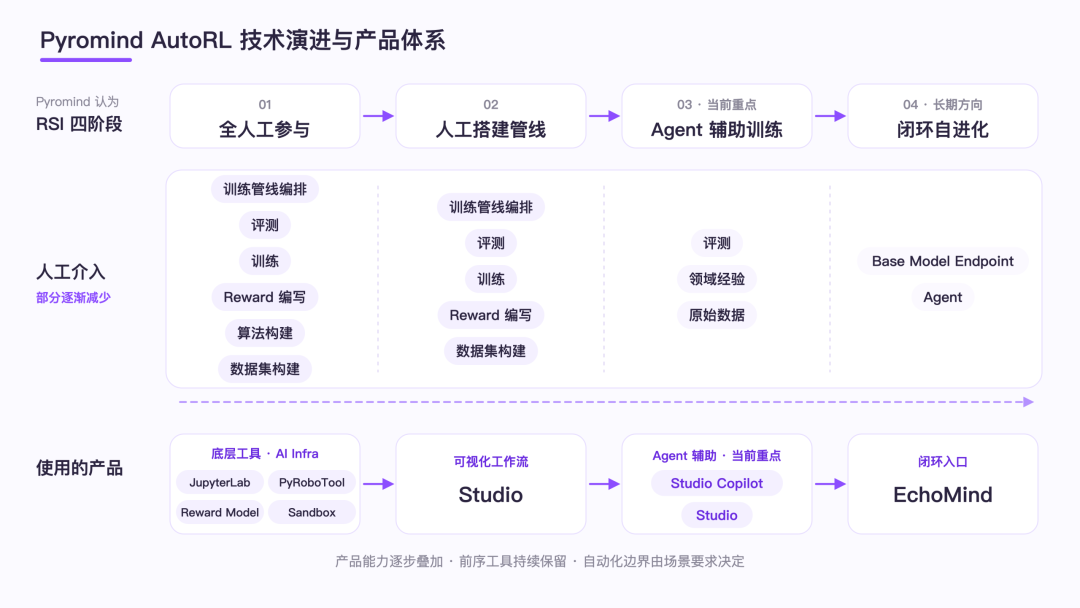
Figure1:Evolution of AutoRL and Product System
Safety and benefits are not two interchangeable questions. Companies need to confirm that updates remain within business boundaries while also determining whether improvements are worth the investment. For Pyromind, the real test is how to ensure this continuous improvement serves not just one project but can also be an affordable capability for many companies willing to use it long-term.

Incorporating General Models into Specialized Scenarios
When discussing customers' willingness to pay, Pyromind founder Kevin told "Intelligent Emergence," "Customers are most willing to pay for Agent products in areas where existing models struggle."
He believes the stronger the foundational model, the higher the starting point for post-training. Pyromind aims to further meet enterprises' specialized needs based on general capabilities.
General models can recognize buttons on screens but may not be familiar with the remote control paths for a television app on different pages; they can understand electronic components but may not know what output format a company requires and which errors can affect subsequent projects. Often, the factors that determine whether a product can be delivered lie in these experiences that must be gathered from the business site.
The AITV solution that Huanwang collaborated on with Pyromind is such a scenario.
When a user tells the TV they want to watch a particular show, the Agent's task is much more than just opening the player. It needs to enter the video app, find the search entry, input the title, locate the result, and handle any ads and pop-ups along the way until the film starts playing. The remote mainly relies on the directional and confirm buttons; with each step, the model needs to first identify which element is currently selected.
A wrong focus once could lead to entering another page upon confirmation next time. During development, the team even encountered an instance where as soon as a screenshot was submitted to the model, an ad popped up, and the button that was originally meant to open the film instead led to the membership recharge page. Understanding within a single screenshot does not guarantee success in a series of continuous operations.
In this collaboration, Huanwang provides the business environment and task data,Pyromind is responsible for training the action execution model, allowing the Agent to learn sequentially to recognize focus, locate targets, and select button paths while coordinating with modules understanding requirements and planning steps.
Actual usage display of casting results
According to the company, in the Android TV testing environment, the accuracy rate of the post-trained 4B (approximately 4 billion parameters) action model for focus recognition reached 99.6%, and the success rate of the entire system for cross-page search and playback exceeded 90%. The former verifies whether each step is in the right position, while the latter checks whether the user's command can be executed to completion.
Huaqi's challenge lies on the input side of the electronic engineering software.
A diagram of component symbols can be understood directly by a person, but to hand it over to electronic design automation software like KiCAD for further editing, it still needs to be converted into a structured description that the software can parse. The lines, coordinates, pins, and electrical properties in the diagram must correspond; otherwise, the engineering personnel will have to reconstruct according to the original drawing.
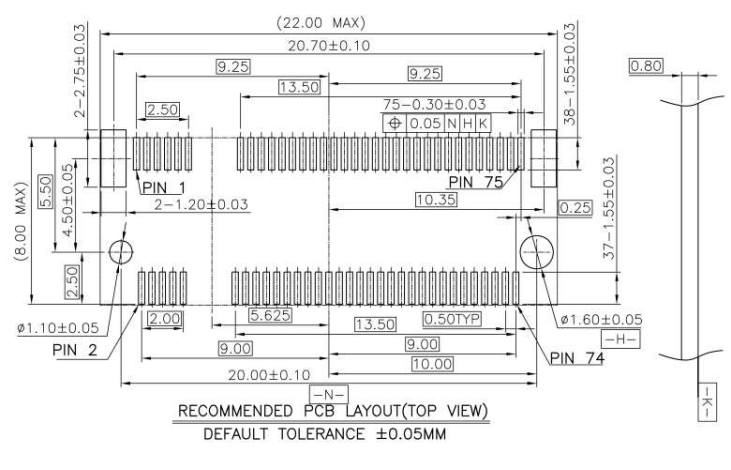
Figure2:Component Symbol Diagram
In such tasks, the difference between "understanding" and "doing it right" may lie in a single arrow. In baseline testing, the model can analyze the structure of an arrow with text, and the generated description is re-rendered into the graphic, but the arrow may point in the opposite direction. Similar proportional errors or missing pins may also affect whether the result can be used for subsequent engineering work.
For this reason, Pyromind trained a dedicated transformation model, incorporating Huaqi's symbol samples, output formats, and electrical rules into post-training, and then restored the generated results into graphics for item-by-item verification. In the company’s disclosed interim verification, the model is already able to recognize standard graphical elements on simple symbols and generate corresponding structured code, initially completing the conversion from image to engineering description. This allows engineers to do less rework from the drawings, thus laying the groundwork for implementation.
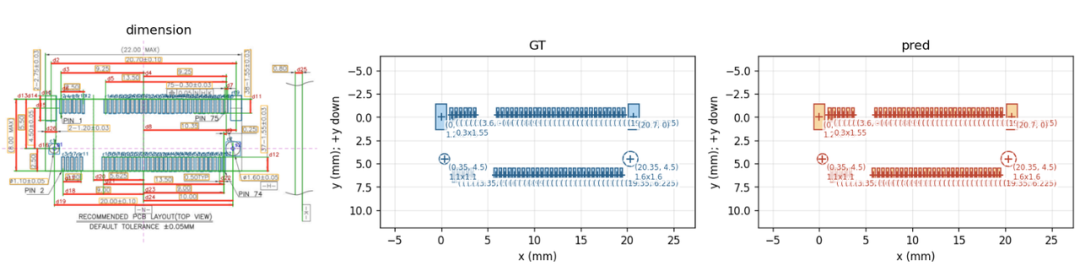
Figure 3:Incorporation of symbol samples, output formats, and electrical rules into post-training,
and the process of restoring the generated results into graphics (illustration)
According to the company, the IoU (Intersection over Union) of render similarity in the interim verification, which represents the area overlap between the redrawn image and the target image, has improved from 0.2 to 0.65. Minor components and pin positions still need optimization, but professional rules can already enter the learning process of the model instead of just relying on manual inspection by engineers.
In these specialized tasks, customers can clearly explain why it is worth doing and also determine what constitutes a job well done. Whether the film played, or whether the symbols were drawn correctly, both have answers that are closer to the business than a general ranking list. Pyromind's concept of enterprise private domain includes these tasks, processes, and evaluations derived from specific businesses, instead of just handing over internal documents for the model to read.
This also provides a concrete starting point for the industry RSI, turning existing task goals and acceptance criteria of enterprises into bases that models can learn from and validate, and allowing new business rounds to continuously provide materials for improvement. The effects of one training session demonstrate the value of the method on current tasks; the ability to catch the next change is what begins to test continuous learning.

Turning business experience into deliverable capabilities
The Huanwang team once encountered an app adjustment. Previously, opening a video required manually switching to full screen; after the update, playback is automatically full screen. The user's viewing objective hasn't changed, but the operational path to accomplish it has.
The actions the model has already learned may no longer be applicable in the same way. Even if a more powerful general model is switched, it still needs to be validated whether it adapts to the new operating path.
What Pyromind built for this collaboration is not just a certain version of the action model. The system will record screenshots, key presses, planning, and execution results within the task together, organizing successful demonstrations, erroneous operations, and corrected paths into training data. The new version, after evaluation, will return to the task to run, continuing to leave new tracks.
This process does not mean sending all logs directly into training. A single task failure only indicates the result is incorrect; it must also be categorized whether the focus recognition was wrong, the target was not found, or the button path went awry. Different issues return to different training segments; only then can the failure experience become effective. The data from the Huanwang case still needs to be randomly checked and corrected, and it does not mean that the model parameters change immediately every time the Agent executes a task.
After the app changed to playback full screen, new interfaces and operational trajectories accumulated along the existing process, allowing the model to adapt to the new path through subsequent training. The data processing methods, training configurations, and evaluation records left by the last delivery become the foundation for this update.
Pyromind refers to the mechanism that continuously accumulates training materials around task evaluation as the Continuous Learning Flywheel. It connects task execution and model improvement: the model participates in more tasks, generating new experiences; the experiences filtered, trained, and validated will then influence how the model performs next time.
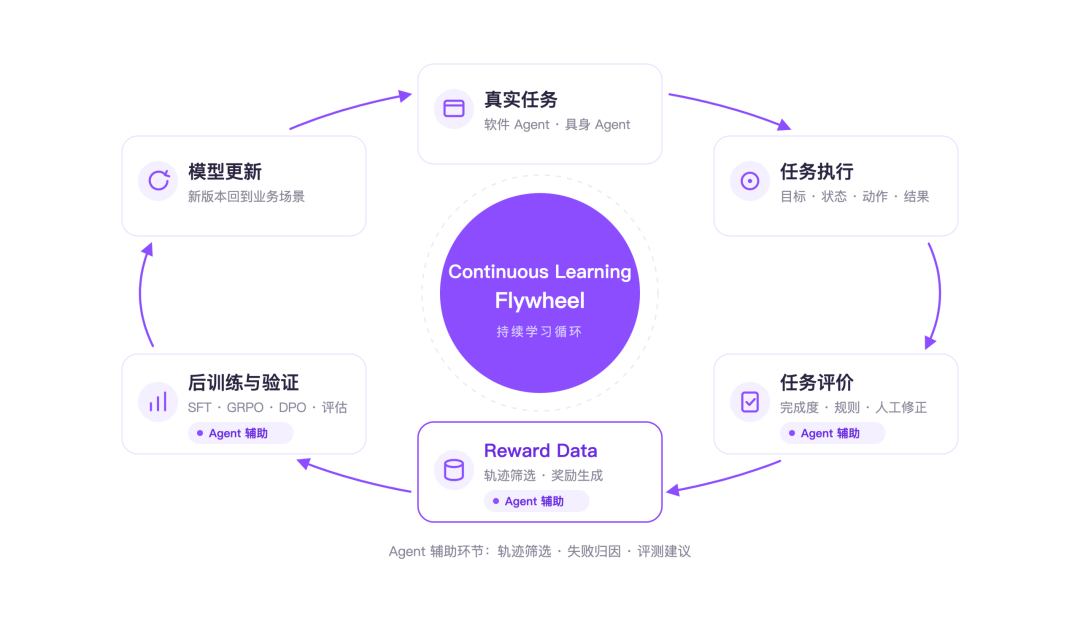
Figure 4: Continuous Learning Flywheel illustration
However, merely repeating the execution of a set of training scripts is not the entirety of this goal. Further changes pointed to by RSI involve allowing AI to also participate in the work of “ how to improve AI”. According to Pyromind, its AutoRL system is enabling Agents to assist in selecting trajectories, analyzing failure reasons, proposing assessment suggestions, and creating training processes. Parts of the work that previously needed to be reorganized by algorithm experts every round are starting to be taken on by the system; the business objectives, complex judgments, and model releases still require human oversight. This stepwise automation does not mean the entire process is already capable of being unattended.
This exploration also does not follow a single technical route. Salesforce focused on optimizing prompts, tools, and workflows under unchanged model weights when discussing self-improving Agents in July this year; Pyromind, on the other hand, chose to convert business feedback into model capability updates through post-training. Both need to answer which changes are genuinely useful and how to allow effective experiences to enter the next round.
For enterprises, what currently has greater value is that the updated processes can continue to operate while gradually reducing repetitive expert labor. Business is still changing, and humans are still making decisions, but maintaining an Agent does not always equate to reorganizing a model's development. This is precisely why Pyromind sees the current practice as an early form of industrial RSI.
A system capable of continuous training does not mean customers are willing to continuously pay for training costs. Customers are concerned about whether the next round of investment can continue to improve their business. For tasks with stable processes and limited anomalies, prompts, fixed workflows, or one-time fine-tuning may be sufficient, and repeated training may not be the more economical choice.
Continuous demand primarily arises from the changes themselves. Huanwang needs to adapt to new app interfaces and operational paths; industrial customers may encounter new products, orders, and acceptance requirements. Even if a certain version has reached the standard, maintaining that standard may still require ongoing updates. Other needs arise from the expansion of application scope. The collaboration between Huaqi and Pyromind has extended from the conversion of component symbols to circuit diagram tasks, introducing new adaptation work with more complex inputs like dimension annotation omissions and distorted images.
From establishing cooperation on key tasks, then expanding through new tasks, new devices, and new data, ultimately forming Land-and-Expand. Its premise is that the work done in the previous phase was indeed useful, providing customers with reason to pass more business to this mechanism.
In industrial quality inspection, this calculation is even more intuitive.
An acceptable product being misjudged as a suspected defect often necessitates an additional manual re-inspection. According to Kevin's previous disclosures, the team has reduced the false positive rate of a quality inspection task from 23% to 8% on about 10,000 historical samples. Customers can assess the value of such improvements combined with the detection volume, individual re-inspection time, and labor costs, and then compare with training and maintenance expenses. Meanwhile, the risk of missing real defects also needs to be controlled.
Feedback serves two purposes here. For the training system, it tells the model which results are better; for customers, it provides a basis for evaluating the return on investment. Thus, the technological cycle and business return fall onto the same business metric.
Besides reducing manual re-inspections, enterprises must also consider the cost of the Agent itself. According to Kevin, Huaqi switched from using Gemini to the post-trained 4B model, while Huanwang utilizes the 4B model in action execution. After targeted training, smaller models can undertake the specialized tasks within, providing room to reduce resource consumption for high-frequency calls.
Pyromind's independent research PyroDash has also incorporated the division of labor between models into training. Smaller models learn through post-training when to request the large model. During actual reasoning, requests are first given to the small model, which then decides whether to hand over during the generation process; once handed over, the large model continues to complete the task. Training objectives consider both accuracy and reasoning costs. According to the company, in five mathematical reasoning tests, the average accuracy of PyroDash in high precision mode reached 64.04%, exceeding that of using GLM-5.2-FP8 alone by 6.36 percentage points, while estimated reasoning costs were reduced by 20.4%. The system can learn how to allocate capabilities without delegating every step to particularly costly abilities.
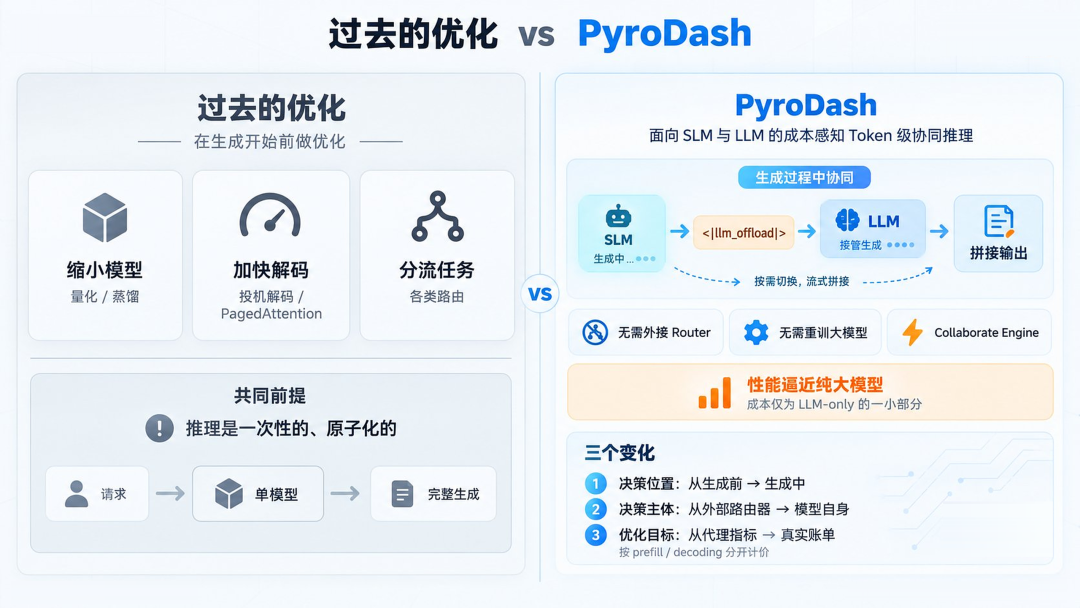
Figure 5: Past optimization vs PyroDash
For enterprises, whether it is worth training ultimately still needs to calculate the overall account. The training, deployment, and maintenance investment from one update, whether it can be covered by the savings in subsequent calls, reduced manual reviews, or improvements in business quality, decides whether there is reason to continue investing.
According to Kevin's previous disclosures in public discussions, in larger enterprise scenarios where ROI is clear, individual client payments have reached the range of one million to ten million RMB. This scale indicates that continuous learning already has specific commercial demand, rather than merely being a technical discussion; it does not represent the payment level of all customers, nor is it equivalent to the company's overall revenue.
Pyromind's pricing model also corresponds to how much update work customers are willing to undertake. Using the training platform Studio, customers maintain training processes and rewards themselves, while the platform charges based on computing power, storage, and other resources; using the continuous learning service EchoMind, Pyromind takes on reward design and update maintenance, charging based on the value of training resources and reward services included. Both can generate revenue from ongoing training, with the difference lying in service boundaries rather than "one-time charges" or "long-term fees."
Customers pay for the corresponding training resources and services, and the reason for ongoing payment is that model updates can still bring business value. Model improvements support broader business usage, and more usage produces new tasks and feedback, creating opportunities for a positive business cycle. Revenue itself cannot prove that RSI has been realized, but measurable returns give continuous learning a long-term economic foundation for operation.

Turning customization needs into platform-level business
With the demand for continuous updates established, the next challenge falls on Pyromind itself. If every new customer requires a whole algorithm team to be reinvested, continuous learning may still be a labor-intensive project business.
The more specific the enterprise's tasks are, the more pronounced this problem becomes. The acceptance criteria for television remote controls and electronic engineering are clearly not the same. Directly handing one customer's models and rules to another cannot guarantee results, nor does it fulfill the meaning of a horizontal platform.
Pyromind hopes to reuse the methods and tools that convert business experience into model capabilities. When entering a scenario for the first time, the team needs to understand the data format, task objectives, and evaluation benchmarks, and then adapt the training feedback; meanwhile, the common data processing, reward methods, training nodes, and evaluation processes continue to be accumulated into the product. When similar scenarios are re-accessed, existing accumulations can reduce repetitive building, while industry rules and key judgments still need to be re-validated.
According to the company, with support from the general product team, two FDEs (Frontline Deployment Engineers) responsible for requirement integration and adaptation have supported more than a dozen B-end customers. The focus of this division is not to replace all research and delivery with two people, but to separate on-site adaptation from general product development, allowing the latter to serve multiple projects.
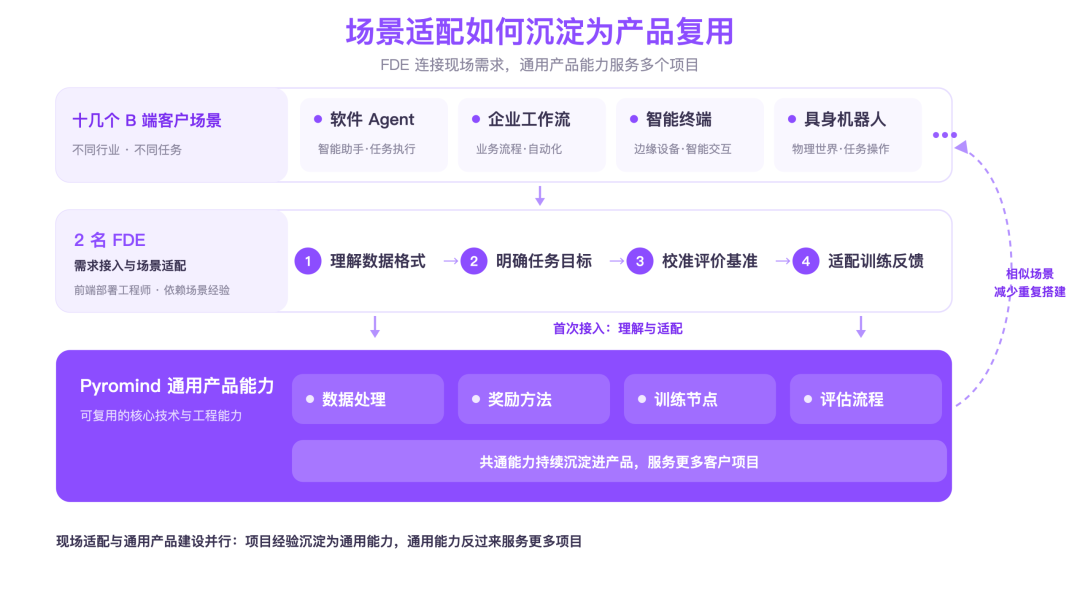
Figure 6: Scene adaptation and product reuse
On the customer side, there will also be accumulations left. In addition to the updated models, task trajectories, reward definitions, evaluation standards, training configurations, and historical versions can all serve as bases for subsequent improvements. How a business requirement was previously transformed into a training goal, what adjustments were effective, and the next round of updates can follow up accordingly.
The faster the base model iterates, the more these accumulations need to be properly retained. Kevin emphasized in previous interviews that Pyromind does not want to rely on a single foundational model company, nor take on all client applications, but rather provide continuous learning capabilities for different models and businesses. Enterprises can continue choosing more suitable models while aiming to retain existing business judgments and training experiences as much as possible.
This also explains the relationship between platform reuse and industrial RSI. The former is not just about selling a few more software licenses, but allowing more Agents to access the learning mechanism without having to rebuild a set of training and maintenance systems individually. If every Agent requires a dedicated algorithm team in the long term, continuous learning would be hard to become a routine capability for enterprises.
From existing practices, Huanwang and Huaqi have provided examples of improvements obtained from post-training on specialized tasks; task feedback recycling and updating processes allow for improvements to continue in subsequent business endeavors; the division of responsibilities for pricing and delivery has started answering how this mechanism can be adopted by customers and who will maintain it long-term. These results collectively constitute early evidence of Pyromind’s exploration of industrial RSI, rather than equating a specific score increase to complete self-evolution.
Next, more substantial validation will come from longer-term customer usage. Whether updates can continually generate profits, whether expert investment can decrease when accessing similar scenarios, and whether the effects remain reliable with increased automation need to continue being answered in future deliveries.
Pyromind's long-term vision is to “ enable every Agent to possess self-evolution capabilities.” Currently, this vision has an executable path: allowing customers' business experiences to enter the models while also letting the experiences of serving customers enter the platform.
When the next round of improvements no longer starts from scratch, the next delivery can also utilize existing accumulations, making continuous learning potentially both a capability customers are willing to pay for and a long-term business that an infrastructure company can expand.
Image source|Provided by the company, Visual China
免责声明:本文章仅代表作者个人观点,不代表本平台的立场和观点。本文章仅供信息分享,不构成对任何人的任何投资建议。用户与作者之间的任何争议,与本平台无关。如网页中刊载的文章或图片涉及侵权,请提供相关的权利证明和身份证明发送邮件到support@aicoin.com,本平台相关工作人员将会进行核查。


