Report Date: 2026-09-20
Source of Data and Opinions: AiPlot
I. Investment Conclusion: The Market Is Pricing "AI Storage Options," but Profit Quality Remains a Decisive Validation Point
SanDisk (SNDK) is currently worth researching, not only because it is a major global supplier of NAND flash memory, but also because AI inference is shifting the competitive focus in the storage industry from "capacity and unit price" to "data transfer efficiency in inference systems." If large-scale inference scenarios ultimately adopt SSD persistent KV Cache, enterprise SSDs will no longer just be general storage devices, but may become the caching infrastructure within inference architectures. SanDisk possesses synergies in the NAND supply chain, SSD product capabilities, experience in controllers and firmware, as well as brand and channel assets, thus presenting a potential pathway to upgrade from a traditional storage manufacturer to an AI storage solutions provider.
The core judgments of this report can be summarized in four points.
First, SanDisk's business logic is undergoing repricing. Historically, the company covered multiple links from NAND production synergies to SSD packaging, enterprise storage, embedded storage, and consumer products. After being spun off from Western Digital in 2025, the market began to observe its income, profits, and capital allocation capabilities more directly as an independent storage company. This change has transformed it from merely a business segment within a comprehensive storage group to a storage asset that can be valued independently.
Second, AI inference could bring structural demand to the NAND industry, not just cyclical demand. UBS's related research characterizes the current inference bottleneck as the "weight transfer memory wall": a significant amount of time is not spent on pure computation but on transferring model weights and context caches. Solutions include hard-coding model weights into chips and migrating the ever-growing KV Cache to larger capacity, lower-cost SSDs.
Third, current valuations already incorporate high growth expectations. The SNDK stock price is approximately $1,792.96, with a market cap of around $262.36 billion; corresponding to a PS ratio of about 12.96 times, PE of about 22.95 times, EV/EBITDA of about 20.46 times, and P/FCF of about 23 times. These multiples do not reflect the pricing of traditional NAND cycle bottom companies, but are closer to the pricing typical of "high growth, high profitability, AI storage beneficiaries."
Fourth, what really needs to be validated is not whether the story holds, but whether the profits in 2026 are sustainable. Materials indicate that in 2026, revenue is about $20.25 billion, up 175.3% year-over-year; net profit is about $11.43 billion, up 796.7% year-over-year; net profit margin is about 56.5%; and free cash flow is about $11.49 billion. This performance is exceptionally strong, but also significantly higher than the typical profit range for traditional NAND/SSD manufacturing companies. If a significant portion comes from one-time projects, industry bottom reversals, or spin-off accounting treatments, the current valuation's margin of safety may be below the levels indicated by the surface data.
Therefore, SanDisk is better understood as a "structural AI storage option": the upside comes from KV Cache, enterprise SSD, and independent company value reassessment; the downside risks stem from the NAND cycle, price wars, technology alternatives, customer concentration, and profit normalization.
Note: All relevant analyses in this article are compiled materials through AiPlot AGENT.
https://aiplot.com/agent
II. Company Overview: From SanDisk Brand to Independent Listed Storage Entity
1. Company Identity and Historical Evolution
SanDisk is the storage company behind the "SanDisk" brand, with a core business focused on NAND flash memory and its system-level solutions. The company has previously operated as an independent publicly listed entity, acquired by Western Digital in 2016, and subsequently existing as a business segment within the WD framework for about nine years. In 2025, SanDisk was spun off from the Western Digital system, returning to the status of an independent publicly traded company.
Therefore, when studying the current SNDK, it cannot simply be equated with SanDisk prior to 2016, nor should it be viewed entirely as a legacy business within the WD system. A more reasonable approach is to regard the period from 2016 to 2025 as the integration phase within a large storage group, while viewing the period after 2025 as a new stage of independent company operations and capital market pricing.
This distinction is important. Current financial data of the "new SanDisk" cannot be simply compared to the former SanDisk before 2016; the spin-off may have altered asset boundaries, cost allocations, business combinations, and capital structures. Past accumulated technology, customers, and supply chain foundations still hold reference value, but the specific profit levels must be evaluated based on financial disclosures post-spin-off.
2. Business Model: Vertical Synergy Instead of Simply Selling NAND Chips
SanDisk's business can be understood as a solution system from NAND resources to terminal storage products.
Its upstream involves producing most of its self-used NAND flash memory chips in Japan through a joint manufacturing structure with Kioxia, participating in advanced processes like 3D NAND. Subsequently, the company packages the chips into solid-state drives, embedded storage, mobile storage, and other storage products for OEMs, data centers, cloud vendors, consumer electronics, and automotive clients.
The value of this model lies not only in possessing flash memory capacity but also in mastering the synergistic relationships from wafers, packaging to system products. Capabilities in controllers, firmware, error correction, wear leveling, cache management, thermal management, and platform compatibility determine whether NAND chips can be transformed into stable, reliable, and mass-deployable SSD products.
3. Products and Application Scenarios
SanDisk's products and application scenarios mainly include the following four categories.
Enterprise and Client SSDs. The products target data center servers, enterprise storage arrays, PCs, workstations, and cloud computing infrastructure. As the requirements for capacity, throughput, latency, and energy consumption increase in AI training and inference, the strategic importance of enterprise SSDs rises.
Embedded Storage. This includes products like eMMC, UFS, targeting smartphones, tablets, automotive systems, and industrial equipment. This business typically relies on long-term cooperation with SoC manufacturers, OEMs, and brand customers, resulting in relatively stable demand, although customer certification cycles and price negotiations can be stringent.
Removable Storage and Consumer Products. This category includes SD/microSD cards, USB drives, portable hard drives, and high-speed storage cards. The "SanDisk" brand commands high recognition in the consumer market, aiding in maintaining channel coverage and terminal demand, but this market faces competitive pressure on gross margins and average selling price (ASP) in the long run.
Automotive and Industrial Storage Solutions. Products are used in scenarios requiring high-reliability storage, such as the Internet of Vehicles, autonomous driving, industrial control, and more. As the volume of in-vehicle data and reliability requirements increase, this segment has medium- to long-term potential, yet it also requires lengthy certification cycles and stable quality records.
III. Industry Chain Position and Competitive Advantages
1. SanDisk's Position in the NAND Industry Chain
SanDisk's position in the industry chain can be roughly divided into three levels.
In the upstream, the company, through its joint relationship with Kioxia, controls part of the NAND wafer production capacity and participates in the competition for processes, yield, and costs. In the midstream, the company utilizes its controller, firmware, and packaging capabilities to transform NAND chips into SSDs, embedded storage, and mobile storage products. In the downstream, the company completes product sales and deployment through OEMs, cloud vendors, data center customers, and consumer channels.
Therefore, SanDisk is not merely a NAND chip supplier nor is it a SSD brand that relies entirely on external procurement. It occupies a cross-sectional position of "upstream manufacturing synergy + midstream solutions + downstream brands and channels." This structure provides greater operational flexibility, but also entails higher capital expenditure, inventory, and supply-demand management requirements.
2. Key Competitive Advantages
Vertical Integration and Manufacturing Synergy
The joint manufacturing structure with Kioxia allows SanDisk to participate in critical processes from wafers to packaging and to share production capacity and technology investments to some extent. In the capital-intensive NAND industry, manufacturing synergies help lower the pressure of bearing all capital expenditures alone and support supply security during demand upswings.
However, vertical integration does not equate to permanent cost advantages. Technologies such as 3D NAND and QLC continue to evolve, necessitating ongoing R&D and capital expenditures. If production expansion mismatches demand growth, the vertical structure may amplify the impacts of inventory, depreciation, and price declines.
Controller, Firmware, and System Capabilities
The actual performance of SSDs is not determined solely by NAND chips. Controller design, firmware algorithms, error correction capabilities, wear leveling, write lifespan, cache management, and thermal management all influence product usability in data centers and enterprise customers.
In AI inference scenarios, this capability's importance might further increase. If SSDs are used as persistent KV Cache, the products need to be optimized for specific read/write patterns, latency requirements, reliability, and data tiering strategies. At this point, competition is not merely about "cost per TB," but about "throughput per inference unit, latency per unit, and total cost of ownership per unit."
Brand and Channels
The "SanDisk" brand enjoys high recognition in the consumer market, supporting the sales of storage cards, USB drives, and portable storage products. The brand itself may not be a direct source of AI storage growth, but it can provide channel assets, customer touchpoints, and a certain cash flow foundation.
On the enterprise side, long-term cooperation experience with OEMs, cloud vendors, and data centers is also valuable. The entry of storage products into large customer supply chains typically requires certifications, compatibility validations, and ongoing services, and historical cooperation records may lower the costs of new product integration.
Diverse Market Coverage
SanDisk covers data centers, PCs, smartphones, automotive, industrial, and consumer electronics simultaneously, reducing dependence on a single terminal market. Diversification cannot eliminate cycles but can mitigate the direct impact of a downturn in a particular market on the overall business.
3. Major Disadvantages and Constraints
Cyclicality and Price Wars in the NAND Industry
The NAND industry exhibits significant supply-demand cycles. Manufacturers increase bit shipments by expanding production, and when demand slows, there is a tendency for inventory to rise, ASP to drop, and margins to contract rapidly. Even if AI brings new demand, the industry could still face temporary oversupply due to over-expansion.
Capital Intensity and Process Iteration Pressure
Technological upgrades for 3D NAND, QLC, and others require sustained capital expenditures and R&D investments. If cash flows are insufficient, companies may miss out on process iterations; if investments are excessive, they may face depreciation and idle capacity pressures when demand does not materialize.
Resource Disparity with Comprehensive Storage Giants
Comprehensive storage giants that simultaneously possess DRAM, NAND, controllers, system software, and data center platform capabilities may hold more negotiating power when dealing with cloud vendors and system integrations. SanDisk needs to establish differentiation through NAND resources, SSD products, controller firmware, supply chain synergies, or solutions for specific scenarios.
Customer Concentration and Product Substitution Risks
If the enterprise SSD business heavily relies on a few cloud vendors or large OEMs, changes in a single customer's orders may significantly impact revenue and profit. Moreover, advancements in DRAM, HBM, compute storage, or other new storage technologies may alter the growth trajectory of certain SSD demands.
IV. AI Inference "Memory Wall": The Potential Revaluation Logic for SanDisk
1. Inference Bottlenecks Are Expanding from Computing Power to Data Transfer
Traditionally, the focus of AI chips has been on computing power, bandwidth, and power consumption. However, in the phase of large model inference, the system must continuously transfer model weights, contexts, and KV Cache. As model sizes, session lengths, and concurrent requests increase, data transfer between memory hierarchies may become a critical factor limiting throughput and response speed.
This is summarized as the "memory wall" in AI inference. Its essence is not that a particular type of storage will necessarily replace another, but that if the growth rate of computing capability outpaces memory capacity and data transfer efficiency, the system's bottleneck will shift from computing power to memory and storage hierarchies.
2. Two Representative Technical Paths
Current materials propose two representative solution directions.
The first path is hard-coding weights into chips. Taking AMD's acquisition of Taalas as an example, once trained, model weights can be directly written or solidified in the chip structure, reducing the physical layer's weight retrieval and transfer. The potential advantage of this path is high inference efficiency, but it may sacrifice model flexibility and be limited by model updates, application scenario changes, and hardware adaptations.
The second path is to persist KV Cache onto SSDs. This path acknowledges that KV Cache will continuously grow but attempts to shift part of the cache from expensive, limited-capacity DRAM/HBM to larger-capacity, lower-cost SSDs, forming a new persistent cache layer.
These two paths are not necessarily mutually exclusive. Future systems may allocate different data to HBM, DRAM, SSD, or other storage layers based on latency, cost, model update frequency, and data access hotness.
3. The Significance and Limitations of the 1ZB Estimation
UBS's related materials estimate that if "KV Cache persistence onto SSD" becomes a feasible and widely adopted architecture, by 2030, the demand for cache layer capacity might reach about 1ZB, accounting for more than 70% of the entire industry's bit supply by 2027.
The significance of this estimate lies not in its accurate realization, but in revealing the potential orders of magnitude for demand: AI inference could bring NAND incremental demand that differs from that of PCs, phones, and traditional servers. If this demand materializes, the growth driver for flash manufacturers will expand from "capacity upgrades for end devices" to "storage layer expansions in AI inference infrastructure."
However, this estimate must be viewed as a scenario assumption rather than a definite order. It relies on several premises: cloud vendors are willing to place some KV Cache into SSDs; the latency and lifespan of SSDs can meet large-scale inference needs; the software stack can effectively manage cache layering; unit inference costs can be improved due to SSD's large capacity; and that HBM, weight hard-coding, and other new storage technologies will not significantly replace this demand.
4. Can SanDisk Upgrade from "General Storage" to "Inference Cache Layer"
If persistent KV Cache becomes one of the mainstream architectures, SanDisk’s opportunity lies not just in selling more SSDs, but in upgrading its products to system-level solutions tailored for inference scenarios. Potential directions include:
- Optimizing protocols, IO, and firmware for KV Cache read/write patterns;
- Enhancing random read/write, latency consistency, durability, and thermal management capabilities;
- Collaboratively designing data tiering and cache management solutions with cloud vendors;
- Integrating SSDs with caching software, performance tuning, and operational services;
- Engaging in standard supply chains for inference infrastructure through long-term supply and joint development.
This will change the metrics by which product value is assessed. What enterprise clients may care about is no longer just the capacity and price of SSDs but how many concurrent inferences each inference node can support, the cache hit rates, whether tail latency is stable, and whether the overall inference costs can decline.
V. Tokenizing SanDisk: What RWA Structures Offer and Do Not Offer
1. Basic Facts About Multi-Channel Tokenization
According to agent materials, various tokenized SanDisk products have emerged around SNDK. These products do not mean that SanDisk has issued on-chain stock, nor do they imply that all tokens are directly equivalent to SNDK shares traded on traditional exchanges. A more accurate understanding is that different platforms provide on-chain products related to SNDK price or economic interests through various legal entities, custody arrangements, and issuance frameworks for non-U.S. investors or specific investors.
Representative structures listed in the materials include:
- Ondo Tokenized SanDisk (SNDKon): Described as "providing holders an economic exposure similar to holding SNDK and automatically reinvesting dividends," targeting non-U.S. retail and institutional investors, utilizing the Reg S pathway, and emphasizing close-to-24/7 trading and redemption mechanisms;
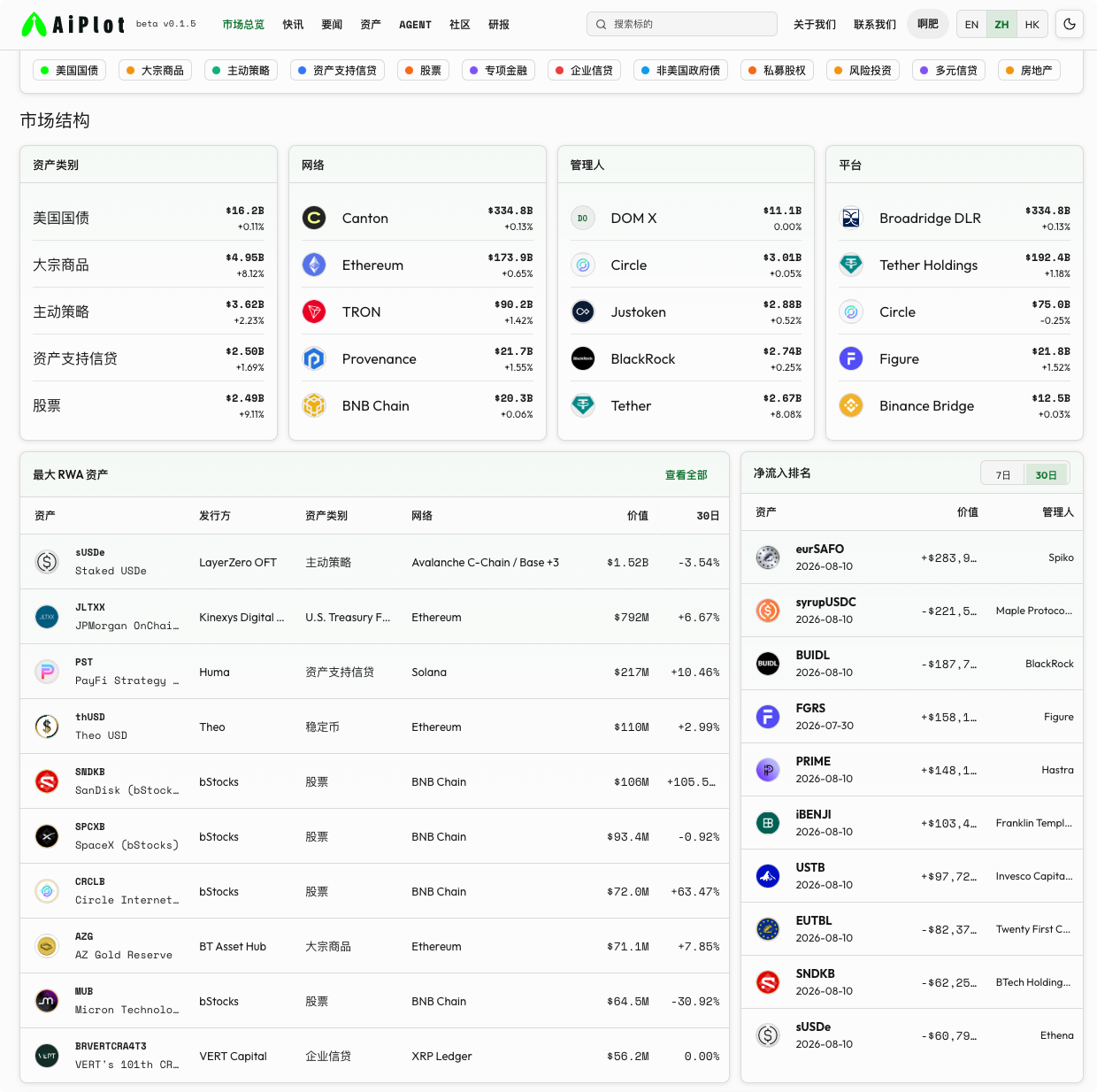
- bStocks’ SanDisk (SNDKB): Issued by BTech Holding under the Abu Dhabi Global Market (ADGM) framework, targeting non-U.S. investors, supporting instant redemptions, with relatively low investment thresholds;
- xStocks’ SanDisk Corporation xStock (SNDKx): Issued by Backed Assets, targeting professional investors, with a stated minimum investment amount of approximately $5,000, redeemable daily;
- Dinari’s SanDisk Corporation Common Stock (SNDK.d): Formed under Reg S for global non-U.S. retail investors, stated to be tradable when the U.S. stock market opens, emphasizing high trade availability;
- Reality’s SanDisk Reality (rSNDK): Issued under the Salvadoran Digital Assets Law and Reg S framework, targeting non-U.S. investors and supporting instant redemptions.
The common feature of these products is that their underlying economic exposure usually points to the same SNDK stock, but the issuers, jurisdictions, investor qualifications, trading hours, redemption rules, custody methods, and dividend management may vary. Therefore, "tokenized SNDK" is not a single product but rather a set of on-chain products with different legal and liquidity attributes.
2. Financial Innovation Value of RWA Tokenization
Transactions, settlements, and investor access in traditional equity markets are constrained by geography, broker accounts, trading hours, compliance identities, and settlement systems. Tokenized products aim to package the economic exposure of traditional stocks into assets that can circulate on-chain, enabling some non-U.S. investors to gain relevant exposure with lower infrastructure thresholds.
These products may bring three types of efficiency improvements.
First, investor access efficiency. Non-U.S. investors no longer need to rely solely on traditional broker channels and may access stock-related exposure through compliant RWA platforms.
Second, trading and settlement efficiency. Blockchain can support more granular holding, transfer, and programmable settlement. Some products highlight longer trading hours or nearly 24/7 trading arrangements.
Third, portfolio efficiency. Stocks, stablecoins, and other on-chain assets can be used together in the same financial infrastructure, providing new possibilities for collateralization, liquidity management, and cross-asset allocation.
From the perspective of SNDK, tokenization will not directly change the company's NAND capacity, customer orders, or profit margins, but it may expand the distribution channels for stock economic exposure and make it easier for capital markets to form cross-border investment demand around the "AI storage" theme.
3. RWA Cannot Substitute for Fundamentals
Tokenized products are merely a method for distributing and settling securities exposure; they do not automatically create enterprise value or eliminate the volatility, valuation risks, and operational risks associated with the stock itself. Investors also need to differentiate the following levels:
- Do tokens represent actual stock, trust assets, or merely the issuer's contractual price exposure?
- Are there independent custody, auditing, reserve proof, and redemption mechanisms?
- Do holders enjoy voting rights, dividend rights, or other shareholder rights?
- Is there a possibility of premium, discount, or liquidity deviation between the trading price and the underlying SNDK share price?
- How do the regulatory rules of the jurisdiction of the issuing platform apply to investors?
- How will liquidity be maintained during market closures, on-chain congestion, issuer redemption pauses, or problems with custody institutions?
Thus, in this report, RWA is regarded as an innovative variable in asset efficiency and market distribution layer, rather than a substitutive explanation for SanDisk's fundamentals.
VI. Financial Performance in 2025-2026: Strong Growth, but Sustainability of the Spin-Off Needs Verification
1. Revenue Growth
The annual data provided by AiPlot Agent materials are as follows:
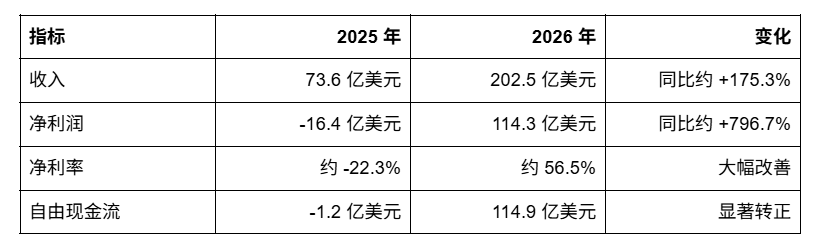 2025 is likely at the beginning of the spin-off or at the industry bottom stage, with revenue scale around $7 billion, and net profit and free cash flow negative. In 2026, revenue rises to $20.25 billion, nearing threefold growth. If the data measurements are consistent, this means the company has experienced a very strong cyclical reversal or business boundary change.
The materials suggest several potential explanations, including significant customer orders or supply agreement improvements, a shift in product structure from low-margin consumer products to enterprise SSDs, and parts of the WD system businesses reverting to SanDisk post-spin-off. However, in the absence of longer historical data and segmental split information, these can only be considered possible reasons, not established conclusions.
2. Gross Profit, Operating Profit, and Net Profit
The primary indicators disclosed for 2026 include:
- Gross profit of about $14.47 billion, with a gross margin of approximately 71.5%;
- Operating profit of about $12.45 billion, with an operating margin of approximately 61.5%;
- Net profit of about $11.43 billion, with a net margin of approximately 56.46%;
- Net profit year-on-year growth rate of about 796.71%.
For 2025, the main indicators include:
- Gross profit of about $2.21 billion, with a gross margin of approximately 30%;
- Operating profit of about -$1.41 billion, with an operating margin of approximately -19%;
- Net profit of about -$1.64 billion, with a net margin of approximately -22.31%.
The contrast from losses to a net margin of over 50% is striking. The data for 2025 reflects the state typical of an industry bottom or at the early stage of a spin-off, while the data for 2026 is significantly above the long-term profit ranges commonly seen in traditional NAND/SSD manufacturing companies.
Therefore, the focus of research should not linger on the “high profit margins,” but should continue to inquire:
- How much of the 2026 profits come from the ongoing operations of NAND/SSD products?
- Do they include asset sales, tax benefits, restructuring gains, spin-off adjustments, or other one-time projects?
- Are gross margin improvements due to ASP increases, cost reductions, product mix improvements, or changes in accounting boundaries?
- Can profit margins be sustained after industry prices, inventory, and capital expenditures normalize in 2027 and beyond?
3. Free Cash Flow and Profit Quality
Free cash flow for 2026 is approximately $11.49 billion, closely matching the net profit of about $11.43 billion, with a FCF profit margin of approximately 56%-57%. On the surface, this indicates robust cash conversion ability of profits, with working capital, depreciation, and capital expenditures not significantly consuming profits.
However, free cash flow may also be influenced by one-time factors, such as asset disposals, inventory releases, tax changes, working capital recoveries, or cash flows related to the spin-off. To judge cash flow quality, a complete cash flow statement, changes in inventory, changes in accounts receivable, capital expenditures, depreciation, and cash arrangements for joint ventures are still needed.
Free cash flow in 2025 is approximately -$1.2 billion, which is not an extreme deterioration compared to the losses incurred. This could align with the state at the industry's bottom or early spin-off stage but still lacks sufficient evidence to indicate that the company has escaped cash flow volatility in the NAND industry.
4. EPS Measurement Discrepancies
The materials provide two sets of EPS: the 2026 EPS in the annual table is approximately $73.76, while the EPS in the AiPlot asset overview is approximately $78.08. There are discrepancies that may arise from differences in the reporting year and rolling twelve-month measurements, as well as differences in basic EPS, diluted EPS, weighted average shares, or data update time.
In the absence of original annual reports and EPS calculation tables, this report does not enforce uniformity between the two figures. Valuation analyses can only specify which EPS figure to use and should not mix different measures.
VII. Capital Structure and Valuation: What Current Prices Imply
1. Capital Structure
Capital structure indicators provided by AiPlot materials include:
- P/B of approximately 16.67 times;
- ROE of approximately 72.66%;
- ROA of approximately 50.8%;
- Debt/Equity = 0;
- Dividend yield = 0.
High ROE and ROA corroborate the over 50% net margin, indicating that the current balance sheet data exhibits strong asset return capability. However, if future profits revert to industry norms, ROE and ROA may also significantly decline.
With a Debt/Equity ratio of zero, it indicates that the company shown in the materials has virtually no traditional interest-bearing debt. Low leverage can reduce interest and repayment risks, but it also means that shareholder returns primarily rely on profit growth, valuation expansion, and future buybacks or dividends, rather than being amplified by financial leverage.
2. Relative Valuation Snapshot
According to the AiPlot asset page materials, the current valuation is approximately:
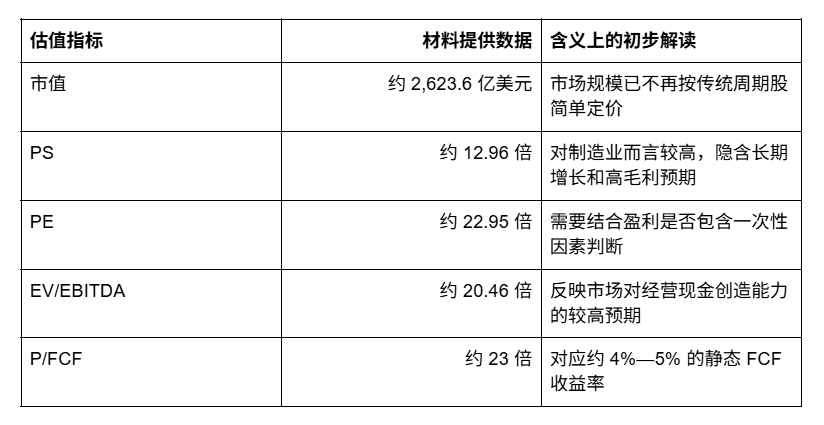
There exists an important valuation structure: PS of approximately 13 times, PE of approximately 23 times, P/FCF of approximately 23 times. The market's willingness to assign a high PS suggests it may view SanDisk as a high-growth or high-margin AI storage company rather than a typical NAND manufacturer. The PE and P/FCF remaining around 23 times indicates that the market also believes in a certain sustainability of current profits and cash flows.
However, the profits and cash flows for 2026 may contain one-time factors. If sustainable profits are lower than reported profits, the "real PE" and "real P/FCF" calculated at current prices would be higher than the apparent multiples.
3. Three Scenario Analyses
Due to the lack of sufficiently long historical financial, segmented profit, and capital expenditure forecasts, this report does not provide precise target prices but adopts directional scenario analyses.
Optimistic Scenario: Smooth Expansion of AI Storage
In this scenario, inference and training scenarios extensively utilize SSDs as crucial storage mediums for models and KV Cache, NAND prices remain stable, and SanDisk increases its share in enterprise SSDs, cloud vendor supply chains, and AI storage solutions. The high profits in 2026 are not fully driven by one-time projects, and revenue continues to grow rapidly.
At this point, the current PE of about 23 times and P/FCF of about 23 times can be interpreted as a comprehensive pricing of high growth, high cash flow, and AI storage options. The upside in valuation will still depend on whether the company can prove it possesses system-level product capabilities rather than merely benefiting from rising NAND prices.
Baseline Scenario: Returning to Normalcy After Cyclical Repair
In this scenario, a considerable part of the extraordinarily high profit in 2026 comes from rebounds at the industry bottom, product price improvements, or one-time gains. As supply expands, NAND prices and gross margins retract, the net margin returns to around 15%-20% or another range closer to normal cyclical levels, with revenue maintained around $15-$20 billion but profits and free cash flow declining.
At this time, the PE calculated based on 2026 profits will underestimate actual valuation pressure, and the real PE/PFCF might significantly exceed the current snapshot. The stock may still have long-term growth potential in AI storage, but valuation will rely more on the market's expectations of profits over the next two to three years rather than on single annual statement data.
Pessimistic Scenario: Unfavorable Industry and Technical Paths
In this scenario, comprehensive storage manufacturers like Samsung and Micron expand their shares in enterprise SSDs and new storage products; AI inference adopts more high-density DRAM, HBM, weight hard-coding, or other architectures, leading to lower-than-expected demand for SSDs as KV Cache; meanwhile, NAND supply expansion causes ASPs and margins to decline.
If revenue growth slows down, and net margins and ROE/ROA decline simultaneously, the current high PS, PE, and P/FCF ranges will face significant compression. At that point, the market will reevaluate SanDisk pricing it as a cyclical storage company rather than as an AI infrastructure growth stock.
VIII. Investment Disputes: The Real Questions That Bulls and Bears Must Answer
1. Bullish Logic
Bulls do not simply believe that "AI will increase storage demand," but rather that AI will change the structure of storage demand.
If the path of persistent KV Cache onto SSD matures, SanDisk, as a major global NAND supplier and enterprise SSD manufacturer, has the opportunity to transition from "general storage" to "inference cache layer." After the split from the WD system, the market can also value its AI storage business more directly without relying on the indirect pricing of a comprehensive storage group.
In addition, the diversified product mix of enterprise SSDs, embedded storage, automotive storage, and consumer storage can buffer against a single terminal cycle. Various RWA products involving SNDK may broaden the channels through which non-U.S. investors gain economic exposure to it, enhancing asset visibility and liquidity on-chain.
2. Bearish Logic
Bears need to focus on the fact that NAND is still a highly cyclical industry. AI-induced demand may gradually increase in the coming years, but supply expansions, price competition, and process iterations will continue to affect margins. If the demand for SSDs from AI inference does not meet expectations or is partially replaced by HBM, DRAM, weight hard-coding, or other technologies, the market's high-growth pricing for SanDisk could drop.
Moreover, the profit and free cash flow data for 2026 significantly differ from traditional industry ranges. If a substantial amount of profits includes one-time projects, the current valuation may have prematurely reflected a prolonged period of high profitability. For a capital-intensive industry, future expansions of capital expenditures, inventory accumulation, and customer concentration could also weaken the margin of safety in cash flow.
3. The Most Critical Validation Questions
Investors should prioritize verifying the following questions rather than focusing solely on stock prices and thematic popularity:
- What is the true share of enterprise SSD and data center business in revenue, gross profit, and orders?
- In the 2026 profit margin, what proportions come from ongoing operational profits and one-time gains?
- Has the company already engaged with cloud vendors in KV Cache, inference storage, or similar joint development? Are there any mass production or long-term contracts in place?
- Is AI storage demand stemming from actual deployments, or is it still at the concept validation and market expectation stage?
- How does the Kioxia joint manufacturing structure impact capital expenditures, production capacity allocation, costs, and profits?
- How will NAND supply, ASPs, inventory, and capital expenditure cycles change after 2027?
- Are the underlying assets, custody, redemption, and investor rights of various tokenized SNDK products transparent?
- How can the difference between the 2026 EPS of $73.76 and the asset page EPS of $78.08 be explained?
IX. Risks and Catalysts
1. Main Risks
Profit Quality Risk. The extraordinarily high net margins and free cash flow in 2026 may contain one-time factors such as spin-offs, taxes, asset disposals, inventory releases, or other non-recurring elements. If future disclosures reveal ongoing operational profits to be below current levels, the market may lower valuation multiples.
Industry Cycle Risk. Changes in NAND/SSD supply and demand will affect ASPs, inventory, gross profits, and cash flows. Even with rising AI demand, one cannot rule out temporary price wars caused by supply expansions.
Technology Path Risk. The persistence of KV Cache onto SSD may be partially replaced by higher density HBM, DRAM, new storage types, or weight hard-coding. The architecture for AI inference is still rapidly evolving, and one should not treat a single technology path as deterministic.
Capital Expenditure Risk. NAND process upgrades and capacity construction require long-term investments. If the company expands production in anticipation of AI demand, but actual deployment lags behind, it may face increasing depreciation, inventory backlogs, and pressured cash flow.
Customer Concentration Risk. Large cloud vendors and OEM customers have substantial order scales but also strong bargaining power. Changes in purchasing rhythms from a single customer may significantly affect quarterly revenue and profit.
Valuation Retracement Risk. If the current market has priced in high growth expectations around PS of approximately 13 times, PE/PFCF of around 23 times, any slowdown in growth or normalization of profits may bring valuation compression.
RWA Structure and Regulatory Risks. The issuers, custodians, and trading platforms of tokenized SNDK may be distributed across different jurisdictions. Regulatory policies, redemption arrangements, underlying asset isolation, and secondary market liquidity changes may impact the practical availability of tokenized products.
2. Potential Catalysts
Clearer Segment Disclosures. If the company discloses specific information on enterprise SSDs, AI storage, data center clients, and long-term orders, the market can better assess the sources and sustainability of profits in 2026.
Joint Development or Scale Deployment by Cloud Vendors. Public disclosures of KV Cache optimization, inference storage architecture, AI SSD solutions, or mass production deployments by large cloud clients will directly validate SanDisk's actual positioning in AI storage.
New Quarterly Earnings Reports Confirming Strength. If subsequent quarterly revenue, gross margins, and free cash flow remain strong while inventory and capital expenditures are kept at controllable levels, market confidence in profit quality may increase.
Capital Return Policies. Changes in dividend, buyback, or other capital allocation policies may improve the certainty of shareholder returns and help the market gauge management's confidence in future cash flows.
Expansion of RWA Products. If more compliant platforms launch tokenized SNDK, and the underlying assets, reserves, redemptions, and liquidity mechanisms are continuously made transparent, it could enhance the cross-border distribution efficiency of SNDK economic exposure. However, this remains a market structure catalyst and cannot replace business fundamental validations.
X. Conclusion: SanDisk is a High-Elasticity Target in the AI Storage Theme, Not an Unconditional Sure Asset
The investment value of SanDisk is forming a new logical chain: NAND manufacturing synergies provide foundational resources, SSD, controller, and firmware capabilities offer system-level product capabilities, the memory wall created by AI inference generates potential incremental demand, and the spin-off in 2025 allows these assets to be observed and valued independently in capital markets. Meanwhile, multi-platform tokenized SNDK products bring stock-related economic exposure into RWA and on-chain financial infrastructures, reflecting changes in asset distribution and settlement efficiency.
However, this logical chain still contains two weak links.
The first weak link is whether AI storage demand will truly materialize. A demand level of 1ZB for persistent KV Cache is an impactful industry scenario, but it relies on various conditions such as architecture, software, costs, and reliability. Even if SSDs become part of the inference cache layer, the share and margins SanDisk can obtain still require validation through customers, products, and orders.
The second weak link is the sustainability of financial performance in 2026. The magnitude of improvements in revenue, net profit, and free cash flow is substantial, and the current valuation clearly incorporates high growth and profitability expectations. In the absence of longer historical data, segmented financials, and complete cash flow data, it is more appropriate at this stage to conduct sanity checks on valuation and financial quality rather than derive precise DCF target prices or singular conclusions.
In summary, SanDisk can be defined as:
An independent storage company with NAND supply chain and SSD system capabilities that possesses upward options for AI inference storage; its long-term value depends on the real deployment of AI storage demand, while short-term pricing highly relies on whether the extraordinarily high profits in 2026 can be proven to be sustainable by subsequent earnings reports.
For more data and analysis, please follow Aiplot:
https://aiplot.com/
📖 Community交流:
- Telegram:
https://t.me/+IIYMcJigBAo4Mjg1
免责声明:本文章仅代表作者个人观点,不代表本平台的立场和观点。本文章仅供信息分享,不构成对任何人的任何投资建议。用户与作者之间的任何争议,与本平台无关。如网页中刊载的文章或图片涉及侵权,请提供相关的权利证明和身份证明发送邮件到[email protected],本平台相关工作人员将会进行核查。