Based on the September Global and Asia Investment Manager Survey by Bank of America Merrill Lynch (as of September 15)
Highlights
Global Market:
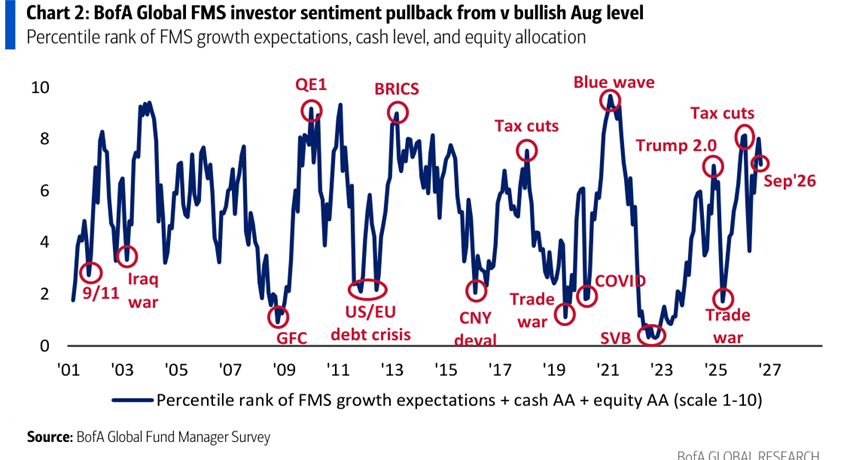
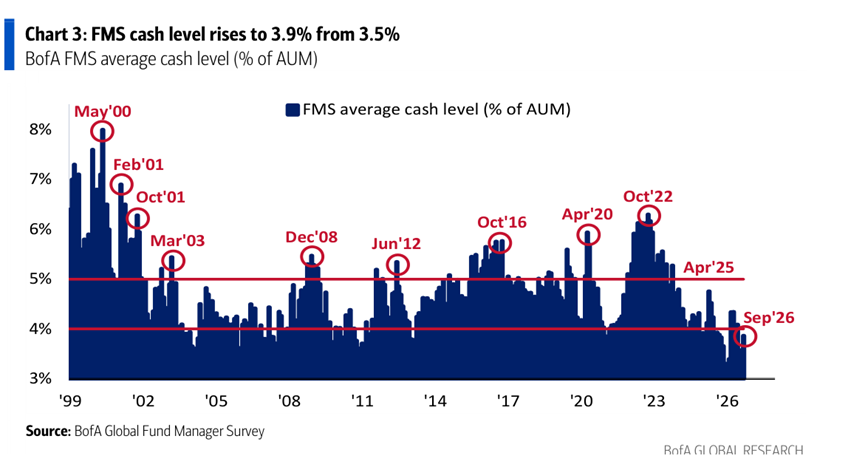
1. Positioning: Investor sentiment has retreated from its August highs, with cash positions rising to 3.9% (vs. 3.5% in August)
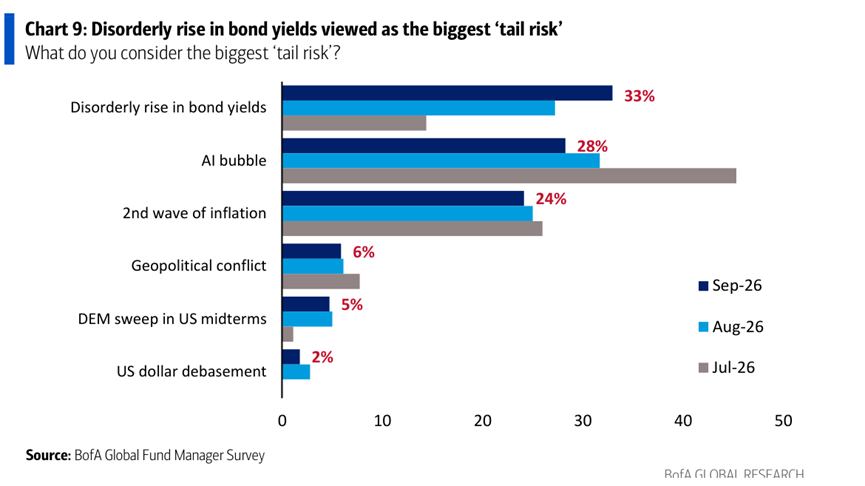
2. Risk: Bonds are seen as the biggest risk (33% vs. 27% in August), while the proportion who believe the AI bubble is the biggest risk has dropped to 28% (vs. 32% in August)
3. Interest Rates: 36% of investors expect rising interest rates and a flattening curve, the highest since September 2022
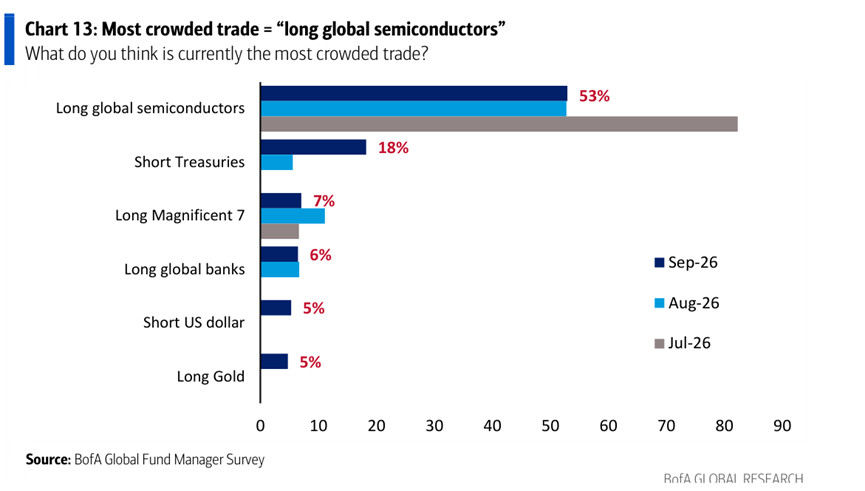
4. Crowding: 53% of investors believe that going long on semiconductors is the most crowded trade, unchanged from August; the second is shorting U.S. Treasuries (18%)
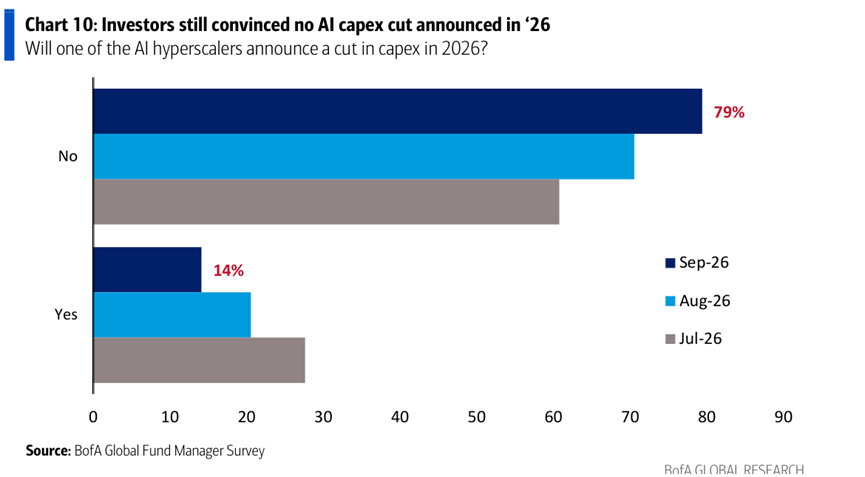
5. Capital Expenditure: 79% believe there will be no cut in capital expenditures in 2026 (vs. 71% in August)
6. Midterm Elections: 44% expect the Democrats to control the House of Representatives while the Republicans control the Senate; the expectation for a Democratic sweep has increased to 31% (vs. 23% in August)
Asian Market:
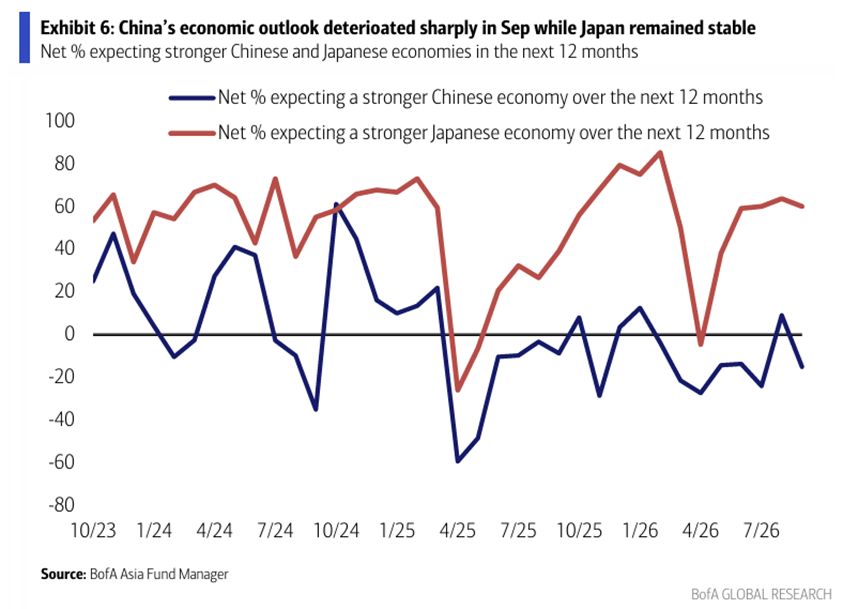
1. Expectations for China’s economic growth have weakened significantly
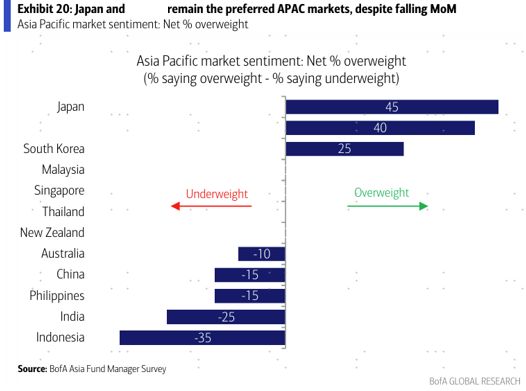
2. In the Asia-Pacific market, over-allocated to Japan at 45% (vs. 50% in August), Taiwan at 40% (vs. 55% in August), and the highest proportion in semiconductors for South Korea, while under-allocated to Mainland China at -15% (vs. -18% in August)
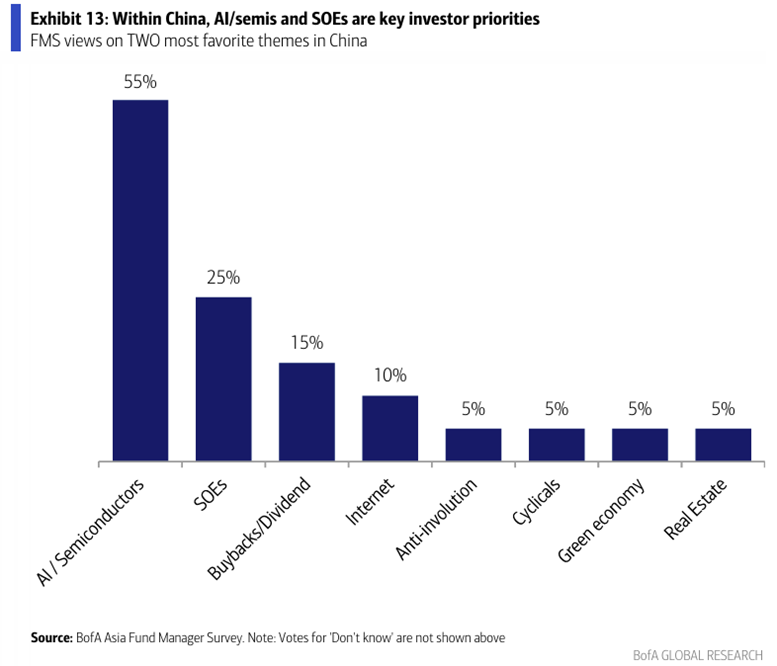
3. Within the Chinese market, AI and semiconductors are the most favored (55%), followed by state-owned enterprises (25%) and dividends (15%)
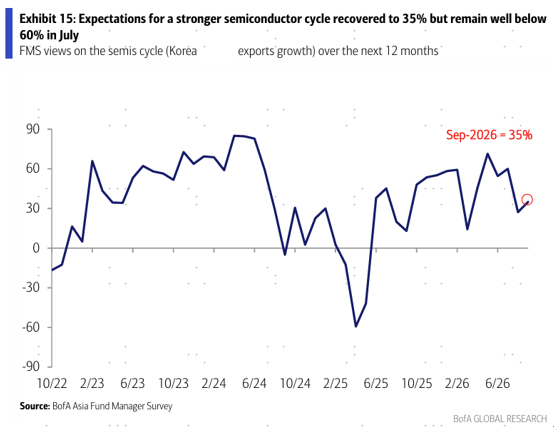
4. The proportion optimistic about semiconductors in South Korea and Taiwan has risen to 35%, but is still significantly lower than July's 60%
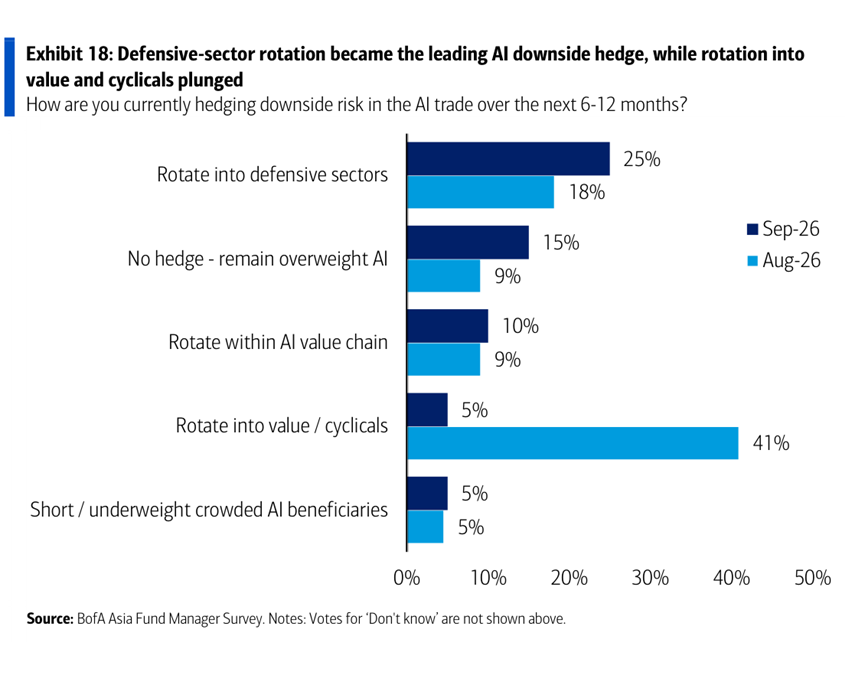
5. To hedge against AI risks, more investors (25% vs. 18% in August) are rotating into defensive sectors

I. Global Investment Manager Survey
1. Positioning: Investor sentiment has retreated from the August highs; cash positions increased to 3.9% (vs. 3.5% in August)
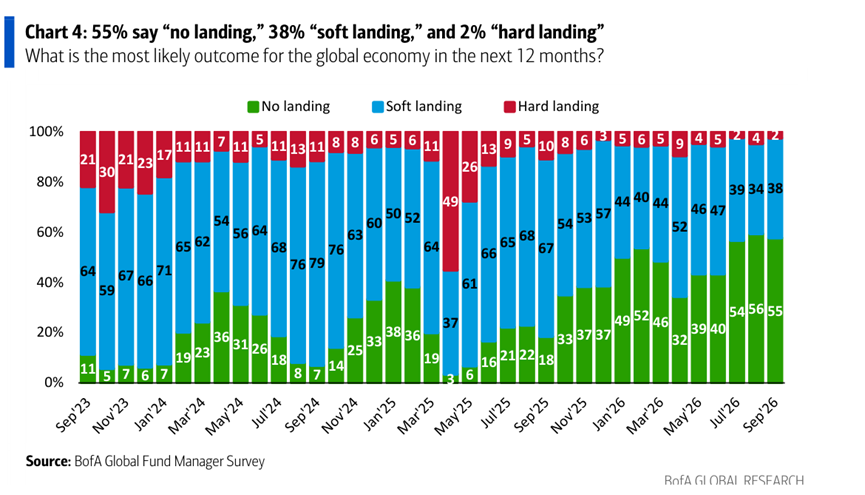
2. Growth: The proportion expecting a stronger global economy dropped from 14% in August to 8% in September; the number of those who expect the global economy to not 'land' decreased slightly from 56% in August to 55%, while 38% believe in a 'soft landing' (vs. 34% in August), and 2% expect a 'hard landing'
3. Risk: Rising bond rates are the biggest tail risk (33% vs. 27% in August), replacing the AI bubble; the proportion that sees the AI bubble as the biggest risk has dropped to 28% (vs. 32% in August)
4. Interest Rates: For the first time since September 2022, investors expect the yield curve to flatten; 36% of investors anticipate rising interest rates, the highest since September 2022, and 25% believe monetary policy is 'stimulative'
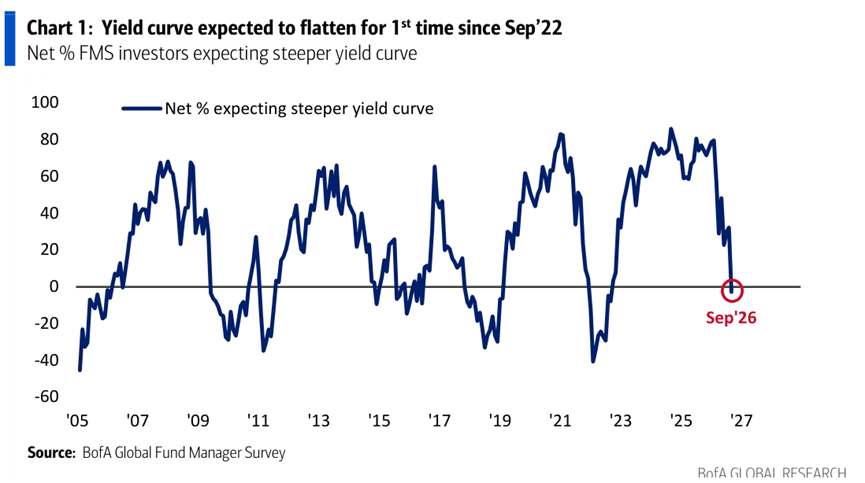
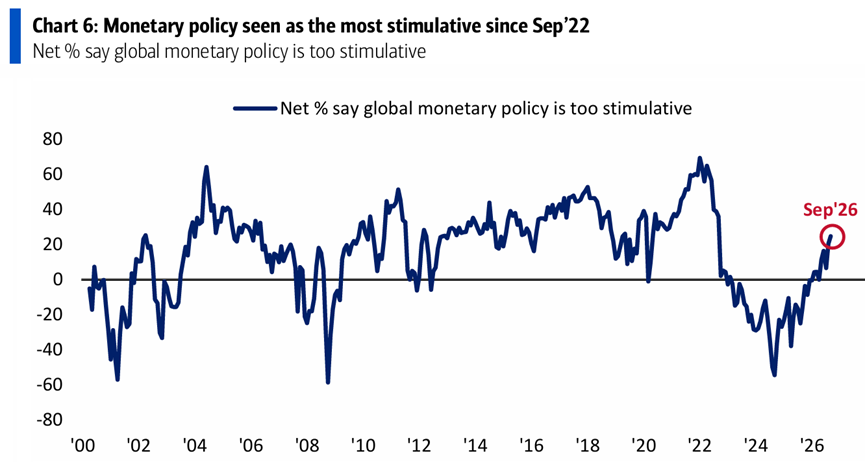
5. Crowding: 53% believe going long on semiconductors is the most crowded trade, unchanged from August; 18% believe shorting U.S. Treasuries ranks second
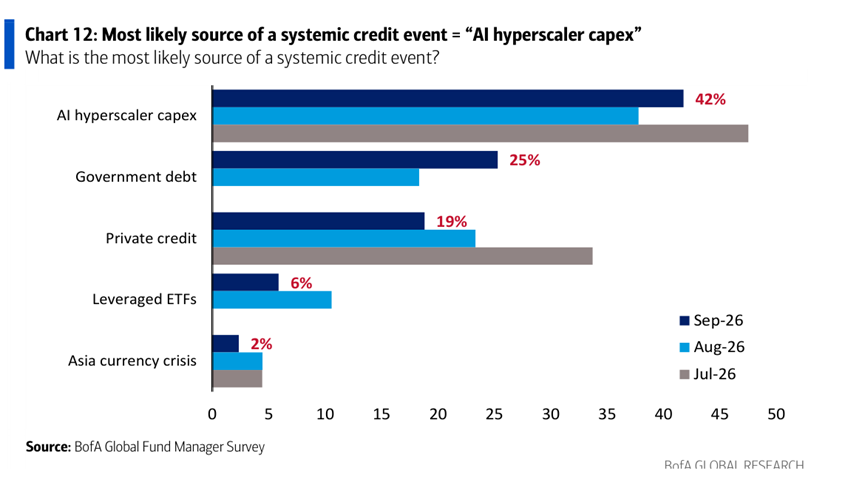
6. Capital Expenditure: 79% expect that large cloud providers will not announce cuts to capital expenditures in 2026 (vs. 71% in August); 42% believe that capital expenditures from AI large cloud providers are most likely to trigger credit risk (vs. 38% in August)
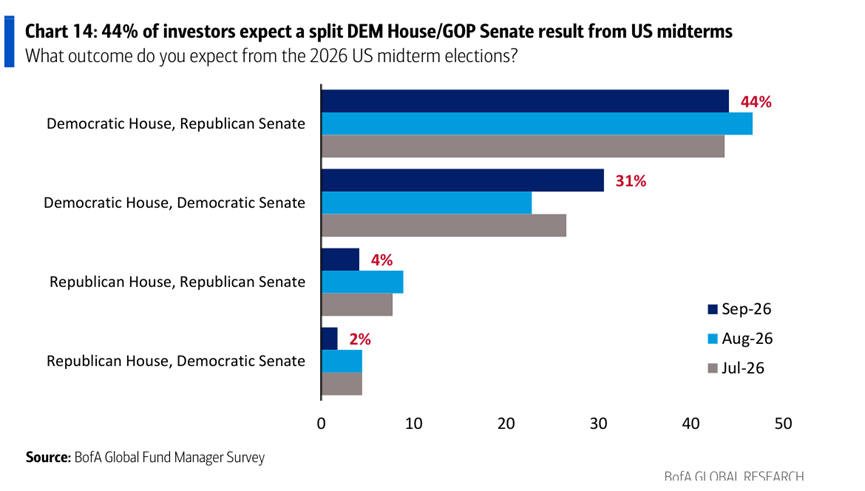
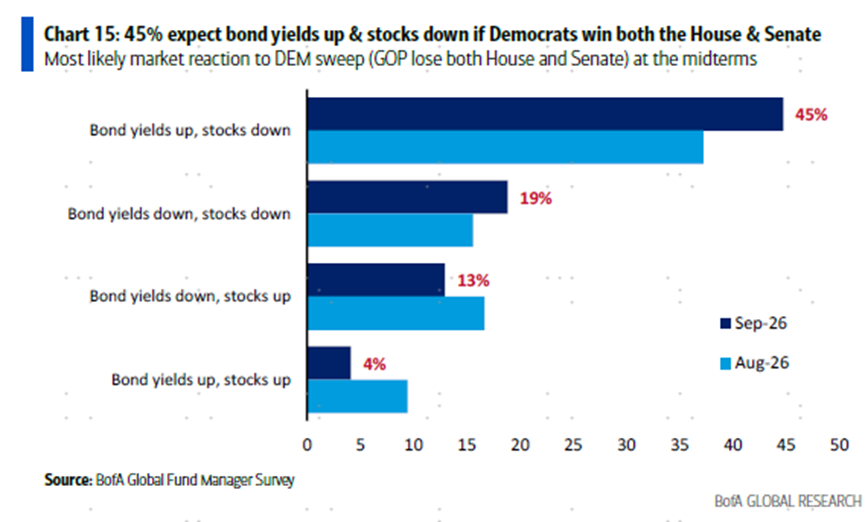
7. Midterm Elections: 44% expect the Democrats to control the House of Representatives, while the Republicans control the Senate; the expectation for the Democrats to control both chambers has risen to 31% (vs. 23% in August). If a Democratic sweep occurs, 45% expect the market response to be “rising interest rates and falling stock markets”
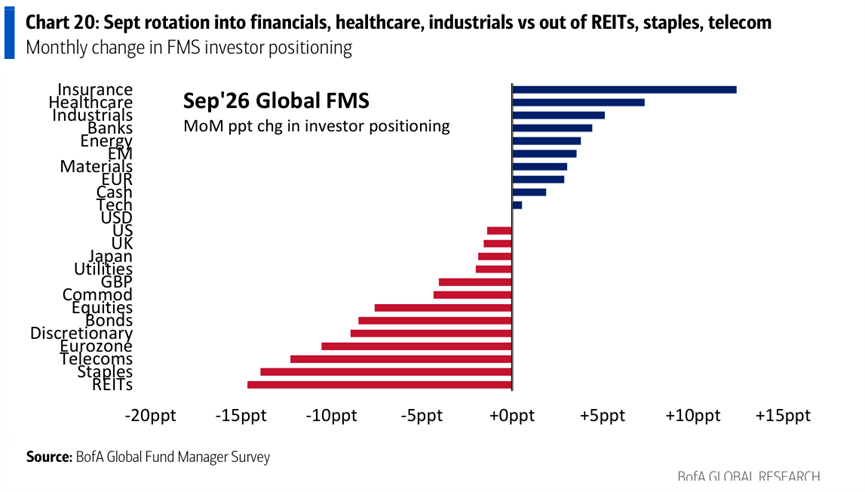
8. In September, investors increased allocations to insurance, healthcare, and industrials, and reduced allocations to REITs, consumer staples, and communication

II. Asia Investment Manager Survey
1. Expectations for China’s economic growth have significantly weakened in September; 55% of investors expect an improvement in profits for Asia-Pacific excluding Japan over the next 12 months (vs. 45% in August)
2. Within the Asia-Pacific market, over-allocated to Japan at 45% (vs. 50% in August), Taiwan at 40% (vs. 55% in August), with the highest percentage in investors for South Korea, and under-allocated to Mainland China at -15% (vs. -18% in August)
3. In the Chinese market, foreign investors are most optimistic about AI and semiconductors (55%), followed by state-owned enterprises (25%) and share buybacks (15%)
4. The proportion optimistic about the semiconductor cycle in South Korea and Taiwan has rebounded to 35%, but is still significantly lower than July's 60%
5. As a hedge against AI trades, more investors (25% vs. 18% in August) are rotating into defensive sectors, while the proportion rotating into value and cyclical sectors has significantly decreased (5% vs. 41% in August)
免责声明:本文章仅代表作者个人观点,不代表本平台的立场和观点。本文章仅供信息分享,不构成对任何人的任何投资建议。用户与作者之间的任何争议,与本平台无关。如网页中刊载的文章或图片涉及侵权,请提供相关的权利证明和身份证明发送邮件到support@aicoin.com,本平台相关工作人员将会进行核查。


