No one has ever called a meeting with 8 billion people. Yet the consensus is already on the ledger.
The McKinsey Global Institute estimates that by 2025, global household wealth will rise to about $570 trillion, with global balance sheets nearing $180 trillion. Of the wealth increment, only about 20% genuinely comes from newly formed physical capital, while the rest is largely due to the appreciation of existing assets. The allocation of equities between households and pensions in the United States is close to historical highs, with retirement system assets reaching $51.2 trillion by the second quarter of 2026, accounting for about one-third of U.S. household financial assets. McKinsey estimates global household financial wealth at approximately $341 trillion, and the asset management scale at about $159 trillion.
These numbers translate into a single phrase:
Wages solve today, asset prices bear tomorrow.
You may not self-identify as an investor, but pensions, provident funds, insurance accounts, housing prices, treasury bonds, and stock indices are investing on your behalf. The difference is: some know the risks they bear, while others outsource the risks to default options.
For ordinary people, resonance often does not come from "global $570 trillion," but from smaller balances.
A 28-year-old who barely crosses the median monthly income in a first-tier city manages to set aside 2,000 yuan each month. He feels that investing is for the wealthy, so money stays in the bank card for "safety." Ten years later, what he will pay is rent or a down payment, and the price will have already been rewritten according to inflation.
A 35-year-old family with children treats cash as emergency funds and expands indefinitely; however, the portion exceeding six to twelve months' expenses is actually an unaccounted "long position in cash." Education for the child and medical care for the parents sees bills increasing in nominal amounts while the interest on savings climbs at a rate far lower than inflation.
A 45-year-old man who "only trusts real estate" has already made the largest investment of his life, but it is one-dimensional. In years when housing prices rise, he feels he understands assets well, but only in years when housing prices level off does he realize: concentration itself is a risk.
None of these three types of individuals considers themselves "speculators." Yet all three are already bearing risks. What investment knowledge needs to address is making these risks visible.
"Investing is a zero-sum game; if someone wins, someone must lose"—where is the right and where is the wrong?
In the secondary market, as you buy and I sell, the algebra of price fluctuations can approach zero, and after accounting for friction, becomes a negative sum. To speak of this layer as the entirety of finance is to treat the casino hall as the entire city.
The parts of finance that are compensated with high salaries involve three seemingly unexciting activities.
First, cross-period allocation. Power plants, chip factories, drug trials, power grids, with recovery cycles measured in years. No one pays for steel and silicon ten years from now with tonight's wages. Bonds, stocks, and credit turn today’s savings into entitlements for future cash flows. Mispricing is not just one less car for the trader; it is society misallocating steel to places it shouldn't be used.
Second, the tradability of risks. Exporters need to lock in exchange rates, farms typically lock in grain prices, and companies lock in interest rates. The social function of derivatives begins as insurance and then proceeds to speculation. Speculation provides counterparties; insurance can only be sold when it has counterparties. Declaring all derivatives as zero-sum gambling means demanding the real economy absorb all the volatility itself.
Third, information compression. Prices provide a language that doesn’t require meetings. A rising interest rate, falling stock prices, and widening credit spreads are tickets purchased with real money by thousands of accounts. It often makes mistakes, but it acknowledges errors faster than committee voting. This is the essence of "uncommunicated consensus": it does not mean everyone shares the same viewpoint, but that everyone must confront the same set of pricing.
Thus, the world’s top mathematical, physical, and computer talents continue to flood into finance. Not because this industry is more ethical, but because the externality of mispricing is substantial, while those who can write uncertainty into executable prices are scarce. Hedge fund excess returns can be zero-sum; exchanges, clearing, market making, asset management, and risk control maintain the market in a tradable state, which is not zero-sum. Writing two types of people as one will forever misalign the debate.
The act of investing itself does indeed provide a sense of winning and losing that has been tamed by data. Candlestick charts, funding rates, positions, and macro calendars force the vague "I feel" into judgments that can be analyzed retrospectively. What’s interesting is the game, but dangerous is treating the thrill of the game as a revenue model. The advantage of professional traders has never been excitement; it lies in their positions, discipline, and acknowledgment that they too can be wrong.
Why ordinary people still need some investment knowledge
Not to become traders. But for four more down-to-earth matters.
Cash will depreciate. Even if nominal interest rates remain, inflation and the total money supply will rewrite the purchasing power of deposits.
Default options are also positions. Those who do not buy stocks often overexpose themselves to properties and cash; this is not neutral but another kind of concentration.
Products can disguise themselves. Spot trading, wealth management, tokenized stocks, perpetual contracts, and options have totally different sources of returns. If one cannot tell them apart, they will treat 20 times leverage with the same mindset they treat deposits.
Platforms and jurisdictions will determine if you can buy and whether you can find someone when you incur losses. The first layer of knowledge is qualifications and structure, not technical analysis.
A few preliminary actionable points do not constitute a strategy.
- First, clarify whether this money will be in use within three years. Ensure that money intended for use does not enter high-volatility assets. Emergency funds should be kept separately, not mixed with long-term funds.
- Set a loss limit based on "can sleep well," rather than setting a target based on "how much can it increase after it rises."
- Learn to trade spot and record costs first before engaging with contracts. The funding fees and forced liquidations of perpetual contracts are another lesson.
- Popularity does not equal tradability. Look at transaction volumes and bid-ask spreads, not the first on the percentage gain leaderboard.
- In retrospectives, only ask three questions: What is the logic? Is the position aligned with the logic? If wrong, which rule will guide exit?
Current hottest tracks in the market.
Around September 19, 2026, Bitcoin returns to around $81,000, Ethereum to about $2,600, and the total cryptocurrency market cap about $2.78 trillion. Gold is about $4,380, the S&P 500 around 7,650 points, and the ten-year U.S. Treasury yield close to 5%. In the same week, the U.S. SEC just granted a conditional onshore pilot for tokenized NMS stocks for five years; offshore tokenized stock transactions have already concentrated on a few distribution channels. Popularity is not a single product but several parallel tracks: crypto spot, U.S. stocks and tokenized stocks, gold and interest rates, and short-term yields.
The average person does not seek to "guess the direction of this week" but wants an account that can store these tracks separately: fiat currency and stablecoins can enter, spot can be purchased, yields can stop, stocks and tokenized stocks can be viewed when qualifications permit, and derivatives are closed by default. The "broad-based 7%" from ten-year arithmetic corresponds to long-term positional thinking on indices and high-quality assets, not contracts that double over a weekend.
What Binance has placed on this menu, and which layer should beginners interact with first.
According to the platform's current public display (subject to the local page):
- Spot: BTC, ETH, and mainstream coins; this is the thinnest and should be the first layer to learn. The closest to a ten-year calculator is the ability to hold and clearly see costs in spot trading, not leverage.
- Wealth Management / Earn: A deposit place for idle stablecoins; returns come from lending or platform activities, meant to replace "bank card savings," not as a substitute for risky assets.
- U.S. stock spot: Qualified non-U.S. users can trade over 7,000 U.S. stocks and ETFs, corresponding to direct ownership of S&P, NASDAQ, or individual stocks (including corporate actions). For those wanting to replicate the "broad-based ten years" approach, index ETFs are closer than single stocks to that balance sheet.
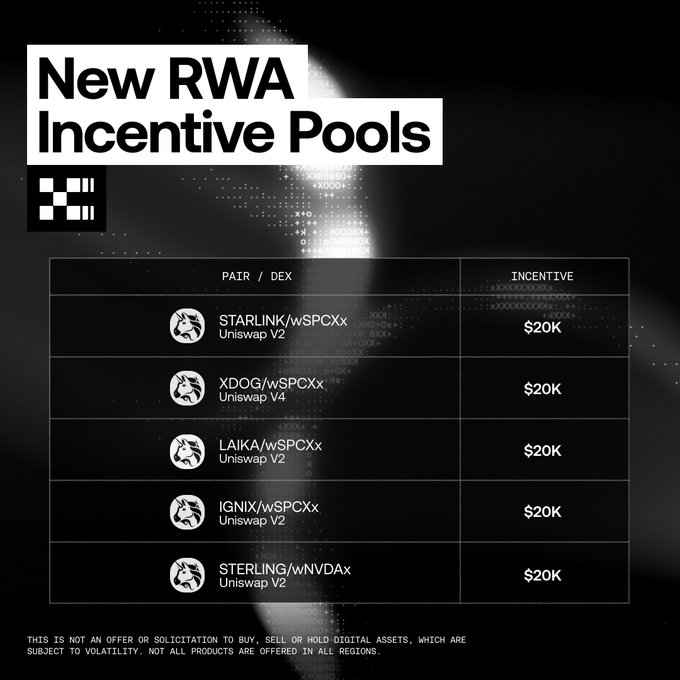
- bStocks: Tokenized securities held 1:1, traded 24 hours, can be exchanged for corresponding stocks at zero cost, tracking prices, but do not equate to shareholder status. Long-term transactions are heavily in QQQB, SPCXB, and semiconductor-related codes, not every new code launched.
- Stock options and gold/silver options: Open only after qualification, settled in physical or commodity terms, with fees calculated per contract.
- Crypto perpetual and stock perpetual: 24-hour leverage, nominal minimums can be very small, but maximum leverage far exceeds traditional brokerages. This is the last layer, not the first, and certainly not to be used to arbitrage ten-year compounding tables.
Pathways for beginners can yield four steps, rather than "buying all the popular items today."
Step one: register through
https://jump.do/zh-Hans/xlink-proxy?id=3
(Official partnership link) to complete identity verification and see clearly what products have been opened to you.
Step two: use fiat or supported deposit channels to exchange for stablecoins, first making a very small BTC or ETH spot transaction to go through buying, selling, and recording. The amount should be small enough that losing it does not affect rent.
Step three: if permitted in your location, open the stock or bStocks quotes, referencing the transaction leaderboard rather than news headlines. If you wish to express an opinion on the NASDAQ or a researched company, then utilize spot or tokenized spot.
Step four: keep contracts closed until you can clearly explain funding fees, marked prices, and liquidation prices.
For those with existing accounts, this sequence applies equally. Having an account does not mean you should take on leverage. The VIP amount calculated at 3 times, newly introduced zero makers, and activity points only change bookkeeping and fees; they do not alter whether this balance sheet is rational.
The significance of the financial industry to the world can be simply written: it allows strangers to lend savings to strangers without having to first become friends. The significance of investment knowledge to individuals is equally straightforward: it lets you know which risk profile you are already on. 100,000 yuan, 2,000 yuan monthly, or starting five years later are all just clarifying the same matter—time will stand on the side of compounding as well as on the side of inflation, depending on which side you entrust your money to.
8 billion people do not share a unified belief but collectively face the purchasing power of currency and asset prices. This is not feel-good rhetoric; it is the reality that accounts will automatically execute.
Risks remain valid after all paragraphs. Assets may not appreciate for a long time, leverage can first wipe out people in the correct direction, tokenized stocks can deviate from on-site prices, wealth management can incur losses, and platform rules and regulations can change. The high annualized returns of U.S. stocks over the past decade do not guarantee the next decade. Registration is the gateway to entry, not to guaranteed earnings. Any statement that turns "consensus" into "must rise" and translates arithmetic into capital preservation promises has already departed from the appropriate stop for this news piece.
免责声明:本文章仅代表作者个人观点,不代表本平台的立场和观点。本文章仅供信息分享,不构成对任何人的任何投资建议。用户与作者之间的任何争议,与本平台无关。如网页中刊载的文章或图片涉及侵权,请提供相关的权利证明和身份证明发送邮件到support@aicoin.com,本平台相关工作人员将会进行核查。