After oil prices, rising food prices may continue to impact the bond market.
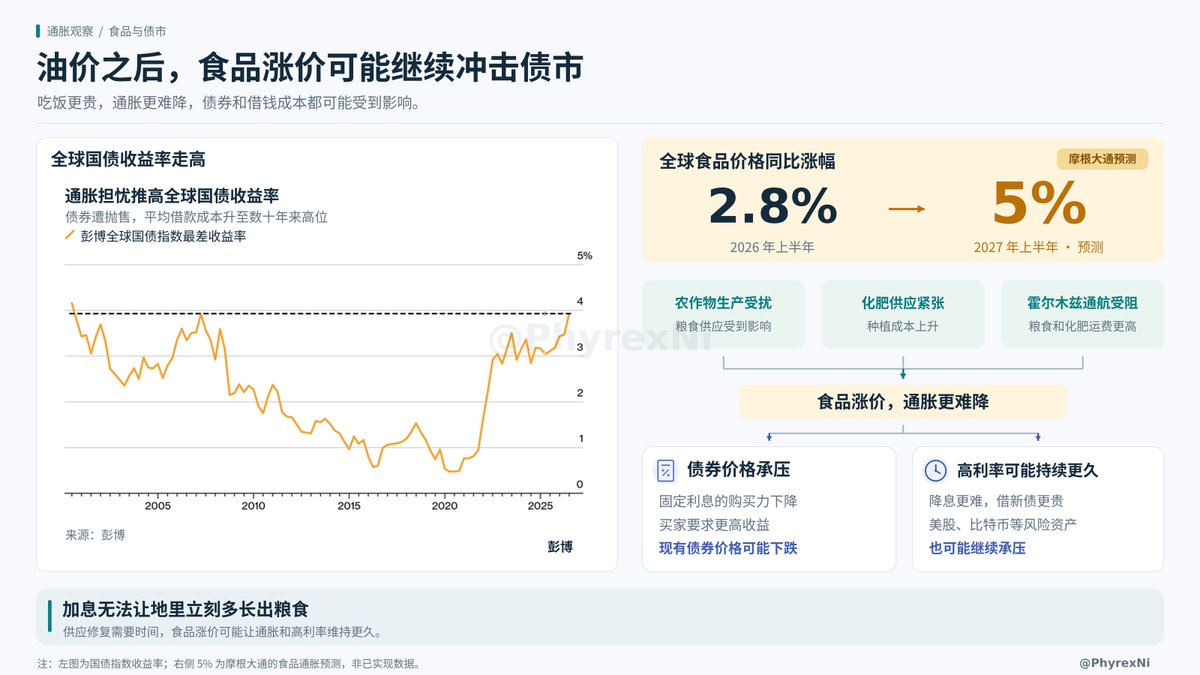
The United Nations Food Price Index has risen to its highest level since the end of 2022. JPMorgan expects that in the first half of 2027, the year-on-year increase in global food prices may reach 5%, higher than the 2.8% of the same period this year. In other words, people may have to spend more on food in the future, and even if oil prices decline, rising food prices may prevent inflation from dropping.
The reason is that crop production is affected, fertilizer supply is relatively tight, the cost of growing food has risen, and yield may also be impacted. Coupled with the blockade of Hormuz, the cost of transporting food and fertilizer has increased, and these additional costs may ultimately be reflected in supermarkets and at dining tables.
Moreover, it takes time for food to grow from being planted to harvest; when supply issues arise, it is difficult to recover immediately, and interest rate hikes cannot make food grow instantly in the fields.
This is also a concern for the bond market. As prices continue to rise, the fixed interest paid by bonds becomes less and less meaningful, and investors will demand higher yields to be willing to buy, which may lead to continued declines in the prices of existing bonds. At the same time, with inflation not coming down, it becomes harder for central banks to feel comfortable lowering interest rates, and the government and businesses will continue to bear higher borrowing costs.
Therefore, if food prices continue to rise, high interest rates may persist for longer, and the risk market will also continue to be affected.
@Gate Crypto, U.S. stocks, Hong Kong stocks, Korean stocks, gold, CFD, one-stop trading for prediction markets
免责声明:本文章仅代表作者个人观点,不代表本平台的立场和观点。本文章仅供信息分享,不构成对任何人的任何投资建议。用户与作者之间的任何争议,与本平台无关。如网页中刊载的文章或图片涉及侵权,请提供相关的权利证明和身份证明发送邮件到support@aicoin.com,本平台相关工作人员将会进行核查。


