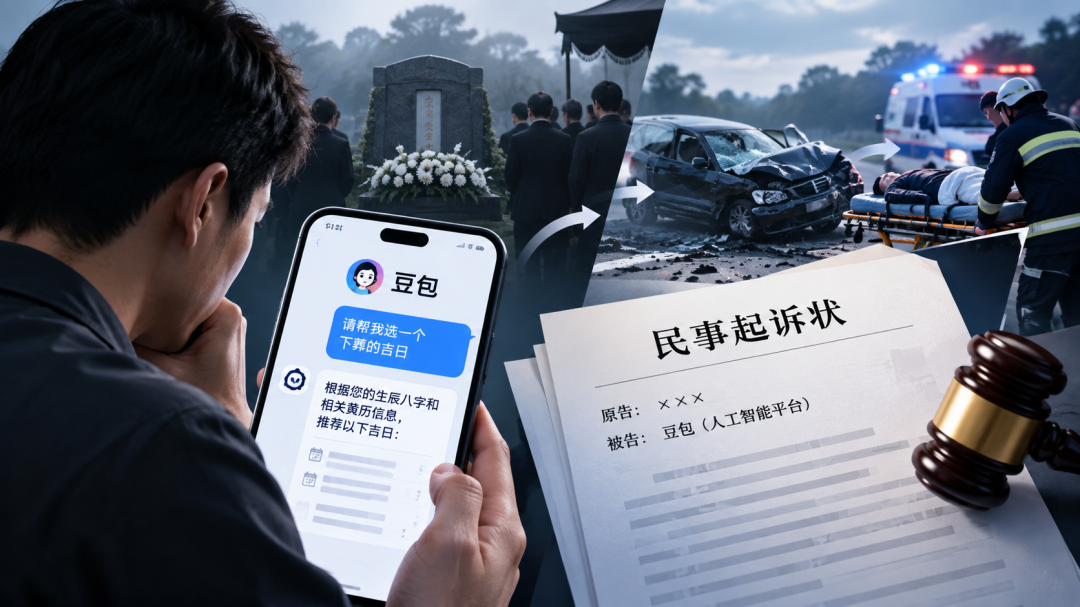
In Jiaxing, Zhejiang, Mr. Shi's mother passed away suddenly from illness on April 17, 2026.
The local feng shui master calculated that April 20 was a suitable day for burial. Mr. Shi felt that this timing did not align with the local custom of "burial within three days," and hesitated.
Then he opened Doubao and asked the AI: Which day is an auspicious day?
Doubao provided a date: April 19.
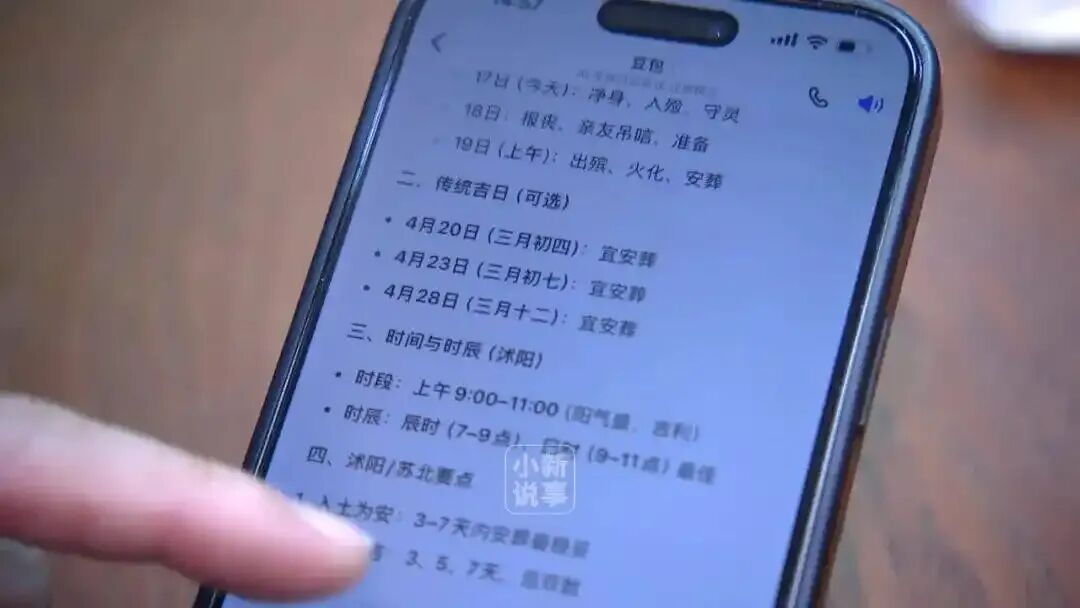
Mr. Shi believed it. He notified friends and relatives, arranged the funeral, and followed through with everything.
But after the arrangements were completed, he asked about the timing again. This time, Doubao changed its response: April 19 was actually not an auspicious day.
Notices had already been sent out, and guests had been invited, so changing the date would be too costly. Mr. Shi could only go through with the burial on the 19th.
Shortly after the funeral, a relative in the family had a traffic accident and suffered serious injuries.
The family attributed this outcome to: the burial date was not chosen well, and there were feng shui issues.
Mr. Shi complained to the platform without results.
Then he made a very logical decision—he sued Doubao.
Interestingly: the lawsuit was written with the help of Doubao.
The Absurdity of This Case
First, let's clarify the entire chain of logic:
Mr. Shi did not trust the feng shui master, but trusted Doubao
Doubao provided a date, then later contradicted itself
Mr. Shi arranged the funeral according to Doubao's advice
The relative had an accident—unrelated to the burial date at all
Mr. Shi blamed Doubao for choosing the wrong date
After the complaint proved fruitless, he sued
The lawsuit was also written by Doubao
This is no longer "a self-inflicted wound"; it's "hitting yourself in the face and then asking the same hand for help in writing a request for a slap back."

Netizens accurately said: "I stand on the man's head because AI can no longer fit here."
Can it Win Legally?
Difficult.
The defendant (ByteDance) argued in court: Auspicious days belong to folklore superstitions, user agreements clearly state that "content is for reference only and should not be used as a basis for professional decisions," and the platform is not at fault.
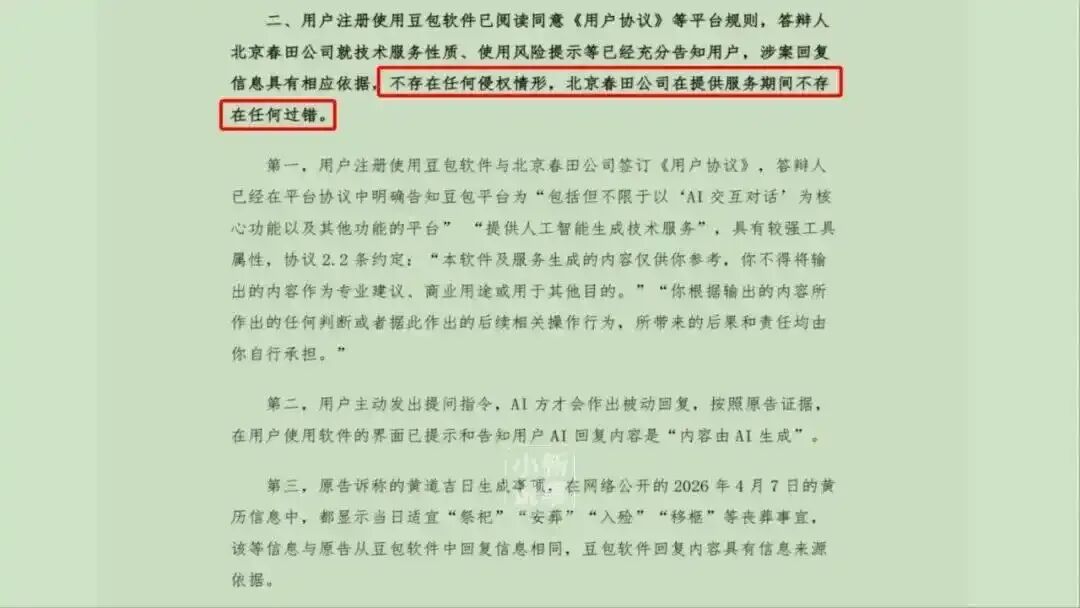
Third-party lawyers have pointed out two core issues:
First, the relative's car accident is an independent unforeseen event, making it legally difficult to establish a causal relationship with the "burial date."
Second, there is no unified standard for the lunar calendar/auspicious days. Different versions of the calendar provide contradictory interpretations. The AI essentially just integrates information from the web; it cannot predict fortune or misfortune.
The hearing began on September 15, and a verdict has not yet been announced.
The Real Topic Worth Discussing
Aside from the absurdity of this case, it actually exposes a deeper phenomenon: more and more people are using AI as an "encyclopedia" for everything, including questions that AI should not be answering at all.
Mr. Shi claims to be a loyal user of Doubao, "I use it almost every day and have entrusted it with many documents and contracts."
Documents and contracts—OK, that's where AI excels.
Auspicious burial dates—this is not AI's forte, and it isn't even a question AI should answer.
But AI will not refuse. If you ask it about auspicious days, it really provides you with a date. It won't tell you "I should not answer this question," nor will it remind you "this thing has no scientific basis." It will calmly give you an answer that seems authoritative, just like it would for any other question.
This is the problem: AI's "answering any question" is an advantage in most scenarios, but in certain situations, it is dangerous.
Last year, there was a similar case—where a user wanted to sue Doubao over a flight ticket refund, which was also suggested by Doubao.
When AI helps you write a lawsuit, it does not first ask you: Does this case have merit?
It just writes.
Conclusion
But winning or losing is not the point.
The important issue is: an AI product provided a specific date when a user asked "which day is suitable for burial," then later contradicted that date; the user acted on the wrong date, and AI bears no responsibility—because it said "content is for reference only."
The phrase "for reference only" has become a universal shield for all AI companies when faced with "my product was used in the wrong context."
But this shield, for users, is actually a translation:
"I can answer anything, but I am not responsible for any outcome."
Doubao helped Mr. Shi choose a date and helped him write a lawsuit.
Both tasks were completed, but the results of both tasks had nothing to do with it.
This may be the ultimate form of AI products in 2026: full participation, full exemption from liability.
免责声明:本文章仅代表作者个人观点,不代表本平台的立场和观点。本文章仅供信息分享,不构成对任何人的任何投资建议。用户与作者之间的任何争议,与本平台无关。如网页中刊载的文章或图片涉及侵权,请提供相关的权利证明和身份证明发送邮件到support@aicoin.com,本平台相关工作人员将会进行核查。