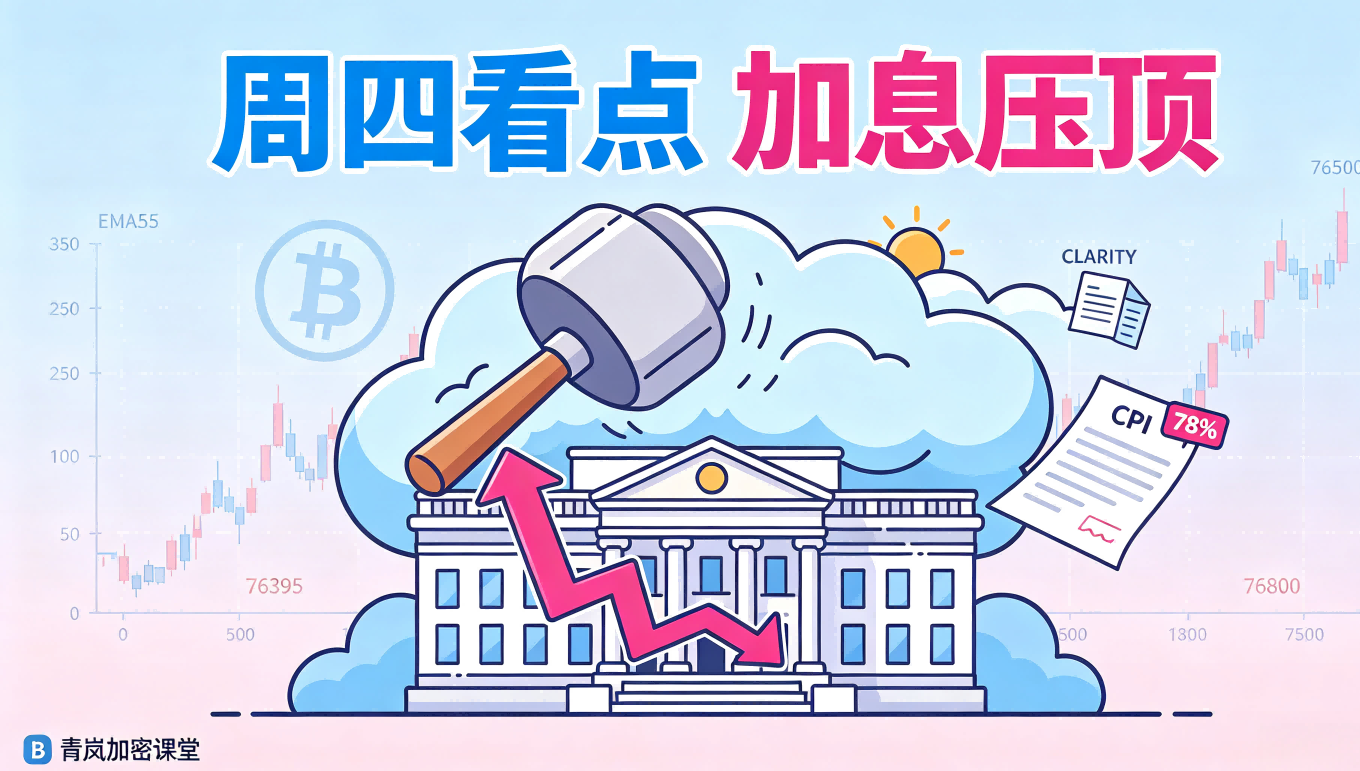
In mid-September in Washington, the procedural/cloture vote result of the "CLARITY Act" quickly froze on the Senate display screen—supporting votes failed to meet the threshold required to open formal debate, and the bill was put on hold in the Senate stage, neither passed nor definitively rejected, merely left in the shadows of the corridor. This frustration, seen as a crucial framework to clarify the boundaries of federal crypto asset regulation, represents a setback stuck at the door, which also means that U.S. crypto entrepreneurs continue to navigate forward in the uncertain gray area of rules. After the vote results were announced, several industry figures spoke out, among them a16z partner Chris Dixon, who wrote on X that "tens of billions of dollars are flowing on-chain," leading payment companies and financial institutions are accelerating the adoption of blockchain technology, and global entrepreneurs are still building new financial products to respond to this political stalemate with real-world business needs. Dixon also emphasized that a16z's policy work in Washington is "far from over," and will continue to promote the establishment of clear regulatory rules that protect consumers while leaving room for innovation—on one side, congressional procedures remain stagnant, while on the other, capital, institutions, and products are rapidly operating on-chain. At this moment when the "CLARITY Act" was blocked outside the Senate, the core contradiction between regulatory bottlenecks and the industry's strong fundamentals was exposed to the spotlight.
Vote Frustration: CLARITY Act Stuck at Procedural Threshold
In mid-September 2026, the Senate was not making a final choice on whether to pass the "CLARITY Act" itself, but rather voting on whether to "allow formal discussion of it." This type of procedural/cloture vote in the U.S. legislative process serves as a threshold to determine whether a bill can enter the main stage of full debate, accepting amendments and ultimately voting. In other words, what was rejected this time was the pass to proceed with the legislative process, not a final judgment on the bill’s life or death; the regulatory roadmap was blocked outside, but had not yet been formally declared a failure.
The result was that this threshold was not opened. The vote did not meet the threshold required to open debate, and the "CLARITY Act" was put on hold in the Senate pathway, lingering at the edge of the agenda without entering substantive deliberation. As the specific counts of supporting and opposing votes have not yet been confirmed in reliable public sources, the outside world can only see an abstract conclusion: the bill is temporarily shelved, and the unified regulatory framework continues to be absent. Some opinions instinctively attribute the vote's failure to partisan gamesmanship, but the relevant details have not been confirmed from multiple sources, making it temporarily impossible to assign blame. In this "procedural bottleneck" legislative state, Congress has neither clearly stated a desire to abandon attempts at unified legislation on crypto assets, nor has it effectively extended the time for the industry to delay progressing within uncertain boundaries through a procedural vote.
a16z Steps Out of the Trading Room, Rooted in Washington Long-term
For Chris Dixon, the Senate's procedural freeze felt more like the first hill in a long race, rather than the finish line. His statement on X deliberately extended the time dimension— a16z's work in Washington is "far from over" and will continue to promote the establishment of clear regulatory rules—this is not just an emotional appeasement of a voting result, but a clear signal to LPs and project parties: this leading venture capital will not view Congress as merely a place to take a one-time legislative "gamble," but will integrate policy games into long-term asset allocation. Dixon also emphasized "providing innovation space for entrepreneurs while protecting consumers," condensing the frequent "protection vs. innovation" contradiction seen in the industry in recent years into a single sentence, trying to build a negotiable middle ground between regulators' risk control language and entrepreneurs' product iteration logic.
The intervention of venture capital firms does not stop at the level of voicing on social media. Capital like a16z that has a large-scale layout in the crypto and Web3 space is itself involved in filtering which business models have a chance of surviving under future regulatory frameworks, and the policy positions formed around legislation and lobbying can reverse-engineer into invisible "templates" for project parties designing compliance paths: what kind of user protection measures are more easily accepted by regulators, what kind of token issuance and governance structures are more persuasive in the context of Congress, and which business boundaries are best avoided in the current uncertain environment. Dixon’s emphasis on being "far from over" after the Senate vote failure essentially tells entrepreneurs and invested companies: even if the CLARITY Act is temporarily stuck at the procedural threshold, U.S. rules will not naturally grow in a vacuum, and those willing to establish a long-term presence in Washington will have the opportunity to write their preferred compliance paths into the future industry script.
When Regulation is Delayed: On-chain Funds and Institutional Adoption Running Ahead
Dixon's statement on X that "tens of billions of dollars are flowing on-chain" serves to remind Washington: regardless of Congress's willingness to open debate, economic activities on-chain have expanded ahead of the bill. Funds and transactions are no longer just experimental "trial runs," but are continuously operating under a global framework, with scenarios like payments, settlements, and asset trading increasingly relying on on-chain infrastructure. More crucially, he pointed out that leading payment companies and financial institutions are accelerating their adoption of this technology—traditional financial systems are no longer standing in opposition to the crypto industry but are considering on-chain as part of their own pipelines. This "first get on board, then pay the fare" reality objectively creates pressure for regulators: the more systemic institutions move their key businesses on-chain, the harder it becomes for the existing vague framework to support risk assessments, liability determinations, and inter-agency collaboration.
In the U.S., the "CLARITY Act" was originally expected to provide clear boundaries for the connection between this new and old system, but now, with the setback of the procedural vote, it means that such clarity is difficult to realize in the short term, and platforms, project parties, and developers can only continue to make real choices in the gray area. On one end is the U.S. federal environment still lacking unified legislative support, with teams having to leave "policy maneuvering space" in product design, token structures, and user coverage; on the other end, jurisdictions like Hong Kong have already clearly outlined virtual asset licensing and tokenization regulatory paths in government policy reports, with the Monetary Authority planning to test the tokenization of foreign exchange fund notes by the end of 2026, providing a relatively predictable compliance roadmap. In a world where regulation is delayed, and funds and institutions are running ahead, U.S. entrepreneurs increasingly need to answer a question no longer abstract: to which legal order will their code and business ultimately serve.
U.S. Stalling, Hong Kong Accelerating: Diverging Paths of Licensing and Tokenization
On one side, the U.S. federal-level key framework "CLARITY Act" was frustrated in the Senate procedural voting, making it difficult to enter formal debate and even more so to provide unified rules for the market in the short term; on the other side, Hong Kong has directly included licensing and tokenization in the government timetable in its policy report. In early 2026, the Hong Kong SAR government has made it clear that the Securities and Futures Commission will improve the virtual asset licensing system and regulatory framework for tokenized investment products, proposing to promote the issuance and trading of gold and other suitable physical assets on licensed platforms, and is planning to normalize the issuance of digital bonds, exploring the use of digital currencies to complete settlements, dividends, redemptions, and other life cycle scenarios. Meanwhile, the Monetary Authority has set the goal of testing the operation of the tokenization of foreign exchange fund notes by the end of 2026, elevating tokenization from "product innovation" to "infrastructure testing." In the U.S., entrepreneurs are still waiting for an unresolved procedural vote and unfulfilled bipartisan commitments; in Hong Kong, project parties can already design licensing applications, RWA structures, and technical solutions for tokenized bonds based on the paths provided by regulators.
This divergence is quickly being reflected in the site selection decisions and compliance architecture of entrepreneurs. For U.S. domestic teams, the lack of clear federal rules means they must break down business risks between state laws, existing securities regulatory practices, and a temporarily shelved "CLARITY Act," while Hong Kong provides another problem-solving approach with its roadmap from the Securities and Futures Commission and the Monetary Authority: operating businesses related to gold, other physical assets, and digital bonds within licensed platforms and regulated infrastructures. Cross-border projects are beginning to weigh whether to continue waiting for U.S. legislation to take shape or to build products and asset structures along the tokenization test fields in Hong Kong, maintaining distance from U.S. investors through geographic restrictions and contractual terms. The speed difference between licensing systems and tokenization regulation is pushing global crypto and capital market projects toward the reality of "U.S. rules unsettled, Hong Kong leading the way."
Commitments, Lobbying, and the Uncertain Regulatory Window of 2026
Over here in the U.S., the window has not truly closed. According to reports, seven Democratic senators publicly stated after the procedural voting setback that they will promote bipartisan cooperation in hopes of sending the "CLARITY Act" across the finish line before the end of 2026, forming a politically framed timeline, but still remaining in the realm of "talk." The president of The ETF Store, Nate Geraci, immediately questioned that such statements have so far been more about appeasing market sentiment than actual actions capable of reversing the schedule. In contrast, capital and project parties are demonstrating patient strategies: while expressing disappointment, Chris Dixon emphasizes that "tens of billions of dollars are flowing on-chain," and a16z's policy work in Washington is "far from over," meaning that leading capital will not withdraw from the congressional corridor due to a single procedural failure but will accept a long game, continuously betting in hearings, draft amendments, and bipartisan coordination. For U.S. domestic crypto entrepreneurs, platforms, and capital, their mid to short-term compliance strategies are thus locked in a state of simultaneous high pressure and maneuverability—on the one hand, needing to reserve higher legal and compliance costs in an environment where regulation remains unclear and the prospects for the bill as of September 17 remain uncertain, defaulting to a risk baseline of "enforcement first, legislation later"; on the other hand, they utilize regulatory gaps and geographical differences to retain maneuvering space in product issuance locations, asset structures, and investor access conditions, while probing more actively navigated regulatory testing grounds in Hong Kong, and simultaneously continuing to invest resources in long-term lobbying efforts in Washington. The regulatory window for crypto in the U.S. in 2026 has become longer and more uncertain due to this round of Senate voting; those who can hold the compliance bottom line and policy chips amid uncertainty may truly influence the layout of the table in the next rule rewrite.
Join our community to discuss together and become stronger!
AiCoin exclusive Hyperliquid benefits: https://app.hyperliquid.xyz/join/AICOIN88
AiCoin exclusive Aster benefits: https://www.asterdex.com/zh-CN/referral/9C50e2
On-chain Telegram community: https://t.me/AiCoinWhaleData
On-chain community: https://www.aicoin.com/link/chat?cid=N6OVMor5g
AiCoin on-chain Twitter: https://x.com/aicoinwhaledata
免责声明:本文章仅代表作者个人观点,不代表本平台的立场和观点。本文章仅供信息分享,不构成对任何人的任何投资建议。用户与作者之间的任何争议,与本平台无关。如网页中刊载的文章或图片涉及侵权,请提供相关的权利证明和身份证明发送邮件到support@aicoin.com,本平台相关工作人员将会进行核查。