Iran's hard control over global oil is accelerating the rise in oil prices as Saudi crude exports face obstacles.
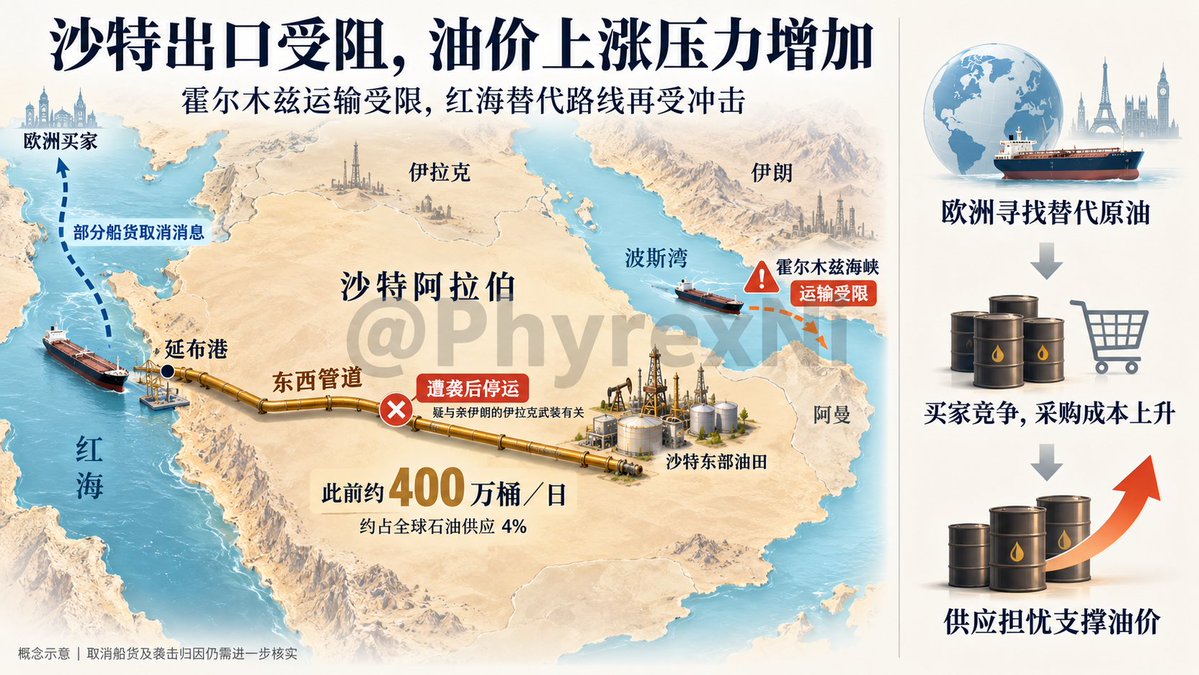
Currently, there are reports that Saudi Arabia has informed some European customers about the cancellation of crude oil shipments scheduled for late September, and the loading of crude oil at the Dammam port has also been paused. The east-west pipeline, which was attacked, has stopped operating, affecting Saudi Arabia's alternative export route that was supposed to bypass Hormuz.
This pipeline previously transported about 4 million barrels of crude oil daily, accounting for approximately 4% of global oil supply. If it cannot be restored for a long time, and inventory continues to deplete, the price of crude oil will face greater pressure.
The biggest concern for the market is that transportation through Hormuz has not yet returned to normal, and the alternative route to the Red Sea has also been impacted. The fewer export channels available, the more sensitive the market will be to any attack or delivery delay.
If Europe temporarily increases its procurement, it will need to look for crude oil from the North Sea, the U.S., or other regions. These supplies already have other buyers, and with more people competing for the same batch of crude oil that can be delivered on time, procurement costs may continue to rise, with pressure also transmitted to other regions.
The reason for the halt of Saudi Arabia's east-west pipeline is suspected to be related to Iran-affiliated armed groups in Iraq. So, defying Iran is not an option; it has single-handedly controlled global oil prices for 7 months, leaving everyone at their wit's end. Impressive! It should be called "dad."
@Gate Crypto, U.S. stocks, Hong Kong stocks, Korean stocks, gold, CFD, one-stop trading for predictive markets
免责声明:本文章仅代表作者个人观点,不代表本平台的立场和观点。本文章仅供信息分享,不构成对任何人的任何投资建议。用户与作者之间的任何争议,与本平台无关。如网页中刊载的文章或图片涉及侵权,请提供相关的权利证明和身份证明发送邮件到support@aicoin.com,本平台相关工作人员将会进行核查。


