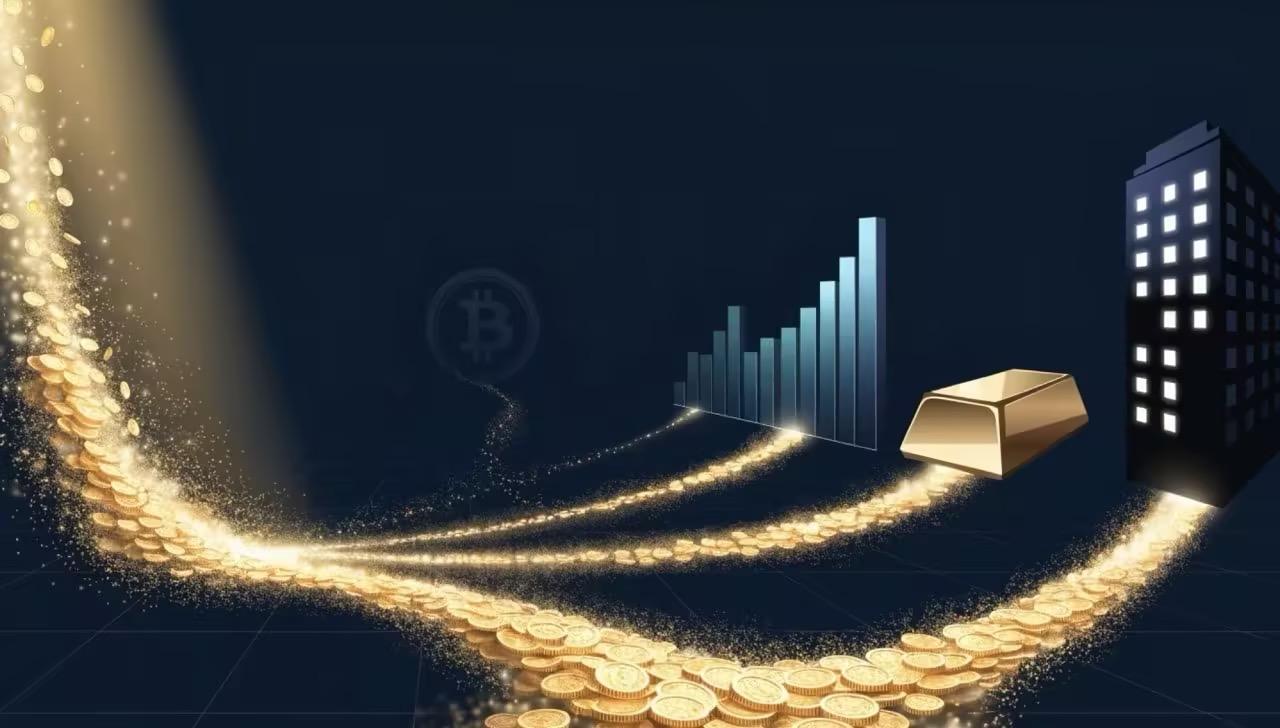
In early September, many families' mobile phones simultaneously popped up three types of messages. One type is gold: the international gold price bounced back after retracting from the high point at the beginning of the year, swinging back and forth between 4300 and 4500 US dollars, domestic gold ETFs showing net selling of several hundred million yuan in a single day, and the price difference between gold shops and investment gold bars still glaring. One type is banks: the three-year fixed deposit has dropped from nearly 3% a few years ago to around 1.55% at major banks, with investment subsidiaries calculating an average annualized yield of only about 2.05% in the first half of the year, while the one-year fixed deposit is slightly better, at least breaking 1%, and financial products can unexpectedly incur losses, influenced by recent poor performance in the stock market. One type is the stock market: the Shanghai Composite Index has once again slipped below 3900 points, and trading volume in the two markets has significantly shrunk from the mid-year high, with stock ETFs turning from net inflow to net outflow. With these three messages overlaying, the real question for retail investors is not "which hot spot is the loudest," but—where can they put that money at home that they dare not gamble recklessly and are unwilling to watch thin away.
Let’s state the conclusion outright to avoid sensationalism: the volatility of BNB, regulatory uncertainty, and counterparty risk in exchanges are all significantly higher than those of gold and bank wealth management. It does not possess the attribute of “lower risk.” The only reason it is worth discussing is—within the realm of crypto assets, it is one of the few that has real use cases, a continuous destruction mechanism, and global liquidity; for those who have already set aside a living reserve, gold, and a solid wealth management base, it can at most account for a very small portion of risk assets.
1. What retail investors are really anxious about is "not enough stability to use, but dare not touch the aggressive."
In the past decade, ordinary families have defaulted to three avenues: real estate responsible for appreciation, savings providing peace of mind, and Yu'ebao and bank wealth management being slightly more profitable than demand deposits. By 2026, these three paths will simultaneously narrow. The share of real estate in total household assets has already slid from a peak to just slightly above 50%; second-hand home transactions exceed new homes as the real estate market enters a phase of stagnation and liquidity, no longer a wealth engine that can be jumped into with closed eyes. The savings aspect is even more direct: the posted interest rate for three-year fixed deposits has fallen over 100 basis points from its peak, and when money matures and is re-invested, the reported interest is reduced. The scale of wealth management is still expanding, but the average yield across the market has been pressed to slightly above 2%, erasing the relative advantage over savings, and incurring net value fluctuations.
Anxiety generally boils down to three statements: “Not buying feels like a loss, but bought and then afraid of being trapped”; “Stable products cannot keep up with inflation expectations”; “Too many high return stories are heard, but stories of principal losses are heard too little.” There is also a more insidious anxiety called “peer comparison”—colleagues are buying gold ETFs, relatives are flaunting funds, and on short videos, someone says they've changed cars with cryptocurrency. Professional allocation does not deny this emotion but translates it into constraints: what you truly want is security, inflation resistance, or doubling overnight? The three goals cannot be achieved simultaneously with the same amount of money.
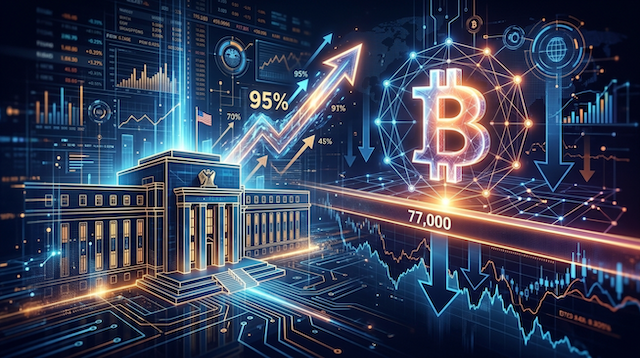
September 2026 tightened the road signs again. The good US non-farm payrolls and PPI in August raised the bets on interest rate hikes in September to around 60% to 70%, while the ten-year US Treasury yield briefly approached 5%. In China, M2 growth year-on-year at the end of August reached 7.5%, with interbank rates around 1.4%, indicating that short-term funds are not expensive, but the combination of “needing both safety and significant appreciation” is itself expensive. Many institutions wrote September's key words as: defense and waiting.
2. How are the most familiar paths for the public doing now?
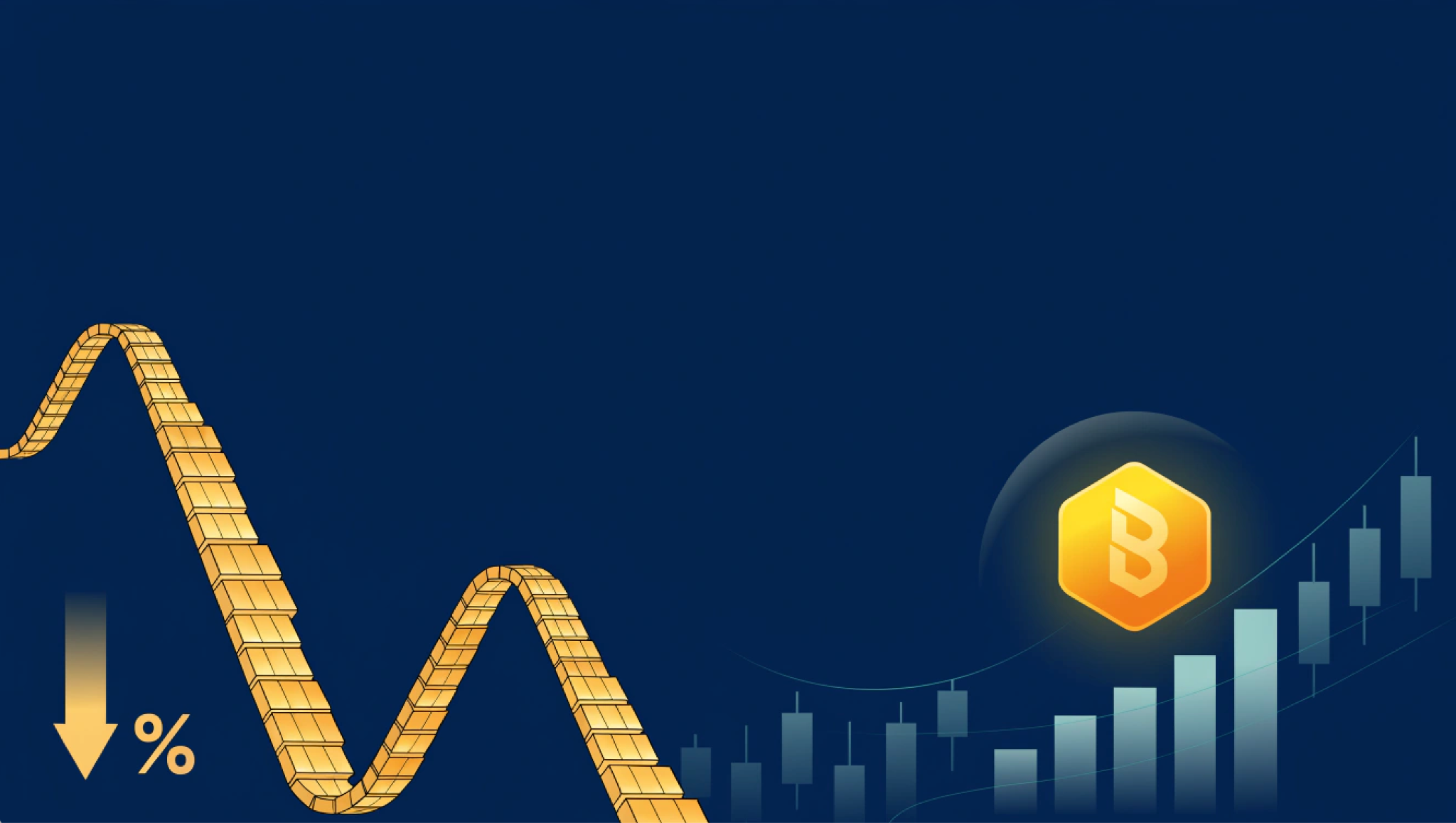
Gold: The long logic remains, but short volatility no longer resembles a safe haven. In early 2026, spot prices briefly reached above 5500 US dollars; by mid-September, they have returned to 4280–4350 US dollars, with a drop of about 20% from the peak at the start of the year. On September 10, the daily drop was close to 2%, and there was significant net redemption in domestic gold ETFs. Gold has not turned into scrap metal but has transformed from “blindly avoiding risk” into a high-volatility asset after being crowded at a high position. In extreme market conditions, it can also be liquidated for cash. It is suitable as an insurance holding of 5%-15% in financial assets, focusing on investment bars or gold ETFs, avoiding treating gold jewelry premiums as investment returns, and definitely not using T+D and leverage for bottom-hunting. The Federal Reserve's discussions around September 16 are a schedule for traders, not an exam date that families must bet on.
Savings and bank wealth management: principal is relatively safe, but appreciation functionality is weakening. As of August, the size of wealth management was approximately 33.4 trillion yuan, with a scale-weighted average annualized yield of about 2.38%; the average annualized yield across the market in the first half of the year was approximately 2.05%. Major banks’ cash management types are commonly at around 1.4% annualized for seven days, and fixed-income performance benchmarks are mostly between 1.9%-2.2%. The three-year and five-year fixed deposits continue to decline, and high-interest offerings from joint-stock banks often target new customers, short terms, and small amounts. They should still prioritize covering 6-12 months of living expenses and upcoming rigid expenditures. The risk lies in treating net value-type wealth management as guaranteed and buying products with mismatched terms and opaque investments for an extra 0.5 percentage points.
Funds and the stock market: flexible, but September feels more like a waiting period. Trading volumes in both markets have dropped from over 3 trillion at mid-year to below 2 trillion, with stock ETFs turning to net outflows in August and the Shanghai Composite Index missing 3900 points again. “Fixed income +” continues to expand and begins to incorporate REITs, but most public REITs have fallen this year. Index funds and dividend funds are suitable for investment over 3-5 years and not suitable for chasing one-month themes with sectoral funds.
Real estate: the logic for self-use remains, investment logic has shifted gears. A self-use home discusses residency and family stability. A second investment property faces a demand center shifting downward, an increasing proportion of second-hand sales, and weaker development investment. The policies support real residence, not a nationwide surge.
3. First, draw the map: core assets, satellite assets, and only then consider crypto.
The sequence must be established. The first layer is cash flow and emergency funds. The second layer is savings, money market funds, and low-risk wealth management. The third layer is stocks, funds, and some gold. The fourth layer is crypto assets. This order cannot be reversed.
The overall risk of crypto assets is higher than that of gold spot and even higher than that of R2 wealth management. BNB is singled out not because it is more stable than gold, but because: within the fourth layer, it is closer to observable infrastructure tokens than most “story coins.” The correct statement is—under the premise of already deciding to allocate a small portion of crypto assets, BNB is worth prioritizing research; it is not about replacing gold and wealth management with BNB.
Here is an example for understanding: with an investable asset of 500,000 yuan, placing 300,000 in savings and stable wealth management, 50,000 to 80,000 considering gold or short bonds, 80,000 to 120,000 in index or dividend funds, and only 20,000 to 30,000 discussing crypto. Even if half is invested in BNB, it only accounts for about 3% of total assets. Thus, if it drops by half again, the family balance sheet will not capsize. The difference between retail investors and institutions often lies not in information but in whether they can tolerate “most of the money looking very dull.”
BNB itself: utility, public chains, platforms, and destruction.
If crypto assets are classified according to “narrative purity,” BNB has never been the most romantic category. It lacks the religious feeling of Bitcoin as digital gold, and the aura of Ethereum as the “world computer.” It is more like compressing the global largest trading infrastructure's traffic, clearing capacity, product matrix, and a scaling public chain into the same token. Thus, judging BNB cannot only rely on candlestick charts but should consider the token mechanism, on-chain usage, exchange lifecycle, and regulatory realities on the same table.
As of mid-September 2026, the spot price of BNB is approximately 720-735 US dollars, with a market capitalization of about 96 billion US dollars; the supply has decreased from the original 200 million tokens to about 133.16 million tokens, with a long-term target still being 100 million tokens. The historical highest price occurred on October 12-13, 2025, at 1369.99 US dollars, currently retracting about 47%. During the same period, the BNB Smart Chain just completed the Pasteur hard fork, with validators pushing the block gas limit towards 70 million, and network utilization above 95%. The figures themselves are not “proof of inevitable rise,” but they pose a more rational question: during the phase where the platform shifts to compliance, the token continues to deflate, and the public chain remains in use, is BNB still the most verifiable value capture tool in the Binance ecosystem?
The conclusion leads: BNB merits serious study because it simultaneously connects the cash cow business of centralized exchanges and the real consumption of a high-throughput public chain. The so-called “window period” is more accurately described as—relative to the peak valuation of Q4 2025, the current price has digested a considerable part of optimistic expectations, while supply contraction, network expansion, and institutional channels are still progressing. This is not a risk-free buying signal. Any deterioration in regulation, centralized governance, exchange counterparty risk, and macro liquidity could interrupt the narrative.
1. What is BNB: from fee discounts to multi-layer network fuel.
In July 2017, Binance issued BNB through an ICO, with an initial total of 200 million tokens and a very simple use: to pay trading fees on the exchange with discounts. Nine years later, the demand has at least split into four layers.
Exchange utility. Holding and using BNB can still reduce spot and other rates and participate in Launchpad and Launchpool. When high-profile projects go live, part of the chips will be locked in phases.
Public chain fuel. The BNB Smart Chain adopts EVM-compatible architecture and PoSA consensus, with BNB used to pay gas, stake to validators, and participate in governance. BEP-95 real-time burns a part of each gas, confirming that “usage is deflationary” on-chain.
Ecological expansion. Besides the main execution layer BSC, there are opBNB (Layer-2) and storage layer Greenfield. BNB is no longer just “Binance token,” but a settlement unit of a multi-chain infrastructure.
Institutional channels. On May 28, 2026, VanEck launched the first US spot BNB product VBNB on Nasdaq, with a fee of 0.39%, managed by qualified custodians in cold storage. As of September 11, its net assets were only about 2.53 million US dollars—having a channel does not mean that institutional funds are already flooding in, it changes accessibility, not immediately rewrite supply and demand.
2. Technical foundation: a chain being utilized close to full load and being forced to expand.
When evaluating public chain tokens, the worst mistake is to only read the white paper. A more reliable method is to see if the network is filled with real transactions and whether the team is willing to pay engineering costs for throughput.
The Pasteur hard fork on August 25, 2026, introduced BEP-675 and BidBlock V2, reducing excess EVM execution before sealing. Mainnet data shows that the new path has covered about 98% of recent blocks, with the average gas per block increasing by about 28%. By September 14, the on-chain gas limit exceeded 55 million, with utilization still above 95%, prompting validators to adjust the target limit to 70 million, with the roadmap aiming for 80 million to 90 million. Being at full load proves that the demand is real, and it also indicates that without expansion, applications will be pushed towards competing chains. Continuous expansion aligns with BNB's logic: as throughput increases, stablecoins, DEX, and RWA can continue using BNB as fuel.
On-chain financial data further supports being “in use.” By mid-September 2026, the DeFi lock-up on the BNB Chain was about 5.9 billion US dollars, slightly exceeding Solana's, ranking second after Ethereum; the RWA increment in 2026 was about 3.6 billion US dollars, leading among major public chains; stablecoins maintained a stock level in the ten billion range. It must also be remembered: Ethereum's DeFi lock-up remains around 50 billion US dollars. BNB Chain wins in throughput, rates, and retail penetration, not in fully replacing Ethereum.
3. Platform background and growth history: traffic precedes licenses, and licenses reshape traffic.
In 2017, Zhao Changpeng (CZ) and He Yi founded Binance, quickly becoming the world's largest platform by spot trading volume, leveraging token listing speed, product iteration, and low fees, and opened contracts, wealth management, Launchpad, payments, and on-chain wallets, forming a closed loop of “trading entrance + issuance factory + public chain.” The advantage of this closed loop is its network effect: the deepest order book, preferential listing rights, and public chain capable of supporting high-frequency applications. For holders, discounts, new offerings, gas, and brand premiums are therefore hard toreplace with a single narrative.
The costs are also clear. During the period of rapid expansion, compliance lagged significantly. In November 2023, Binance reached a settlement of about 4.3 billion US dollars with the US Department of Justice, CFTC, FinCEN, OFAC, etc.; CZ admitted the failure of the anti-money laundering program, resigned as CEO, paid a fine of 50 million US dollars, and was sentenced to four months in prison in April 2024. In October 2025, he was granted a presidential pardon, marking the end of his personal legal liabilities, but the company’s oversight, governance reform, and reputational damage have not automatically disappeared. Richard Teng has served as CEO since the end of 2023, and He Yi became co-CEO in December 2025, with the strategy shifting to “exchanging licenses for access.” The Abu Dhabi ADGM approved trading, clearing, custody, and brokerage licenses in December 2025, starting operations in January 2026; while Dubai VARA, Bahrain payment licenses, and Kazakhstan settlement hub show a strategic shift towards the Gulf and Eurasia. In 2025, MGX invested 2 billion dollars, the first large-scale institutional investment in the platform.
Globalization is not linear. The EU MiCA requires obtaining CASP licenses by June 30, 2026; after withdrawing the application in Greece, Binance stopped providing crypto asset services to EU residents starting July 1. This shows that being “the largest globally” does not mean operating everywhere. The reading of BNB should not be “the platform has ended,” but rather: it is using contraction to ensure survival while losing a portion of the European incremental entry.
4. Binance's real investment in BNB.
To test “whether the platform is truly committed to BNB,” one should look at verifiable actions.
On the supply side, deflation has been mechanized. Quarterly Auto-Burn burns tokens according to price and number of blocks produced, with lower prices usually leading to more being burned; BEP-95 burns a portion of gas in real-time. In 2026, the quarterly burn amounts were approximately 1.37 million, 1.57 million, and 1.616 million tokens for January, April, and July respectively, with the July burn valued around 932 million US dollars at the time, reducing total supply to about 133.17 million tokens. The next round of market expectations is set around October 2026. The cumulative burn since inception has exceeded 65 million tokens, with about 33 million tokens remaining to reach the 100 million target.
On the demand side, BNB is embedded in fee discounts, Launchpad/Launchpool locks, on-chain gas, and certain activity thresholds. In 2025, the platform claimed to have 300 million registered users, with an annual product trading volume of approximately 34 trillion US dollars, and reserve proof metrics showing around 162.8 billion US dollars; SAFU is around 1 billion US dollars and was converted to Bitcoin at the beginning of 2026, promising to replenish if it falls below 800 million US dollars. These are risk buffers for the platform, not bullish options for BNB. On the engineering side, ongoing forks and layered expansions demonstrate that the public chain is treated as a production system: on-chain use is continuous, and real-time burns will not stop.
5. Why it is the most worthy asset to study in the Binance ecosystem.
There are many tradable assets in the Binance ecosystem. If the question changes to “which one is most tightly bound to long-term cash flow and infrastructure use of the platform, while also having transparent supply constraints,” the answer will converge on BNB.
There are three reasons. First, the value capture path is short: fee discounts, new offering locks, gas, and destruction all act on the same token. Second, it has the best liquidity, which is also one reason it appeared before most public chain tokens in the US spot ETP market. Third, the supply rules are predetermined, with the path from 200 million to 100 million openly traceable, resembling a continuously repurchasing but non-dividend company. Buying BNB essentially bets on three curves: whether global retail trading entrances still exist, whether the public chain remains occupied, and whether destruction is not interrupted. Excess returns come from binding with the super exchange, and discounts also arise from that same source.
6. How to understand "it is still a window period."
Calling any point in time the "best window" is excessive. A more rigorous statement is: the position in September 2026 possesses four observable conditions that make the risk-reward ratio superior to that near the peak in October 2025.
First, valuation position. Having retracted nearly half from historical highs, some optimism regarding "ETF + bull market + ecosystem acceleration" has been purged.
Second, supply is still contracting. Quarterly burns have not stopped, with the Auto-Burn event before and after October being a clear calendar event; high utilization will elevate real-time burns.
Third, production capacity is being opened. The 70 million gas limit aims to convert over 95% of the full load back into scalable space.
Fourth, institutional channels have emerged, but funding is not yet crowded. VBNB has reduced friction for regulated accounts, but its scale remains very small.
The premise for the window period to exist is: position control is within the range of acceptable principal loss. If “window” is understood as a short-term must-rise, that is not investment, but betting on direction.
7. Q&A: laying out the doubts.
Q: Is Binance a scam platform? Could BNB be a scam?
A: There is no public evidence showing that Binance itself is a Ponzi scheme or an exit scam platform. It has operated for nearly nine years, leading in trading volume globally for a long time, and provides reserve proofs, SAFU, cold wallets, and multi-signature verification. However, “not a scam” does not mean there are no risks: hacks, account theft, penalties, service interruptions, and regional exits all exist. A significant amount of so-called “Binance scams” actually come from fake websites, fake customer service, and off-exchange scams. Recharge only through regulated means and initiate withdrawal white lists and access keys.
Q: Few validators, is it a centralized fake chain?
A: PoSA is originally biased toward throughput over decentralization. Compliance resistance, governance attack surfaces, and downtime correlation are all more significant than Ethereum. If the first principle is absolute resistance to censorship, BNB is not the optimal solution; if the first principle is low rates and high-frequency retail finance, this architecture is intentionally designed. Centralization is both a source of discount and a source of performance.
Q: Has the SEC not accused BNB of being an unregistered security?
A: The lawsuit indeed concerns the initial issuance. Later district courts found that the SEC lacked sufficient facts for the inference that “every single transaction in the secondary market meets the Howey test.” This does not mean legal risk is zero nor that all jurisdictions recognize it as a non-security. VBNB only indicates that there is a regulatory product channel, and it does not prove that issues have been resolved.
Q: Could burning just be a market-making technique, and even after burning, prices won’t rise?
A: Burning reduces supply but does not automatically create demand. In the past, prices have remained flat or even dropped after multiple burns. When demand is stable, continuous burning increases the network share for each token; when risk appetite declines, it can only slow down the selling pressure. Viewing it as a “quarterly free pump button” may lead to repeated lessons from the market.
Q: With the EU pulling out, has globalization failed?
A: The EU exit is a substantial setback. However, the user base relies more on Asia-Pacific, the Middle East, Latin America, Africa, and parts of Eastern Europe. A new definition may no longer be “one license dominates the world” but rather “become a local champion where licenses can be maintained.” Being neutral but cautious about BNB: while it has lost a piece of European increment, it has not lost the largest retail trading network.
Q: Could it suddenly collapse like FTX?
A: Any centralized custody involves counterparty risk. The difference lies in observable metrics: reserve proofs, 1:1 coverage metrics, SAFU, and a monitoring period after the settlement. This reduces the probability of a “completely opaque black box,” but does not eliminate operational, hacking, or new regulatory shocks. Do not place all net assets long-term on any single exchange.
Q: From 1369 US dollars down, is buying now like catching a falling knife?
A: A 47% retracement only indicates weakening holdings at high positions, not that the bottom has completed. Splitting the position into batches and using the longest holding periods one can tolerate to hedge timing errors is more useful than debating “whether this is the last drop.”
8. How to enter if unregistered, how to buy if registered, and purchase discipline.
If you still do not have an account:
https://jump.do/zh-Hans/xlink-proxy?id=3
(Official cooperation link) Invitation code: aicoin668
Complete identity verification and compliance prompts according to your location; the products vary in availability based on the country/region, read the risk prompts before trading.
Registered users buying BNB have four common routes:
- C2C/P2P: Buy stablecoins or BNB with fiat currency, only select high completion merchants and release within the platform, never transfer privately.
- Quick Buy: Direct purchase with bank card, higher fees, suitable for small test orders.
- Spot: Use USDT/USDC to place limit orders in the BNB trading pair.
- Instant Exchange Convert: One-click swap at quoted prices. If only regulatory products can be purchased in your area, trade VBNB through a broker, accepting management fees and tracking errors.
Discipline is more important than prediction: first complete KYC; start with small amounts to navigate deposits, trades, and withdrawals; enable BNB fee deductions in settings; for long-term holdings, use limit orders and stagger purchases to avoid chasing highs emotionally; do not use high leverage to “bottom hunt”; evaluate self-custody for large long positions; treat quarterly burns, network upgrades, and regulatory changes as rebalancing points rather than短线 signals.
9. Risk checklist and conclusion.
Conditions that could falsify bullish logic include: new security determinations, sanctions investigations, or major market exits; reserve disputes, security incidents, or disruptions to banking channels; PoSA validator concentration, cross-chain bridges, and ecological contracts being hacked; competition from Ethereum Layer-2 and Solana; high-beta assets being sold off first during dollar liquidity contractions; and uneven selling pressure from concentrated major players and early allocations.
BNB remains the cleanest single asset to observe in the Binance ecosystem: exchange distribution, public chain fuel, and supply caps are detailed within the same mechanism. In September 2026, the price is far from the peak, burning has not stopped, expansion is ongoing, and institutional channels are open but not crowded. For those who can endure large fluctuations, this is closer to “a structurally significant window worth establishing research positions” rather than “the last train that is missed.” Discipline is more vital than narrative: only use funds you can afford to lose, stagger purchases, refuse leverage, verify official entrances, and acknowledge the unpredictability of next week's regulatory headlines.
Disclaimer: This article is based on publicly available information as of mid-September 2026 and does not constitute investment advisory opinion, securities recommendation, or a trading offer. Crypto assets are highly volatile and may result in total loss of principal. Some jurisdictions restrict or prohibit related services; please verify local laws and platform availability. Prices, supply, lock-up, burn quantities, and product scales may change rapidly.
免责声明:本文章仅代表作者个人观点,不代表本平台的立场和观点。本文章仅供信息分享,不构成对任何人的任何投资建议。用户与作者之间的任何争议,与本平台无关。如网页中刊载的文章或图片涉及侵权,请提供相关的权利证明和身份证明发送邮件到support@aicoin.com,本平台相关工作人员将会进行核查。