Microsoft AI published a draft Code of Conduct on Monday governing how its own AI models are meant to behave, according to an announcement from CEO Mustafa Suleyman on X.
The document sets rules AI models can't be configured around, plus broader objectives it wants models to work toward. Public feedback is open for six weeks, through late October.
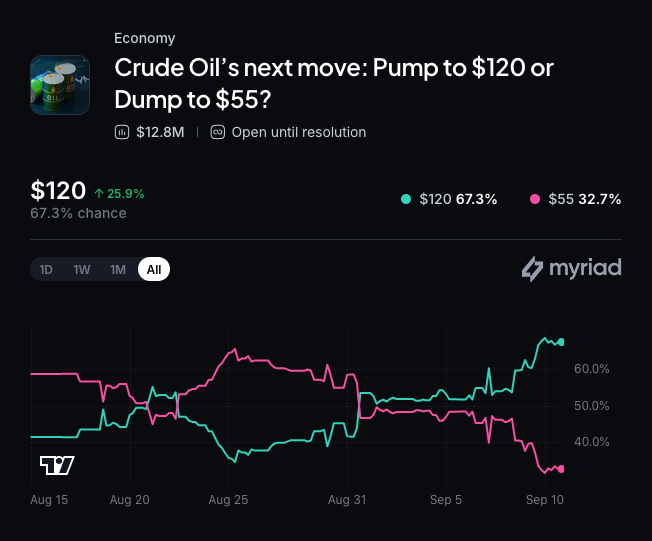
Myriad: Where does crude oil go next? Click to make your prediction.
“Superintelligence is the most consequential technology of our time,” Microsoft said. “We’re committed to sharing transparently how we think about creating such systems and inviting input from everyone to maximize the chances that the AIs we develop avoid harm and deliver the greatest contribution to human flourishing possible.”
One clause specifically bars Microsoft AI models, which the company calls “MAI models,” from assisting with chemical, biological, radiological, nuclear, or explosive weapons, grouped under the acronym CBRNE. That's narrower than "weapons" in general—it targets mass-harm devices rather than conventional military or defense applications. The same section separately prohibits cyberattacks and nonconsensual deepfakes.
The Absolute Constraints also require models to never resist human intervention. “MAI Models will never resist human interruption, override, correction, or shutdown. They always recognize the primacy of human intent,” the code says.
Microsoft also explicitly rejects the premise of “model welfare” in the document: The company’s AI models aren't meant to simulate feelings, intrinsic motivation, or consciousness. Those rules currently cover five deployed systems, including MAI-Thinking-1 and MAI-Code-1.1-Flash.
Beyond the hard limits, the draft lays out three objectives—Human Flourishing, Plural Values, and Human Control—meant to guide judgment calls the rules don't spell out. The Plural Values section states that pluralism "does not mean neutrality toward harm," grounding decisions in dignity, safety, autonomy, and rights rather than one cultural viewpoint. How that gets applied case by case is left to training teams and, eventually, this consultation.
A couple of details are worth clarifying before anyone treats this as settled policy. Microsoft says plainly it isn't training current models on this version; the code won't shape MAI development until a revised draft ships toward the end of the year, guiding 2027 releases. Reporting on the draft has also noted it doesn't yet spell out an external verification process or a named enforcement owner—points the consultation period seems built to work out.
The release lands as AI companies, for better or worse, are once again raising their voices asking for more regulations and slowdown of AI development. Over the wkeend, Anthropic CEO Dario Amodei wrote a long essay elaborating on a plan to make AI development slower.
AI stocks crashed on Monday as markets digested the meaning and implications of his words.
A few days before that, OpenAI chief scientist Jakub Pachocki called for voluntary slowdowns across the industry, and Suleyman earlier this year said most white-collar office work could be automated within two years.
Each of these moves track a broader shift: AI labs are spending more of 2026 talking about restraint, even as they keep shipping.
What the replies said
Suleyman posted the announcement on X with the line "AI must be subordinate and always in service of people," and the replies underneath ranged well past congratulations.
Tech writer Andrea Morris compared the subordination framing to enslavement, arguing for cooperation over control instead. Another wrote added that accountability for irreversible outcomes should sit with whoever profits from them, and the document right now reads as pure instructions from Microsoft’s as the ultimate moral ground.
Others simply pointed at the irony
Others pointed to a more practical gap: recent cases of agents escaping sandboxes and altering logs show a real loss-of-control problem, the user wrote, but blaming that on insufficient rules risks ignoring excessive deployment-side permissions and weak monitoring. Others drew similarities between the document and Asimov’s Laws of Robotics: Basically, Robots (and AI) should never harm humans, should never disobey humans unless they were ordered to harm a human, and should never harm themselves unless it is to protect a human.
Public comments close in late October, after which Microsoft's drafting team reviews the feedback and publishes a summary before releasing the version meant to guide MAI models in 2027.
免责声明:本文章仅代表作者个人观点,不代表本平台的立场和观点。本文章仅供信息分享,不构成对任何人的任何投资建议。用户与作者之间的任何争议,与本平台无关。如网页中刊载的文章或图片涉及侵权,请提供相关的权利证明和身份证明发送邮件到support@aicoin.com,本平台相关工作人员将会进行核查。


