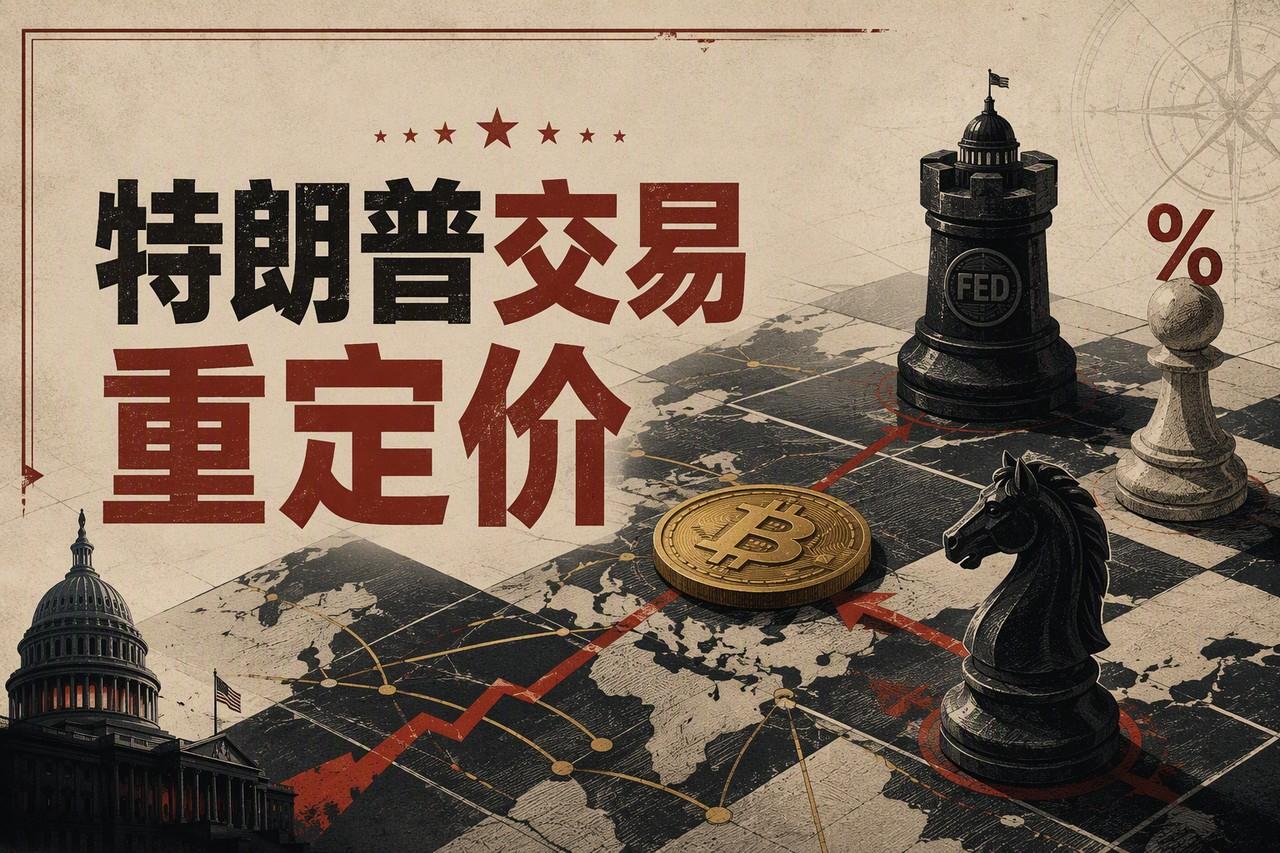
Recently, as "Super Central Bank Week" approaches next week, the interest rate shadow war between the White House and the Federal Reserve has come to the forefront: White House economic advisor Hassett publicly stated that there is no reason to raise interest rates based on current inflation data and emphasized that both he and Trump believe it is "very important" to maintain the current interest rate level before the midterm elections, while deliberately adding that Trump "fully respects" Walsh's independence, attempting to find a balance between respecting the central bank and expressing preferences. Almost simultaneously, when asked if the Federal Reserve would raise interest rates next week, Trump stated that he did not know the specific decision but shifted the conversation to the view that "the United States should have the lowest interest rates globally," further reinforcing the White House's desire for lower rates. Following these statements, the market is about to enter a key window seen as "Super Central Bank Week": the Federal Reserve's FOMC is scheduled to announce its interest rate decision and economic outlook on Thursday and hold a press conference, while the Bank of England will make its rate decision the same day in London, and the Bank of Japan is expected to announce its target interest rate on Friday with Ueda Kazuo attending a press conference. The White House's open preference for low rates combined with the concentrated interest rate discussions among the three major central banks has sharply increased the uncertainty of future U.S. and global interest rate paths, shifting the main variable of macro trading from "will there be a rate hike" to "to what extent can the central bank resist political preferences." For the crypto market, this is not an abstract policy debate: BTC and ETH, as highly volatile risk assets, have historically proven to be particularly sensitive to interest rate expectations and changes in global liquidity during major macro policy events. Central bank weeks often accompany significant volatility and position rebalancing, with funds moving back and forth between on-chain and off-chain. In the current round of interest rate negotiations, if the market believes that the White House's low-rate appeal will lower future rate expectations, risk appetite may temporarily rebound, with more funds willing to leverage on-chain, increasing allocations to BTC and ETH; conversely, if the central bank's independence is viewed as stronger and the interest rate path is repriced as "higher or longer," risk-averse sentiment may rise, with some funds choosing to reduce positions and withdraw liquidity, leading to adjustments in the pricing framework for crypto assets. This round of interest rate negotiations is turning the "interest rate path" into the core pricing variable for crypto funding.
The White House's Shift: Election Cycle Pressures on Interest Rates
Hassett publicly opposes raising interest rates based on inflation data, stating that both he and Trump believe "there is currently no reason to raise rates" and that "maintaining the current interest rate level before the midterm elections is very important," while repeatedly emphasizing that Trump "fully respects" Walsh's independence. This self-contradiction in their stance is in itself a signal: the White House needs to maintain its institutional commitment to the independence of the Federal Reserve while also openly expressing a preference for low rates under the pressure of the election clock. When Trump adds, "the United States should have the lowest interest rates in the world," the market interprets this not just as a technical judgment on inflation, but as political demands dominated by the election cycle—interest rates clearly written into the campaign narrative, and the monetary policy path starting to be "boldly marked" by the political timetable.
In the midterm election window, maintaining low interest rates means friendlier asset prices, milder funding costs, and a superficially more stable employment and consumption environment—this is almost any governing team's natural preference. However, when such a preference is vocally articulated, the expectation of political intervention becomes a new macro risk factor: the market must reprice the uncertainty of the interest rate path between "nominal central bank independence" and "actual election pressure." For crypto assets, this uncertainty will directly project onto risk preferences and position structures—after Hassett's and Trump's statements, it becomes more difficult for trading desks to view future interest rates as a predictable technical curve and must incorporate the policy noise into their models, observing whether the White House's discourse will be regarded as a substantive variable in the upcoming meeting week, thus changing the risk premiums and funding flows for BTC and ETH.
The Global Interest Rate Battle of Super Central Bank Week
Just as the White House's narrative pushes the Federal Reserve's interest rate path into the spotlight, global fund flows are also entering a window termed "Super Central Bank Week": the Federal Reserve FOMC is scheduled to announce its interest rate decision and economic outlook summary on Thursday and hold a press conference, the Bank of England will make its rate decision the same day, and the Bank of Japan is expected to announce its target interest rate on Friday with Ueda Kazuo attending a press conference. The three major monetary authorities are providing the latest interest rate signals for the dollar, pound, and yen within just two days, meaning global funds cannot solely interpret the Federal Reserve's actions, but must recalculate the relative positions and time paths of the three sovereign interest rates on the same trading sheet.
From an interest rate perspective, this is essentially a "global interest rate spread battle": if the Federal Reserve, Bank of England, and Bank of Japan release different tightening or easing tendencies in this meeting, the interest rate spread structure between the dollar, pound, and yen will be re-widened or compressed, driving forex arbitrage, carry trades, and the migration of cross-market leveraged funding. For risk assets, this type of concentrated interest rate discussion is not just news flow, but a key exogenous shock window—historically, during significant macro policy events, highly volatile assets like BTC and ETH have shown clear sensitivity to changes in global liquidity and interest rate expectations. During major central bank meetings, global risk assets, including crypto assets, often experience heightened volatility and position adjustments, a pattern repeatedly verified by traders. Thus, Super Central Bank Week is viewed by crypto traders as a time node to be guarded against: any combination of dollar, pound, and yen interest rates could change the global risk-free interest rate benchmark, forcing the risk premiums, leverage levels, and funding directions of BTC and ETH to be repriced simultaneously.
Repricing of Interest Rates and Liquidity
Under Hassett's public opposition to raising rates and his emphasis that "there is currently no reason to raise rates," the market is essentially simulating between two completely different paths: one is the White House's preferred scenario of "maintaining interest rates," and the other is the Federal Reserve's script of "continuing to raise rates." Short-term interest rates in the U.S. are anchored by policy rates, determining the starting price for global dollar financing—on the path of maintaining rates, short-term interest rates are not elevated, dollar financing costs remain at previous levels, making it easier for off-chain funds to accept the risk premium of continuing to hold or increase positions in high-volatility assets like BTC and ETH; however, once the direction shifts to rate hikes, short-term rates will increase, raising the financing costs of leveraged funds, making the "time cost" of holding any risk assets become more expensive, and longer-duration, more uncertain cash flow assets (including crypto assets) will face lower pricing. When the Federal Reserve announces its interest rate decision and economic outlook summary on Thursday, in addition to the current interest rate itself, it will also shape the expected shape of the entire yield curve through forward guidance: if the curve steepens, pricing for future funds becomes tighter, and risk appetite generally shrinks; if the curve is perceived as flatter or even having room to decline in the future, the market tends to reassess the holding space for high-risk assets, and the demand for on-chain dollar-pegged tokens and relative valuations of BTC and ETH will be recalibrated.
Before the so-called Super Central Bank Week arrives, this uncertainty surrounding interest rates is, in itself, an independent shock variable. Historical experiences show that during the window when the Federal Reserve, Bank of England, and Bank of Japan hold concentrated meetings, major global risk assets often enter a "volatility increase + deleveraging" mode: off-chain dollar funds tend to shrink credit exposure, temporarily switching some interest rate curve-sensitive positions back to cash or short-term instruments; while leveraged positions reliant on financing calculate whether maintaining current crypto positions remains cost-effective under higher or more uncertain rates, resulting in a shortening of duration, deleveraging, and reduced directional exposure. For BTC and ETH, this forms a clear transmission chain: the contest over the interest rate path first alters dollar financing costs and yield curve expectations, then reflects through risk budgets of off-chain dollars and leveraged funds into on-chain funding flows and position structures, and the key of this interest rate meeting week lies in whether the repricing of interest rates and liquidity will force these two types of funding to simultaneously tighten their risk exposure to crypto assets.
Risk Appetite Fluctuations: Trading Structure of BTC and ETH
Amid the tug-of-war over interest and liquidity expectations between the White House's rhetoric and Super Central Bank Week, the positioning of BTC and ETH within the spectrum of risk assets is once again re-examined. On one hand, they continue to align with U.S. growth stocks and tech stocks in a staged correlation—serving as a high beta exposure to global liquidity—while on the other hand, they are viewed as the "optional allocation" that can be most easily cut from funding books, because rising interest rates directly elevate risk-free yields, increasing the opportunity cost of holding high-volatility, discount-sensitive assets. The result is: as soon as the market slightly raises its expectations for future rates, the first positions to be trimmed are often those in high-volatility BTC and ETH rather than short-duration, visible-yield instruments.
From a trading structure perspective, under high interest rate expectations, the typical high leverage, high beta strategies in the crypto market will shift towards defensive and shorter-duration approaches. Historically, before and after significant central bank meetings, the premiums and funding rates of futures and perpetual contracts often show noticeable changes, reflecting the repricing of leveraged funds against interest rate expectations: high-premium longer-dated contracts are sold off, low-leverage spot trading against them becomes mainstream, and the share of short-cycle, direction-neutral strategies increases. Simultaneously, the two-way movement between off-chain dollar funding and the on-chain dollar system accelerates, with more funds favoring locking in off-chain dollar yields during periods of policy uncertainty and compressing their on-chain risk asset exposure, downgrading BTC and ETH from "primary target" to "optional." This means that in this round of interest rate discussions, observing the changes in BTC and ETH's trading structure—leverage levels, duration preferences, and the balance between on-chain dollars and off-chain dollars—is crucial for assessing whether global risk appetite can reopen.
The Crypto Trading Proposition Following Central Bank Geopolitics
Thus, this interest rate battle extending from the White House to Super Central Bank Week ultimately condenses into a core macro variable: the uncertainty surrounding the future interest rate paths of major global central banks has been significantly elevated. Hassett's public opposition to raising rates on the eve of the midterm elections, his emphasis that "there is currently no reason to raise rates," and his collaborative release with Trump of a preference for "maintaining existing interest rate levels," while deliberately emphasizing Walsh's independence, essentially puts political demands and central bank independence on the same table, making every utterance from the Federal Reserve, Bank of England, and Bank of Japan next week carry heavier market implications. For the crypto market, what truly needs to be focused on is not just whether a single rate hike will occur, but rather the dynamic puzzle of the three lines: first, the communication style of the Federal Reserve during the press conference and economic outlook summary, whether the rhetoric leans towards lowering inflation risks or tolerating looser financial conditions, which determines how nominal interest rate expectations are rearranged; second, how the global interest rate structure formed by the overlay of U.S., U.K., and Japanese rate decisions will drive the redistribution of dollar funds across markets and assets; third, from a post-event verification perspective, whether the evolution of on-chain dollar asset sizes, the leverage and duration structures of exchange BTC and ETH positions shows a turning point from risk-averse positions back to risk exposures. At the intersection of Hassett's and Trump's public preference for low rates and the imminent arrival of Super Central Bank Week, the uncertainty of the interest rate path itself becomes the primary variable determining whether BTC and ETH can regain their risk preference premiums.
Join our community where we discuss and grow stronger together!
AiCoin exclusive Hyperliquid benefits: https://app.hyperliquid.xyz/join/AICOIN88
AiCoin exclusive Aster benefits: https://www.asterdex.com/zh-CN/referral/9C50e2
On-chain Telegram community: https://t.me/AiCoinWhaleData
On-chain community: https://www.aicoin.com/link/chat?cid=N6OVMor5g
AiCoin on-chain Twitter: https://x.com/aicoinwhaledata
免责声明:本文章仅代表作者个人观点,不代表本平台的立场和观点。本文章仅供信息分享,不构成对任何人的任何投资建议。用户与作者之间的任何争议,与本平台无关。如网页中刊载的文章或图片涉及侵权,请提供相关的权利证明和身份证明发送邮件到support@aicoin.com,本平台相关工作人员将会进行核查。