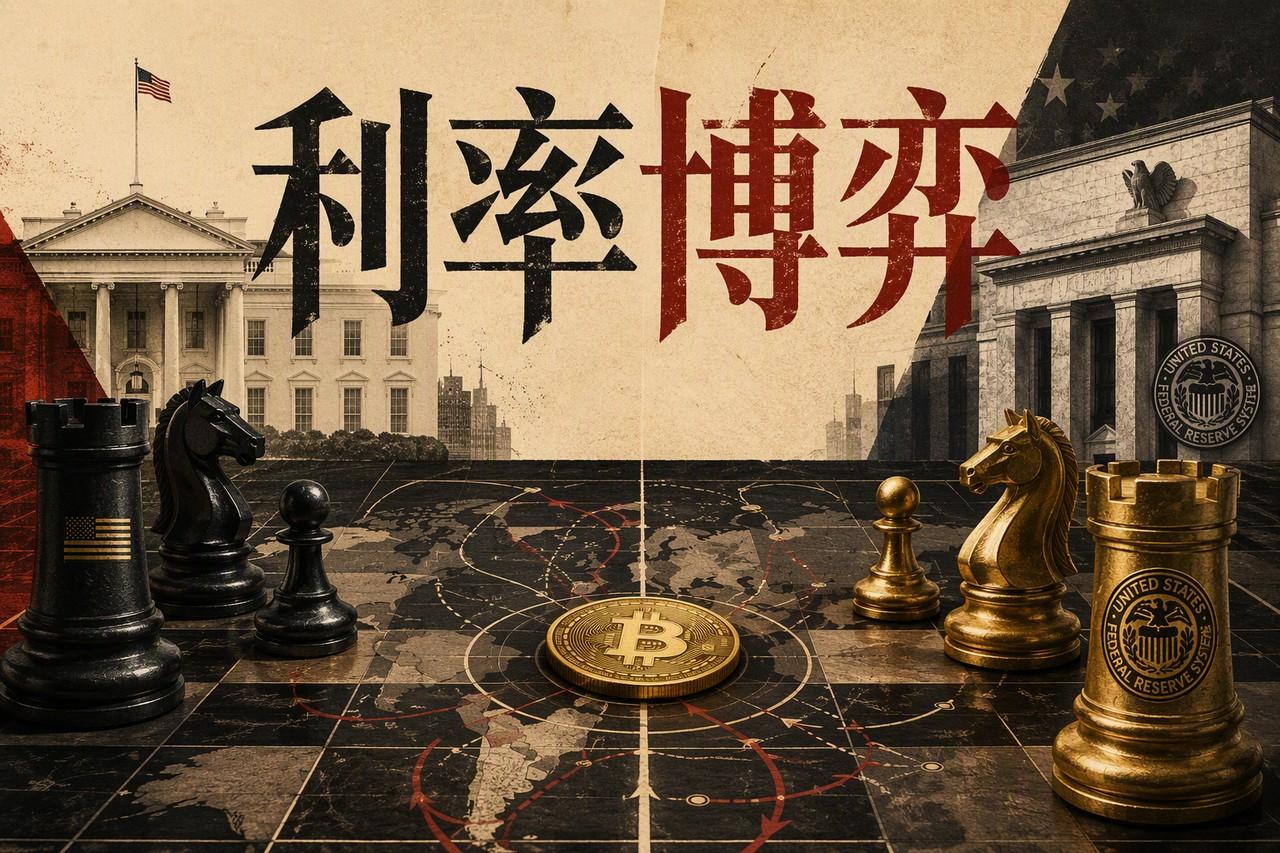
On September 10, 2024, on the first night of the Republican National Convention, Trump reignited market imaginations about the "Trump trade" with a full set of interconnected macro statements: on one hand, he openly stated that the U.S. should have the lowest interest rates in the world, directly pressuring current monetary policy and pulling the Fed's future path back into political narrative; on the other hand, he reiterated that if the Republicans secured the House and Senate, he would distribute a $5,000 dividend to every adult American, emphasizing that "it should be easy for Congress to pass" and "I always keep my promises," transforming the one-time cash distributions’ fiscal impact from a campaign slogan into a serious market pricing scenario; in the same context, he claimed the Iran war would end before or after the midterm elections, saying Iran is "very eager to reach an agreement," and downplayed the significance of whether Gulf states meet with Iran, tying the end of the war's time window to the U.S. elections, integrating the situation in the Middle East, Ukraine, and energy issues into his campaign narrative. Interest rate expectations thus became politicized, expectations for fiscal spending were elevated, and geopolitical risk premiums fluctuated between the rhetoric of "the war is likely to conclude" and actual uncertainty, with these three macro variables converging to alter the combination structure of liquidity, inflation, and safe-haven demand. For assets like BTC and ETH, which are typically viewed as high beta risk assets in a low-interest and expansive fiscal environment, this signifies not merely a simple "easy monetary policy," but a scenario trade surrounding interest rate pathways, cash dividends, and the trends of Middle Eastern warfare: capital can bet on new buying pressure from rate cuts and cash distributions while also reserving discounts for risks of agreements failing or war delays. From the current perspective, the so-called "Trump trade" has evolved from a campaign slogan into a macro narrative pivot around interest rate expectations, fiscal shocks, and geopolitical premiums that are repricing high beta assets like BTC and ETH.
Low Interest Rate Commitment: Interest Rate Expectations and Crypto Market Risks
When Trump threw out "we should have the lowest interest rates globally" at the Republican National Convention, he was not targeting a specific meeting of the Fed but rather the institutional buffer of the Fed— the "technical neutrality" assumption of its independence and interest rate trajectory. Once this slogan is reinforced repeatedly in the election narrative, the market inevitably has to add a new variable to its models: future interest rates are no longer determined solely by inflation and employment but must also endure the public political pressure from the White House and Congress for "low rates." The result is that the interest rate expectation curve is injected with more political noise: on one hand, short-term rate cut scenarios are amplified, pushing the central idea of risk-free rates down; on the other hand, the long end may see an increase in term premiums due to concerns over the erosion of central bank independence, with dollar asset pricing being pulled between "lower policy rates" and "higher uncertainty compensation," leading to more pronounced pro-cyclical and reflexive volatility in risk appetite.
Almost simultaneously, James Thorne publicly questioned the Fed's tightening motives—he views the impending tightening as more driven by the desire to appease Wall Street than by the need to address runaway inflation. He dismantles this view with specific data: currently, the U.S. inflation outlook has not changed significantly, with year-over-year wage growth slowing to 3.1%, and no signs of a wage-price spiral or second-round effects, which weakens the arguments for aggressive tightening. Thus, the narrative starts to swing: on one side is Trump's call for "the lowest global interest rates," while on the other, strategists question the rationale for existing tightening, creating a disconnect between official positions and market sentiment. For BTC and ETH, this misalignment in interest rate expectations directly rewrites the trading structure—each forced adjustment to the risk-free rate pricing anchor amplifies the effects on futures basis, funding rates, and spot risk premiums, making these two major assets appear more like leveraged bets on interest rate pathways and liquidity expectations, rather than a linear reaction to inflation or tech narratives alone.
$5,000 Dividend: Household Liquidity and Crypto Buying Pressure
While interest rate pathways are being politicized, Trump has also thrown in a more voter-targeted chip from the fiscal side—if the Republicans secure the House and Senate, he will distribute a $5,000 dividend to every adult American. On the first night of the Republican National Convention, he not only provided a specific amount but also emphasized that this "should easily pass" in Congress and reinforced credibility with "I always keep my promises." Even though the $5,000 is currently only reported from a single source, lacking a specific distribution mechanism and fiscal source explanation, the market still views this as a huge cash transfer option tied to election outcomes: if realized, U.S. households would suddenly gain an unexpected windfall on their balance sheets, directly boosting household monetary balances and perceptions of disposable income.
The experiences during the pandemic provide a clear reference for this assumption. At that time, after receiving cash subsidies, some funds did not remain in deposit accounts but flowed into stocks and crypto assets, intuitively reflected in the shift in retail investor position preferences. On a macro level, the increase in liquidity for the household sector first changed the risk preference curve: households that could only purchase defensive assets began to allocate positions for "high volatility, high narrative" targets, thus providing extra buying pressure for global risk assets like BTC and ETH. If every adult does receive $5,000 in the future, even if only a small portion is deemed as "risk capital" that does not affect daily expenses, it would be sufficient to stack into a significant influx of retail investment through exchanges, dollar-priced token purchases, and on-chain fund transfers, leading crypto markets to react to the risk appetite shock of this potential fiscal dividend before the rate debate concludes.
Expectations for the End of the Iran War: Energy Premiums and Safe-Haven Sentiment
Alongside the "$5,000 dividend" cash catalyst, Trump directly tied the end window of the Iran war to before or just after the midterm elections at the same event. He claimed Iran was "very eager to reach an agreement" but nonchalantly stated he "doesn't care" whether Gulf states meet with Iran, equating the timeline for ceasefire and negotiations to part of the campaign narrative rather than being led by regional diplomatic timing. For asset pricing, this is not the peace agreement itself but a time guideline provided by political figures: the Iran conflict may ease around the election dates, but until concrete documents and terms emerge, it can only be seen as an expectation imbued with strong political intent rather than a certainty that can be incorporated into models.
Each change in the rhythm of the Middle East conflict is quickly computed by the market into energy supply expectations and oil risk premiums, thereby influencing imaginations about inflation and interest rate trajectories. While discussing Iran, Trump also pulled in Zelensky's issues with Russian diesel fuel into the same context, reinforcing the narrative chain of "war = energy risk": if the Iran war indeed cools as he suggests around the elections, there should theoretically be room for the energy risk premium and safe-haven sentiment to drop, relieving pressure on global risk assets; conversely, if the ceasefire window proves merely campaign rhetoric, renewed pressures on oil prices and inflation expectations will push interest rates and risk appetites into a new round of uncertainty. Some participants previously viewed BTC as a hedging position against the traditional financial system during periods of geopolitical tension; now, in a state where "expectations for the war's end" coexist with uncertainty, this geopolitical safe-haven narrative will not disappear immediately but resembles a tactical trading logic swayed by energy premiums and interest rate expectations, rather than a value proposition to be relied upon for the long term.
Wall Street vs. Voter Pressure
The narrative around interest rates has returned from the Middle Eastern battlefield to domestic elections, with the center of the storm being the Fed. James Thorne of Wellington-Altus has already named this, suggesting that the impending policy tightening seems more geared toward pleasing Wall Street rather than genuinely suppressing inflation; with wage growth having slowed to 3.1% and no signs of a wage-price spiral emerging, this allegation of "serving capital markets" raises questions about the legitimacy of high-interest rates. Almost simultaneously, Trump at the first night of the Republican National Convention demanded "the lowest global interest rates" and suggested that if the Republicans win both houses, he would issue a $5,000 dividend to every adult, placing the voters' demands for low rates and cash dividends directly in front of the Fed. Wall Street hopes for tightening to maintain asset valuation order, while voters expect easing combined with cash stimulus to boost their financial situation; under this dual pressure, the traditional discourse of "central bank independence" appears increasingly fragile, and the uncertainty premiums for the interest rate paths begin to be repriced.
In this narrative-torn environment, bets in the crypto market have also diverged: institutional funds are more sensitive to interest rate and liquidity environments and will structure macro hedges around the two paths of "tightening to please Wall Street" and "easing to satisfy voters," building trending positions on BTC and ETH, betting on the direction of future real interest rates and dollar liquidity; retail investors, on the other hand, tend to focus on the imagined scenario of the $5,000 dividend, recalling the historical surge of cash subsidies into stocks and crypto during the pandemic, and are inclined to view potential subsidies as new frontline ammunition during times of elevated sentiment. During this interweaving phase of both types of buying, BTC and ETH often carry institutional interest rate thematic trades while also layering retail investors' speculative expectations around "cash rain," leading to a price structure more susceptible to violent fluctuations rather than being driven by a single logic.
Where the Trump Trade Lands: How BTC and ETH Should Respond
In summary, the three macro mainlines opened up are actually quite clear: first, interest rate expectations are pulled from the narrative of "tightening to appease Wall Street" toward the political demand that "the U.S. should have the lowest interest rates globally," making the future pathways for real interest rates and dollar liquidity more uncertain; second, memories of cash subsidies similar to those during the pandemic are awakened—if the $5,000 dividend is indeed supported by the Republicans securing both houses, it would signify a one-time fiscal stimulus, directly altering household sectors' weight choices between cash, stocks, and crypto assets; and third, whether the Iran war will conclude around the midterm elections, combined with statements on Ukraine and energy issues, creates suspense for the direction of geopolitical risk premiums and energy prices, which in turn impacts the inflation path to further affect interest rates and valuation systems. For BTC and ETH, the transmission sequence of these three variables is fundamentally as follows: dollar interest rates and liquidity expectations first determine whether mainline funds dare to increase duration and risk exposure; secondly, inflation expectations and energy prices shape the relative attractiveness of "anti-inflation assets" and "geopolitical safe-haven assets"; and finally, whether the household sector, upon receiving potential dividends, will push some cash directly into high-beta coins like during the pandemic. From the perspective of 2026, this remains an expectation game— the Fed has not yet responded with actual decisions to Trump's low-interest pressure, the legislative process for the $5,000 plan in Congress is still ongoing, and negotiations related to Iran have yet to provide a clear peace timeline; thus, the so-called "Trump trade" is more about narrative premiums surrounding interest rate pathways, fiscal stimulus, and geopolitical premiums, and what the crypto space needs to do is not simply bet on a particular campaign slogan but continuously track the Fed's public statements, the pacing of subsidy plans in Congress, and every inflection point in the Iranian war negotiations, adjusting BTC and ETH positions and leveraged exposures to levels that truly align with the evolution rhythm of these key signals.
Join our community, let's discuss and become stronger together!
AiCoin exclusive Hyperliquid benefits: https://app.hyperliquid.xyz/join/AICOIN88
AiCoin exclusive Aster benefits: https://www.asterdex.com/zh-CN/referral/9C50e2
On-chain Telegram community: https://t.me/AiCoinWhaleData
On-chain community: https://www.aicoin.com/link/chat?cid=N6OVMor5g
AiCoin on-chain Twitter: https://x.com/aicoinwhaledata
免责声明:本文章仅代表作者个人观点,不代表本平台的立场和观点。本文章仅供信息分享,不构成对任何人的任何投资建议。用户与作者之间的任何争议,与本平台无关。如网页中刊载的文章或图片涉及侵权,请提供相关的权利证明和身份证明发送邮件到support@aicoin.com,本平台相关工作人员将会进行核查。