A week ago, GPT-6 Astra was rebuilding Manhattan street by street inside a game engine, wowing users left and right with its capabilities. This week, the same crowd is posting screenshots asking OpenAI what happened to their model.
"Astra feels significantly dumber for me today," the popular pseudonymous developer synthwavedd posted on X. "Was only a matter of time before The Post-Launch Lobotomy. Shame."
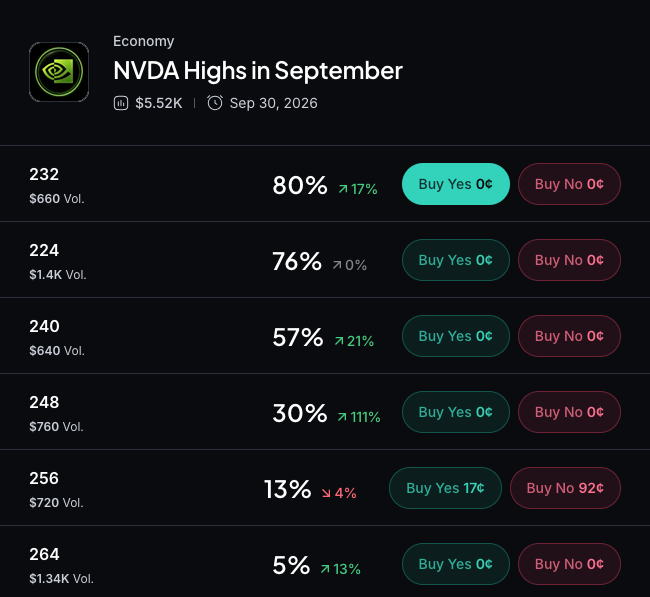
Myriad: How high will Nvidia stock go? Click to make your prediction.
It's a familiar refrain, with AI users accustomed to their favorite chatbots and agents suddenly feeling like they've been "nerfed." Most of the time there are reasonable explanations for the perceived drop in performance from these models. But when enough people start saying the same thing at the same time, it's worth examining what's going on. And social media at the moment is replete with examples of users quickly souring on GPT-6 Astra.
Developer Pranjal Paliwal, who previously had praised the model, went back and actually read the code Astra had written him. He did not like what he found.
"We don't have AGI," he posted. "We have a regression."
AGI, short for artificial general intelligence, is the industry's term for a machine that can do essentially anything a human can do cognitively. OpenAI's own president used the word at Astra's launch. A week later, one of his users is using it to describe the opposite.
The complaints share a similar shape. Developer Pankaj Kumar listed the symptoms: faster answers, worse quality, and a suspicion OpenAI "reduced the juice value." Founder Saba asked OpenAI directly why she now has to "dumb it down" to get tasks done.
"Juice value" isn't an official term. Nobody has defined it. But it's shorthand everyone here understands: the amount of computing effort the model spends thinking before it answers, and the suspicion that OpenAI quietly turned that dial down once the launch demos had done their job.
Some people tested it properly. Salio and researcher Md Ismail Sojal both ran the identical prompt against launch-day Astra and today's version, and both got worse results from the current one.
Others are just switching back. Dax Raad, who builds the coding tool Opencode, said his team has gone back to Astra's predecessor, GPT-5.6 Sol, because the spend doubled for downsides that weren't worth it. ChatGPT user Mustafa Sahinli put it more bluntly: Astra now makes him feel like Claude Opus 4.6 "after 1 week of release," a jab at Anthropic's own post-launch backlash.
Not everyone thinks OpenAI has purposely nerfed its newest model though. The pseudonymous user Antikythera published the most detailed rebuttal in the pile, arguing the timeline runs backwards.
"It is as dumb as it was on launch," wrote Antikythera. "The model is good, but the model has a lot of problems. It's lazy. Writes like a bullet-point-addict... people were overhyped on launch week, now they had time to test it and see its mistakes."
In other words: nothing changed. You just stopped being dazzled long enough to notice the model was always a little bit of a bullet-point-addict.
T3Chat founder, Theo, has a somewhat similar idea: Astra is actually more inconsistent than Claude Fable, so it can produce outstanding or downright stupid code at times. What seems to be happening is a wave of users posting the dumb results more frequently now that the honeymoon is over.
This isn't new, either. OpenAI's last flagship, GPT-5.6 Sol, went through the identical cycle in July, when users reported its top reasoning mode had gone shallow overnight. OpenAI executive Tibo Sottiaux denied deliberately weakening it, while confirming the company had been experimenting with reasoning effort, the setting that controls how many steps a model "thinks" through before answering.
One reply summed up the running joke: closed labs release a model, and it catches "some kind of disease a few days later and suddenly become[s] dumber." Another offered the cynic's theory in a single line: "They probably get quantized so they're not burning the companies as much money."
Quantizing a model means shrinking the precision of its internal math to cut costs, often at some expense to accuracy. OpenAI has never confirmed doing that on purpose to a shipped model.
OpenAI has not issued a Sol-style statement about Astra yet. The model remains the company's first to cross what it calls the critical threshold for cybersecurity risk, meaning it can find and chain together unknown software vulnerabilities without human guidance, a capability restricted to vetted defenders under OpenAI's Daybreak program.
Dumber or not, it still costs $10 per million input tokens and $50 per million output tokens, 2.5 times what Sol charged at launch.
免责声明:本文章仅代表作者个人观点,不代表本平台的立场和观点。本文章仅供信息分享,不构成对任何人的任何投资建议。用户与作者之间的任何争议,与本平台无关。如网页中刊载的文章或图片涉及侵权,请提供相关的权利证明和身份证明发送邮件到support@aicoin.com,本平台相关工作人员将会进行核查。


