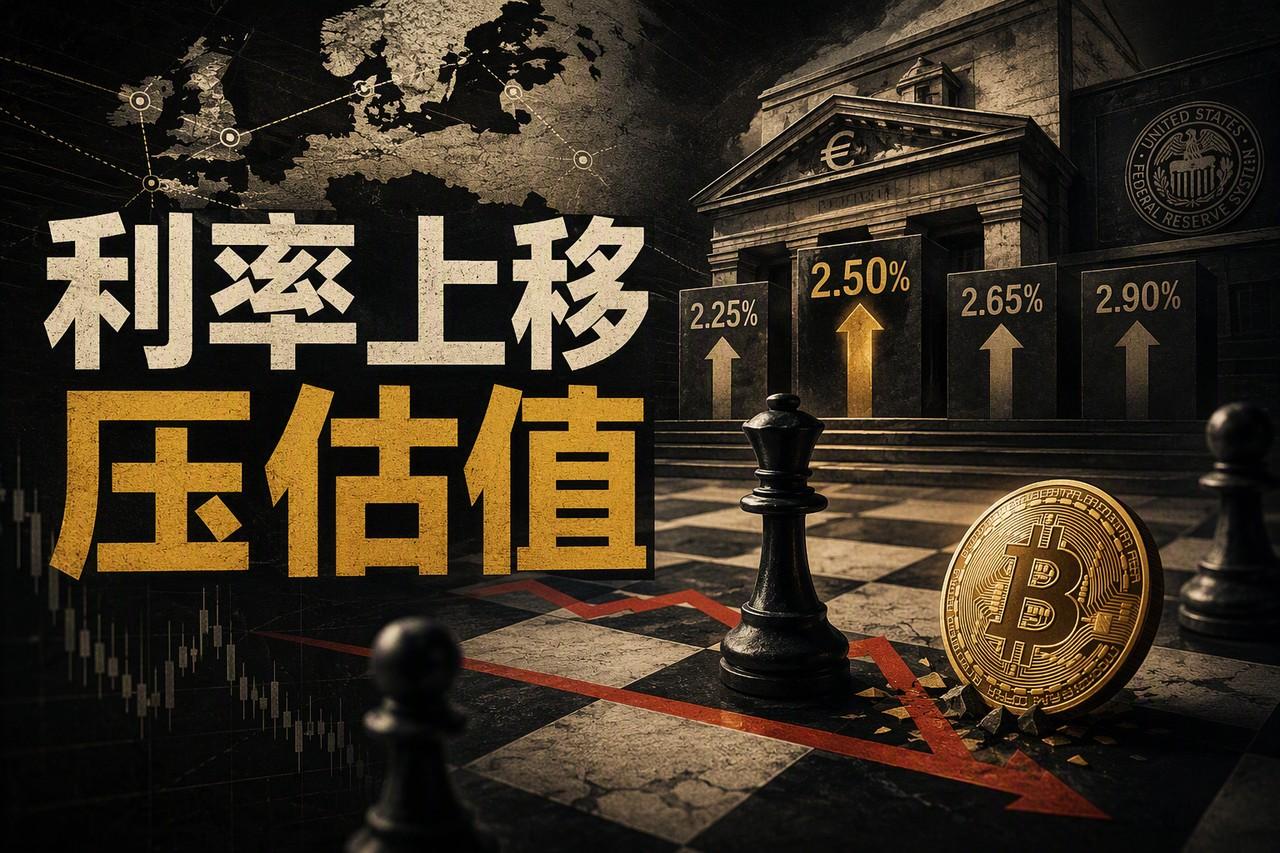
The latest PPI report from the United States has become a catalyst for the current cycle of interest rate hike bets: data shows that over the 12 months ending in August, the PPI in the United States increased by about 5.4%. This "producer-side" inflation signal emerged a day before the release of the CPI, forcing trading in interest rates to recalibrate its judgment for the Federal Reserve's September meeting. The implied probability of a 25 basis point rate hike in September quickly rose from about 65% to about 70% according to the CME Group's Federal Funds futures, with some traders even starting to fully price in the possibility of another rate increase in October. Rising rate hike expectations imply higher future dollar rates and tighter liquidity; traditional experience tells fund managers that this usually compresses the valuation space for high-risk assets like Bitcoin and Ethereum, and raises the offensive appetite of shorts in derivatives. In this macro context, the founder of the Poolin mining pool, Jiang Zhuoer, publicly stated: "The probability of a rate hike is now at 70%, and it's expected that the CPI released the next day will not be favorable, I am prepared to short," demonstrating that an experienced player who understands mining costs and on-chain cycles has chosen to position themselves on the short side ahead of the results, creating a demonstration effect for retail investors and contract funds, suggesting that this round of interest rate competition surrounding the Federal Reserve's meeting on September 15-16 will not just be a numbers game on Wall Street, but will directly reshape the sentiment tone and position structure of the cryptocurrency market.
Inflation Data Repeated: PPI Boosts Rate Hike Bets
The latest PPI annual rate of about 5.4%, combined with the timing of the CPI announcement the day before, itself is a signal of "strong demand, and persistent cost pressures"; however, when broken down, the core PPI monthly rate for August was only 0.2%, lower than the expected 0.3%, indicating that the production side is not overheated overall. It is precisely this "overall strength, but slight moderation in the core" mixed structure that has led to divergences in market interpretation: doves can emphasize the mildness of the core, while hawks focus on the annual rate and overall level, believing that inflation remains sticky and unlikely to make the Federal Reserve comfortable. In Federal Funds futures, this debate ultimately manifested as a small but crucial upward shift in the probability of a rate hike — CME contracts showed that the implied probability of a 25 basis point hike in September was about 65% before the data was released, but was pushed to about 70% after the announcement. Some reports even indicated that traders had almost completely anticipated another hike in October, which means that even with significant internal disagreements among officials, the market has chosen to preemptively push the policy path toward a "tighter" direction.
The rise in rate hike bets is directly reshaping global dollar liquidity and the risk-free yield curve: higher expectations for the federal funds rate imply that the opportunity cost of holding dollar cash and short-term rate assets decreases, while for all assets priced based on forward cash flows, the discount rate is rising. Conventional wisdom is that higher dollar rates and tighter liquidity will primarily compress the valuations of high-risk assets — Bitcoin and Ethereum, seen as high-beta assets, can easily amplify volatility with each "upward adjustment" in rate expectations. Ahead of important inflation data and the Federal Reserve's meetings, crypto market participants often reduce leverage, increase allocations to dollars and dollar-linked assets, and enhance hedging through futures and options. Once the expectation of another hike in October continues to be solidified by Federal Funds futures and official statements, the flow of funds retreating from risk assets and moving to defensive positions is unlikely to reverse direction in the short term.
Rate Hike Expectations Intensify: Bitcoin Seen as High-Beta Risk Asset
After the latest PPI raised the annual increase as of August to about 5.4%, the pricing for a 25 basis point rate hike in September in CME Federal Funds futures rapidly increased from about 65% to about 70%, extending to the narrative of “another hike in October.” Federal Funds futures not only change the probability of a rate hike for a single meeting, but also drive the entire U.S. dollar yield curve upward: short-term yield expectations rise, pushing the risk-free return on dollar assets higher, prompting global funds to reassess the necessity of holding high-valued, high-volatility assets. In this re-pricing framework, Bitcoin and Ethereum are no longer "uncorrelated" alternative assets, but are viewed by mainstream funds as high-beta risk assets similar to stocks, but with greater elasticity, with their price movements often further amplified based on U.S. stock risk sentiment.
Once the rate expectations shift towards "higher for longer," the traditional pattern is for funds to withdraw from high-leverage, long-duration risk assets: the corresponding actions in the crypto market involve proactively reducing leverage on exchanges, shortening the duration of contracts and strategies, and reallocating some positions back to dollars and dollar-linked assets, while also bolstering hedging through futures and options. After the PPI was released, Jiang Zhuoer publicly prepared to short based on the “about 70% probability of a rate hike and the CPI likely not being favorable.” Such statements from miners and KOLs compound with signals from Federal Funds futures, creating a resonance effect for retail and high-leverage funds, prompting more individuals to transition to a defensive posture in advance. As the Federal Reserve's meeting on September 15-16 approaches, the market's choice to continue pushing rate hike expectations further into the future is being determined alongside the dollar rate path and on-chain reduction in leverage, thereby deciding the risk pricing coordinates for Bitcoin and Ethereum during this round of inflation data window.
Jiang Zhuoer Preemptively Shorts: Hedging Moves from the Miner's Perspective
After the PPI was released, Jiang Zhuoer did not base his decisions on the price chart alone, but first observed the signals provided by Federal Funds futures: the probability of a 25 basis point rate hike in September increasing from about 65% to about 70%. In his view, this indicates that inflationary pressure remains sticky, making it unlikely for the following day's CPI to deliver an "unexpected positive." In this window of renewed rate hike expectations, risk assets are more likely to come under pressure. Thus, the founder of Poolin, who has long stood at both the computational and trading front, chose to publicly state that he is "prepared to short," effectively converting his macro judgment into an action of reducing risk exposure in Bitcoin.
From the perspective of miners and industry KOLs, this reaction is grounded in a clear cash flow logic. Miners' income is valued in BTC based on block rewards and transaction fees; however, the costs of electricity, operations, and potential borrowings are dominated by dollar rates. Rising rate hike expectations imply that every kilowatt of electricity and every financing will be more costly in the future, and holding excessive unhedged coin-based risks will directly erode mining profits. The moment the probability of a rate hike is pushed higher by the PPI, participants like Jiang Zhuoer are more inclined to lower their BTC exposure through shorting or hedging with derivatives, quickly locking in mining earnings in dollars. The issue is that his public statement not only represents a personal defensive action but also acts as an amplifier for market sentiment: when retail investors see "miners are shorting," they often follow suit by reducing positions and lowering leverage, subsequently decreasing the leverage ratio of long positions in contracts and shifting the funding structure toward a more conservative stance. In an environment driven by macro data, where miners and KOLs mutually shrink risk, the pricing focus on Bitcoin becomes more easily dragged by rate paths and tightening expectations rather than simply determined by on-chain trading activity.
Funding Structure Shift: From Spot Leverage to Derivative Defense
When the PPI raised the implied probability of a 25 basis point rate hike in September from about 65% to about 70%, and even reports started discussing “another hike in October,” the first adjustment in the market was not in sentiment but in structure. Traders who originally amplified long positions in Bitcoin and Ethereum with leverage began to shrink their net exposure: on one hand, they increased holdings in dollars and dollar-linked assets, locking in safer returns in a higher rate environment, while on the other hand, they migrated risk exposure to perpetual contracts and options as derivatives, replacing one-way bets with hedging. This means that the same directional judgment is realized more through contracts rather than pushing the on-chain asset through high-leverage spot trading.
The result is a quiet withdrawal of buying power from the spot market. As the short-term attractiveness of dollars and dollar-linked assets rises, the proportion of spot funds willing to "sit in dollars" increases, correspondingly leading to a decrease in active buying and order depth left for BTC and ETH. In such a liquidity environment, even if selling pressure comes from a small reduction in positions, price fluctuations are more easily amplified, and on-chain transaction activity begins to yield to changes in rate expectations and the weighting of dollar allocations. In the window during which key macro data is released — first the PPI, followed closely by the CPI, perceived as critical, and further back to the Federal Reserve's meeting on September 15-16 — high-leverage contracts are particularly vulnerable: any slight misjudgment in direction can trigger forced liquidations amid violent fluctuations, with chain liquidations spreading along perpetual contracts, turning what could have been smoothed out by derivatives into accelerated downward movement in BTC and ETH prices. This shift from spot leverage to derivative defense in the funding structure itself lays the groundwork for the next chain of liquidations.
From One PPI to a Round of Volatility: Three Key Clues for Further Observation
From the PPI's year-on-year increase of about 5.4% as of August to the implied hike probability rising from 65% to about 70% in Federal Funds futures, this sequence of data has rewritten the risk premium in the pricing of BTC and ETH: high rate expectations raise the discount rate, lower risk appetite, and drive funds to migrate from high beta currencies and high-leverage contracts to dollars and dollar-linked assets, as well as defensive hedge positions, shifting the trading structure from "actively increasing positions to take advantage of volatility" to "compressing leverage, shortening position durations, and using derivatives to lock in risks." There are three main lines worth closely monitoring: first, whether the CPI confirms the inflation pressures conveyed by the PPI — the PPI being released the day before the CPI itself serves as a "trailer," if the CPI continues to show tense readings, it will further solidify the market's bets on higher rates; second, how the final decision of the Federal Reserve's meeting on September 15-16 rewrites the dollar yield curve — whether there will be a rate hike or how the dot plot adjusts will directly reprice the risk premium and funding flows of crypto assets; third, whether on-chain funds show directional redistribution between BTC, ETH, and other assets — whether they continue to concentrate on leading assets and defensive positions, or, under the stimulus of public short statements like Jiang Zhuoer's, layer in more short-term speculation and hedging positions, amplifying the liquidation chain of contracts. In a phase of rising macro uncertainty, the only truly controllable factors are one's leverage multiples and position durations; the key variable for participants to stay at the table during the next round of volatility will be their ability to dynamically adjust to policy expectations and timely reconstruct trading structures.
Join our community to discuss together and become stronger!
Exclusive Hyperliquid benefit from AiCoin: https://app.hyperliquid.xyz/join/AICOIN88
Exclusive Aster benefit from AiCoin: https://www.asterdex.com/zh-CN/referral/9C50e2
On-chain Telegram community: https://t.me/AiCoinWhaleData
On-chain community: https://www.aicoin.com/link/chat?cid=N6OVMor5g
AiCoin on-chain Twitter: https://x.com/aicoinwhaledata
免责声明:本文章仅代表作者个人观点,不代表本平台的立场和观点。本文章仅供信息分享,不构成对任何人的任何投资建议。用户与作者之间的任何争议,与本平台无关。如网页中刊载的文章或图片涉及侵权,请提供相关的权利证明和身份证明发送邮件到support@aicoin.com,本平台相关工作人员将会进行核查。