Original | Odaily Planet Daily (@OdailyChina)
Author | Azuma (@azuma_eth)
After the carnival, the Meme market of the Robinhood ecosystem has finally welcomed a correction that was not unexpected.
GMGN market shows that as of 14:00 on September 10, Beijing time, the market value of PONS has dropped to 460 million USD (including repurchased and burned shares), a 24-hour decline of 19.4%; the market value of AI has fallen to 197 million USD, a 24-hour decline of 12.1%; the market value of CASHCAT has dropped to 165 million USD, a 24-hour decline of 14.4%; the market value of MEME has decreased to 60.9 million USD, a 24-hour decline of 28.8%...
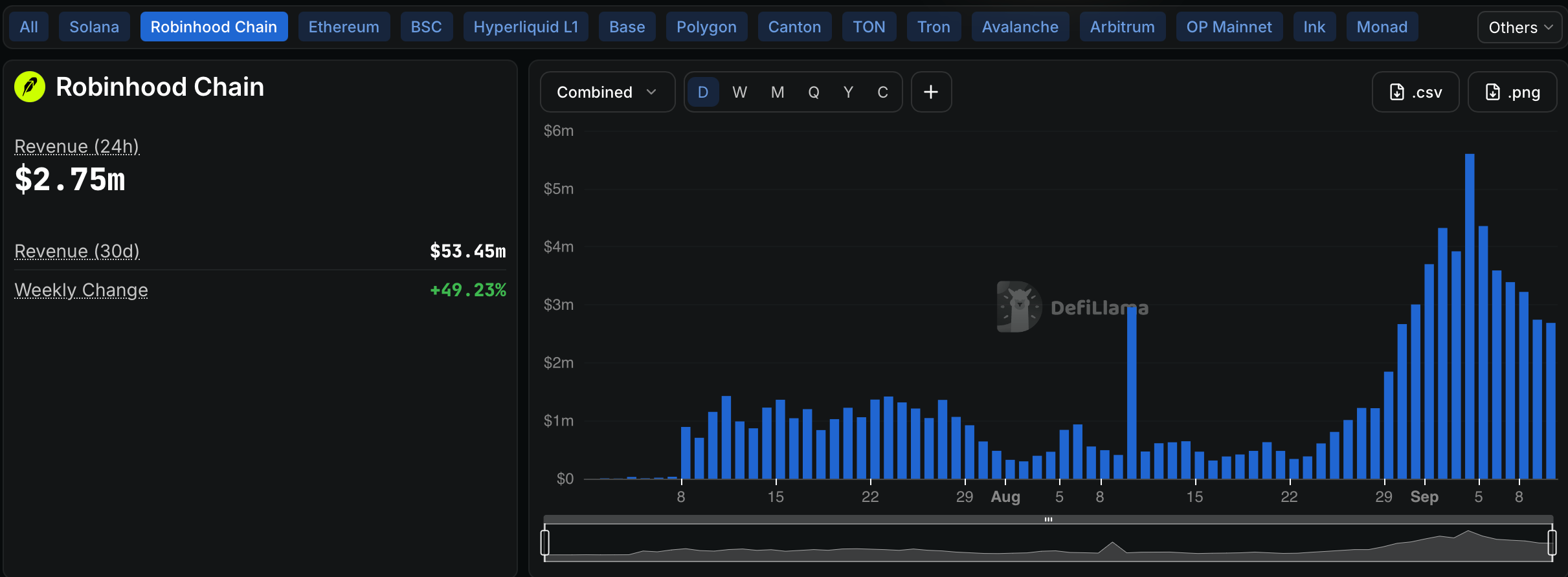
Accompanying the cooling of the Meme market, the fee income of the Robinhood Chain, which peaked at about 5.6 million USD on September 4, has also declined for seven consecutive days, shrinking to about 2.75 million USD in the past 24 hours.
The reason for this round of correction is actually not complex. On one hand, during the crazy market over the past two weeks, the paper profits of early investors have been increasingly high, and the potential selling pressure from profit-taking has continued to expand; on the other hand, after targeted capital diversion efforts from ecosystems like Solana and BSC, the influx of new funds and attention into the Robinhood ecosystem did not continue at the same pace, together with the differentiation in internal capital competition, caused the originally momentum-driven rise to lose steam and profit-taking to cluster.
Of course, this drop does not mean the story of the Robinhood ecosystem has come to an end; the current situation is more like a temporary pause in the first round of the craziest Meme speculation — the tokens that have risen the fastest and had the most crowded positions have significantly retraced, and market sentiment is gradually returning to rationality.
Looking further into the future, this chain, naturally endowed with Meme genes, still has significant imaginative potential. At least, the captain, Vlad Tenev, seems to have found a new source of liquidity.
At Goldman Sachs Annual Meeting, Tenev Aims at Billionaires
On the same day that the Meme correction hit the Robinhood ecosystem, Robinhood co-founder and CEO Tenev attended the annual "Goldman Sachs Communacopia + Technology Conference." This conference, hosted by Goldman Sachs Group, is one of Wall Street's important investor communication events in the technology and media industries, mainly attended by institutional investors, analysts, and management from publicly-listed companies.
At the conference, Tenev participated in a one-on-one fireside chat moderated by Goldman Sachs analyst James Yaro (who is also a HOOD bull and has given multiple bullish ratings for HOOD). Interestingly, in such a serious interview setting centered on "technology" rather than "cryptocurrency," Tenev spent almost half of his time discussing the Robinhood Chain.
Throughout the discussion, "tokenized stocks" was the keyword Tenev mentioned most frequently. Tenev stated that the core advantage of the Robinhood Chain is not simply bringing traditional stocks to the chain but allowing these stocks to genuinely enter DeFi, be callable and combinable by third-party developers, and further build new financial products. Currently, Robinhood Chain has launched over 200 types of tokenized US stocks, covering more than 120 countries and regions outside the United States.
Tenev also mentioned the position of Meme in this narrative.
When discussing some new plays that have emerged on-chain recently, Tenev mentioned that developers have begun combining tokenized stocks with crypto-native assets, such as Meme, some of which "exceed Robinhood's initial expectations." In other words, in Tenev's view, the recent Meme explosions like PONS, MEME on the Robinhood Chain are not completely detached from the official narrative; instead, they reflect the possibility that open on-chain assets can be recombined and repriced.
Based on the Meme craze, Tenev clearly has bigger goals — to bring institutional funds into the Robinhood Chain. Tenev explicitly stated at the conference that one of the key focuses of the next phase for Robinhood Chain is to continue expanding liquidity and attract more institutions to participate. Previously, Robinhood mainly addressed "how to make it easier for ordinary people to buy stocks," while the future is "how to enable global users and institutions to participate in these assets through on-chain infrastructure."
This is also the most noteworthy aspect of this "evangelism" — Meme may only be the easiest entry point to attract attention for the early stage of Robinhood Chain, but in Tenev's plan, it may be far more than a final destination. What Robinhood wants to do is to transform this chain into an infrastructure connecting traditional financial assets, DeFi, retail, and even institutional funds.
From this perspective, the current round of Meme correction seems more like an opportunity for re-selection — which ones are merely speculative targets that rose in popularity, and which can genuinely benefit from the subsequent liquidity and infrastructure dividends of the Robinhood Chain, are the real questions the market needs to answer in the next stage.
So, can we bottom hunt now?
Personally, I still hold a fairly optimistic view on the long-term narrative of the Robinhood Chain, and HOOD is one of my main long-term holdings in the US stock market.
As for the selection within the Meme sector, relatively speaking, projects that are infrastructure-related and have clear buying support may currently have a higher safety margin. The reason is simple; Meme relies on attention and sentiment, while infrastructure derives value from on-chain transactions themselves — as long as the Robinhood Chain can continue to attract users, capital, and trading volume, the underlying infrastructure should theoretically benefit.
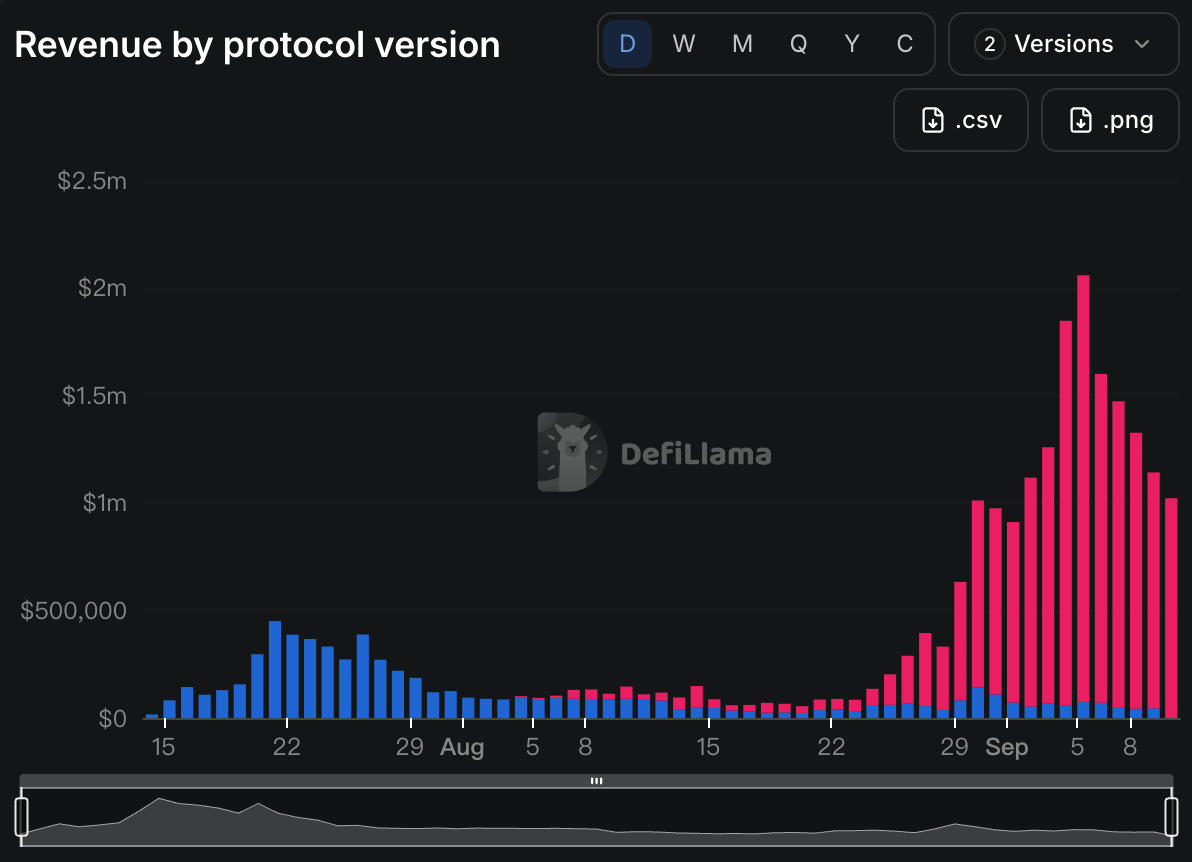
Taking PONS as an example, Pons still has over a million USD in protocol income daily; under a transparent repurchase mechanism, the decline in PONS price actually means an acceleration of the repurchase pace, which can offset a certain degree of the selling pressure from profit-taking.
As for purely Meme targets, the most important selection criterion at present is whether the "cultural nuance" behind a specific Meme possesses long-term resilience, and whether it will still be noticed during the next wave of enthusiasm — MEME, currently supporting the "Robinhood vs AMC" debating narrative, might be an option, especially since Tenev frequently references AMC.
Ultimately, I do not believe the current round of the Robinhood Chain market has reached its conclusion; however, at this stage, rather than chasing the next suddenly surging Meme, waiting for the market to squeeze out the bubbles and then seeking those with actual income, buybacks, and ecological positions will be a more comfortable choice.
免责声明:本文章仅代表作者个人观点,不代表本平台的立场和观点。本文章仅供信息分享,不构成对任何人的任何投资建议。用户与作者之间的任何争议,与本平台无关。如网页中刊载的文章或图片涉及侵权,请提供相关的权利证明和身份证明发送邮件到support@aicoin.com,本平台相关工作人员将会进行核查。


