During the live broadcast on Wednesday, the lowest point was still hovering around 76,000, and just two days later, it surged back above 80,000, reaching a high of about 82,000. I still won't guess how high it will go, as guessing right once doesn't help. Today, let's discuss a few practical points, so next time when we encounter such a sudden surge, at least we can understand how the money has pushed it up and avoid making the mistake of jumping in just because we see a big bullish candlestick.
First, let's talk about a data point that many people tend to overlook: open interest (OI). It sounds a bit technical, but it's easy to understand; you can think of it as how many contract positions are still open in the market. When BTC goes up by 3%, the reasons behind it can vary completely.
The first scenario is when BTC is rising, but OI is decreasing. This situation often does not involve new investors jumping in to go long; rather, it’s usually previous short sellers who can’t hold on any longer and are closing their short positions, a phenomenon we often refer to as short covering or a short squeeze. This type of rise can sometimes be particularly aggressive because stop losses from shorts are bought back passively, without regard for cost. But there’s a catch: if the ascent mainly relies on liquidating shorts, once this batch of shorts is cleared out, whether it can continue to rise depends on whether there are real new buying orders to take over. Otherwise, it can easily surge for a while and then lose momentum.
The other scenario is different: as the price rises, OI also rises. This indicates that new positions are building up in the market, with some people chasing long positions and others shorting at high levels, making the market generally more exciting—leveraging becomes increasingly piled on, like a rope that’s being pulled tighter. When the price continues upward, one side of the market will end up unable to bear it. So sometimes, you might see BTC gradually rising, then suddenly a massive candlestick shoots up, which is likely not because a large influx of cash buying suddenly appeared, but rather that the price moved a bit, triggering a batch of stop losses and liquidations, then quant funds, machines, and leveraged positions are all triggered, skyrocketing the price in a short time.
In the future, when you see BTC suddenly surge, take a glance: Is OI rising or falling when the price goes up? A lot of information can be discerned at a glance.
Another point: Who is buying? Some newcomers may think that if the price rises, then someone must be buying, but it's not entirely true. Buying in the futures market and buying in the spot market are not the same thing. For example, if BTC suddenly spikes from 80,000, but it's mainly driven by perpetual contracts going long and the spot market hasn't moved much, with funding rates quickly rising, I would generally be cautious. This kind of rise feels more like people pushing the price up using borrowed money; it may indeed climb quickly in the short term, but as soon as the price pulls back slightly, high-leveraged longs tend to hit stop losses, and you will see how quickly it falls after the intense rise.
Conversely, if there are clear buy orders in the spot market first and the futures market isn’t particularly crazy, with funding rates remaining relatively normal, this structure is much healthier. Because when you buy into the spot market, there’s no such thing as forced liquidation. If you buy one BTC and it drops by 3%, no one is going to come and forcibly sell your coins. But it's different for futures; the higher the leverage, the closer you are to the liquidation line. So as mentioned before, the ascent pushed by spot buying and the ascent pushed by leverage are completely different things. You don’t need to delve too deep into every piece of data; at least clarify first whether the market is being driven by real capital or leverage.
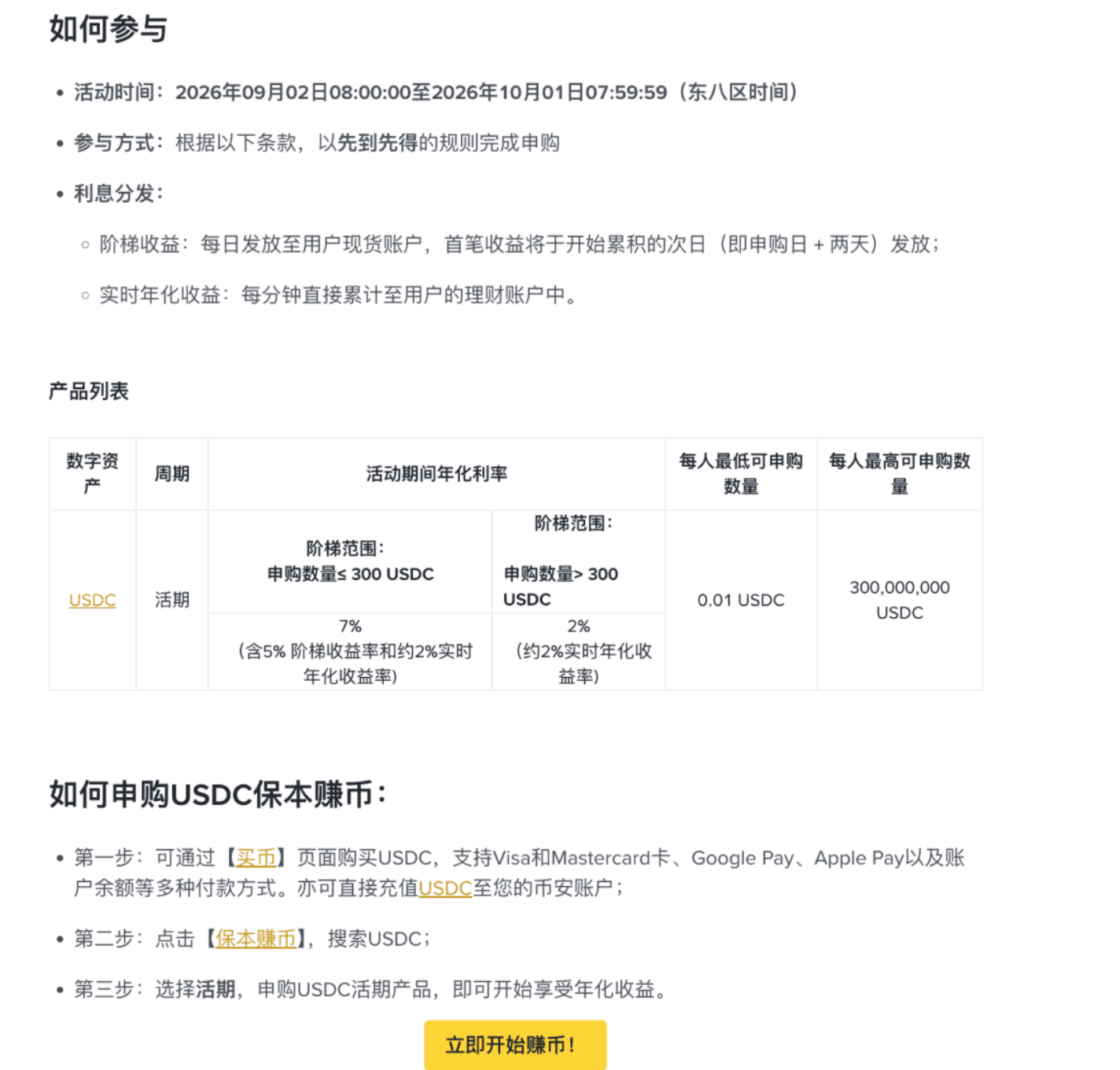
If you happen to have some USDC on hand that you’re not currently planning to use, Binance now has a USDC principal-protected earning product, currently offering up to 7% annualized return. If you have funds that you plan to keep aside, you might want to take a look. Those without an account can register through the exclusive link below:
👉 https://jump.do/zh-Hans/xlink-proxy?id=3
(Invitation code: aicoin668, enjoy a 10% rebate)

Registering takes just three steps:
- Prepare USDC: Buy coins or deposit directly.
- Open "Principal-Protected Earnings": Search for USDC.
- Select the earning product: Subscribe directly. The specific returns and rules are based on real-time updates from the Binance official page.
Don’t just see that the funding rate is positive and think the market is dangerous. It’s normal for funding rates to remain positive during a bull market; what you need to watch out for is how quickly they are rising. For instance, if BTC rises gradually and the funding rate climbs slowly, that’s usually no problem; but if BTC surges suddenly and the funding rate spikes dramatically while OI simultaneously skyrockets, then it’s worth paying extra attention—this represents that everyone is scrambling to go long.
The most troublesome market conditions are not when no one is bullish, but rather when everyone suddenly becomes bullish. Once all positions are squeezed to one side, if the price dips even slightly, it can trigger a chain reaction: Longs hit stop losses → Long positions are liquidated → Price continues to drop → More longs get liquidated. What was a short squeeze during the rise could turn into a long liquidation during the fall.
This is also why you often see particularly frustrating market movements: you watch it rise all day but are afraid to buy, and just when you finally gather the courage to jump in, boom—it starts to pull back. The market is not specifically targeting your money; often, it’s just that when you can’t help but chase the move, it happens to coincide with the market sentiment being the most crowded.
So if BTC continues to hover around 80,000 over the next few days, you can just keep an eye on a few points; there's no need to memorize everything—just understand the logic behind it. For example, if BTC pushes up again: First, look at whether OI is rising or falling when the price increases; if OI drops, it might be short covering; if OI rises rapidly, it indicates new leverage is entering the market; second, check if the funding rate suddenly rises quickly; third, see if there are spot purchases accompanying it; and finally, check whether it can hold above the high levels.
Some friends like to watch for breakouts; for instance, BTC breaks above 80,000! Upon seeing this, they feel the trend is set. However, a breakout is just the beginning; what really matters is whether it can hold above that level. For example, if BTC spikes to 81,000 but then drops back to 79,800 after ten minutes, failing to reclaim the highs even after several attempts, the quality of that breakout is generally poor. But if after breaking through, it keeps hovering above 80,000 with buyers stepping in on the pullbacks and the selling pressure can’t push it down, that’s when it shows that this level is truly supported.
There’s also a term called false breakout. Some people might think it’s a deliberate trick by market makers, but it’s not that complicated. Observing the aforementioned points together can already filter out a lot of impulsive trades.
Also, don’t confuse “I didn’t buy at the lowest point” with “I can’t buy.” Many people didn’t buy at 76,000, and now that it’s at 80,000, they automatically think: it’s risen so much, I can’t buy now. But this logic isn’t entirely correct. Just because the price has gone up, doesn’t mean you can’t buy; the key is to see if the risk-reward ratio is reasonable for your purchase now. For example, if you believe there’s still a lot of room above and there’s a clear stop-loss point below, it could still be a viable trade. But if you’re chasing it now without any idea of where it’s wrong—just because you’re afraid it’ll keep rising—then that position is quite risky.
One important thing in trading is: don’t take your cost price as your logic. The market doesn’t know where you bought; buying at 75,000 versus someone buying at 80,000 makes no difference for BTC. What truly matters is that you both have different positions, stop losses, and expectations. If you originally had no plans and only decided to buy because it just spiked, chances are it’s your emotions pushing you. If it’s truly a trending market, those few minutes shouldn’t make a difference; if the opportunity is gone in a few minutes, it’s likely that it wasn’t particularly suitable for you in the first place.
Tonight, there’s also non-farm payroll data. We discussed this on Wednesday, so I won’t elaborate on whether high or low data is better. Because macro data can easily lead people astray; when the data comes out, some say it’s bullish while others say it’s bearish. Therefore, the simplest approach tonight is to look at the market: how does the first wave move, is there a reversal afterward, how does OI change, does the funding rate surge suddenly, and does the spot market follow? These aspects will provide more direct insights than getting caught up in whether this non-farm payroll data is bullish or bearish. Because the data is simply an event, and how the market ultimately trades the data will truly affect your positions.
When you want to place an order, first ask yourself: Why do I want to buy now? Is it based on pre-existing judgment, or did I suddenly want to buy because of the recent spike? Also, if this trade goes wrong, will I still be able to sleep? If you cannot sleep, then your position is problematic. If that big bullish candlestick hadn’t occurred just now, would you still want to buy? If the answer is no, then take a pause—you may not be seeing an opportunity; you are just starting to fear missing one.
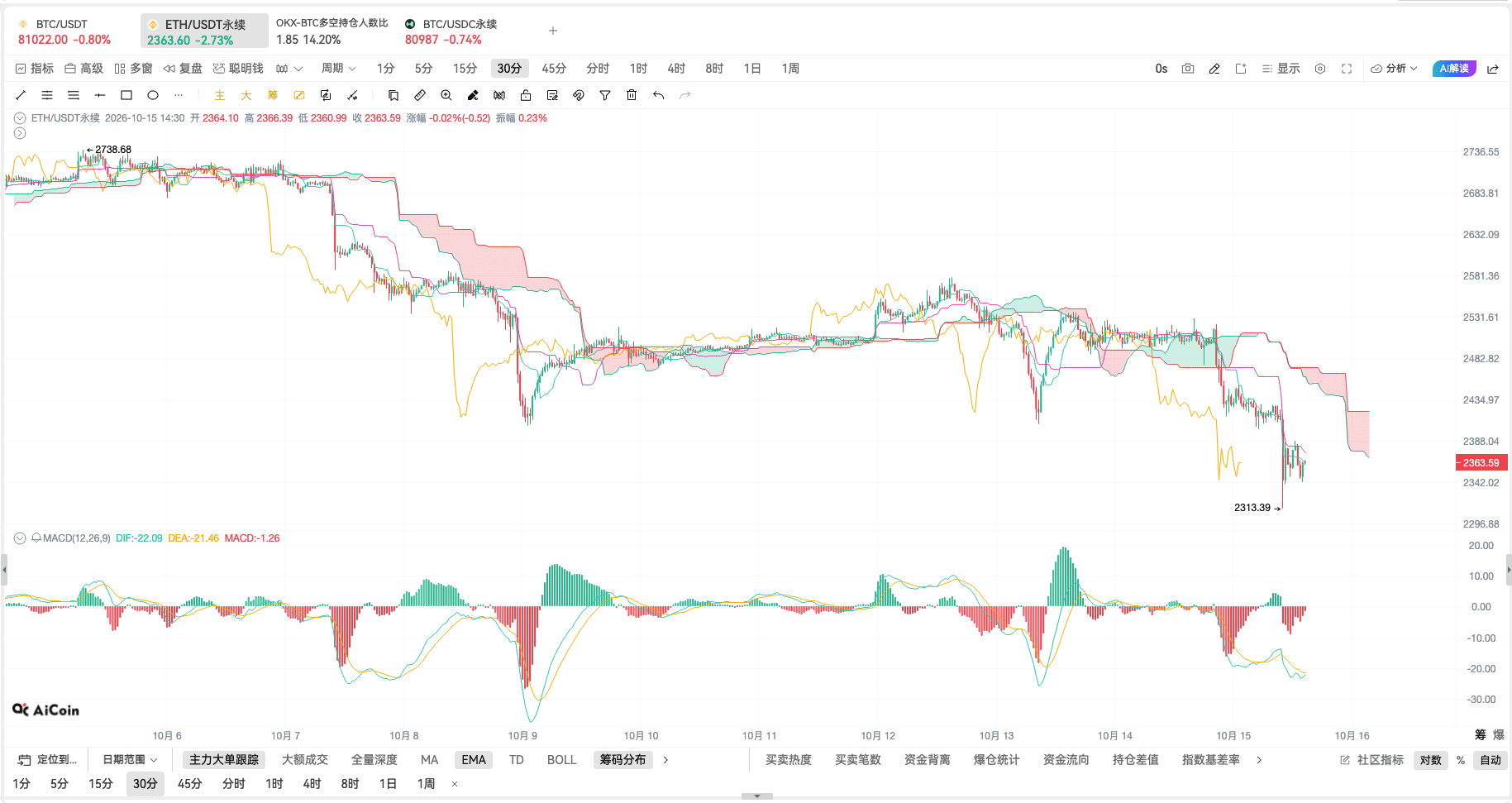
Usually, observing BTC, ETH, and a lot of the data just mentioned can be directly viewed within AiCoin! Stats like liquidations, large trades, liquidation heatmaps, and chip distribution can serve as supplementary tools for daily market watching.

Anyone can say BTC will definitely rise or definitely fall, so it’s crucial that you can judge for yourself. When you see a sudden spike, first check if it’s a short covering; then see if leverage is starting to chase it wildly; next, see if the spot market is involved; and finally, check whether the price can actually hold.
Lastly, as always, a disclaimer: The price fluctuations of crypto assets can be significant, carrying a risk of loss of principal. The content above is for informational reference and data analysis only, and does not constitute any investment advice. Please be sure to consider your own risk tolerance and financial situation, and operate rationally after making independent decisions.
免责声明:本文章仅代表作者个人观点,不代表本平台的立场和观点。本文章仅供信息分享,不构成对任何人的任何投资建议。用户与作者之间的任何争议,与本平台无关。如网页中刊载的文章或图片涉及侵权,请提供相关的权利证明和身份证明发送邮件到[email protected],本平台相关工作人员将会进行核查。