2026-09-09 | In-Depth Analysis | Written by: Misty Rain
Don't rush to look at the K-line today; follow me to see a set of more essential data—money flow. In the past 24 hours, there has been a net outflow of $1.808 billion for BTC, $584 million for ETH, and $193 million for SOL, with the three major mainstream spot funds mainly exiting; but at the same time, DOT rose by 12.26%, accumulating a weekly gain of 38.16%, and ARB increased by 50.78% over the week. The mainstream is losing blood while altcoins are getting a transfusion, and institutions are quietly accumulating. This market is undergoing a silent relocation. This article thoroughly addresses three questions: Where is the money flowing from, where is it going, and how should we ordinary people read these signals.
01 Phenomenon: Mainstream Losses, Altcoin Gains, Rare "Split" in the Market
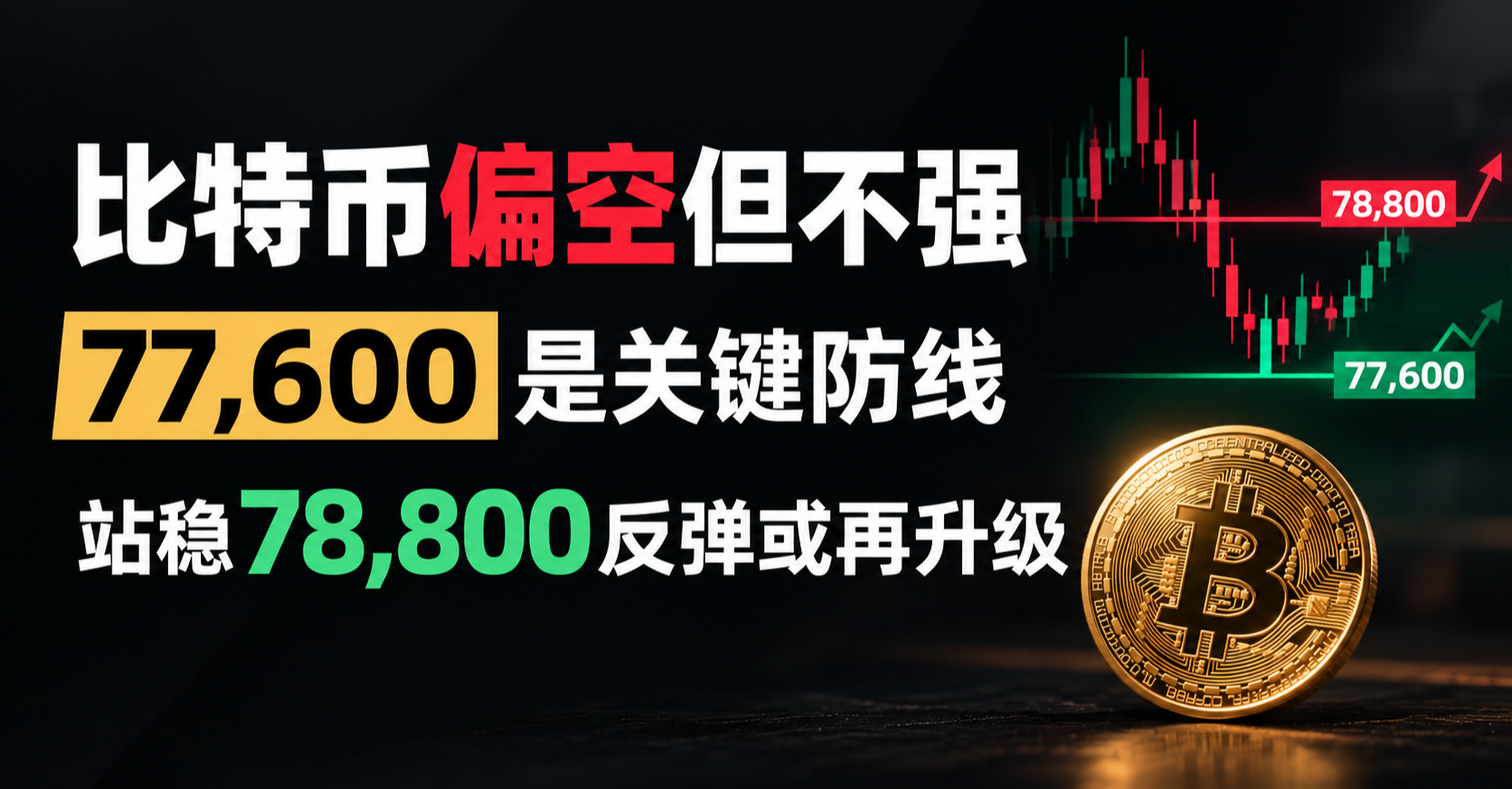
First, let's freeze the scene. BTC is currently around 78,734, having just pulled back from 79,884 to a low of 77,574 before rebounding; the one-hour level is still fluctuating below the 80,000 mark, with a previous high of 82,279.9 still out of reach. Just looking at the K-line, this is a standard picture of "weak rebound, oscillating range."
But the funding data provides a different layer of information. AiCoin monitoring shows that the net outflow of the three major mainstream spots in the past 24 hours totaled over $2.5 billion—$1.808 billion for BTC, $584 million for ETH, and $193 million for SOL. This is no small amount, indicating that funds are concretely leaving mainstream coins. Meanwhile, altcoins began to differentiate: DOT rose 12.26% in 24 hours, accumulating a weekly gain of 38.16%, with a net inflow of 9.56 million USDT; ARB increased by 50.78% over the week, and the 24-hour decline has narrowed to 1.32%, with selling pressure obviously reduced; while OP is still down 6%, with no clear stop-loss signal yet.
Mainstream outflows and altcoin inflows have created a rare "split" within the market. This kind of split usually occurs under two conditions: either existing funds are seeking a more elastic rotation period, or it is the trial period before a big trend starts. Which one it is requires further observation of the funds.
02 Contract Signals: Short Squeeze, New Money Inflow
Looking at the contract side, the details are even more interesting. In the last hour, there was a short squeeze of $8.35 million, surpassing the long position of $6.21 million—shorts are being passively liquidated, indicating that the short-term price focus is moving upward, and those betting on the downside are unable to hold on. At the same time, new addresses have established approximately $2.36 million in BTC long positions and $2.49 million in ETH long positions in a short timeframe—someone is actively increasing their bullish stance at this level.
"Spot outflows + contract short squeezes + new addresses building long positions," this combination has historically occurred many times. In layman's terms: short-term participants are exiting the spot market, but new funds are coming in on the leveraged side to absorb them, and the strength of shorts is being depleted. Market sentiment is not pessimistic; it feels more like a change of hands to a different group of holders.
03 Who is Accumulating Against the Trend: Institutions and "Bitcoin Treasury"
Where is the outgoing spot going? One answer is: it is being picked up by institutions and publicly traded companies. This week’s news flow is unusually dense with institutional buying—
The French Bitcoin treasury company Capital B purchased 376 bitcoins for 25.3 million euros (the purchase price was approximately 67,300 euros per coin), increasing their holdings to 3,521 bitcoins, with an average cost basis of 87,878 euros per coin, backed by Bitcoin industry veteran Adam Back, who participated in the financing with 7.6 million euros, executed by Swissquote;
Tom Lee's Bitmine increased its holdings by $70 million in ETH, bringing its total to 5.93 million coins;
Last week, the Hong Kong-listed company BoYa Interactive purchased 205 bitcoins, increasing its holdings to 4,316 coins, while whale BobbyBigSize closed 693 bitcoin short positions.
Putting these three together, the picture becomes clear: retail investors and short-term funds are "getting off" in the spot market while institutions and treasury companies are "getting on." This "retail exit, institutional accumulation" turnover process is a typical transfer of chips from weaker hands to stronger hands. Note one detail: the increases by Capital B and Bitmine occurred after prices pulled back from the highs—institutions are not looking to chase the price up but are after discounted chips.
04 Macro Factors: Inflation Expectations Have Dropped, But US Debt is the Elephant in the Room
Behind the flow of funds, macro logic is also changing. The most important data today is: the New York Fed's one-year inflation expectations for August have fallen to 3.58% (previous value 3.63%), and expectations of rising unemployment have intensified—another signal of cooling inflation has emerged, which is favorable for the Fed to slow its rate hikes. The Bank of England’s Governor Bailey has also expressed the desire to "eliminate misunderstandings that the central bank has a secret rate hike plan," and the tone of major global central banks is marginally shifting dovish.
However, the other side of the coin must be clearly seen: the US federal government debt has surpassed $40 trillion, with a fiscal deficit accounting for about 6% of GDP, and the 10-year US Treasury yield approaching 5%; over the past decade, the rolling return on long-term US Treasuries has been -2%, the worst level in over a century. On one hand, inflation is cooling and rate hike expectations are converging, on the other hand, debt is ballooning and yields remain high—these two variables are pulling in opposite directions. For the crypto market, the former is a benefit to the denominator (discount rate), while the latter is a long-term draining pump for global liquidity.
Don't forget two other disruptive items: one is the escalation of the Middle East situation—US forces striking Iranian targets and destroying five oil tankers, Iran missile attacks on US targets in Jordan, and the Houthis announcing military actions in Saudi Arabia, raising geopolitical risks and increasing risk aversion; the second is Kraken experiencing withdrawal delays, with over 20 blockchain networks' deposit services suspended (since September 4), and 23 of 725 fund services downgraded—these “trust cracks” at the exchange level exert short-term pressure on sentiment and are worth monitoring for progress.
05 BTC Level Reference: Two Numbers Determine Short-Term Quality
Finally, back to the levels, discussing only two key figures. Currently, BTC is around 78,734, looking at two numbers for the short term:
Lower level 78,500: This has been repeatedly tested as a support level in recent days; maintaining it keeps the oscillation pattern unchanged;
Upper level 79,200: Re-establishing this position opens up further repair space to align with the 79,884—80,000 area.
Further out, 82,279.9 is the previous high, 76,204.5 is the phase low, with the middle being the oscillation zone. On the altcoin side, if DOT breaks through $1.28, watch for a continuation towards $1.35; if it falls back below $1.15, the recovery structure may fail; for ARB, pay attention to see if it can stabilize above $0.17. These numbers are not predictions but "signal switches"—when prices encounter them, the market tells you where it wants to go through trading volume.
06 A Method for You: How Ordinary People Can Read Money Flow
In the final section of the article, I want to condense the data discussed today into a set of observation methods that you can use yourself. In the future, when you see similar market setups, think through these three questions, and you’ll be able to see more clearly than most:
First Question: Is the spot flowing in or out? A net outflow does not equate to a bearish outlook—it’s essential to assess whether the outflow occurs at a high or low level. A significant outflow at a high level signals distribution, while a reduced outflow at a low level usually indicates "washing out and changing hands," combined with institutional accumulation news, which is more likely to happen.
Second Question: Who is being liquidated on the contract side? If more shorts are being liquidated than longs, it indicates prices are being passively pushed up, and shorts are being depleted; if more longs are being liquidated than shorts, it signals weakness in offense, and longs are being cleared. This is the fastest way to judge the short-term power dynamics.
Third Question: What are institutions buying? When retail outflows coincide with institutional accumulation, it often means chips are concentrating among long-term funds. Pay particular attention to the nature of the accumulating parties—public companies, treasury-like companies, well-known funds; their holding periods are often measured in months or even years, and their cost lines typically represent future important support references.
The market today is displaying the combination of "the first question indicates a washout, the second question shows shorts being depleted, and the third question indicates institutions accumulating." This combination may not lead to immediate price increases, but the downward space is usually limited—true large funds have always climbed aboard when others are stepping off.
Keep these three questions in mind; next time you look at the market, what you see will no longer be just the red and green K-lines, but the direction of money flow. Observe, verify, then make judgments, maintaining reverence for the market.
The above content is based on public market conditions and information logic analysis, intended for sharing within a technical analysis framework and does not constitute any investment advice. The cryptocurrency market is highly volatile, and all levels and scenarios are hypothetical; please make rational judgments and pay attention to risks.
免责声明:本文章仅代表作者个人观点,不代表本平台的立场和观点。本文章仅供信息分享,不构成对任何人的任何投资建议。用户与作者之间的任何争议,与本平台无关。如网页中刊载的文章或图片涉及侵权,请提供相关的权利证明和身份证明发送邮件到support@aicoin.com,本平台相关工作人员将会进行核查。