Robinhood is buying its way into the machinery behind its own prediction markets business. The trading app announced Tuesday it will take minority equity stakes in both Crypto.com and OG.com, the prediction markets platform Crypto.com launched as a standalone app back in February and has now spun off into its own separately capitalized company.
Prediction markets let people trade contracts on whether something will actually happen—a Federal Reserve rate cut, an election result, who wins Sunday's game—instead of betting through a traditional sportsbook. Polymarket is among the most popular, but there are others like Kalshi or Myriad, which is developed by Decrypt’s parent company Dastan.
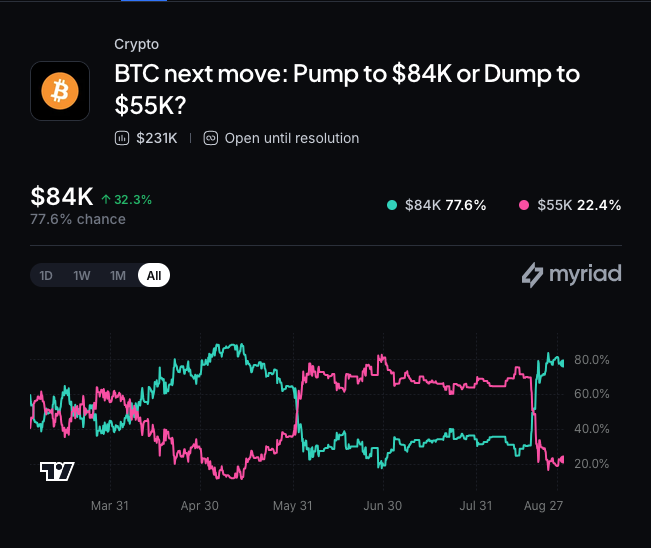
Myriad: Bitcoin's next price move? Click to make your prediction.
Robinhood has turned that idea into its fastest-growing product line, and this deal is about who handles the plumbing underneath it.
Who does what
Under the agreement, OG.com becomes an infrastructure and clearing provider for Robinhood, meaning it processes and settles the trades once a customer places a bet.
Robinhood will route that retail volume through OG.com's exchange, which is regulated by the Commodity Futures Trading Commission, or CFTC—the federal agency that oversees this category of contracts. The companies call it OG.com's largest business-to-business partnership by trading volume, and the rollout begins in phases to eligible U.S. customers starting September 8.
The equity piece runs the other direction. Robinhood's stakes in Crypto.com and OG.com are priced in line with Citadel Securities' July investment, which handed Crypto.com its first-ever institutional funding round and valued the exchange at $20 billion.
OG.com's standalone spin-off values it at $5 billion.
Crypto.com founder and CEO Kris Marszalek framed the tie-up as a “game changer” move, saying in a statement that he wants OG.com to become "the most liquid venue globally for innovative derivative instruments."
Robinhood VP JB Mackenzie said the deal "gives [Robinhood] even more skin in the game" as customer demand for event contracts keeps climbing.
Why Robinhood keeps stacking partners
Robinhood built its prediction markets hub on top of Kalshi's contracts, then started shifting volume to Rothera, its own CFTC-licensed exchange run as a joint venture with trading firm Susquehanna International Group, testing it out during this year's World Cup. Adding OG.com gives Robinhood a third infrastructure supplier instead of depending on a single one.
The strategy is paying off. Robinhood's event contract revenue surged more than 10-fold year-over-year to $156 million in the second quarter, making prediction markets the company's fastest-growing business line while crypto trading revenue fell 38%. For an app that built its early reputation on stock and crypto trading, event contracts are now doing more of the work.
Meanwhile, Crypto.com won conditional approval for a U.S. national trust bank charter in February, and spinning off OG.com into a separately capitalized company is another step toward looking like regulated financial infrastructure rather than just a crypto app.
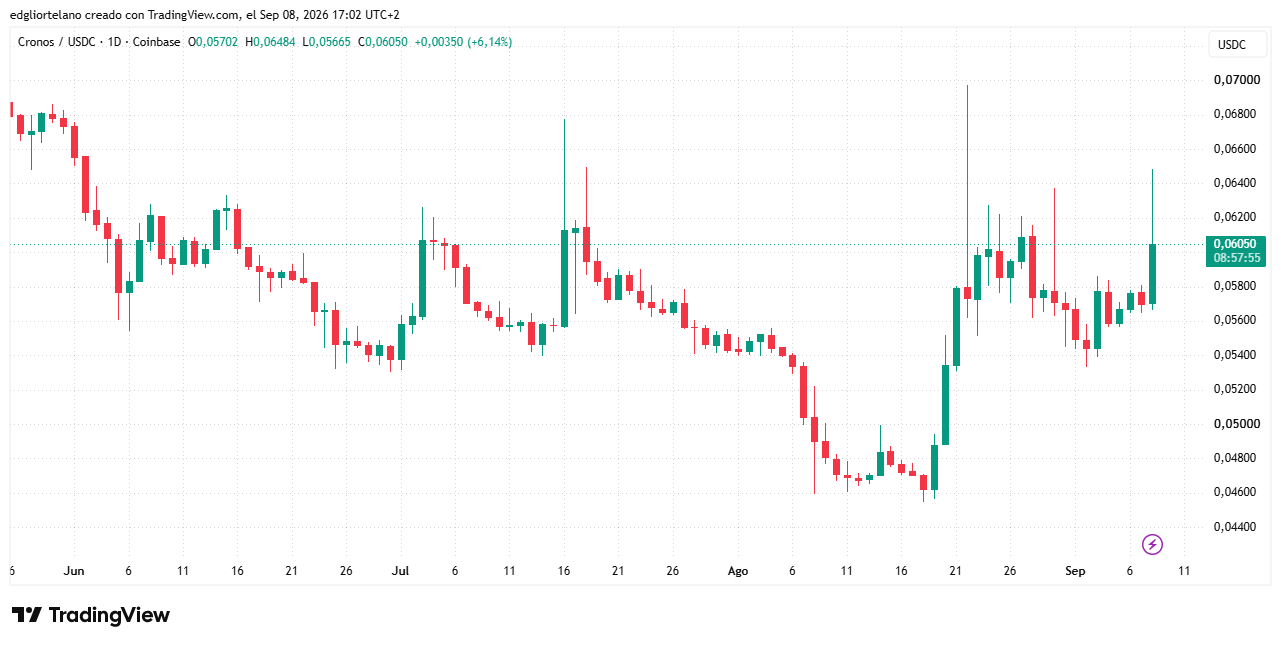
Markets liked what they saw. Shares in Robinhood, which trades as HOOD, climbed about 3.4% in premarket trading Tuesday to roughly $126, while CRO, Crypto.com's native token, jumped more than 6% to its current $0.06 with a daily high of $0.065—a notable bounce for a token that slumped to a three-year low a month earlier after Trump Media Group canceled a separate set of deals with Crypto.com.
The rollout begins in phases to eligible U.S. customers starting today, and both companies have already flagged the next step: equity-linked perpetual futures, pending regulatory clearance.
免责声明:本文章仅代表作者个人观点,不代表本平台的立场和观点。本文章仅供信息分享,不构成对任何人的任何投资建议。用户与作者之间的任何争议,与本平台无关。如网页中刊载的文章或图片涉及侵权,请提供相关的权利证明和身份证明发送邮件到support@aicoin.com,本平台相关工作人员将会进行核查。


