
After so many years and so many times, when it comes to re-evaluating Baidu, there are probably not many people who take it seriously anymore. Of course, relying on traditional internet or autonomous driving, a re-evaluation is not possible.
Re-discussing Baidu means smashing the “ancient” business—regarding traditional advertising as merely responsible for cash flow, completely zero valuation business. Under this basic premise, it is necessary to rethink the value of Baidu as an AI infrastructure stock in the AI era.
The “AI infrastructure” of Baidu, in the opinion of Dolphin, mainly consists of two core assets:
1) AI Cloud Services: Bare Metal as a Service; and API-centric MaaS (Model as a Service);
2) Kunlun Chip: Chip design service focused on computing ASIC, selling chips and rack solutions.
This time, re-isolating Baidu is crucial to weigh whether these two assets have real value. Next, let’s discuss them one by one:
1. AI Cloud Services: Starting from the three-year payback model of cloud giants
In this Q2 financial report, North American CSP provider Amazon and Chinese CSP providers Alibaba and Baidu have all made a quantitative description of their AI investment return cycle for the first time with a three-year payback period, in order to relieve concerns about short-term high Capex.
There is an implicit assumption here that the gross margin of each Token remains relatively stable. Currently, software iterations (FlashAttention, speculative decoding, MoE, prefix cache, etc.) have improved the effective utilization of chips, releasing more computational throughput.
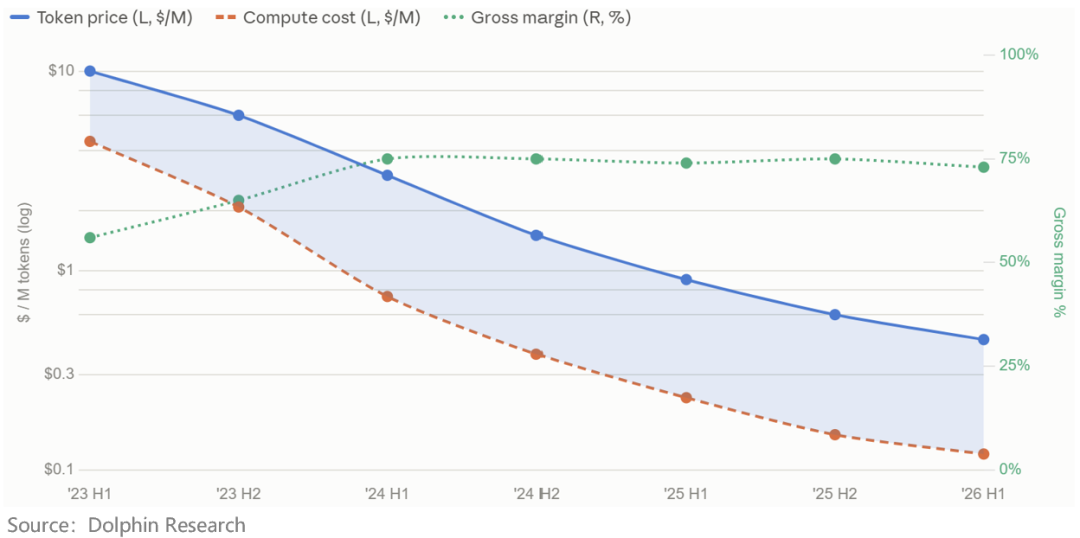
This means that although the charging price per unit Token has plummeted, the cost of each Token is also decreasing. Especially the cost per Token for old cards (which means limited price increases on single cards) is likely to decrease faster than the charging side for Token. From an economic model perspective, this supports the stability or even short-term improvement of Token margins.
But the problem lies in sustainability, which remains uncertain. On one hand, the effective utilization rate of hardware computing power has a ceiling, and more complex adjustments need to be made on the software side to spark this. On the other hand, open-source models and price wars can compress income on a unit Token basis more quickly.
As shown in the figure below, taking H100 cloud leasing business as an example, leasing prices have dropped by 78% over three years, and single card throughput has increased by 8 times, causing the cost per Token to decline by 97%. However, after the gross margin for each Token rose to around 75% in 2024, it did not improve further. In the first half of this year, with the further drop in the prices of large model terminals and the bottleneck of effective utilization of old cards, the gross margin for a single Token has even shown signs of weakening.
Power cost remains a barrier to further penetration of AI. Currently, the practice of extending usage periods is relatively common, and Huang has personally certified that A100 can still be used until 2029, extending its lifespan to 10 years.
But the above figure also proves that extending the lifespan of old cards is only a stopgap measure. The old card H100 has already failed to maintain the unit economic model in the price war. Whether A100 can genuinely match large models for 10 years is hard to commit to, and industrial resources ought to tilt towards the supply bottleneck on the hardware side.
1. Differences in payback periods of CSPs in China and the US, opening opportunities for domestic chips
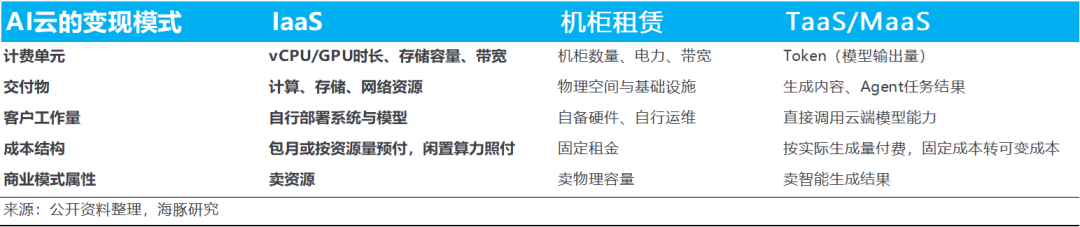
This round of CSP vendors' monetization model in the AI business has mainly five types, with most contributions to current growth and positive ROIC concentrated in the first two (IaaS and MaaS):

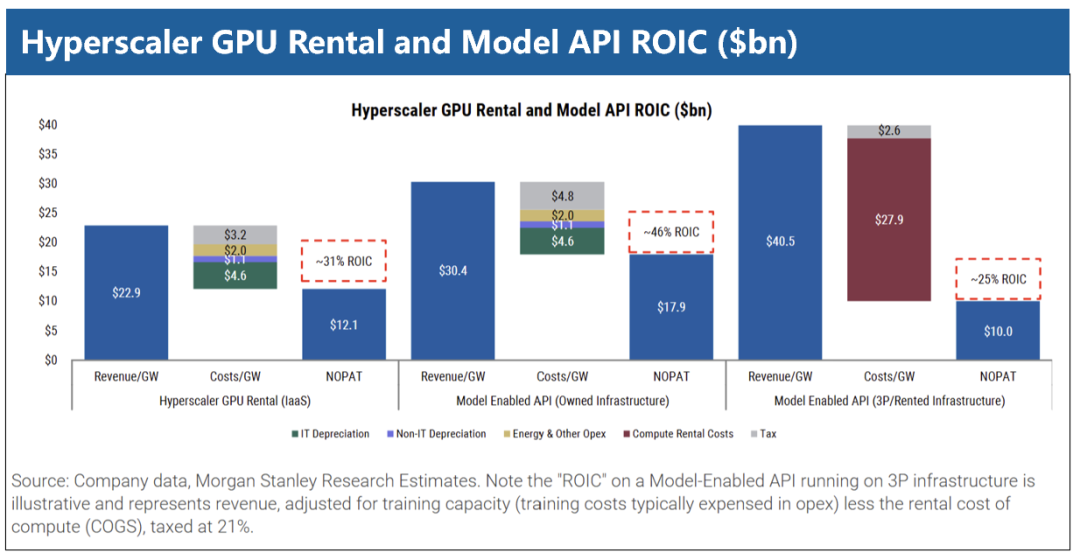
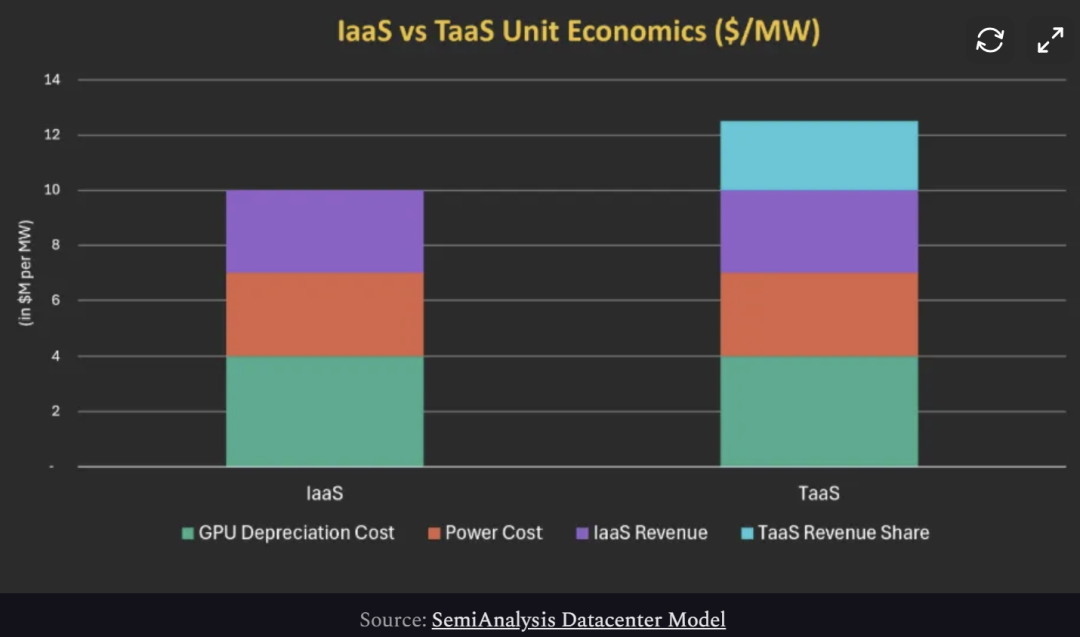
Recent institutions have done rough calculations on the profitability model of CSPs, summarizing that the current computing power prices and costs can meet the three-year payback plan. North American profit margins are generally higher than those in China; among different sub-businesses, MaaS has a higher profit margin. The main reason is that the R&D expenses of 1P large models have not been fully counted in the MaaS business; distributing 3P large models externally is, in fact, based on channel monetization via traffic, with income accounted as net commission (net income), naturally boosting the profit margin.
The specific valuation rough estimates are as follows:
(1) The IaaS business of North American CSPs, mainly with self-built data centers, can achieve an overall ROIC of 30% (taking GB300 computing power as an example, rental income $23 billion/year, corresponding upfront Capex investment of $39 billion/year), calculating operational cash flow OCF, the cash payback cycle is 2.2 years.
(2) The MaaS business of North American CSPs provides multiple large model APIs (including 1P and 3P), with the underlying computing power divided into two sources: self-built data center computing power and rented computing power from third-party platforms.
Without counting the training costs of 1P large models, the marginal operating profit margins can reach 75% (self-built computing power) and 30% (rented computing power). The former has an ROIC of 46%, with a payback period of less than 2 years; the latter involves no upfront investment.
However, the above calculations do not account for the profit sharing of 3P model manufacturers in the industrial chain, especially since North American CSPs do not inherently have bargaining advantages when facing the leading model companies Anthropic and OpenAI.
For example, Amazon's Bedrock can be considered a large model distribution platform. However, due to the weak capability of Amazon's self-developed model Nova, Bedrock mainly sells large models from nearly 20 AI labs worldwide, including those in China.
Q2 AWS revenue growth continues to accelerate, mainly benefiting from the popularity of Anthropic (according to institutional research, the largest share of Anthropic's revenue in CSP comes from Bedrock, accounting for half of Anthropic's total revenue).
From a financial perspective, Bedrock confirms net income, while Anthropic calculates gross income. The profit-sharing method is that Anthropic removes inference costs from gross revenue, and the remaining portion is split 50% to Bedrock as channel fees. For Bedrock, this portion equates to pure incremental profit. Therefore, Bedrock has a naturally higher profit margin level compared to the IaaS business.
(3) For corresponding Chinese CSPs, the unit computing power cost advantage exists only in mid-to-low-end server cards, as well as operational costs and bundled software.
Mid-to-high-end GPUs above H200 face significant market price fluctuations due to regulatory impacts. Chinese CSPs often need to pay multiple premiums to complete procurements, but the leasing prices of computing power externally cannot achieve the same premiums, even requiring consideration of customers' purchasing power, while prices are relatively discounted compared to North American CSPs, thus resulting in lower overall gross margins.
Although operational costs in North America are high (electricity, data center cabinet space, networks, labor, etc.), due to lower operational profits and higher GPU procurement costs, the difference in ROIC for IaaS businesses between the two sides is significant.
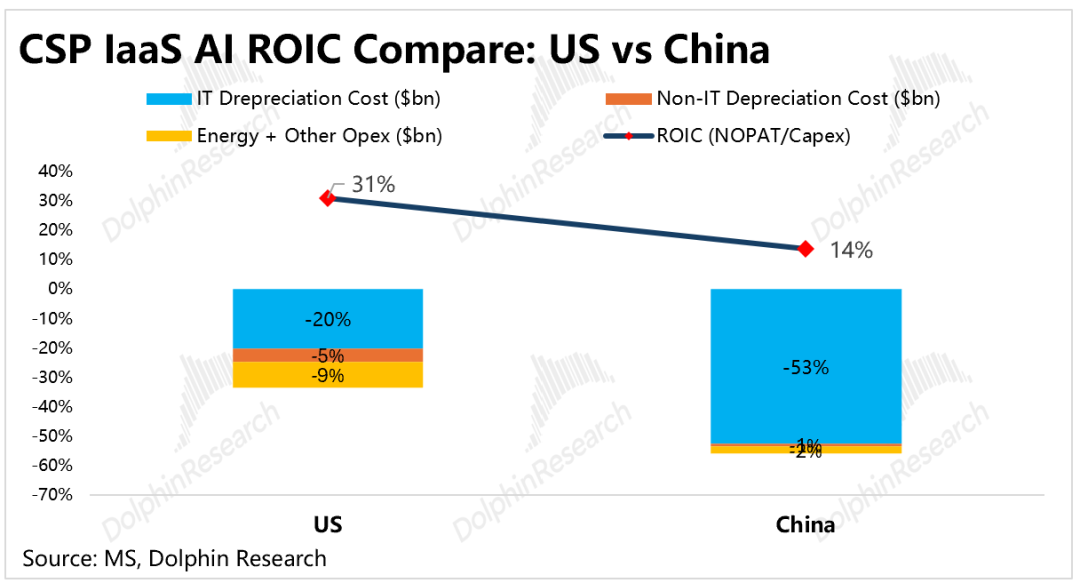
During Alibaba's conference call, management expressed that Morgan Stanley's calculations largely underestimated the actual ROIC, implying that ROIC exceeds 20%.
Dolphin believes that the deviation here mainly comes from the cost confirmation of computing chips. To simplify the calculations, Morgan Stanley assumed all computing power was GB300. In reality, most CSP manufacturers in both North America and China use hybrid solutions, with lower performance requirements for single-card chips in inference scenarios, including many A100, H100 series, or domestic chips.
The procurement premium for non-high-end GPUs for Chinese CSPs is not as high as 3-4 times, so actual procurement costs and gross margins after deducting depreciation will be higher than Morgan Stanley's calculated values.
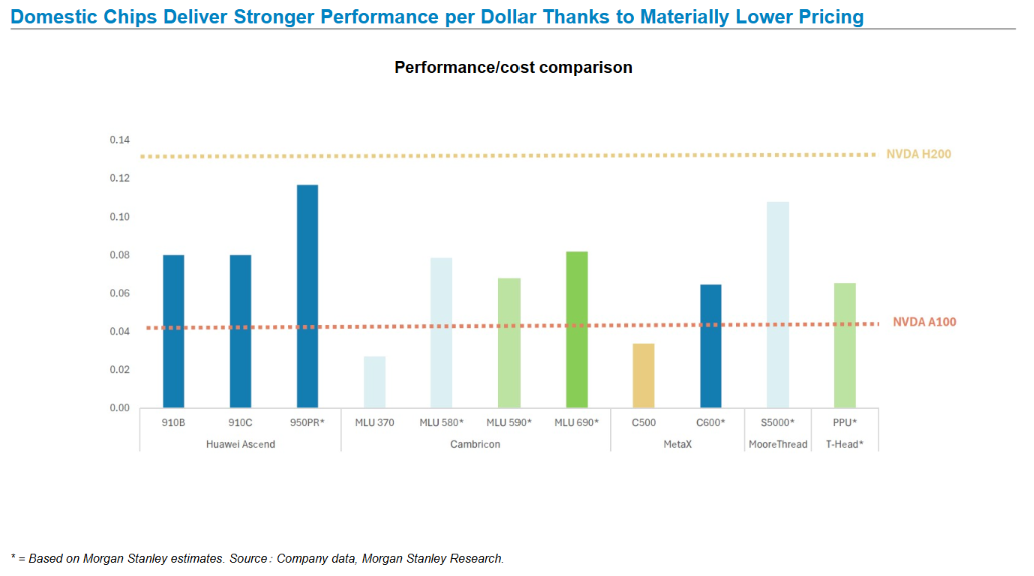
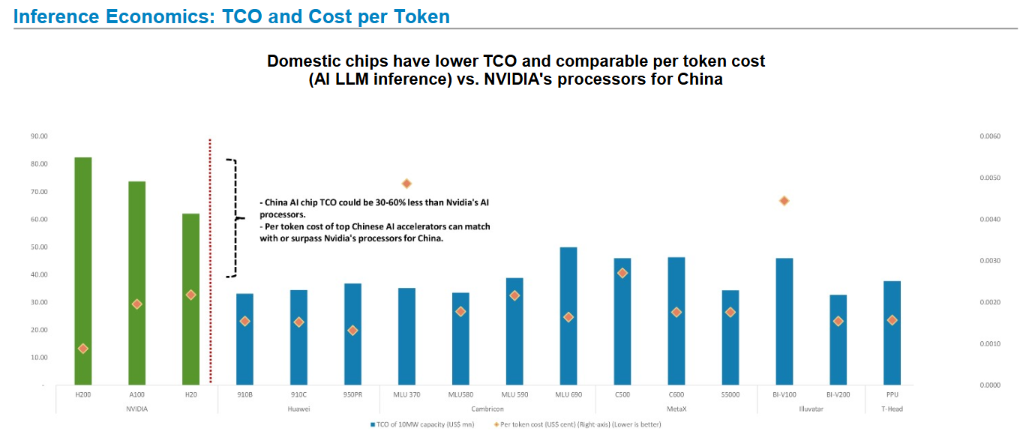
As the performance of domestic chips improves (including increased single-card computing power and large-scale networking to compensate for the shortcomings of single-chip computing power), while total costs (to achieve equivalent computing power, more domestic chips are required, leading to additional power consumption, cabinet occupancy costs, and matching server heads, routers, switches, etc.) can also maintain an advantage, combined with compliance risks for sourcing foreign chips, Chinese CSPs have started to switch a portion of computing power procurement since this year.
In other words, at least in the inference end, domestic chips already have a relative cost advantage, giving large room for domestic chips to increase shipments from a demand perspective.
2. Computing Power Bonus, Baidu’s Late “Second Spring”
Returning to Baidu, Baidu currently has Kunlun chips, and combined with external chip purchases, to a certain extent, is benefiting from the AI cloud growth bonus above a full-stack AI infrastructure.

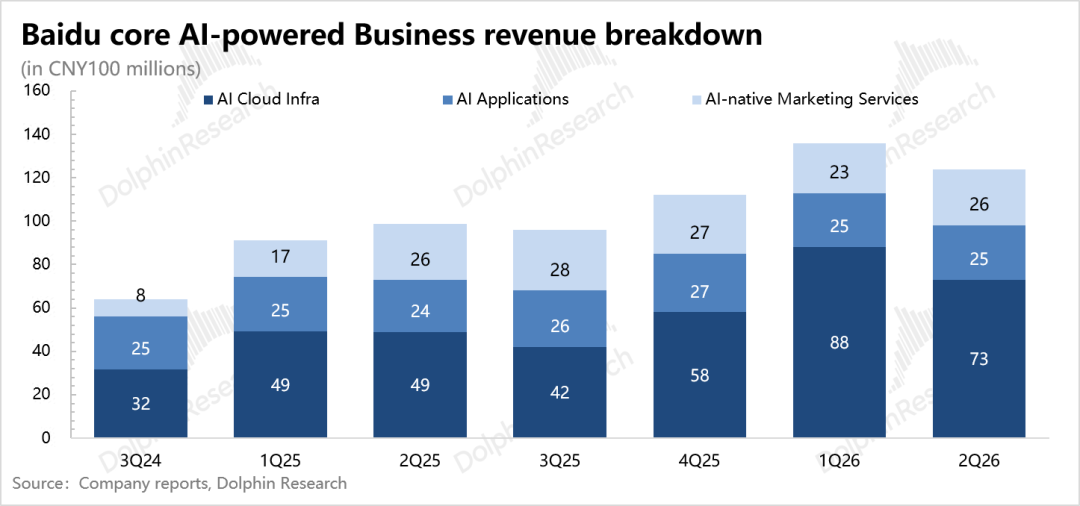
Baidu emphasized the "AI business architecture" starting from Q3 last year, but the benefit from this wave of computing power bonus can be traced back to the end of 2023, and really seeing volume in GenAI cloud revenue will be in the second half of 2024 (accounting for over 10% of cloud revenue).
Baidu's AI business is mainly divided into three parts: AI cloud infrastructure, AI applications, and AI-native marketing. The computing power bonus primarily manifests in the AI cloud infrastructure branch, further subdivided into three components: IaaS, MaaS, and Kunlun chips (the externally sold portion).
Among them, IaaS is the main revenue component of AI cloud, while the MaaS revenue model, with higher gross margins for overseas cloud vendors, is currently not high for Baidu, whose channel distribution capability is inferior to Alibaba and ByteDance.
However, Baidu's AI cloud has advantages in:
First: Supply, readily available GPU computing power and complete public cloud support services, attributed to the computing power prepared for Wenxin Yiyan. Since the self-developed model has not been developed, it can be released for external leasing, as well as procurement of self-developed Kunlun chips, making it easier to form AI cloud computing power;
Second: Customer base, compared to Alibaba and Douyin, its neutral position makes it easier for e-commerce companies like Pinduoduo, short video platforms like Kuaishou, and major gaming companies like Mihayou to choose Baidu as their cloud service provider. Additionally, there are other government and enterprise clients, such as those in electric power and energy.
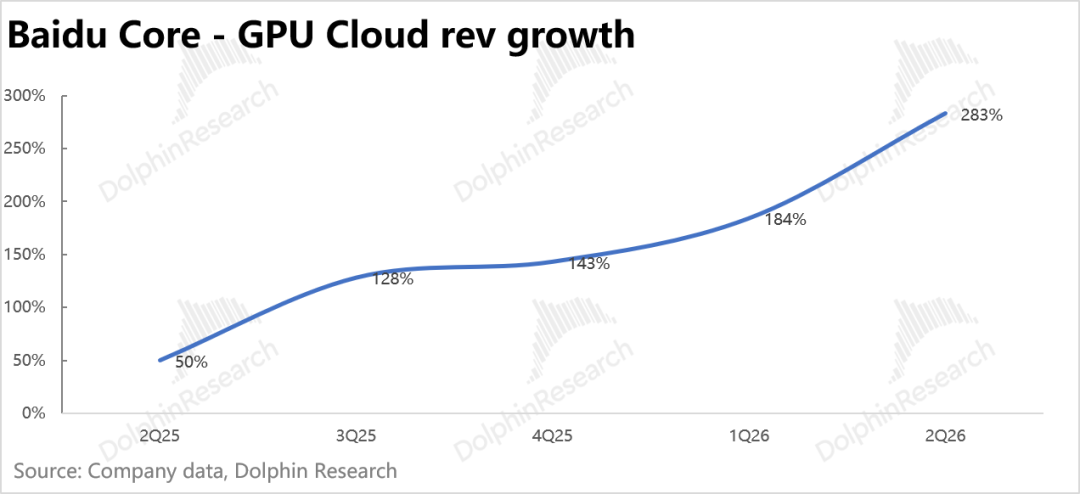
This is why Baidu has continuously emphasized the GPU cloud subscription income disclosed, which has been accelerating quarter by quarter over the past year, reflecting the current high demand situation.
Baidu currently has 1GW of computing power, expecting to double within the next 1-2 years, but it won't necessarily be pure chip purchases to build computing power; rather, it will flexibly adopt financing leases to reduce short-term capital input and ROIC.
In the short to medium-term computing power bonus period, moderate expansion of computing power supply is expected to support the growth rate of cloud business.
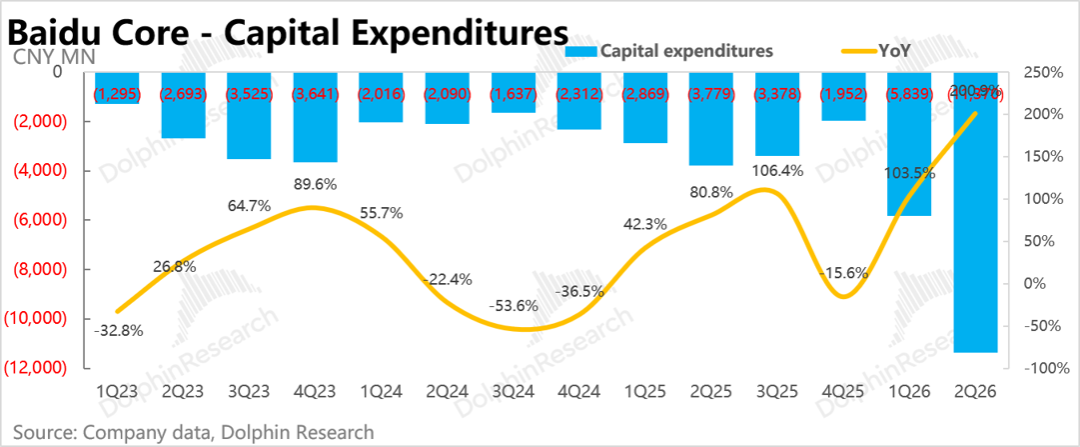
Mentioning the sudden increase in Q2 capital expenditures has still raised some financial concerns, worrying that Baidu will invest aggressively. In the performance meetings of Baidu and Alibaba, both parties' management mentioned a reference AI ROIC model. The key factor is—“Growth rate above 30% + gross margin of 30%” is a balancing condition that can achieve investment recovery in three years. We try to understand the implications of this calculation:
(1) From the steady-state profit margin perspective: The gross margin of signed customer orders must be at least 30%, and after deducting 15-20% for stable operating expenses, the operating profit margin can reach about 15%, which is considered a sustainable business.
(2) From the cash flow recovery perspective: For each unit of self-built computing power, the corresponding depreciation period is 5 years. The aforementioned gross margins of 30-40%, assuming an income of 10 billion, means a depreciation cost of 6.5 billion, leading back to an initial investment cost of 6.5*5=32.5 billion.
When each year generates income of 10 billion and zero growth occurs, if there are 2 billion in Opex cash outflow, then the operational cash flow OCF corresponds to 8 billion. The original upfront investment of 32.5 billion means it will take about 32.5/8= over 4 years to recover.
However, if income is given a growth rate, the payback speed will definitely accelerate. According to scenario analysis calculations shown in the figure below, when the gross margin is 30%, only with income growth of over 30% can a payback within 3 years be achieved. If the gross margin drops below 30%, the requirement for income growth will become higher.
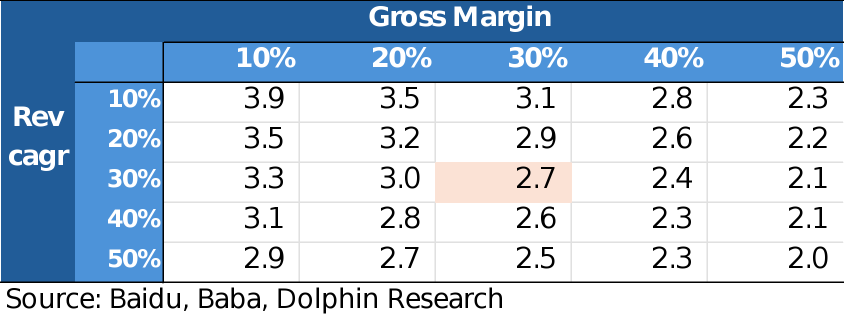
The sensitivity analysis in the above figure shows that maintaining stable gross margins will make it easier to ensure payback cycles and reduce pressure on income growth. Gross margins are affected jointly by cloud vendors' computing power rental prices and short-term Capex, with computing power prices mainly following industry or long-term locking, being less controlled by self-management (unless competition intensifies or proactive price cuts occur), while the cadence of Capex investment is controlled by the company.
Therefore, during the Callback briefing, management revealed that Q2's Capex represents a peak under clustered purchasing, and subsequent quarterly investment scales will not reach new highs. This indicates that Baidu's overall thinking for cloud business is to maintain growth with “quality” rather than pursuing scale blindly to avoid impulsive investments. After a concentrated investment period of 1-2 years, future payback and continuous revenue generation will contribute more performance support to the group.
Dolphin believes that thinking cautiously reflects that Baidu's management is not fully confident about the sustainability of short-term high premiums on computing power, and currently tends to utilize the computing power bonus period to secure 3-5 years of long-term contracts to lock in price certainty. However, with the subsequent release of computing power supply and intensified industry competition, new demand will naturally pressure prices, and the computing power bonus will marginally weaken.
3. ASIC Value: Order Feast vs. Capacity Deadlock,Can Kunlun Chips Still be Worth $50 Billion?
Baidu can be said to be the first company in China to have preliminarily formed a small-scale AI full-stack ecosystem, but compared to Google’s full-stack AI last year, it can only be considered a low configuration version, with core differences not only in large models but also in the competitive strength of chips within peers, which reduces the effectiveness of the ecological closure.
According to performance design and actual mass production (shipment share), domestic chips are currently divided into three tiers:
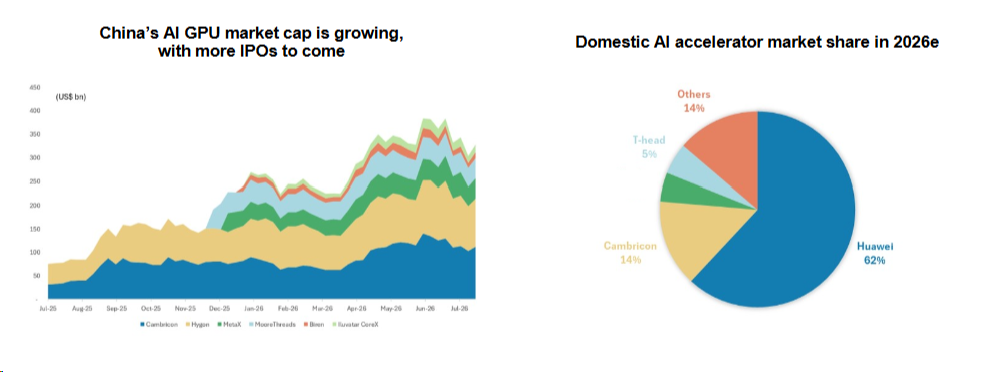
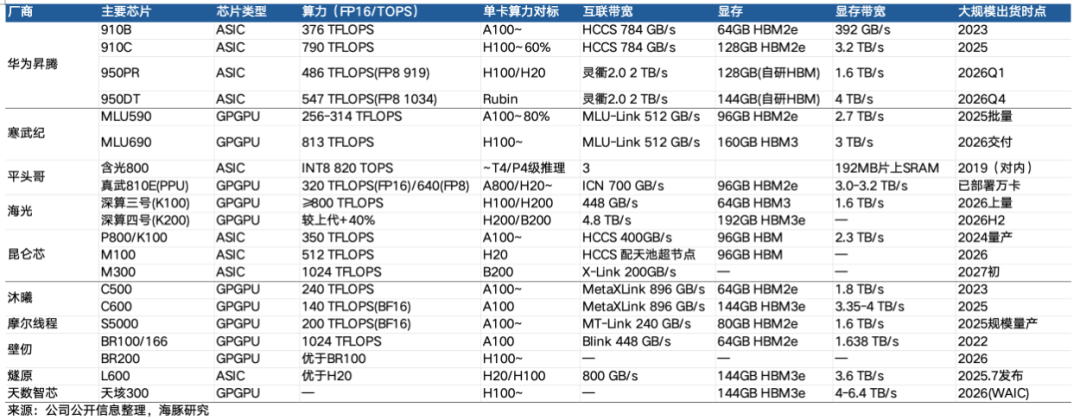
The first tier includes Huawei Ascend, which not only excels in single card performance and network efficiency but has also achieved compatibility with top large models and possesses priority quotas for advanced processes.
The second tier consists of Cambricon, Haiguang, Pingtouge and Kunlun Chips, each having its advantages. However, the paper performance parameters under different chip design schemes do not constitute a theoretical absolute barrier; the key gap lies in capacity realization.
The third tier includes MuXi, Moore, Birun, Tienshiji, and Suizhi, among which MuXi holds a relative advantage regarding chip performance and shipment scale. Except for Suizhi, which is about to go public, all others have already been listed to address funding issues for R&D.
Kunlun chips naturally have ample funding sources, with Baidu, the controlling shareholder, having substantial cash flow. However, compared to its second-tier peers, the first three have already completed the transition from overseas OEM to domestic OEM, while Kunlun's main shipment force, the P800, still relies on Samsung's capacity.
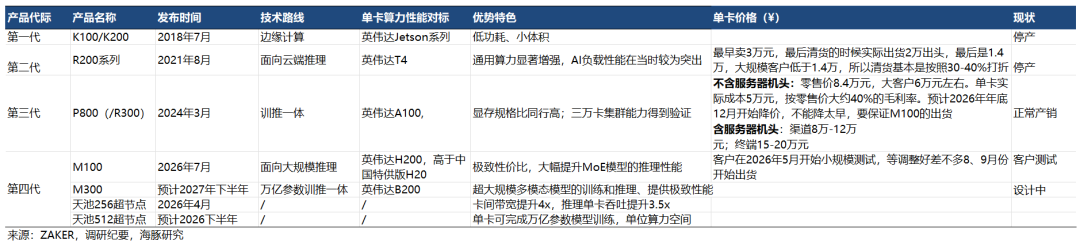
The new product M100 is only in trial production for customer testing, has not yet been mass-produced for shipment, and M300 is still in design, planning for shipment in the second half of next year, but facing the expiration of the cooperation framework with Samsung next year and reducing sanction risks, shifting to domestic OEM capacity is a mandatory option. The mass production progress and capacity scale after switching to domestic OEM will be the biggest uncertainty in the current release of the M series.
However, switching to domestic processes requires modifications to chip architecture design, which likewise requires time. Therefore, whether these plans will delay again as in the first half of the year due to capacity remains uncertain. Thus, despite having ample orders (estimated at nearly 10 billion RMB), capacity constraints will influence the actual performance realization rhythm. Therefore, under the market's general valuation system based on PS+ comparable market value, this will undoubtedly affect the evaluation of Kunlun's value post-IPO in terms of funding.
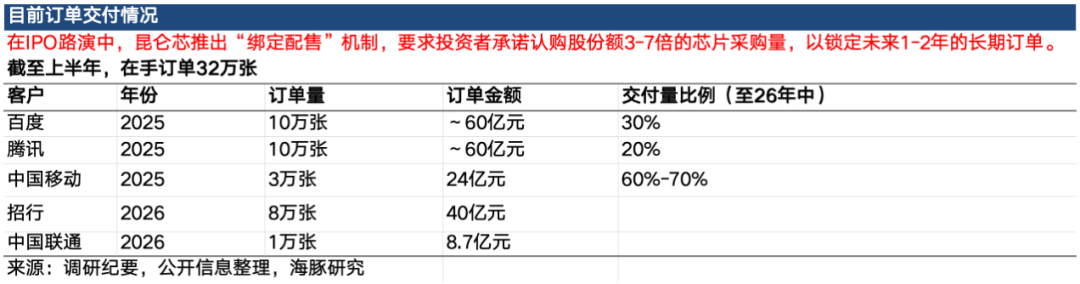
Currently, Baidu's market value is $33 billion, and after deducting the value of Kunlun chip equity, the parent company value is less than $20 billion, almost equal to the current net cash size (cash + short-term investments - short-term loans), which is similar to Kuaishou's current situation, where Kuaishou's market capitalization is roughly the equity portion valued in the primary market with cash net.
Although traditional search has basically no hope, Dolphin believes that the valuation is still notably suppressed, and investor bullish sentiment is low, especially today, when it officially entered Hong Kong Stock Connect trading, it fell by 5%, following a logic of good news realization.
However, with the upcoming Kunlun chip IPO, Baidu will most likely still pivot towards financing primarily or credit, plus the three-year $5 billion repurchase plan in place, the subsequent downward space is limited, but the timing for trading should still focus on the IPO actions of Kunlun chips, or the progress on the aforementioned capacity issues.
End here>
免责声明:本文章仅代表作者个人观点,不代表本平台的立场和观点。本文章仅供信息分享,不构成对任何人的任何投资建议。用户与作者之间的任何争议,与本平台无关。如网页中刊载的文章或图片涉及侵权,请提供相关的权利证明和身份证明发送邮件到[email protected],本平台相关工作人员将会进行核查。