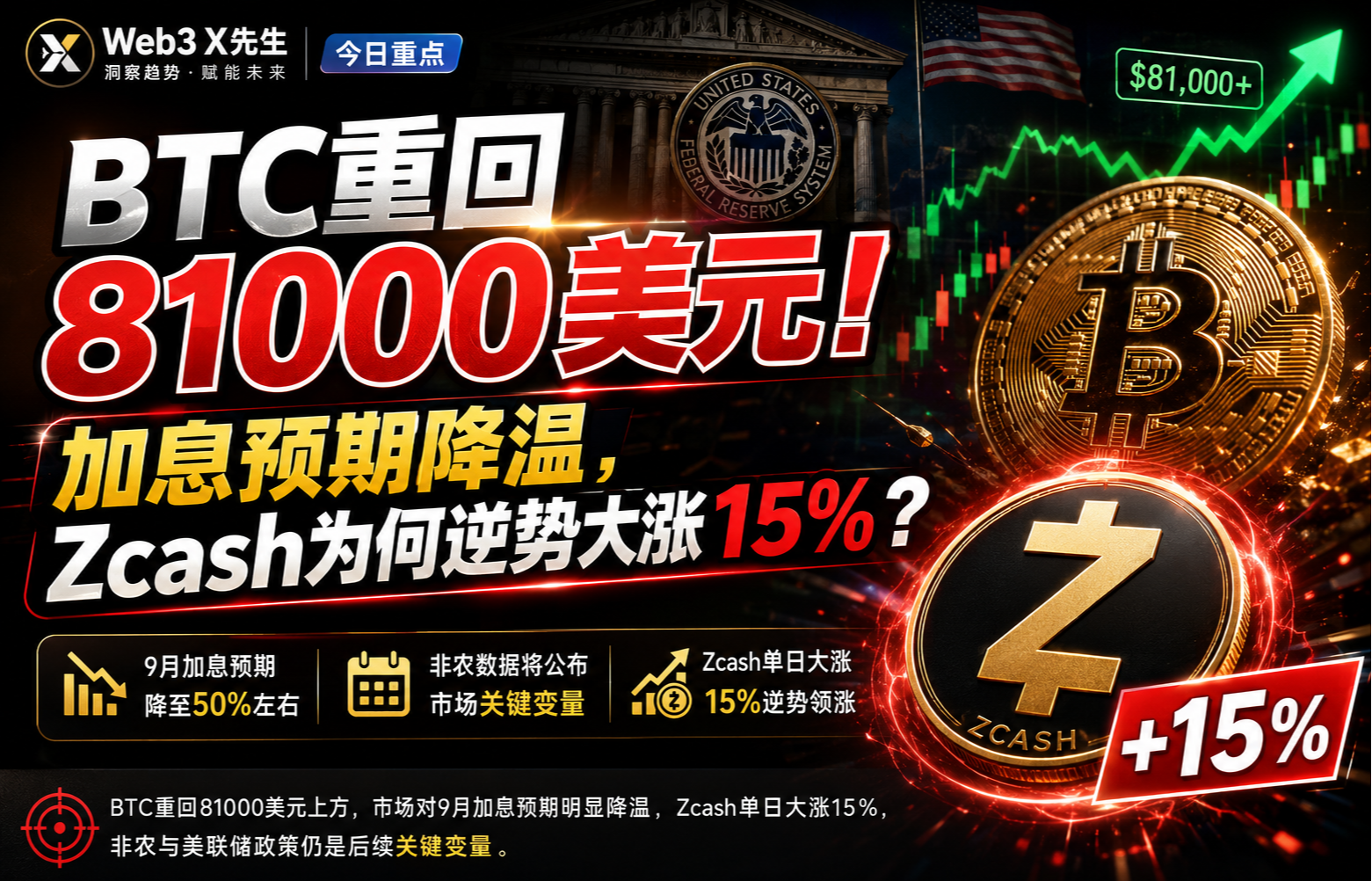
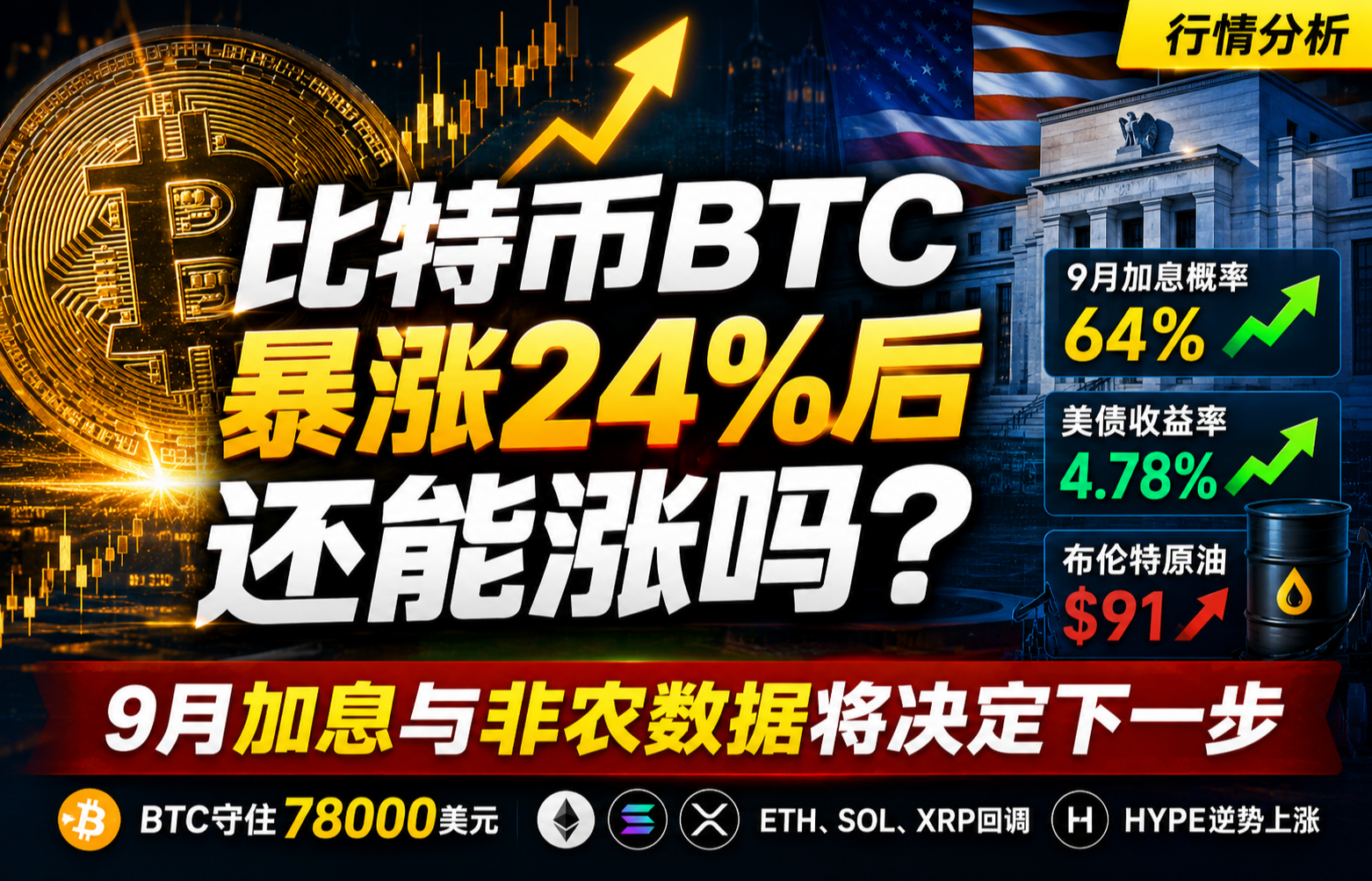
Job Growth and Rising Oil Prices Puts Pressure on the Market, Fed Policy Expectations Shift Again
Last week, what really mattered for the cryptocurrency market was not how much a specific coin rose, but rather the change in macro trading logic.
The U.S. non-farm payroll data for August significantly exceeded expectations, with 162,000 new jobs added, while the market previously expected only 56,000.
More importantly, the July non-farm payroll was also revised from a loss of 23,000 jobs to a gain of 21,000.
This indicates that although the U.S. job market is cooling down, its resilience may be stronger than previously thought.
This precisely changed the market's judgment on the Federal Reserve's policy in September.
Strong Non-Farm Payrolls: Why Might This Become a Market Pressure?
Many investors see good employment data and their first reaction might be, "The U.S. economy is doing well."
But for the current financial market, the logic is not that simple.
If employment continues to be strong, it means there is currently no obvious recession pressure on the U.S. economy.
This would reduce the necessity for the Fed to quickly ease monetary policy.
More critically, average hourly wages increased by 3.1% year-on-year in August, with the unemployment rate remaining at 4.1%.
In other words, although the job market has not returned to its strongest post-pandemic levels, it is not significantly losing momentum either.
This presents a tricky issue for the Fed:
The economy remains stable, but inflation has not fully returned to the 2% target.
In this situation, lowering interest rates naturally requires more caution.
📌 If you want to track the key support and resistance for BTC daily, you can follow the WeChat public account "Crypto Spring," to continuously receive market highlights and trading logic.
The Real Trouble is That Oil Prices Have Risen Again📈
If there were only strong non-farm payrolls, the market could continue to observe.
However, another important variable appeared last week:
Oil prices rose significantly.
Due to geopolitical risks in the Middle East, WTI crude oil briefly surpassed $93, and Brent crude was close to $97.
This is not a particularly good signal for the Fed.
Rising energy prices will directly increase transportation, production, and consumption costs.
If oil prices remain high, inflation may experience upward pressure again.
In other words:
The non-farm payroll data tells the Fed that U.S. employment is not that bad.
Oil prices, on the other hand, indicate to the Fed that inflation risks may not have ended.
With both forces at play, the decision on interest rates in September becomes more complex.
Inside the Fed, There Are No Unified Answers
Last week, statements from Fed officials showed clear divergence.
Waller's stance was relatively dovish.
He believes that if upcoming inflation data continues to show a decline towards the 2% target, then rates can remain unchanged in September.
But the issue is that not all officials are so optimistic.
What the market is truly focused on right now is not simply whether "employment is good or not," but rather:
Between employment, inflation, and energy prices, which variable will ultimately influence the Fed's policy decision?
This is also why market expectations for September's rate hike have shown significant fluctuations in a short period.
From the perspective of Crypto Spring, this rapid change in policy expectations is one of the key sources of recent BTC volatility.
Why Is This Relevant to BTC?
BTC is increasingly resembling a risk asset that is highly sensitive to global liquidity.
When the market expects the Fed to loosen policy, the dollar liquidity improves, and U.S. Treasury yields decline, risk assets typically find more support.
Conversely, if the market starts to re-evaluate the "rate hike" logic:
Treasury yields may rise;
The dollar may strengthen;
Funding costs may increase;
Risk asset valuations will face pressure.
Therefore, what BTC truly needs to focus on is not any single Fed speech, but rather the market's re-pricing of future interest rate paths.
This is why, after last week's non-farm payroll release, the immediate market focus was not on "how well the U.S. economy is doing," but rather:
Will the Fed raise rates in September?
📌 If you want to continue tracking BTC, ETH, and macro data's impact on the market, you can follow the WeChat public account "Crypto Spring," which explains important market changes and the underlying logic each day.
Next, CPI Is the Next Card to Play
The non-farm payrolls have already provided answers on employment.
What the market needs to wait for next is the inflation data.
If CPI continues to decline, the interest rate pressure from strong employment may ease somewhat.
Conversely, if CPI exceeds expectations again while oil prices remain high, the Fed's policy space will be further restricted.
So what’s truly worth monitoring next are three key factors:
First, will WTI crude maintain over $90?
Second, will U.S. CPI and core CPI accelerate again?
Third, will market expectations for a rate hike in September continue to rise?
All three of these factors will ultimately transmit to Treasury yields, the dollar, and BTC.
📌 Mr. Web3 X: The Most Important Thing Now Is Not to Guess Price Movements, But to Look at Policy Expectations
Looking back at last week, the market actually experienced a very typical logical transition.
Previously, the market was more concerned about the deterioration of U.S. employment and thus traded based on rate cut expectations.
But after the strong August non-farm payroll was released, employment concerns were significantly alleviated.
Meanwhile, oil prices broke through $93 again, further increasing inflation risks.
Thus, the market began to rethink:
Does the Fed really have enough reason to loosen policy in September?
This is also the macro variable that BTC needs to focus on right now.
For ordinary investors, instead of guessing whether the next BTC candlestick will go up or down daily, it is better to first understand this logic:
Employment affects interest rate expectations, oil prices affect inflation expectations, inflation and interest rates ultimately affect global liquidity, and liquidity in turn influences BTC.
This chain is likely more important than merely watching price movements.
—— I am Mr. Web3 X, with 6 years of growth in Web3, focusing on Bitcoin, the cryptocurrency market, macroeconomics, and industry trends. If you want to continuously track BTC, ETH, HYPE, and the impact of macro data on the market, you can follow the WeChat public account "Crypto Spring." Understand the highlights, insight the logic, and establish your own judgment, rather than just fixating on price fluctuations.

免责声明:本文章仅代表作者个人观点,不代表本平台的立场和观点。本文章仅供信息分享,不构成对任何人的任何投资建议。用户与作者之间的任何争议,与本平台无关。如网页中刊载的文章或图片涉及侵权,请提供相关的权利证明和身份证明发送邮件到support@aicoin.com,本平台相关工作人员将会进行核查。