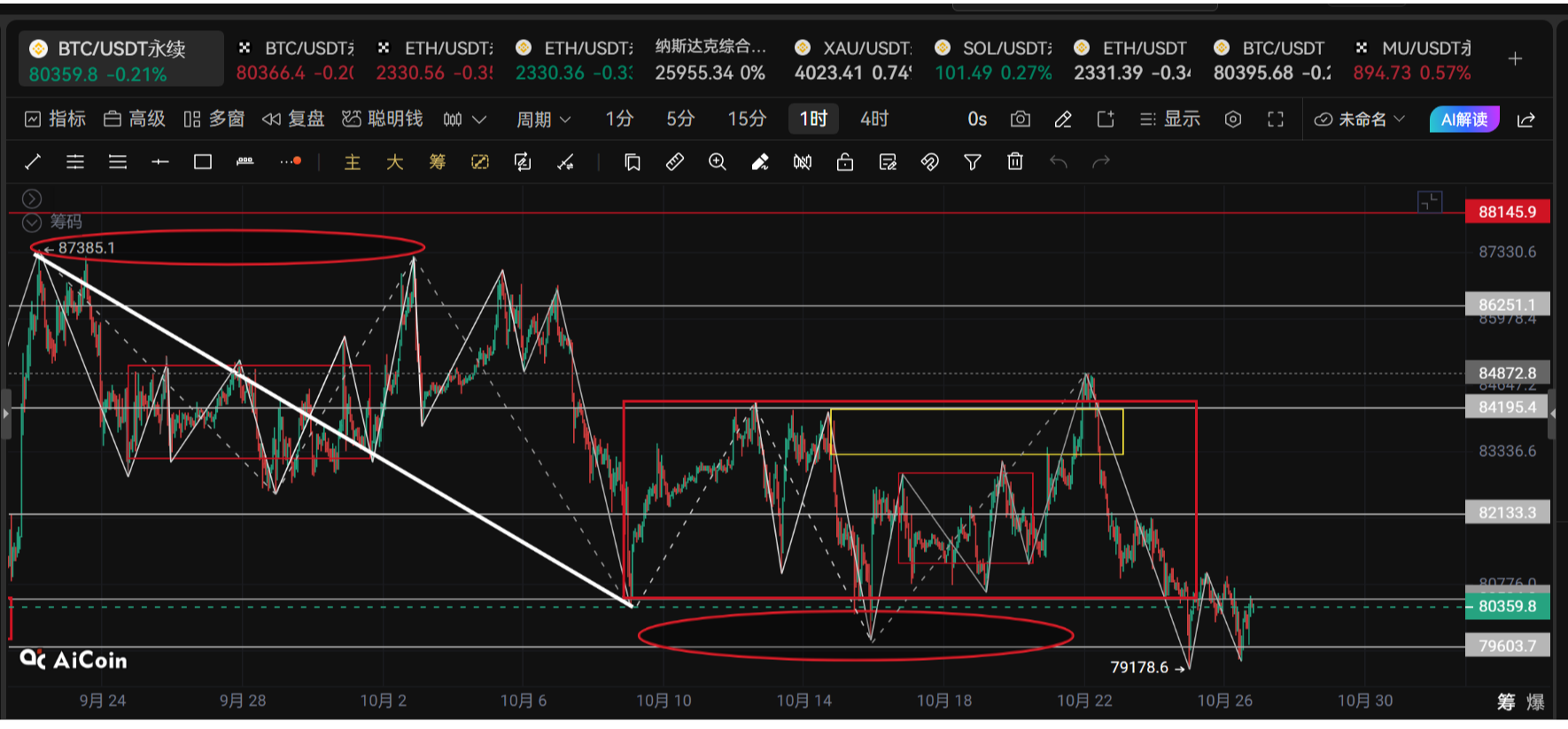
Surge in Demand for Crypto Mortgages, BlackRock Lowers IBIT Threshold to $1 Million, Is Institutional Arrival Accelerating?
Summary
The crypto market is witnessing a noteworthy change, with a continuous increase in demand for crypto asset-backed loans on one side and BlackRock further lowering the physical subscription threshold for Bitcoin ETFs on the other.
Specifically, BlackRock's iShares Bitcoin Trust (IBIT) has reduced the threshold for physical subscriptions and redemptions from $25 million to $1 million, a decrease of 96%.
Meanwhile, as crypto assets gradually enter the traditional financial system, the infrastructure for mortgages, ETFs, and institutional custody is constantly improving.
This means BTC is increasingly aligning itself not just as a trading asset but transitioning towards a more mature financial asset framework. Follow the public account "Bitcoin Lemon" for daily market analysis, news updates, and practical insights.
Significant Growth in Demand for Crypto Asset Mortgages
In recent years, the crypto asset lending market has been rapidly expanding.
More and more investors holding BTC and other crypto assets do not wish to sell their assets directly but choose to use them as collateral to obtain liquidity.
The logic of this model is quite simple.
Hold BTC
↓
Use BTC as collateral
↓
Obtain liquidity in USD or stablecoins
↓
No need to sell BTC directly
↓
Continue to retain potential gains from future price increases
This is particularly attractive for long-term holders.
Because selling BTC directly means investors would have to forgo their asset exposure, whereas through a mortgage, they can achieve a "hold asset + obtain liquidity" model to some extent.
This is also a sign of the gradual maturation of the crypto financial market. Follow the public account "Bitcoin Lemon" for daily market analysis, news updates, and practical insights.
Why Did BlackRock Suddenly Lower the IBIT Threshold?
What deserves more attention is BlackRock's adjustment to the IBIT physical subscription mechanism.
BlackRock has lowered the minimum scale for physical subscriptions or redemptions of IBIT from $25 million to $1 million.
This adjustment means that operations that previously required very large amounts of capital to participate can now accommodate a significantly larger base.
It is important to note that this does not mean the minimum amount for ordinary investors to purchase IBIT has become $1 million.
This refers to the ETF's "physical subscription/redemption" mechanism, which allows institutions or authorized participants to directly use BTC to exchange for IBIT shares or perform reverse operations.
This distinction is very important.
Because it reflects not the retail trading threshold, but rather the underlying infrastructure behind the ETF is becoming more flexible. Follow the public account "Bitcoin Lemon" for daily market analysis, news updates, and practical insights.
Why is the Physical Subscription Mechanism Important?
Traditional ETFs can typically be subscribed and redeemed using cash.
However, for spot BTC ETFs, the physical mechanism allows participants to directly use BTC to exchange for ETF shares.
One of the significant advantages of this approach is that it reduces friction in the asset conversion process.
For instance, if an institution already holds a large amount of BTC and wishes to obtain ETF shares, it does not necessarily need to sell the BTC first and then buy the ETF with cash.
Through the physical mechanism, the conversion between BTC and ETF shares can be completed directly.
CoinDesk previously reported that BlackRock has lowered this threshold from $25 million to $1 million, while Bitwise has also reduced a similar threshold from $100 million to $3 million.
This indicates that the industry is not adjusting from a single institution, but rather the entire infrastructure of the spot BTC ETF ecosystem is gradually maturing. Follow the public account "Bitcoin Lemon" for daily market analysis, news updates, and practical insights.
What Does This Mean for BTC?
From a long-term perspective, these changes have certain positive implications for BTC.
In the past, institutions aiming to enter the crypto market faced multiple challenges such as custody, trading, compliance, and liquidity issues.
Now, BTC has developed an increasingly complete financial infrastructure:
Spot ETF
Institutional Custody
Physical Subscription
Mortgages
Derivatives
Asset Management Products
As these products continue to connect, the gap between BTC and the traditional financial market will also shorten.
BlackRock has also stated that its long-term investment logic in BTC has not fundamentally changed due to previous price adjustments, believing that earlier declines were more related to the crypto market deleveraging and changes in capital flows. Follow the public account "Bitcoin Lemon" for daily market analysis, news updates, and practical insights.
ETF Funds are Flowing Back In
Notably, the recent fund flows for U.S. spot BTC ETFs have also shown improvement.
On September 3, U.S. spot BTC ETFs saw a net inflow of about $731 million, with BlackRock's IBIT absorbing approximately $454 million, accounting for the bulk of the inflow on that day.
This indicates that institutional capital has not completely exited the market due to previous volatility.
On the contrary, after BTC regained the $80,000 range, ETF funds began to show a clear rebound.
If this influx of funds can be sustained, then ETFs may continue to serve as important marginal buyers of BTC. Follow the public account "Bitcoin Lemon" for daily market analysis, news updates, and practical insights.
But the Growth of Mortgages Also Carries Risks
Of course, the rapid growth of crypto mortgages does not mean that the market is solely favorable.
The biggest issue remains leverage.
When BTC prices rise, mortgages can help investors obtain more liquidity.
However, if BTC suddenly drops significantly, the value of the collateral may decrease, potentially triggering margin calls or even forced liquidations.
Therefore, the increase in the scale of crypto loans is actually a double-edged sword.
In a rising market, it can enhance capital efficiency.
In a rapid declining market, it can also amplify liquidation pressure.
So in the future, attention needs to focus not only on how much the loan scale increases but also on the overall market's leverage ratio and collateral quality. Follow the public account "Bitcoin Lemon" for daily market analysis, news updates, and practical insights.
BTC is Undergoing a Bigger Change
When looking at all these factors together, it becomes evident that BTC is undergoing a very noticeable change.
In the past, discussions about BTC were more focused on price.
Now, the market is starting to discuss:
Can BTC be used as collateral?
Can BTC enter ETFs?
Can institutions directly use BTC for ETF subscriptions?
Can traditional financial institutions establish more financial products around BTC?
The importance of these questions is actually on par with the short-term rise and fall of BTC.
Because an asset truly entering the mainstream financial system is not achieved solely through price increases, but requires comprehensive financial infrastructure support.
From this perspective, the increase in demand for mortgages and BlackRock's lowering of the IBIT physical subscription threshold are both structural changes worth paying attention to. Follow the public account "Bitcoin Lemon" for daily market analysis, news updates, and practical insights.
Bitcoin Lemon
We bring you daily insights into the hot topics of the crypto market, not just reporting on news but also helping you understand the logic and opportunities behind the market trends 👀🚀
Follow the public account "Bitcoin Lemon" for daily market analysis, news updates, and practical insights.
Conclusion
The growth in demand for crypto mortgages and BlackRock's reduction of the IBIT physical subscription threshold from $25 million to $1 million reflects the same trend:
BTC is increasingly becoming integrated into the traditional financial system.
Especially in the context of a resurgence of significant fund inflows into the U.S. spot BTC ETF, the infrastructure for institutional participation in the crypto market is further improving.
In the short term, BTC will still be influenced by macro conditions, capital flows, and market leverage.
However, from a longer-term perspective, the continuous improvement of ETFs, mortgages, custody, and physical subscription mechanisms may further lower the barriers for institutions participating in the BTC market.
Therefore, what is truly noteworthy in this news is not the figure of "$1 million," but the increasing number of traditional financial tools being established around BTC. Follow the public account "Bitcoin Lemon" for daily market analysis, news updates, and practical insights.
免责声明:本文章仅代表作者个人观点,不代表本平台的立场和观点。本文章仅供信息分享,不构成对任何人的任何投资建议。用户与作者之间的任何争议,与本平台无关。如网页中刊载的文章或图片涉及侵权,请提供相关的权利证明和身份证明发送邮件到[email protected],本平台相关工作人员将会进行核查。