In August, Trump rarely named Hyperliquid at a financial and technology industry event at the White House.
“As I understand, Mike (CFTC Chairman Mike Selig) is also working hard to push Hyperliquid to enter the U.S. in a fully compliant and legal manner.” — Trump
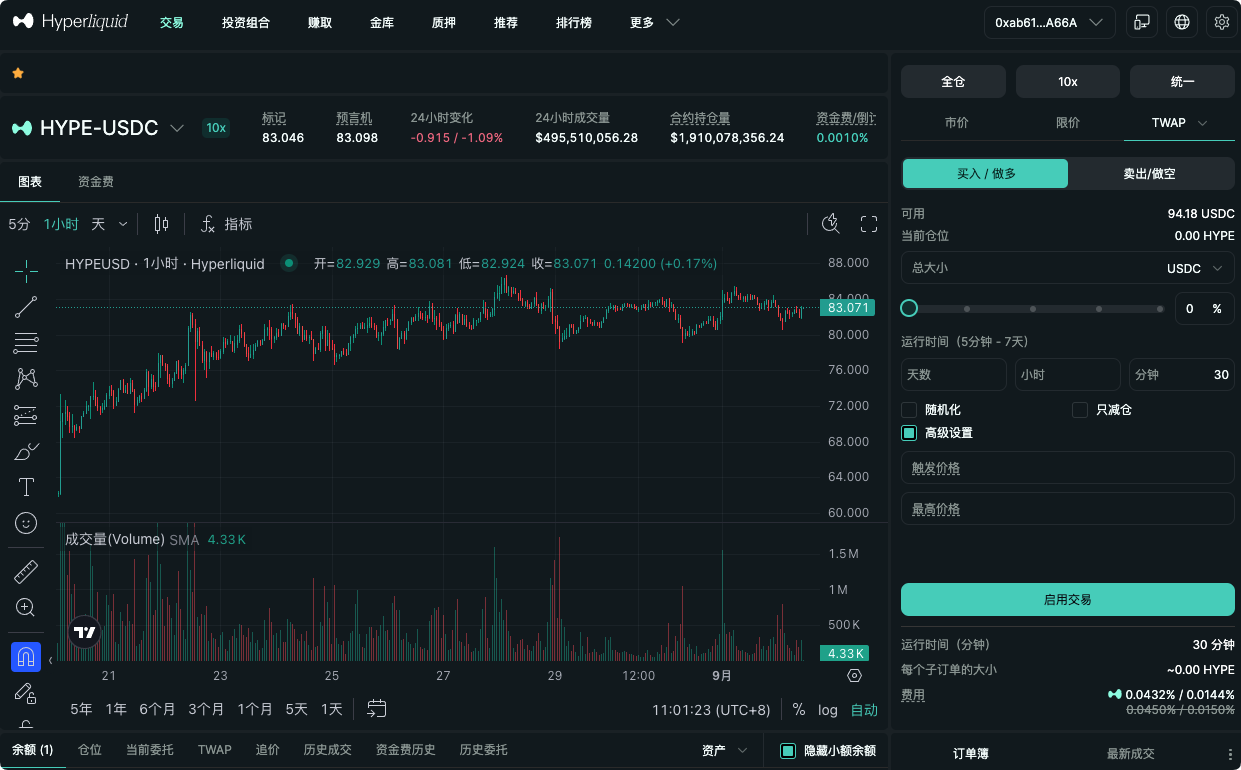
After the news was announced, HYPE quickly strengthened. According to CoinDesk, the immediate increase was 11%, and the market evidently interpreted this statement as a significant regulatory positive.
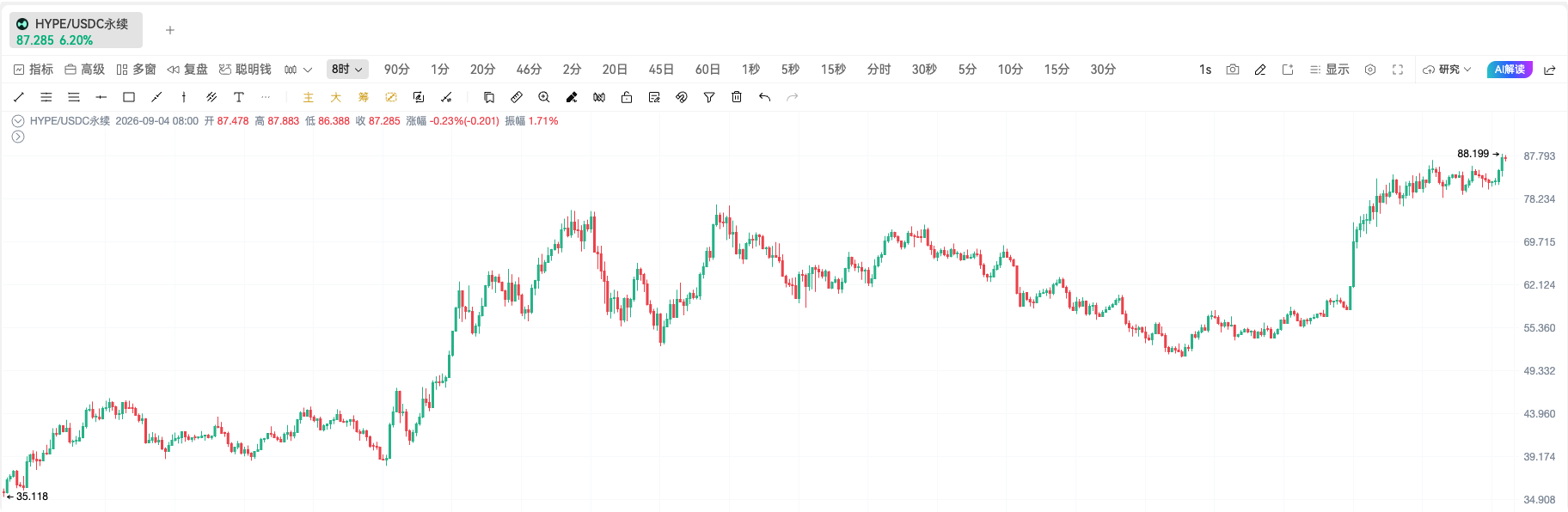
However, it must be noted: Trump's statement is not an approval document from the CFTC, nor does it represent that Hyperliquid has officially entered the U.S. He did not disclose product structure, license type, approval time, or the scope of users it can serve; during the same period, the CLARITY Act, which influences the structure of the U.S. crypto market, has also not passed Congress.
If this news were simply written as “HYPE has another positive,” the article would soon lose its value.
The real point of study is another issue: Once the U.S. compliance path continues to advance, the impact may not only be new users, but may also change Hyperliquid's native trading, HIP-3 asset distribution, and stablecoin reserve profits.
In other words, the U.S. is not just a new market, but may become the common booster for all three revenue engines.
First Engine: Native Crypto Perpetuals as the "Cash Cow"
Hyperliquid's historically most important revenue source remains native crypto perpetual contracts like BTC, ETH, and SOL.
According to GLC Research data compiled by HL Eco's Chinese team, as of August 20, 2026, Hyperliquid covers 684 markets with a cumulative trading volume of $5.35 trillion, of which BTC contributes $1.93 trillion, accounting for 36%; ETH and SOL account for 22.9% and 7.29%, respectively.
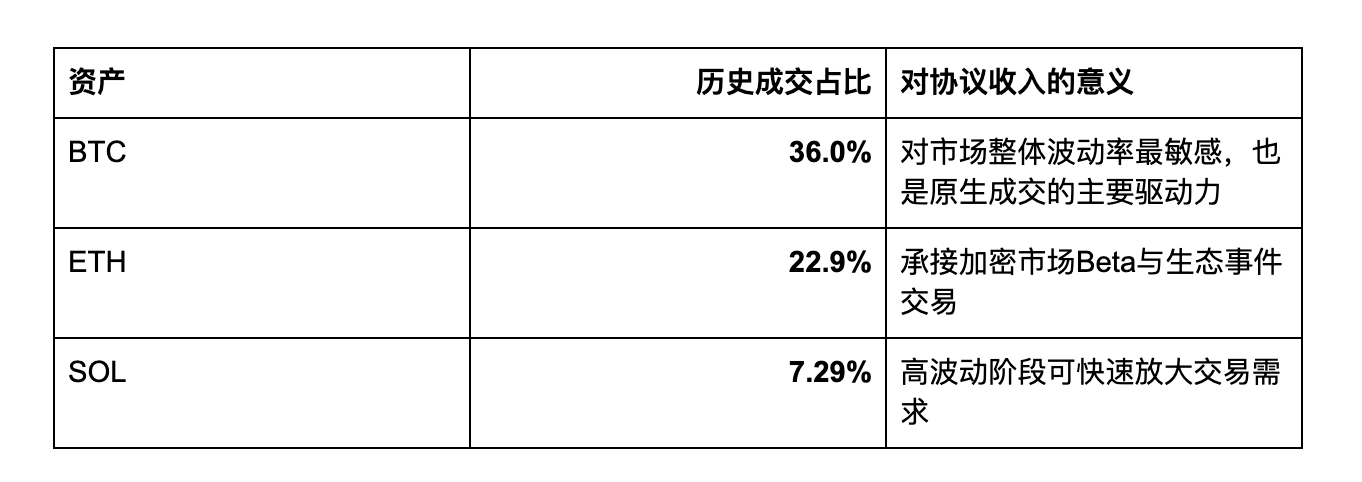
Over the past year, as volatility and risk appetite in the crypto market have decreased, Hyperliquid's native transactions have also been suppressed. The growth brought by HIP-3 in RWA has filled part of the gap, but this type of growth market tends to use lower fees, and the contribution to revenue per trade is still not as high as that of the main site's native perpetuals.
Therefore, the first layer of significance of the U.S. regulatory signal is not “Americans can finally buy HYPE,” but rather it may expand compliant distribution channels, enhance institutional participation willingness, and allow Hyperliquid's most mature, highest monetization efficiency native business to gain a new incremental entrance.
Of course, whether crypto trading volumes have bottomed out remains a judgment, not a fact. Only when prices rise alongside an increase in trading volume, open interest, and active traders can this engine be considered truly re-ignited.
Second Engine: HIP-3 Has No Lack of Transaction Volume, But Is Lacking the Realization of Pricing Power
If the native perpetuals are Hyperliquid's current cash cow, then HIP-3 represents the clearest second growth curve.
The Q2 report released by HRC shows that in the second quarter of 2026, Trade[XYZ] transaction volume reached $20.236 billion, a quarter-on-quarter increase of 79.2%; its share of total HIP-3 transactions rose from 84.5% to 95.1%. Among them, stock contracts reached $5.89 billion in transaction volume, a growth of 377%.
A lengthy report from GLC Research provided another set of data worth considering together: Trade[XYZ] Q2 revenue was $7.59 million, a quarter-on-quarter increase of 32.9%.
A transaction volume increase of 79.2% with only a 32.9% revenue growth means what?
According to the calculation (1 + 32.9%) ÷ (1 + 79.2%) - 1, each dollar transaction of Trade[XYZ] corresponds to a revenue implied decrease of 25.84%.
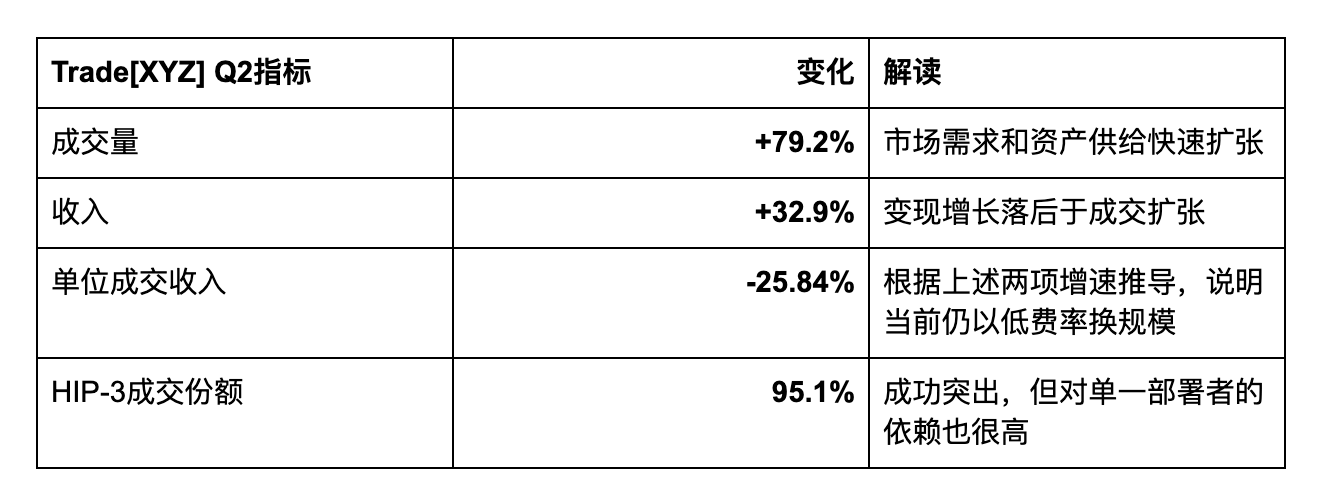
This exactly connects with the question raised in Hyperliquid's Q2 earnings report: platform activity is increasing, so why isn’t protocol revenue exploding in sync? One of the answers is that HIP-3 is still in the stage of acquiring market share using low fees, deployer profit sharing, and Builder incentives.
If the U.S. regulatory path gradually clarifies, it may change this economic model from two directions.
On one hand, the reachable U.S. market expands, increasing potential traders in stocks, indices, commodities, and pre-IPO assets; on the other hand, the regulatory risk premium that Builders need to factor in when choosing underlying trading facilities decreases. In the past, “building on Hyperliquid” was a bet that required assessing policy risks; in the future, it may gradually become a more natural choice.
This does not mean Trade[XYZ] can immediately raise prices, nor does it imply that transaction volumes must necessarily double. A more reasonable observation is whether the new markets can exit the long-term ultra-low fee rates post-maturation, whether new large-scale deployers can emerge beyond Trade[XYZ], and whether the growth of HIP-3 transactions can gradually translate into higher net protocol revenue.
Third Engine: AQAv2 Changes Revenue from Just Transaction Volume
Hyperliquid’s past revenues have been highly dependent on trading activities: the hotter the market and the greater the volatility, the higher the fees; the colder the market, the easier the revenues fall.
AQAv2 adds a different revenue curve to this model.
Hyperliquid's official documentation shows that AQAv2 requires stablecoin deployers to share approximately 90% of the cost-adjusted reserve profits generated from their Hyperliquid stock with the protocol. Profits are accumulated over a 30-day period and are automatically sent to the Assistance Fund eight days after the period ends.
Using the scenario parameters applied by GLC Research—$6.28 billion USDC balance, 3.00% reserve yield, and 90% protocol sharing—the following estimates can be obtained:
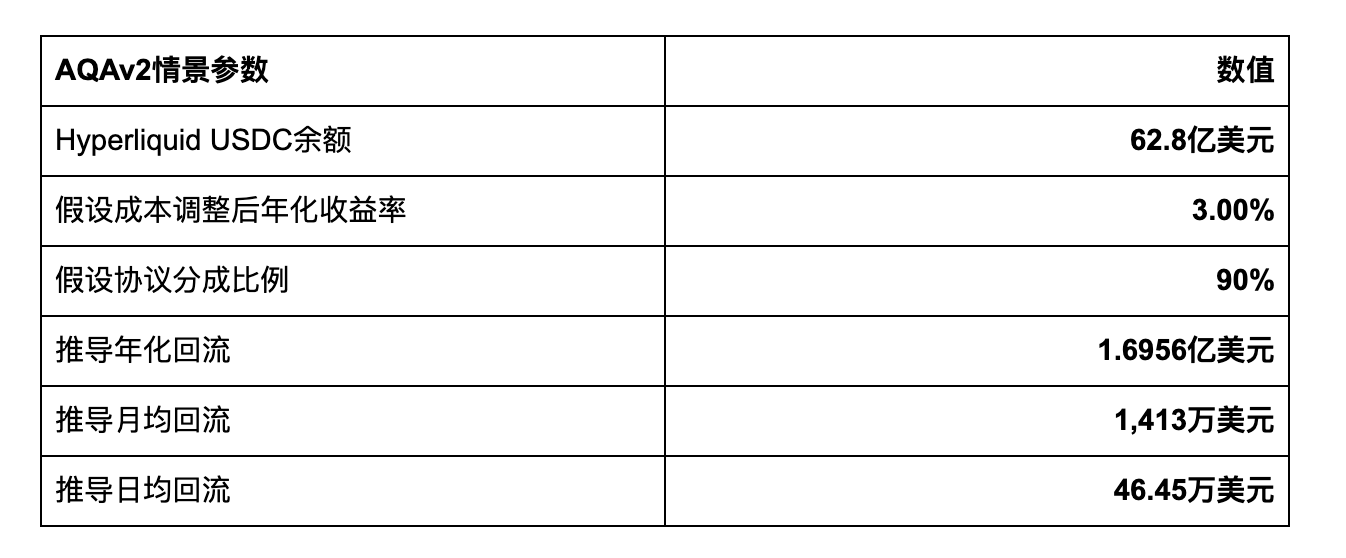
The calculation is: $6.28 billion × 3.00% × 90% = $169.56 million.
This set of figures does not constitute a revenue commitment. The USDC balance may fluctuate, the cost-adjusted interest rate will change with the market, and the protocol execution and regulatory conditions may also change. However, the strategic significance of AQAv2 is very clear: Hyperliquid’s revenue base begins to extend from “how much was traded” to “how many dollar assets the platform has accumulated.”
Native perpetuals earn from volatility, HIP-3 earns from asset expansion and distribution, and AQAv2 earns from stablecoin balances. The drivers of these three curves are different, and when combined, they have the opportunity to reduce protocol revenue's dependence on a single market cycle.
The Real Flywheel: Beyond Revenue, There Are Three Types of Structural Buyers
When trading fees and reserve profits enter the Assistance Fund, Hyperliquid's business activities will further translate into the structural demand for HYPE. Moreover, ETFs and digital asset treasury companies also constitute another two types of buyers.
GLC/HRC statistics based on HL Eco dashboard show that, as of August 20, 2026, over the past 12 months, the Assistance Fund repurchases amounted to $686.46 million, ETF inflows were $344.41 million, and DAT purchases were $745.34 million, totaling $1.77621 billion.
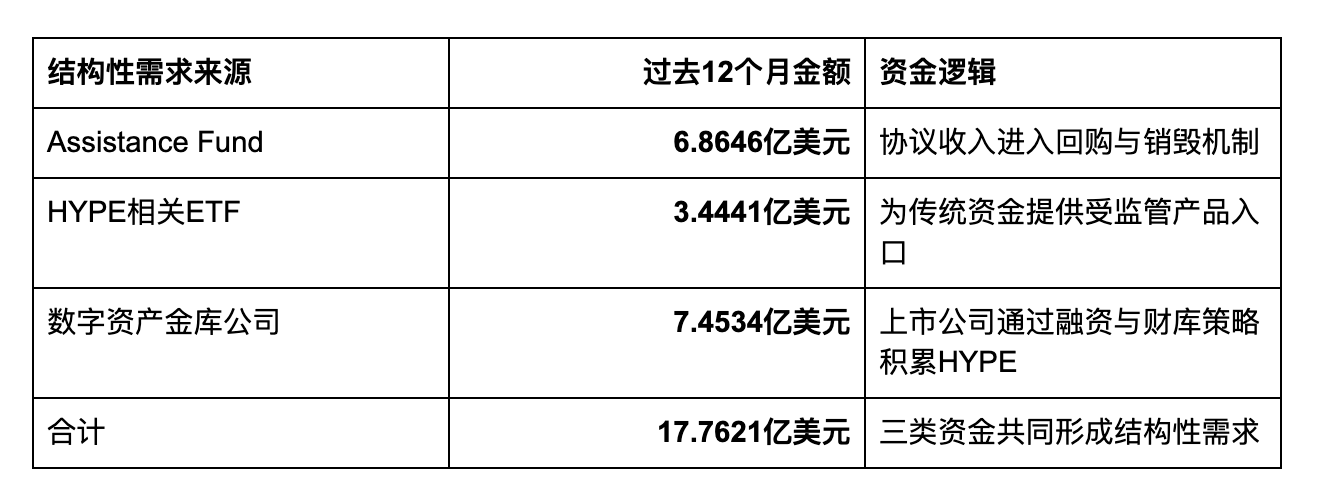
Among them, the NASDAQ-listed Hyperliquid Strategies (PURR) is the largest HYPE digital asset treasury. Official demonstrations from the company show that as of August 19, 2026, its HYPE holdings increased from 12.518 million pieces at completion to 29.365 million pieces, a growth of 134.58%.
However, “structural buyers” do not mean “forever only buying and never selling,” and DAT is certainly not a risk-free money printing machine. PURR may issue more financing when premiums are present, which could indeed lead to more HYPE purchases; however, issuing more shares will also expand the equity, and mNAV may shift from a premium to a discount, influenced by asset prices, taxes, financing costs, and buying times.
Similarly, it should be noted that GLC/HRC has disclosed its holdings of HYPE and its engagement in building Hyperliquid's ecosystem, indicating a clear bullish bias. Therefore, the aforementioned data helps in understanding the funding structure but cannot directly lead to the conclusion that HYPE prices must rise.
What is the More Accurate Statement Regarding "Regulatory Clouds Dispersing"?
It is clearly too early to say that regulatory risks have completely disappeared.
Trump's remarks are merely policy signals; broader market structural legislation is still progressing; it is still unclear what kind of product packaging, licenses, and client protection arrangements Hyperliquid will need to enter the U.S.
However, subsequent reports on August 31 have made this path more specific. Bloomberg states that Hyperliquid Labs is in deep negotiations with Kraken's parent company Payward, possibly leveraging its CFTC-regulated Bitnomial to offer U.S. clients perpetual products related to Hyperliquid; any arrangements will still require regulatory approval, and both parties have not confirmed a transaction.
This means that Hyperliquid may not need to move its native front end into the U.S. unchanged. Another possibility is that Hyperliquid provides market, technology, or pricing capabilities, while licensed institutions handle client access, trading, and clearing.
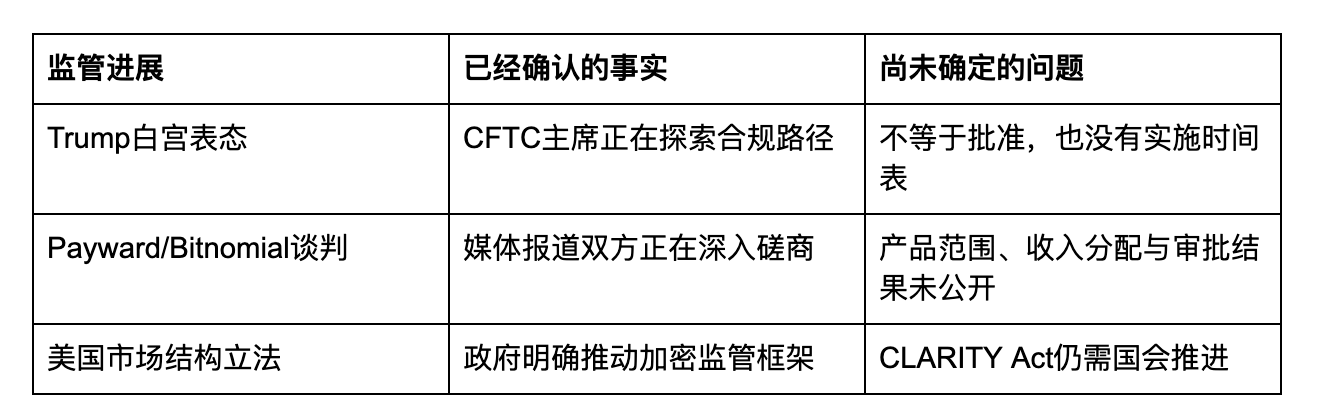
Therefore, the most noteworthy change right now is not “regulatory risks returning to zero,” but rather regulatory risks are for the first time transforming from an unpriced black box to a traceable execution path.
What Should Traders Focus On, Instead of Just the Words "Positive News"?
When regulatory-level news appears, prices typically first trade on expectations, and business data will not materialize on the same day. The three engines also cannot all start simultaneously and in perfect unison.
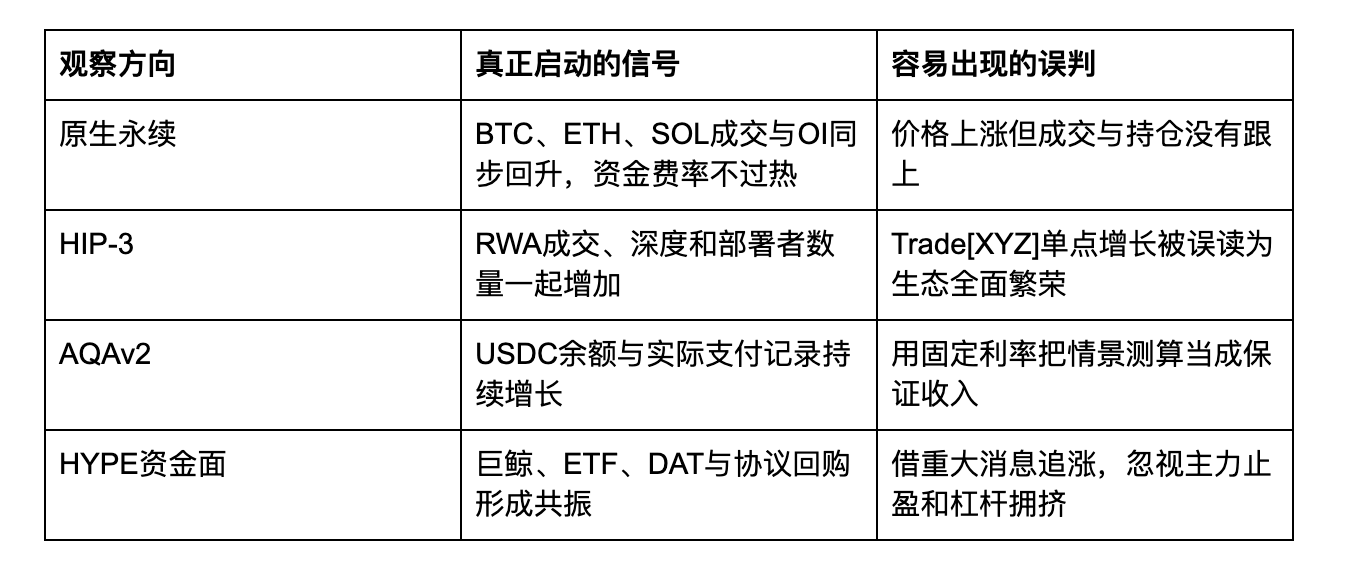
This is also where AiCoin's mobile app fits in.
If regulatory news is treated as a trading clue, it may be useful to first check with AiCoin whether HYPE prices, open interest, and funding fees are synchronized, then track smart money to see whether large players are continuing to add positions or cashing out based on the news; at the same time, it's possible to track crypto perpetuals and RWA markets on Hyperliquid to judge which business curve grows first.
When the market structure and funding behavior mutually validate, then connect to Hyperliquid via AiCoin to place an order, and manage different assets and positions on the mobile app in a unified manner. This approach is not to ensure capturing every rise, but to prevent misreading “regulatory easing” as “all positives have been realized.”
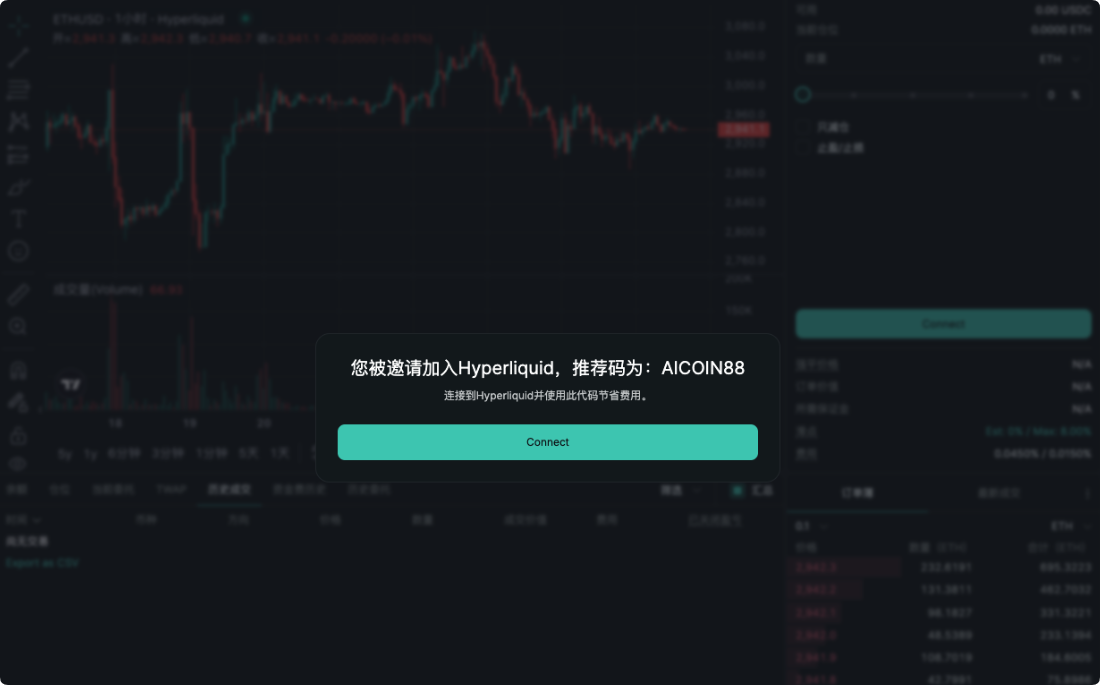
By entering Hyperliquid through the exclusive AiCoin gateway and using the invitation code AICOIN88, users can receive 4% trading fee rebates according to the event rules:
Exclusive link: https://app.hyperliquid.xyz/join/AICOIN88
Final Judgment
Hyperliquid's American story is not truly focused on “how many potential users there are,” but rather on how the regulatory path might simultaneously change four things: native perpetuals can access broader funds, HIP-3 can attract more assets and Builders, AQAv2 can gain revenue from larger stablecoin balances, and HYPE might absorb structural demands from protocol repurchases, ETFs, and DAT.
None of these four things have all materialized, and none can be considered as certain outcomes. However, they are no longer isolated imaginations from one another but have begun to form a business chain that can be observed and verified.
The U.S. is not merely a newly added map piece in Hyperliquid’s growth story; it is more likely the total switch that allows native trading, RWA distribution, and stablecoin earnings to simultaneously relieve their limitations.
Should subsequent regulatory documents, licensed collaborations, trading volumes, and actual revenues be mutually validated, then Hyperliquid's previous strategy of “expanding the ecosystem first and realizing revenue later” could enter the next phase; if only price responses occur without accompanying business data, this wave of market will still primarily be driven by expectations.
Experienced traders facing such news will not only ask how great the positives are but will continuously track: which engine has truly started up.
AiCoin User Exclusive Benefits
👉 Enter invitation code AICOIN88 when binding your Hyperliquid account to enjoy a 4% trading fee rebate.
🔗 Exclusive registration link:
https://app.hyperliquid.xyz/join/AICOIN88
📖 Beginner's Tutorial:
“AiCoin PC Hyperliquid Authorized Trading Tutorial”:
https://www.aicoin.com/zh-Hans/article/514197
“AiCoin Mobile Hyperliquid Authorized Trading Tutorial”:
https://www.aicoin.com/zh-Hans/article/541383
“Zero-Basis Entry! Super Detailed Graphic Tutorial for First-Time Trading on Hyperliquid”:
https://www.aicoin.com/zh-Hans/article/510225
📖 Community Communication:
Telegram:
https://t.me/AiCoinWhaleData
Discord:
https://discord.gg/5XSXjXSpz
AiCoin-Group Chat:
https://www.aicoin.com/link/chat?cid=N6OVMor5g
The content of this article represents the author's personal views and does not represent the stance of this platform. The views, conclusions, and suggestions in this text are for investors' reference only and do not constitute any investment advice related to this platform. Investing in U.S. stocks still requires individuals to bear market risks, regulatory risks, and compliance risks with local laws and regulations (especially currency controls and overseas investment declaration, etc.).
免责声明:本文章仅代表作者个人观点,不代表本平台的立场和观点。本文章仅供信息分享,不构成对任何人的任何投资建议。用户与作者之间的任何争议,与本平台无关。如网页中刊载的文章或图片涉及侵权,请提供相关的权利证明和身份证明发送邮件到support@aicoin.com,本平台相关工作人员将会进行核查。