Intelligent flow and capital flow used to be two parallel tracks.
One track runs at the application layer, involving questions, responses, and task completion; the other runs at the payment layer, including authorization, clearing, and reconciliation. These two tracks were never directly connected, relying on one action to stitch them together—someone clicking a button.
The person is the only interface.
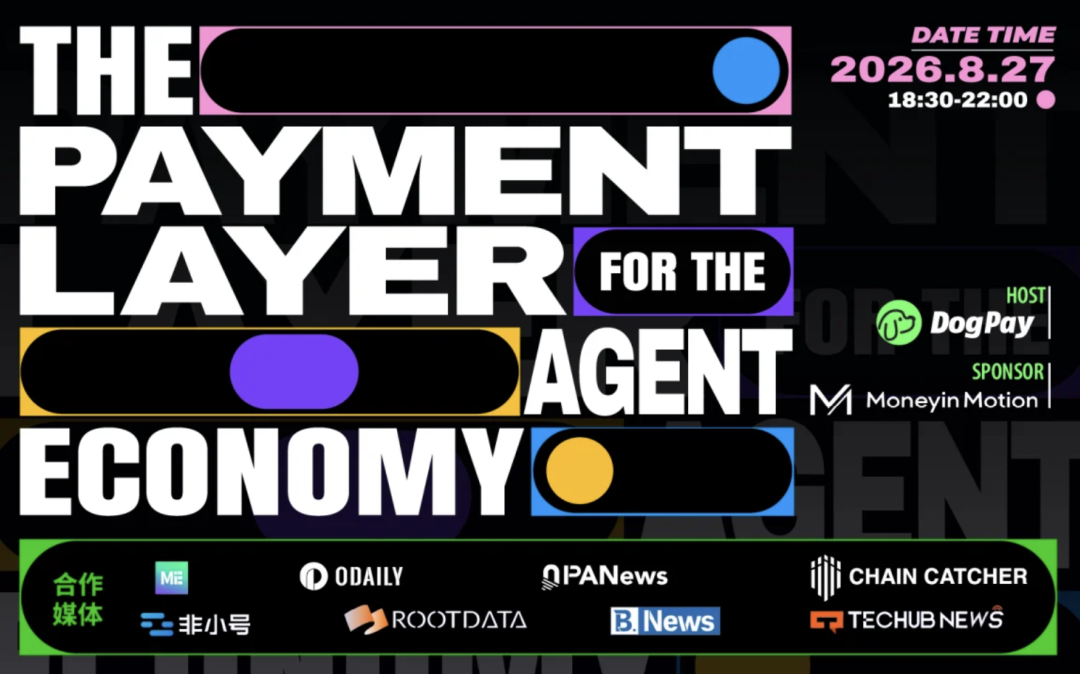
On the evening of August 27, DogPay held an event in Hong Kong titled "The Payment Layer for the Agent Economy," as a Side Event during Bitcoin Asia, co-hosted by Money in Motion.
The discussion was about different facets of the same issue: what happens to these two tracks when the button is no longer clicked by a person.
1. The payer is not a person for the first time
My assessment presented in the discussion is that the real change in Agentic Payment lies not in the channels but in the payer.
Over the past twenty years, everything optimized in the payment industry—rates, success rates, settlement speed, chargeback rates—has been based on the same action: a person clicks, which constitutes authorization, which happens at a certain defined moment. The world before and after this moment is two distinct realms; the entire risk control, clearing, and dispute resolution mechanism is built on this structure.
Agents dismantle this premise. Payment becomes a field in the task execution process: where the budget is set, who grants permissions, under what conditions it is triggered, whether billing is based on results or usage, whether prices fluctuate with load. The system must answer not just "who pays whom," but also "why pay, who approved it, how to trace it back."
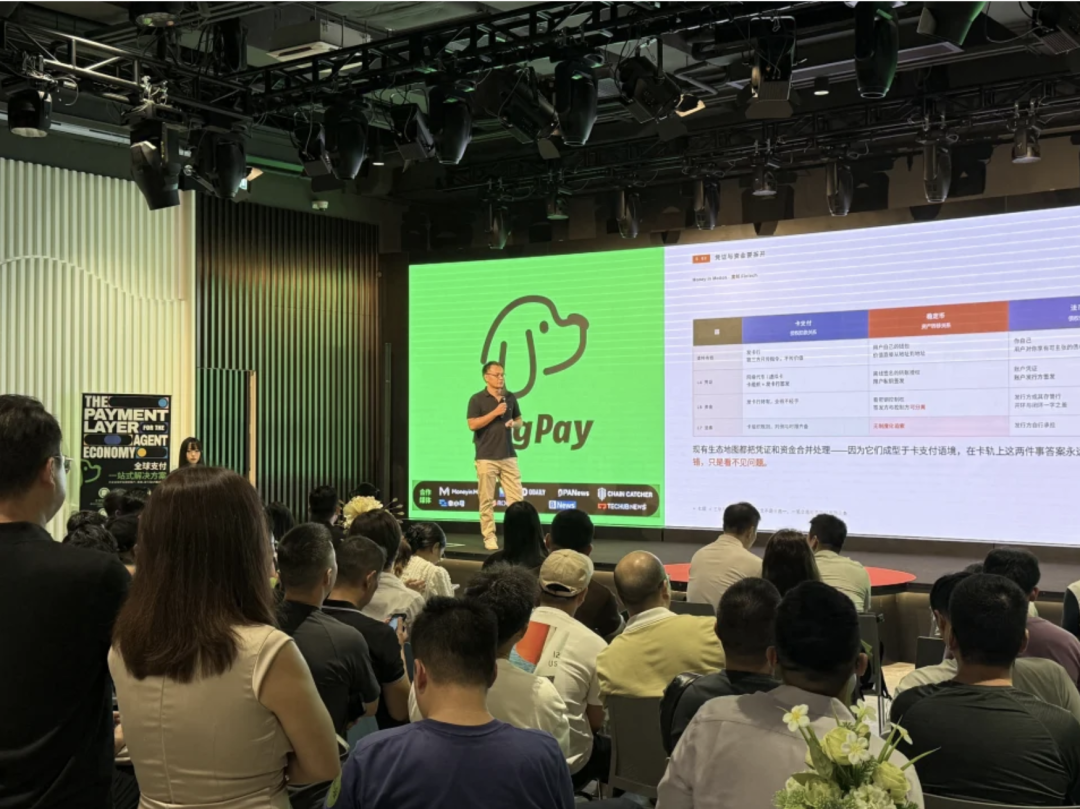
When discussing Agent Trading, Da Yu brought the same question into the trading scene. He proposed two evolution paths: one where the Agent becomes an independent trading entity, discovering opportunities and generating trading logic; the other, where it becomes a digital avatar of the trader, replicating a person's trading system, risk preferences, and execution discipline. The former has a larger imaginative space, while the latter is closer to a practical path.
Though the two paths sound vastly different, the constraints holding them back are the same: wallet security, permission management, audit tracking.
This is not a coincidence. The distinction between proxy consumption and proxy trading is based on the same standard—whether the Agent is executing the intentions of the person or generating its own intentions. And regardless of which side it falls on, the person has stepped back from that interface position.
Once the interface disappears, the two flows can only merge onto the same track.
2. The logic of payment is moving towards tokens
The most radical practitioner of this idea is not in the cryptocurrency industry, but in Stripe.
We previously dissected Stripe's acquisition of over seven billion dollars—the largest in history—of an AI model gateway called OpenRouter, a company that does not handle payments. In the shareholders' letter from that period, Stripe, for the first time in fifteen years, rewrote its origin story: capital and intelligence are becoming the two digital flows underpinning every business.
Why would a payment company care about how businesses spend tokens?
Because the consumption of tokens has already become a flow. After analyzing over one quadrillion tokens flowing through OpenRouter, AMP PBC found that the median request was not a person asking a question but a machine processing in cycles. An agent runs overnight, with similar calls repeating thousands of times, unattended and continuously occurring.
And Stripe has always done one thing: charging on the flow.
Thus, the entire system that has developed around the dollar for twenty years is starting to layer onto tokens—measurement, routing, pricing, risk control, reconciliation, all of it, just with the target changing from dollars to tokens. And the three roles within this system also align: AI tokens generate invoices, card organizations handle card processing, and stablecoins manage settlements.
The model is the product; the measurement layer is the cash register.
Underneath this statement lies a colder structure. Stablecoins solve the transfer issue, but they never resolve the valuation of the transfer target. An on-chain payment can be completed in a second, yet the question of "how much should this model invocation cost" cannot be answered by the chain or tokens. Once the transportation costs are pushed close to zero, all the value is squeezed to the pricing side.
Whoever controls measurement controls pricing.
3. The same shape grows in two directions
Returning to the event in Hong Kong.
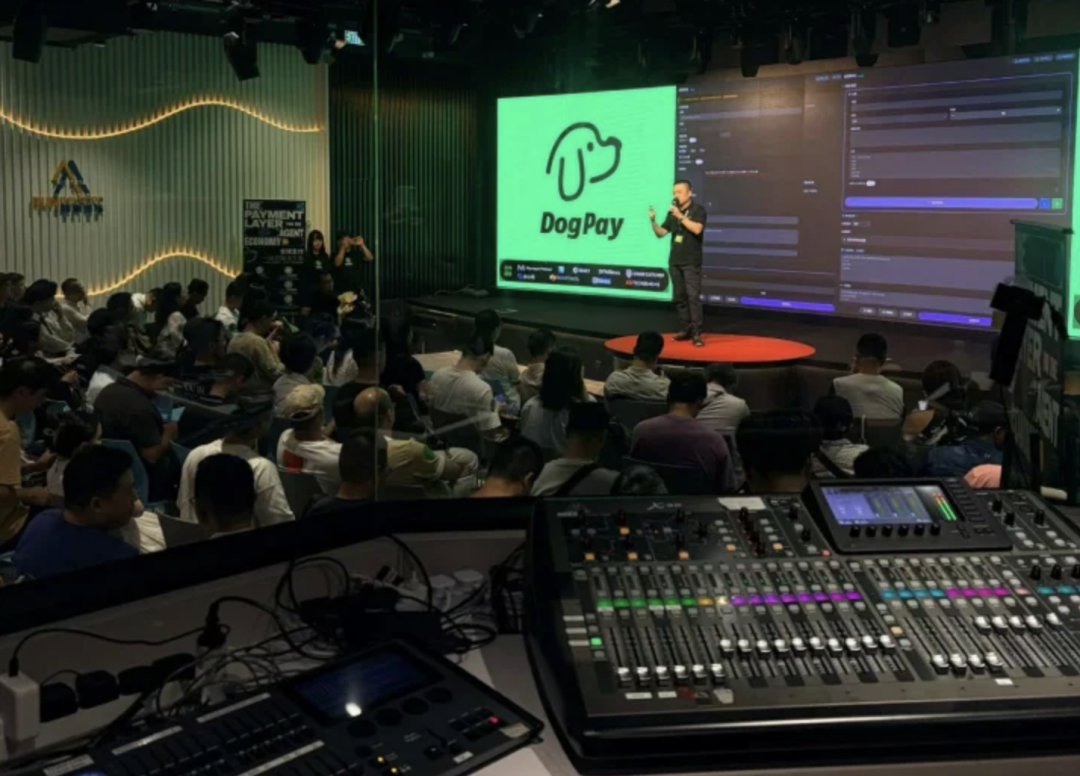
The three layers DogPay discussed—DogID for identity, DogRouter for usage, and DogPay for payment—when viewed through the coordinates outlined above, represent almost the same answer. An Agent needs to be identified before discussing authorization; after being authorized, it can be measured; and upon task completion, payment, revenue sharing, and reconciliation can only be triggered based on that evidence. Identity, usage, and payment are precisely the three checkpoints on this chain.
This shape is not a copy; it is the result of constraints. As consumption shifts from discrete events to continuous flows, and as the payer shifts from a person to a machine, anyone engaging in this process will encounter the same three questions: identifying who it is, calculating how much was used, and whether reconciliation can be achieved. Missing any layer makes it invalid.
Thus, the three layers discussed at a Side Event in Hong Kong point to the same issue as that position Stripe acquired for over seven billion: the difference is only in direction: one moves upward from the dollar side, applying mature payment logic to new products; the other grows downward from the Agent’s original side, first establishing machine usage and identity, then returning to solve the monetary aspects.
Opposite starting points, same shape.
This also explains why DogPay positions itself as a value transfer network rather than just a payment button. A payment tool deals with one-off events; it handles a flow that is continuously running—how value is recorded, allocated, and settled when people and Agents mix in the same collaborative network.
Understanding the shape clearly does not mean the position is fixed.
On the side moving upward from the dollar, it holds twenty years of competitive trading data and the most complete merchant network; on the side growing downward from the Agent’s original aspect, it holds earlier access to usage and more flexible compliance stances. Currently, there is no answer to who will establish themselves first. This is a race that has yet to start, with bets on either side being a gamble.
4. Things born global do not need to land
The issue on the Asian side has never been whether there is demand.
The fact that this event could be packed during Bitcoin Asia is a signal in itself. From API calls to cross-border payments to intelligent trading, in Asia, the Agent Economy is already a running business; the attendees did not come to hear trends but to bring their specific questions.
The vibrant other side presents a question that has yet to be answered earnestly.
Agents and stablecoins are inherently global. They are not born within any jurisdiction, do not rely on the clearing system of any city, nor do they need to land anywhere. The logic of traditional financial centers is quite the opposite—the funds must pass through a physical and legal node, and a city’s value comes from being that essential passage.
As this node begins to shrink, Hong Kong needs to clarify why a city would be needed in a value network that does not depend on geography.
I tend to believe the answer does not lie in the licenses themselves. Licenses can define boundaries, but not attractiveness; moreover, something inherently global will seek the path of least friction rather than the one with the most regulations. What keeps a city in the network may be institutions—like DogPay, which are flexible enough to stand on both compliance and chain sides and are willing to act before standards take shape.
The position of the city must be earned back by the ecosystem.
This is a judgment, not a conclusion. Its premise is that in the next two to three years, the rules of Agent payment should be written by those who operate, rather than waiting for the rules to be established before taking action.
On October 6, Money in Motion and LongTree Labs will hold the first AGENTIC MONEY in Singapore to further push these questions.
After the button disappears, the two flows will find a track for themselves. The real question is whether it will pass through here.
免责声明:本文章仅代表作者个人观点,不代表本平台的立场和观点。本文章仅供信息分享,不构成对任何人的任何投资建议。用户与作者之间的任何争议,与本平台无关。如网页中刊载的文章或图片涉及侵权,请提供相关的权利证明和身份证明发送邮件到support@aicoin.com,本平台相关工作人员将会进行核查。


