🚨 The US debt continues to expand, what should ordinary investors really fear?
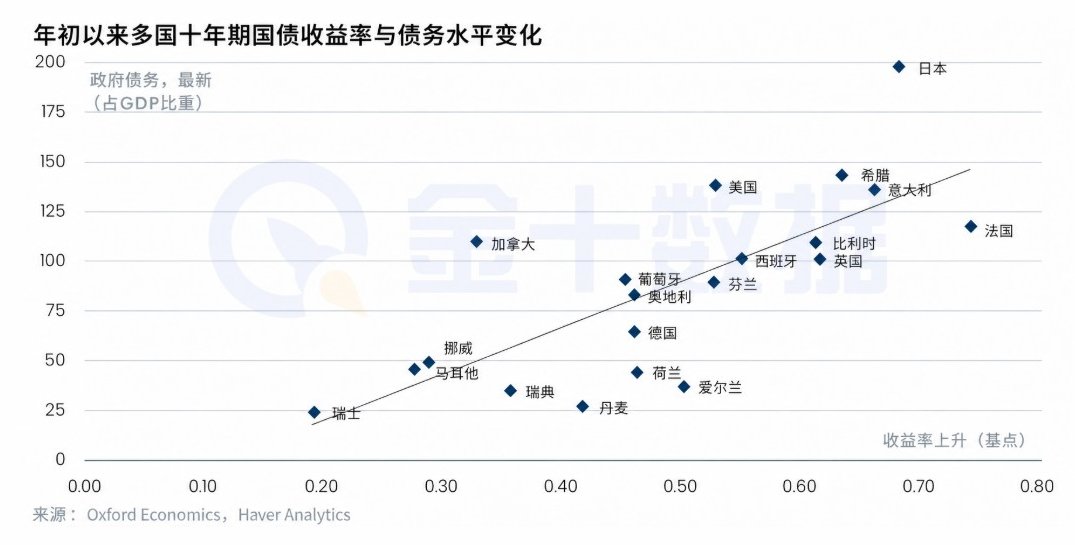
High interest rates for heavily indebted countries are not a one-time shock, but will compound over time.
Assuming a government owes $100, with an average financing cost of 2%, the annual interest is $2. Now as old debt matures, refinancing at 4% would change the interest to $4.
What happens to the extra $2?
The government can raise taxes, cut spending, or continue to borrow money.
In the real world, the third option is usually chosen: rising debt → increasing interest → growing fiscal deficit → more debt issuance → market demands higher term premiums → interest continues to rise.
This process is already visible in the US, and it is the most troublesome issue for the Treasury and the Federal Reserve:
The larger the debt, the more policy options seem available, but in reality, the fewer paths there are.
So-called fiscal policy ultimately leads to two outcomes: either US residents bear the cost of debt, or global dollar or dollar asset holders share the burden.
Anyway, getting the government to voluntarily tighten its belt is probably harder than getting ordinary people to hold onto Bitcoin long-term!
Therefore, current investments should be considered based on three principles:
1️⃣ Be cautious in holding long-term fixed income assets, short-term debt > long-term debt. I am personally not very interested in this trade if there is not enough risk compensation.
2️⃣ Continue to allocate gold, Bitcoin, and high-quality stocks with pricing power, as this aligns with long-term logic.
3️⃣ I personally believe the most important point: use less leverage.
In the era of high fiscal leverage, it is particularly tempting for ordinary people to also increase leverage; many people thought this way during the Japanese real estate bubble, those who bought homes in the US before 2008 had similar thoughts, and even more people in the crypto world borrowed stablecoins to increase positions in 2021.
The government is getting bolder with leverage, while individuals should be increasingly wary of it.
In a nutshell:
In the next decade, you only need to ensure to hold a portion of gold, Bitcoin, and high-quality productive assets long-term, while controlling leverage and avoiding excessive exposure to long-term nominal debt, I think that will be sufficient.
The rest, let them print gradually!
免责声明:本文章仅代表作者个人观点,不代表本平台的立场和观点。本文章仅供信息分享,不构成对任何人的任何投资建议。用户与作者之间的任何争议,与本平台无关。如网页中刊载的文章或图片涉及侵权,请提供相关的权利证明和身份证明发送邮件到support@aicoin.com,本平台相关工作人员将会进行核查。


