Original Title: Rate-Spike Hedgers Go「Bonkers」As Iran Attacks Spike Oil; Stocks, Gold, & Crypto All Tank
Original Author: Tyler Durden, ZeroHedge
Editor's Note: On September 1, global markets faced dual pressures: the U.S.-Iran conflict escalated again, and international oil prices rose sharply; global sovereign bonds continued to sell off, with Japan's 10-year government bond yield reaching 3% for the first time in 30 years. The U.S. stock market, gold, and Bitcoin fell simultaneously, while the dollar and U.S. bond yields rose.
More important than the fluctuations in asset prices is the issue that energy shocks are altering the market's assessment of inflation and interest rate paths. Weak job vacancies, construction spending, and manufacturing data initially pointed to an economic slowdown, but rising oil, diesel, and natural gas prices could push overall inflation higher. This leaves the Federal Reserve with a more challenging combination: weakening growth while price pressures may not ease simultaneously.
Author Tyler Durden interprets this market phase as a return of "stagflation trading." The core judgment is that energy prices, the interest rate market, and risk assets have become difficult to price separately; if refined oil prices remain high, the Fed's policy space may narrow further, while long-term U.S. Treasury bonds will simultaneously face pressures from inflation, fiscal deficits, and AI financing demands.
It should be noted that whether energy prices will continue to transmit to core inflation and whether the Fed will continue to raise rates amid weakening employment still contains significant uncertainty. The options market has markedly increased bets on interest rate tail risks, but this reflects investors' caution against extreme scenarios and does not imply that rates have definitively entered an accelerated upward phase.
The following is the translated content:
After the U.S. struck Iranian targets again, international oil prices surged, and global bond sell-offs intensified. Stock markets, gold, and crypto assets came under pressure, with concerns about stagflation and further interest rate hikes significantly heating up.
The economic data released that day was not strong: job vacancies, construction spending, manufacturing PMI, and the Dallas Fed services index all released varying degrees of cooling signals. However, simultaneous rises in oil prices, refined oil prices, and government bond yields led the interest rate futures market to raise pricing for a September Fed rate hike.
This combination constitutes the core contradiction the article focuses on: economic activity is weakening, yet the energy supply shock may again raise inflation. If price pressures persist, it would be difficult for the Fed to shift towards easing based solely on employment and growth data; however, continuing to raise rates amid economic slowdown could also amplify pressures on financial markets and the real economy.
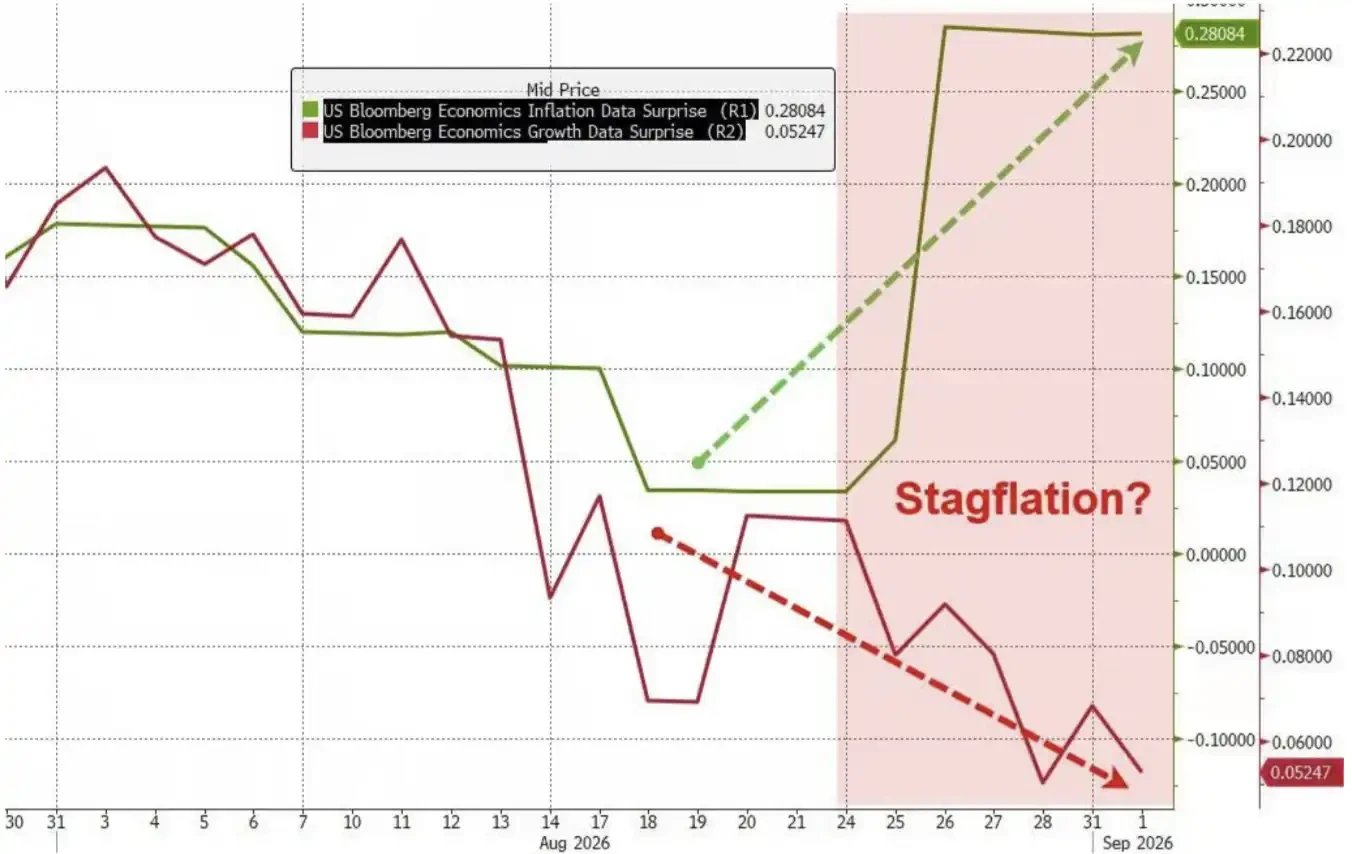
Weak economic data and rising energy prices have led the market to reassess stagflation risks.
Crude Oil Breaks $90; The Real Pressure Comes from Refined Fuels
After the U.S. launched a new round of strikes against Iran, the market began reassessing the long-term disruption of energy transportation through the Strait of Hormuz. U.S. crude oil futures briefly surpassed $90 per barrel, reaching a new high since late July.
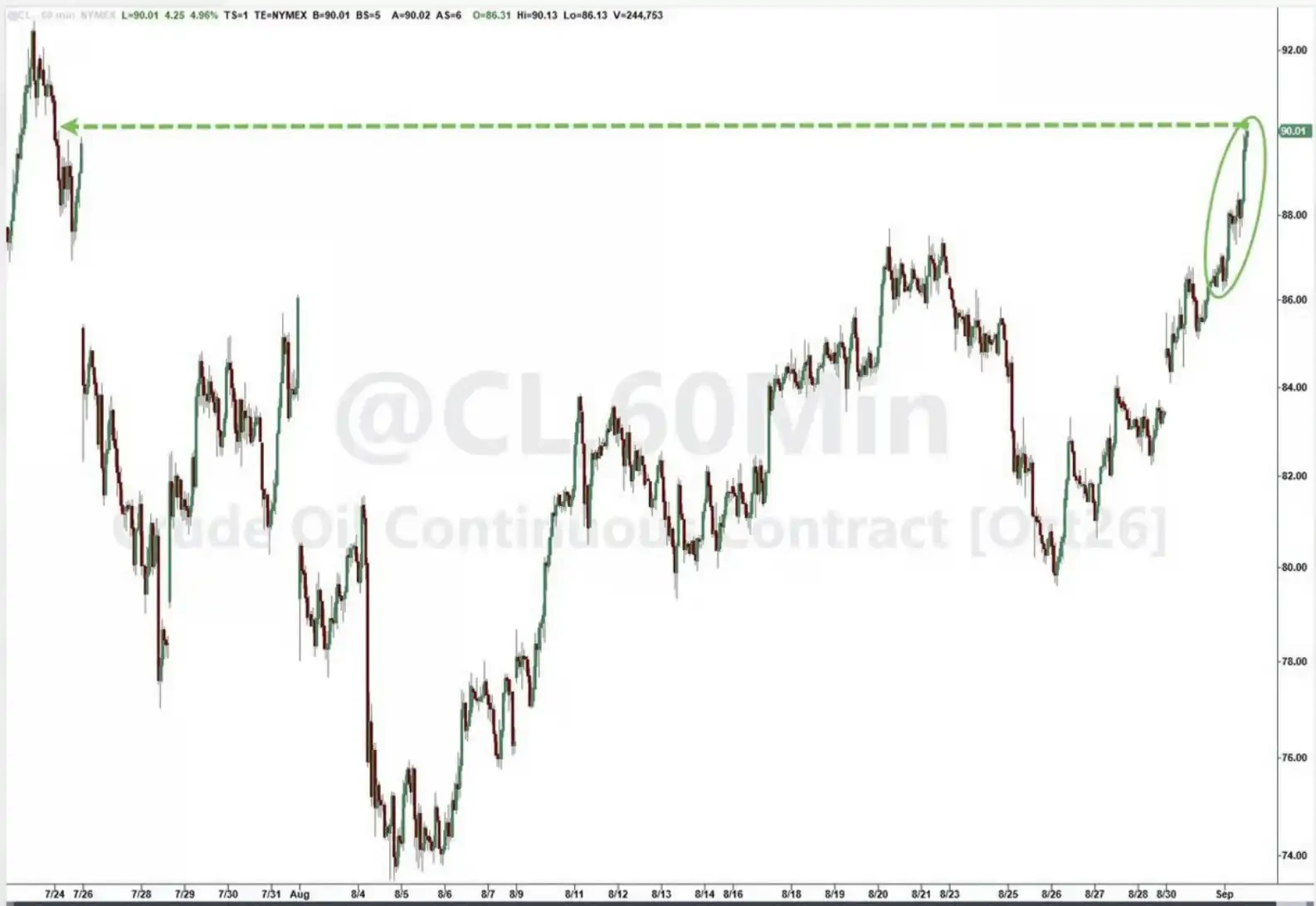
Spot Brent crude oil prices have risen but remain generally within recent volatility ranges.
The Iranian Islamic Revolutionary Guard subsequently warned that the U.S. would face "severe punishment." The U.S. continues to exert pressure on Iran through military actions and sanctions. The duration of the conflict, the nature of Iran's retaliation, and whether shipping security further deteriorates have become key variables in short-term pricing in the crude oil market.
U.S. Treasury Secretary Bentsen downplayed the long-term strategic value of the Strait of Hormuz. He stated that Gulf countries are accelerating the construction of land oil pipelines, suggesting that oil transportation might bypass the strait in two years. However, this statement describes future alternative transportation capacity and does not eliminate current supply and shipping risks.
From the spot market perspective, although spot Brent crude oil prices are rising, they remain generally within recent volatility ranges. Goldman Sachs Delta One trading desk head Rich Privorotsky believes the pressure the market faces comes not only from crude oil prices but also from the more severe signals emitted by the refined oil and natural gas markets.
European natural gas prices have risen to around a three-and-a-half-year high, heating oil is nearing recent peaks, and the U.S. diesel crack spread has set a record. The crack spread measures the difference between refined oil prices and crude oil costs, typically reflecting the supply-demand tightness in the refining segment.
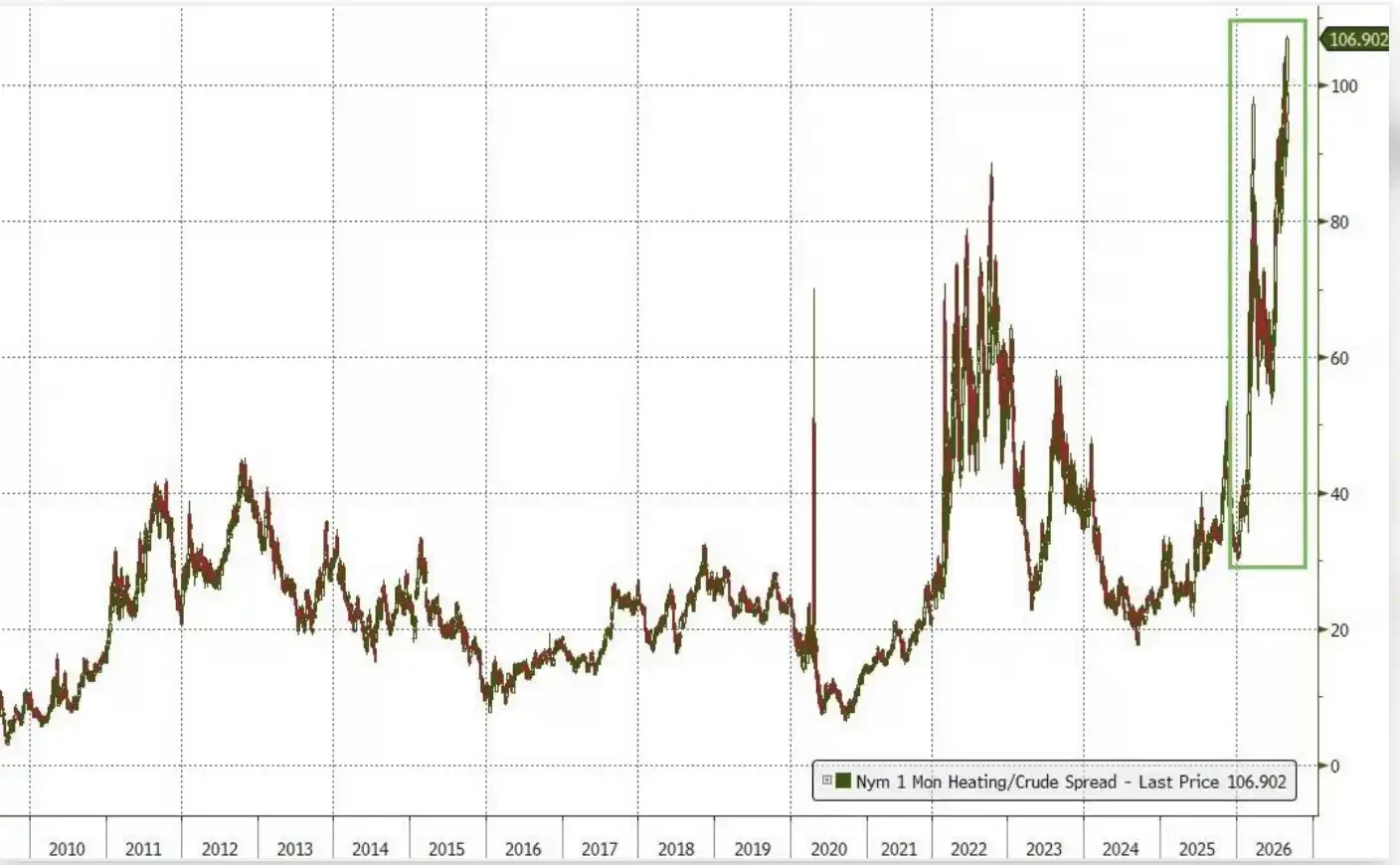
The U.S. diesel crack spread hits a record, with the refined oil market signaling stronger supply tightness than crude oil.
This means that even if crude oil prices do not continue to break through recent ranges, consumers may still face rising prices for diesel, heating oil, and other fuels. Lower crude oil prices may not directly translate into decreased end prices, as some of the price spread may convert into higher refining profits.
Privorotsky assesses that if refined oil prices remain at current levels, overall inflation could experience upward pressure in the coming months. Whether energy price increases ultimately spread to core inflation remains key in determining policy impacts: a one-time supply shock does not necessarily change mid-term inflation trends, but if transportation, production, and service costs continue to rise, price pressures may gradually transmit to other sectors.
According to market data quoted in the original text, since February, global refined oil wholesale prices have averaged an increase of about $40 per barrel, with diesel contributing over 40% to the rise. During the same period, global refined oil exports have decreased by about 6 million barrels per day year on year, with the Gulf region and Russia accounting for approximately three-quarters of the decline. Since this data comes from trading desk analysis, it should be regarded as the statistical caliber of relevant institutions rather than official unified data.
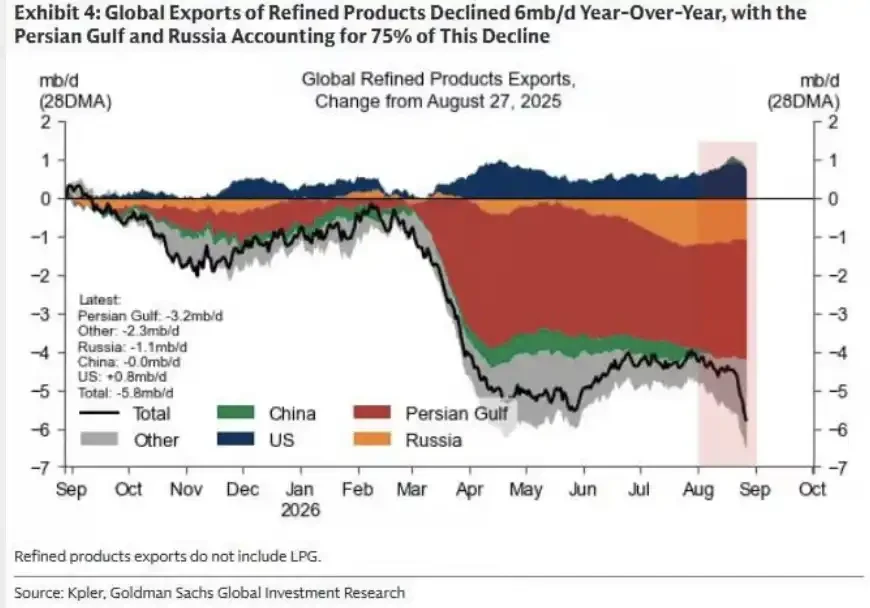
Global refined oil exports have decreased year on year, with the Gulf region and Russia constituting the main drag.
Oil Prices and Interest Rates Re-Bound; Stagflation Trading Returns
Privorotsky believes that it is difficult to discuss the energy market separately from the interest rate market in the short term. Rising oil and refined oil prices could increase inflation expectations, leading investors to demand higher bond yields; rising yields would also depress valuations of risk assets such as stocks.
This trading relationship was particularly evident on September 1. U.S. Treasury yields rose across the board, with short-term gains being larger, resulting in a "bear flattening" of the yield curve.
Bear flattening refers to a situation where bond prices generally decline, and yields overall rise, while short-end yields increase faster than long-end yields, making the yield curve flatter. This usually indicates that the market is raising expectations for recent interest rate hikes or ongoing policy tightening.
That day, oil prices rose, and manufacturing surveys continued to indicate pricing pressures, significantly increasing bets on a Fed rate hike in September. The original text states that the related probability at one point exceeded 70%; other public market metrics indicated that the rate hike probability at that time was around 65% to 70%. Different data may come from different sampling points and contract calculation methods, so unifying them should be avoided.
This pricing round was also influenced by hawkish remarks from Federal Reserve Chair Kevin Warsh. The rise in oil prices is not the sole reason for the warming of rate hike expectations; more accurately, the energy shock reinforced inflation concerns that had already formed in the market.
The author summarizes the current environment as a typical stagflation setup: weakening growth and employment data, but rising energy costs. Related "stagflation asset combinations" have performed relatively well lately, also reflecting that some investors are positioning for slowing growth and rising inflation stickiness.
However, whether rising oil prices will change the Fed's decisions still depends on the duration and transmission to core prices. If energy prices swiftly retreat, the policy impact may be relatively limited; but if diesel, natural gas, and transportation costs remain high for an extended period, the risk of inflation re-diffusion will significantly increase.
Global Bonds Under Pressure; Treasury Buybacks Can't Offset Supply Pressures
Before the energy shock arrived, the global bond market was already under sell-off. On September 1, the comprehensive yield of global sovereign bonds rose to its highest level since 2008, while Japan's 10-year government bond yield reached 3% for the first time since 1996.
Japanese government bonds, in particular, are influenced by a combination of inflation, fiscal expansion, and expectations of further interest rate hikes by the Bank of Japan. Yields on U.S., German, and UK bonds also generally rose, indicating that this is not a singular market phenomenon.
U.S. long-term bonds face additional pressures. The original text points out that the 30-year U.S. bond yield rose in early trading, erasing some of the declines that followed the Treasury's previous announcement of expanded liquidity support buybacks for long-term bonds.
The U.S. Treasury previously announced it would raise the maximum single liquidity support buyback scale for 10 to 30-year bonds from $2 billion to at least $4 billion, with the new arrangement set to begin on September 9. Buybacks can improve liquidity and market trading conditions for older bonds, but will not directly reduce the net financing needs of the U.S. Treasury and do not equate to the Fed's quantitative easing.
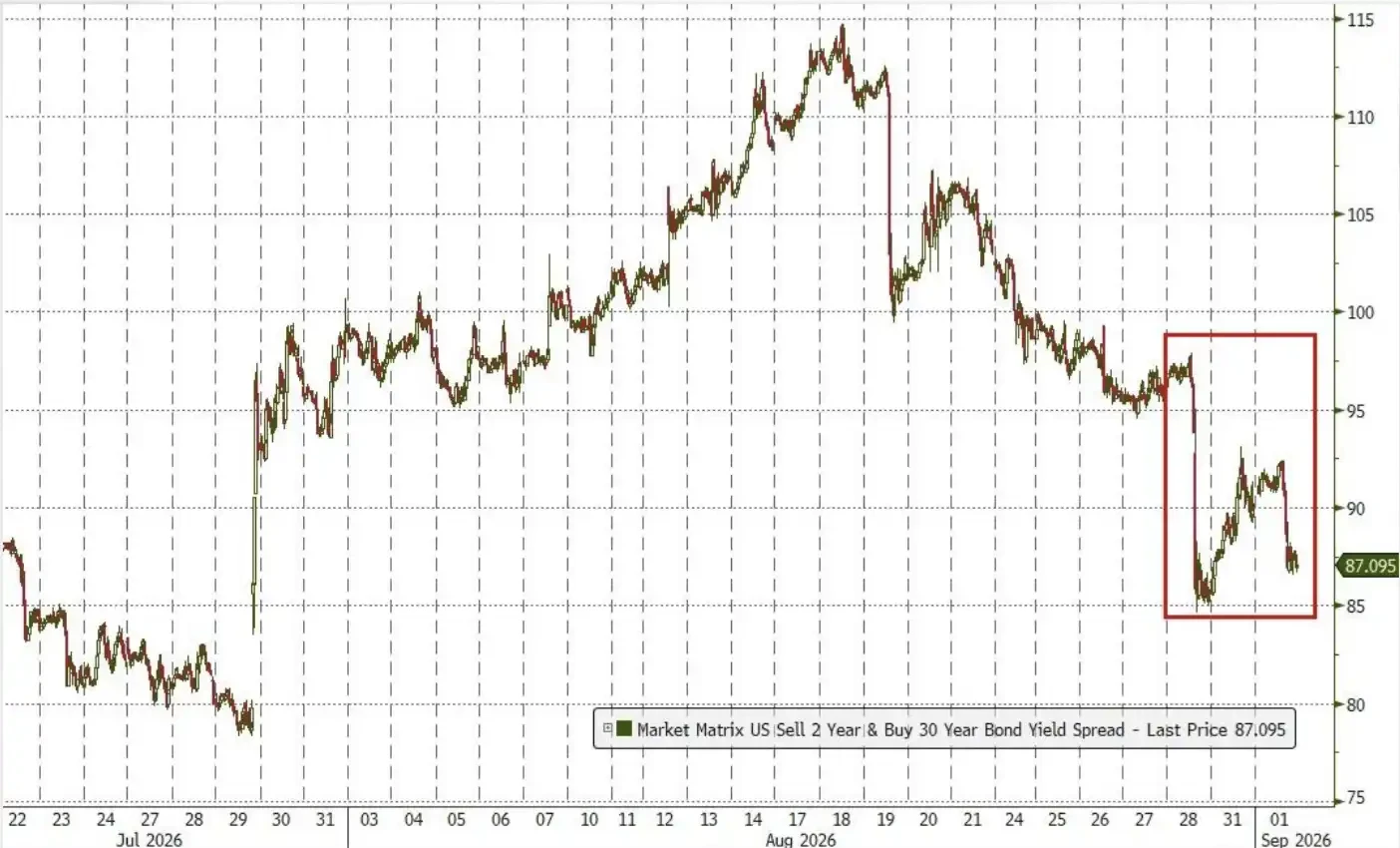
The 30-year U.S. bond yield rose again, erasing some of the decline following the Treasury's announcement of expanded long-term bond buybacks.
Portfolio manager Priya Misra from Morgan Asset Management believes that Treasury buybacks may provide some demand for long-term bonds but could be overwhelmed by financing supply from AI infrastructure construction. The "AI supply pressure" here mainly refers to large tech companies, utilities, and data center operators increasing bond issuance to build computing power, electricity, and supporting infrastructure.
Meanwhile, the U.S. fiscal deficit, the government’s ongoing bond issuance, and a new round of corporate debt issuance are all increasing the supply of long-duration assets. Natixis North America U.S. interest rate strategies head John Briggs assesses that long-end yields may continue to stay elevated until welfare spending reforms actually change the fiscal deficit outlook; in his view, Treasury buybacks relative to overall bond supply are still just "a drop in the bucket."
This also highlights the difference between the current long-end rate pressure and simple rate hike expectations. The short end primarily reflects the Fed's policy path, while the long end must digest inflation risks, fiscal deficits, term premiums, and bond supply. Even if the Fed does not continue to raise rates, long-end yields may not quickly retreat.
Interest Rate Tail Risks Intensify; Options Market Cautious of "Negative Convexity"
While the spot bond market is slowly declining, some investors are aggressively buying high strike rate payer options, essentially betting on a substantial rise in future rates.
Nomura Securities strategist Charlie McElligott notes that there has been a significant increase in demand for mid-term, high strike payer options, with some of the demand coming from a large buyer who is not a conventional participant. Related transactions have driven up the payer skew, making options purchased to hedge against rate rises more expensive than those for rate declines.
However, the overall volatility of interest rate swaption options has not substantially increased in tandem with yields. The reason is that the bond market currently resembles a persistent, slow sell-off rather than a rapid short-term loss of control. Actual volatility remains low, yet there are continuous purchases of extreme upside protection, creating a mismatch between spot movements and tail risk pricing.
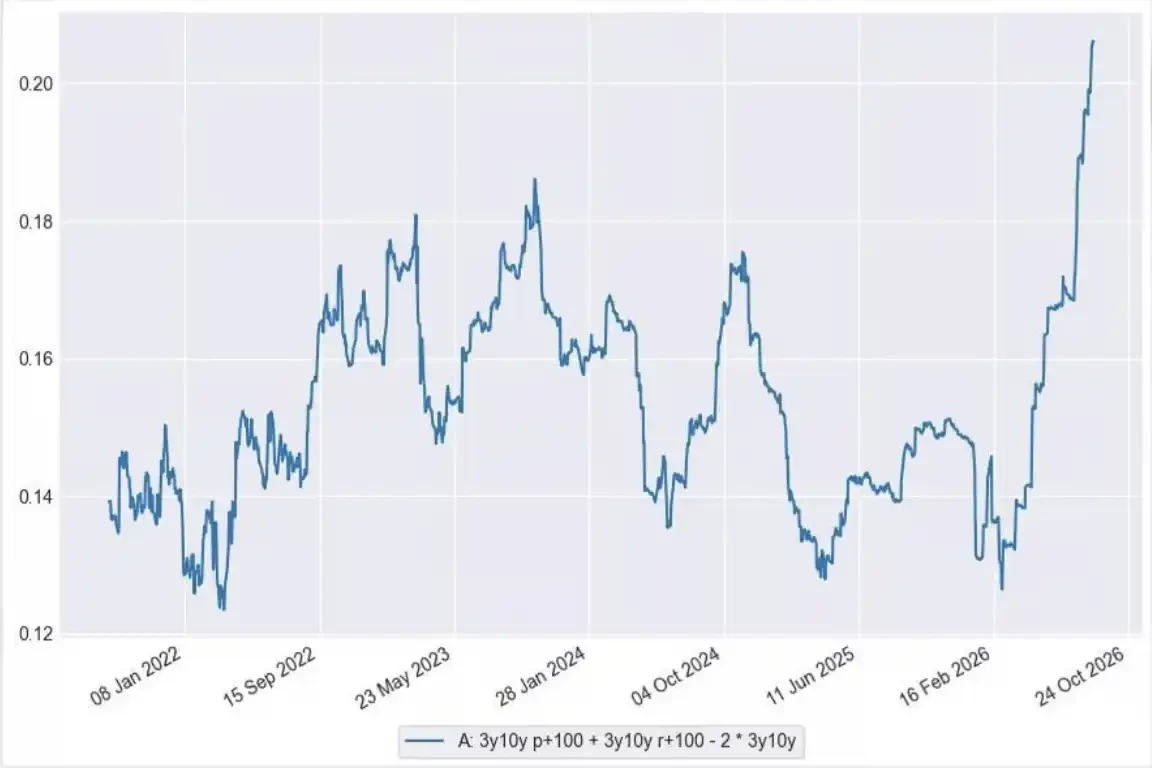
The "volatility of volatility" of interest rates has risen rapidly, indicating the market's evident increase in caution against interest rate tail risks.
The risk is that if rates transition from a slow upward trajectory to a rapid rise, market makers may need to concentrate on hedging previously sold high strike options. Since the market may not have sufficient counterparties to provide opposing positions, such hedging could further amplify interest rate volatility, creating what is referred to as a "negative convexity" moment.
Negative convexity refers to a situation where, after a change in interest rates, some market participants are forced to add hedges in the direction of the market movement: the higher the rate rises, the more they need to increase their rate positions, potentially pushing rates even higher. Current option demand indicates investors are guarding against this risk, but it does not imply this scenario will necessarily occur.
Going forward, the market needs to observe three groups of variables: first, whether the U.S.-Iran conflict and shipping through the Strait of Hormuz continue to affect energy supplies; second, whether diesel, natural gas, and other terminal energy prices can sustain and transmit to core inflation; and third, the extent of weakening employment data and whether it is sufficient to prevent the Fed from continuing to tighten policy.
If energy prices remain high, inflation expectations continue to rise, and bond supply pressures do not ease, the author's stagflation and interest rate tail risk logic will be reinforced. Conversely, if energy supply recovers, refined oil price spreads fall, or significant employment deterioration forces the Fed to prioritize growth risks, the foundation for this round of rate hiking trading could weaken.
免责声明:本文章仅代表作者个人观点,不代表本平台的立场和观点。本文章仅供信息分享,不构成对任何人的任何投资建议。用户与作者之间的任何争议,与本平台无关。如网页中刊载的文章或图片涉及侵权,请提供相关的权利证明和身份证明发送邮件到support@aicoin.com,本平台相关工作人员将会进行核查。


