In this round of market fluctuations, the true protagonist is not a specific stock or sector, but the U.S. Treasury yield approaching a critical position again.
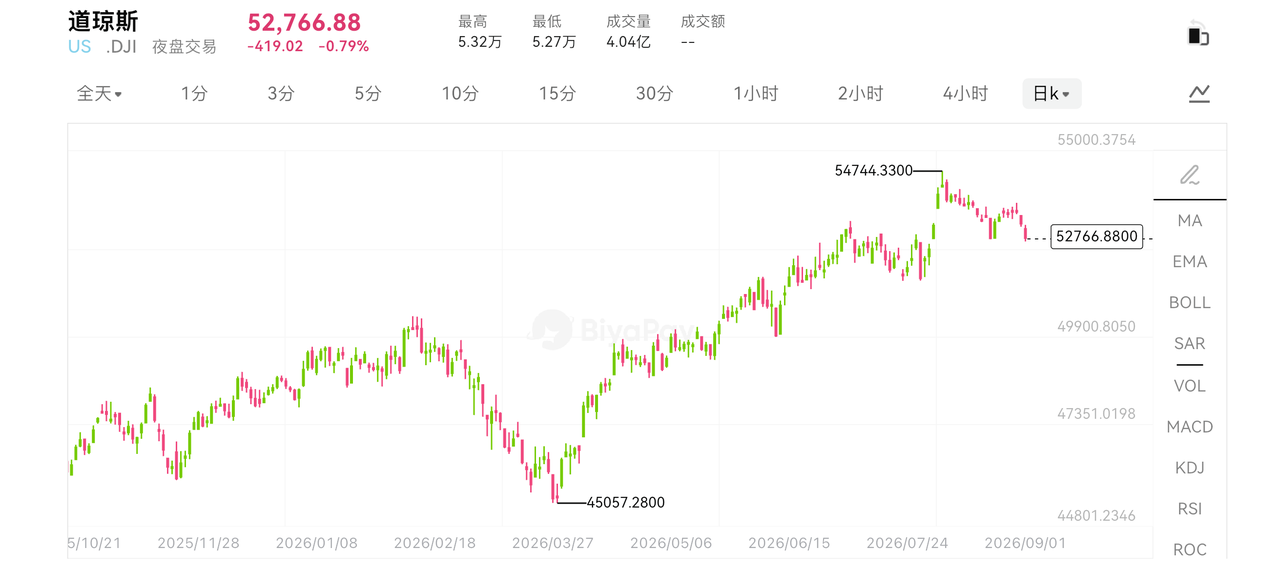
On September 1, BiyaPay market data showed that the three major U.S. stock indexes continued to weaken. The Dow Jones Industrial Average fell by 0.8%, the S&P 500 Index fell by 0.7%, and the Nasdaq fell by 1%, marking the third consecutive trading day of declines for the major indexes. At the same time, the 10-year U.S. Treasury yield rose to about 4.79%, and the 30-year yield also approached 5.3%. With rising oil prices, inflation worries, the upcoming Federal Reserve meeting in September, and U.S. fiscal pressures, multiple factors converged, prompting the market to reassess.
Why are U.S. Treasury yields so important?
Because they are one of the most core references for global asset pricing. When interest rates rise, stocks, gold, and digital assets will all be compared on the same table again. The U.S. stock market needs to assess whether valuations can hold up; gold needs to look at real interest rates and the U.S. dollar; digital assets like Bitcoin and Ethereum pay more attention to liquidity and risk appetite.
This is also why the near 5% mark for U.S. Treasury yields cannot be seen only as fluctuations within the bond market.
When U.S. Treasuries move, U.S. stocks get nervous; this is not a new story. But this time, the pressure doesn't just come from the Federal Reserve; it also comes from oil prices, fiscal deficits, the policy rhythm of the Trump administration, and the financing demands brought about by AI capital expenditures. What the market is truly worried about is not the daily ups and downs, but whether the high-interest-rate environment might last longer than expected.
As the correlations between these assets become stronger, focusing solely on one market can easily overlook signals. For example, in the BiyaPay App, you can simultaneously monitor market changes in U.S. stocks, Hong Kong stocks, BTC, ETH, and other assets. BiyaPay, as a global one-stop asset allocation platform, covers various asset scenarios including digital assets, U.S. stocks, Hong Kong stocks, and fiat currency exchanges, making it more suitable for observing price changes and risk appetite shifts between different markets.
For these kinds of high-volatility situations, what truly matters is not simply watching a specific price point, but understanding the reactions of U.S. Treasuries, the U.S. dollar, tech stocks, gold, and digital assets—who reacts first and who follows. This way, returning to observe the fluctuations in U.S. stocks, gold, or digital assets will reveal a clearer logic.
With U.S. Treasuries approaching 5%, the market's concerns go beyond interest rates
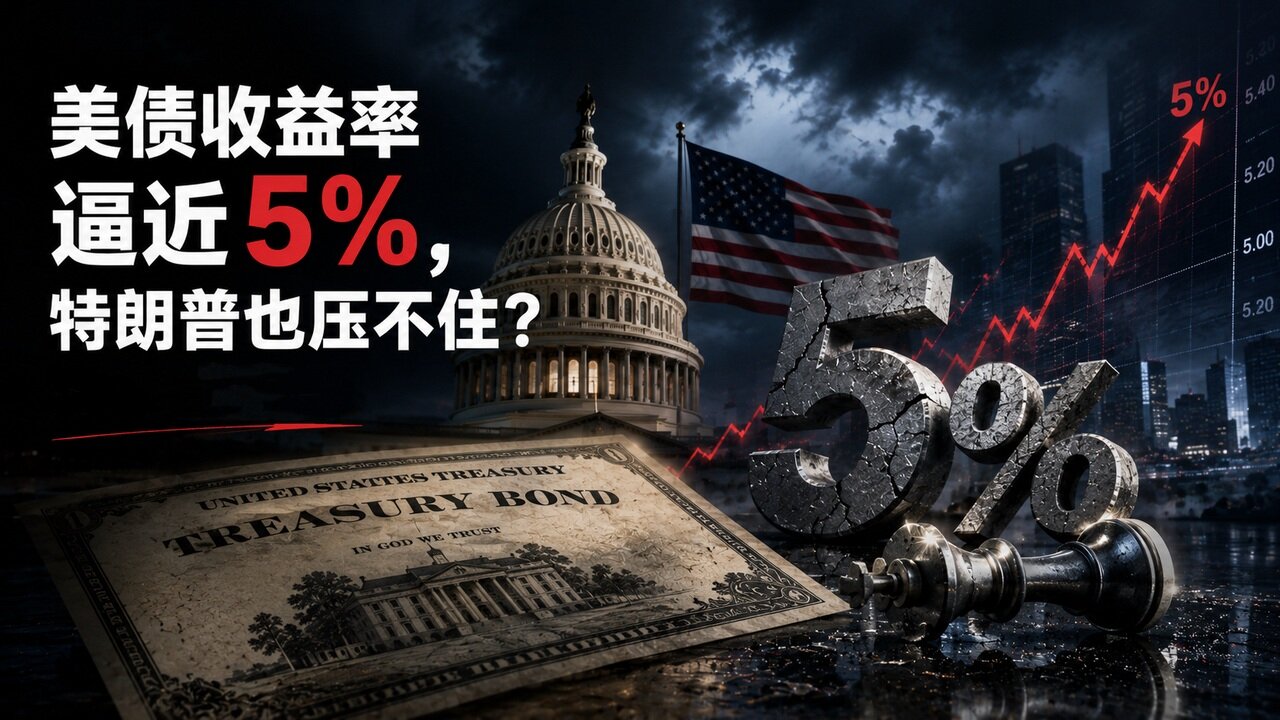
The 10-year U.S. Treasury yield is nearing 4.8%, and the 30-year yield is close to 5.3%. These two numbers reflect not just simple short-term rate hike expectations, but a repricing of long-term funding costs by the market.
Short-term interest rates are more closely related to Federal Reserve policy, while long-term rates are more complex. They consider inflation, fiscal deficits, treasury supply, economic growth expectations, and the willingness of long-term funds to take over assets. The U.S. debt has exceeded $40 trillion, and the pressure from interest payments is becoming heavier. The Treasury Department needs to continue issuing bonds, and the market naturally demands higher yields to compensate for risk.
Trump's dilemma lies here. Politically, he certainly hopes for a strong economy, a stable stock market, and low financing costs; but the bond market does not just listen to slogans; it pays closer attention to inflation data, fiscal paths, and long-term credit. If oil prices continue to rise, inflation pressures will return; if fiscal deficits do not ease, long-term bond supply pressures will be hard to dissipate. As long as these factors remain, U.S. Treasury yields will not be easily suppressed.
Therefore, the core of this market is not simply whether “the Federal Reserve will raise rates or not,” but rather the money is starting to doubt whether the high-interest-rate environment may last longer than previously imagined.
For U.S. stocks, the pressure first falls on valuations
The rise in U.S. Treasury yields directly impacts U.S. stocks through valuation pressure. This is especially true for tech stocks, AI stocks, and high-growth sectors, where stock prices often contain high future growth expectations. When risk-free rates rise, the attractiveness of discounted future cash flows decreases, and the market's tolerance for high-valuation assets also declines.
This is why the Nasdaq has performed weaker in this round of corrections. The AI narrative has not been disproved; cloud computing, chips, data centers, and energy solutions remain areas of market interest. However, the problem is that the AI supply chain has risen too quickly, and many companies' stock prices have already reflected growth expectations for the next few years. Now that U.S. Treasury yields are rising, the market will naturally question whether orders can continue to be fulfilled, whether gross margins can remain stable, and whether capital expenditures will drain cash flow.
In simple terms, in a low-interest-rate environment, the market is more willing to pay for long-term stories; in a high-interest-rate environment, the market cares more about profits, cash flows, and certainty.
This will be key for U.S. stocks going forward. It is not guaranteed that good earnings reports will lead to stock price increases, nor that poor performance will lead to declines; rather, it depends on the quality of growth that companies provide and whether it can offset the valuation pressure from rising interest rates.
Gold is not simply a safe-haven trade
The impact of rising U.S. Treasury yields on gold is more nuanced.
Gold itself does not have interest. When U.S. Treasury yields rise and the U.S. dollar strengthens, the opportunity cost of holding gold increases, resulting in downward pressure on gold prices. Recently, gold has retreated from high levels, reflecting this logic. Public data shows that on September 1, gold futures briefly fell below $4,400, significantly adjusting from peaks in late August.
However, gold is not solely an interest-bearing asset. As long as the market worries about fiscal deficits, geopolitical risks, inflation volatility, and monetary credit, gold will still have demand for safe-haven and hedging. Thus, gold currently faces two opposing forces. On one side, high yields and a strong dollar suppress prices, while on the other side, fiscal and geopolitical risks provide support.
This means that, in the short term, gold is not suitable for just viewing as a "safe haven." The real observation should be on real interest rates. If nominal rates rise faster than inflation expectations, gold will likely come under pressure; if concerns about inflation and fiscal matters continue to intensify, gold might regain investor interest.
Digital assets are influenced by liquidity and risk appetite
Digital assets like Bitcoin and Ethereum are also sensitive to U.S. Treasury yields. The reason is straightforward; liquidity and risk appetite weigh significantly in short-term trading of digital assets.
When U.S. Treasury yields rise and the U.S. dollar strengthens, market funds are more inclined to return to assets with more certain returns, leading to pressure on risk assets. Reports indicate that on September 1, Bitcoin briefly fell to about $77,900 in pre-market trading, affected by rising interest rates alongside U.S. tech stocks. This demonstrates that under strong macro pressures, digital assets will not completely detach from the global liquidity environment.
However, digital assets also have another aspect. Whenever the market discusses the U.S. fiscal deficit, monetary credit, and long-term debt pressure, Bitcoin is often viewed by some investors as part of the "macro hedge asset" framework. In other words, it will face pressure from high rates in the short term, but could be repriced due to fiscal and monetary issues in the medium to long term.
This is what makes the current situation of digital assets complex. They are neither purely risk assets nor stable safe-haven assets but switch narratives depending on different market environments. When rates rise, they come under pressure like risk assets; when discussions about fiscal credit arise, they might gain renewed attention.
Before the September meeting, the market will continue to focus on data
The next FOMC meeting of the Federal Reserve will be held on September 15-16. Waller emphasized in his speech at Jackson Hole that the 2% PCE inflation target is fixed, and short-term rates remain the main tool for achieving dual mandates. He also mentioned that the 12-month PCE inflation is at 3.7%, and the 6-month change is 4.1%, indicating inflation is still above target.
This statement has a direct impact on the market. The Federal Reserve has not provided a clear path but has communicated one thing to the market: as long as inflation does not return to target fast enough, policy cannot easily shift towards easing.
Going forward, non-farm payrolls, CPI, PCE, oil prices, and U.S. Treasury auction conditions will all influence market expectations. If the data continues to show strength, or if inflation pressures do not cool significantly, U.S. Treasury yields may remain high, and valuation pressures on U.S. stocks will persist. If economic data shows significant weakness, the market will shift from worrying about inflation to worrying about growth.
This is also what makes it challenging to judge the current market situation. Inflation has not been fully resolved, yet growth cannot slow down significantly, with both the Federal Reserve and the market awaiting more evidence.
The true variable is the rise in funding costs
So, with U.S. Treasury yields approaching 5%, the impact on U.S. stocks, gold, and digital assets is undeniably present, although the directions are not entirely the same.
The biggest fear for U.S. stocks is a repricing of valuations, especially for AI and tech growth stocks. Gold is temporarily suppressed by high rates and a strong dollar, yet fiscal, geopolitical, and inflation risks still provide it with support. Digital assets are caught between liquidity pressures and macro hedge narratives, leading to greater short-term volatility.
Whether Trump can stabilize market sentiment ultimately depends on whether the bond market responds favorably. As long as long-term U.S. Treasury yields remain elevated, global assets will experience repeated repricing. U.S. stocks will look to see if profits can offset rate pressures; gold will focus on real rates and safe-haven demand; digital assets will be influenced by liquidity and risk appetite.
This round of market activity truly reminds everyone that the past trading environment, which solely focused on growth stories, is changing. As funding costs rise again, every type of asset must address the same question: whether the expectations embedded in their prices can withstand the test of high rates.
免责声明:本文章仅代表作者个人观点,不代表本平台的立场和观点。本文章仅供信息分享,不构成对任何人的任何投资建议。用户与作者之间的任何争议,与本平台无关。如网页中刊载的文章或图片涉及侵权,请提供相关的权利证明和身份证明发送邮件到support@aicoin.com,本平台相关工作人员将会进行核查。


