The market is re-pricing the Federal Reserve's September policy path.
According to the latest data from CME FedWatch, traders' expectations for a 25 basis point rate hike by the Federal Reserve in September have rapidly intensified, with the probability rising to about 65%–68%, while the probability of keeping rates unchanged has fallen to about 32%–35%.
For the cryptocurrency market, which has just experienced a strong rebound, this is undoubtedly a signal that requires caution.
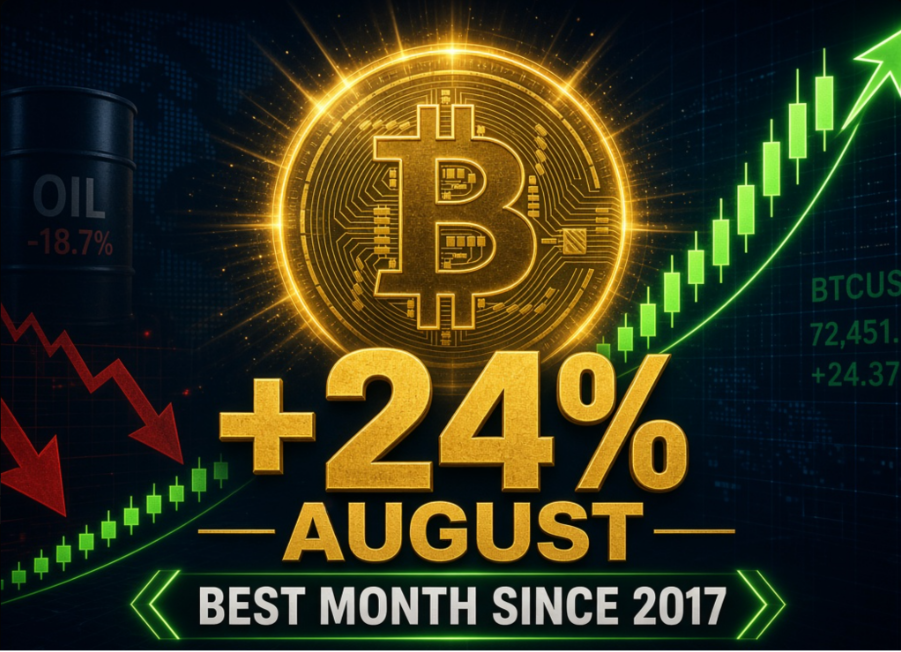
In August, Bitcoin's monthly increase reached around 25%, but as September begins, the market trading logic is changing:
Shifting from “fundamentals driving the rise” to “macroeconomic data determining how long it can keep rising.”

Why has the rate hike probability surged suddenly?
A week ago, the market's pricing for a rate hike in September was still significantly lower than current levels.
The real turning point appeared when recent comments from Federal Reserve officials signaled a hawkish stance.
During the Jackson Hole global central bank annual meeting, Kevin Warsh emphasized in his speech that inflation has not shown enough improvement and that the Federal Reserve still needs to maintain a firm stance on the 2% inflation target.
The market quickly picked up on the policy signals:
Inflation shows no significant cooling → The Federal Reserve has no strong reason to quickly shift to easing → The September policy may maintain a more restrictive stance for a longer time.
As this expectation heated up, interest rate futures began to rapidly reprice.
The current target range for the federal funds rate is 3.50%–3.75%. If there is a 25 basis point hike in September, the target range will rise to 3.75%–4.00%.
More notably, concerns among traders about further tightening in policy this year have also increased.
This implies that the market is worried not just about:
“Will there be a rate hike in September?”
But rather:
“How long will the high interest rate environment last?”
Why has the market suddenly become so “hawkish”?
This shift in expectations is not caused by a single factor.
First, inflation still has a certain stickiness.
Although overall inflation has clearly fallen from previous levels, energy prices have recently fluctuated due to geopolitical factors, increasing market concerns about recurring inflation.
Second, the labor market remains resilient.
If the labor market does not deteriorate significantly, the Federal Reserve lacks urgent reasons to cut rates.
This is why the upcoming U.S. employment data is so important.
Finally, there is still a divergence within the Federal Reserve regarding policy direction.
Some officials have been cautious about an early shift to easing, and recent hawkish statements have further reinforced market expectations for “higher rates lasting longer.”
Consequently, the market has begun to readjust its previously more optimistic rate-cut trades.
What does this mean for BTC?
The Federal Reserve's policy will not directly determine Bitcoin's fluctuations, but interest rate expectations will influence the entire cryptocurrency market through liquidity, the dollar, and risk appetite.
1. Higher interest rates push more pressure on risk assets
An increase in rate hike expectations means the market is demanding a higher rate of return on capital.
The attractiveness of low-risk assets like cash and short-term government bonds is rising, while the risk premium for high-volatility assets like BTC may be reassessed.
Especially after BTC has just experienced a single-month increase of about 25%, profit-taking becomes even more sensitive.
Therefore, once macro expectations change, short-term volatility may very likely be further amplified.
2. The dollar and liquidity may become the second source of pressure
If the market further trades on “the Federal Reserve maintaining high interest rates or even continuing to tighten,” the dollar may gain support.
A stronger dollar and tightening global liquidity typically do not favor high-risk assets.
For the cryptocurrency market, the impact may be even more pronounced:
BTC bears the brunt of pressure, and altcoins often exhibit greater volatility.
3. ETF funds may become a key buffer
However, BTC is no longer a market purely driven by retail sentiment.
Spot ETFs, institutional allocations, and corporate holdings have become important sources of capital.
Thus, even if the macro environment weakens, BTC may not simply repeat the past logic of “Federal Reserve hawkishness = Bitcoin decline.”
What truly needs to be observed is:
The speed of macro capital withdrawal, whether it exceeds the speed at which institutions can buy in.
This may determine whether BTC undergoes a deep correction in the next phase or enters a high-level consolidation to digest pressure.
After the strong rise in August, what should BTC be most cautious about?
The strong market in August has already accumulated a certain amount of profit-taking pressure for BTC.
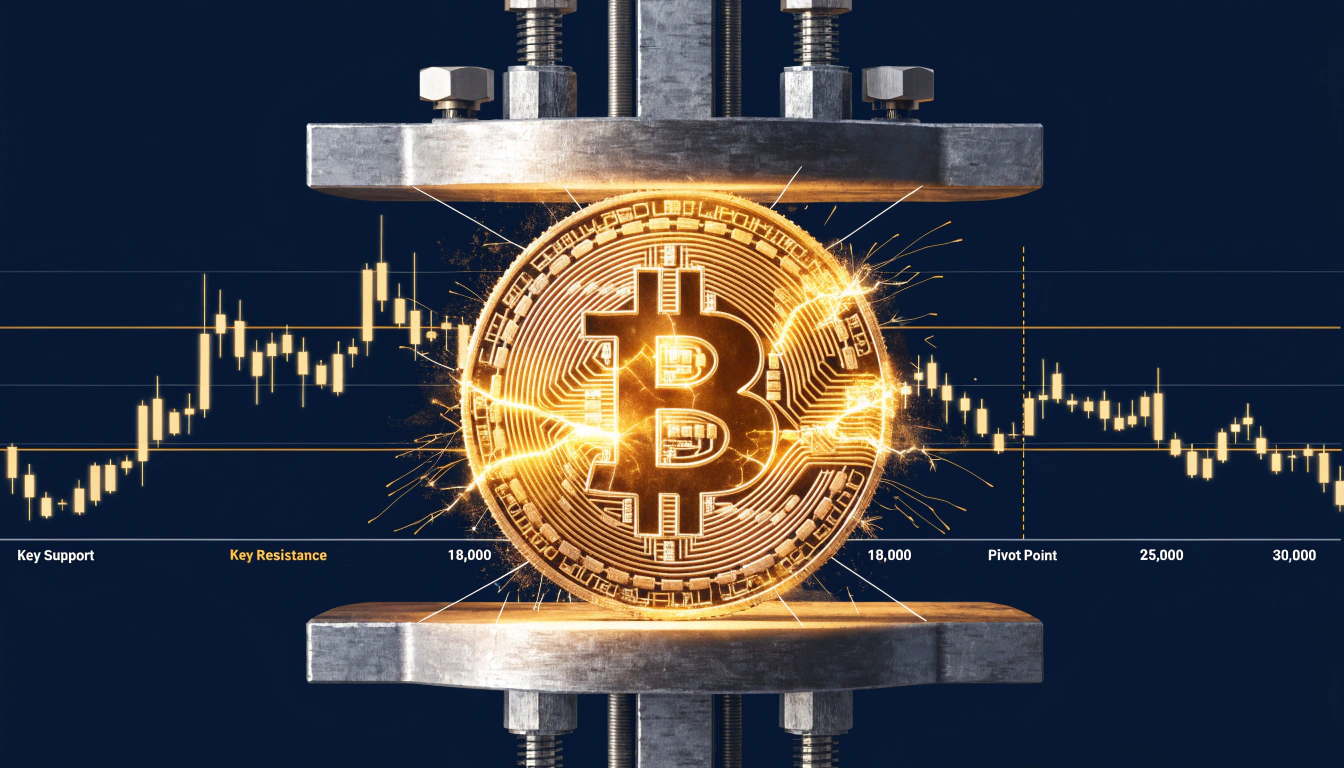
Currently, BTC is consolidating around 77,000–78,000 USD, and the market is waiting for the next directional choice.
From a trading perspective, there are three levels worth paying attention to.
First, 80,000 USD.
This is a very clear psychological threshold in the current market.
If BTC can stabilize above 80,000 USD and increase volume, the market may turn bullish again.
Second, 76,000–77,000 USD.
This is an important short-term support area.
If macro data remains hawkish and leads to BTC effectively breaking below this level, market sentiment may weaken further.
Third, ETF fund flows.
If BTC prices correct but ETF funds continue to flow in, such a correction is more likely perceived as profit digestion.
Conversely, if the price drops while ETF funds continue to flow out, the market needs to be wary of a real change in the capital situation.
The real “big test” is still ahead
The current probability of a rate hike is merely market expectations, not the final outcome.
The upcoming U.S. employment and inflation data will be the key variables determining the September policy path.
If employment and inflation show a significant cooling:
Rate hike expectations decrease → Dollar and interest rate pressure eases → Risk appetite restores → BTC may regain upward momentum.
If the data continues to show strength:
Rate hike expectations heat up → Dollar and real interest rates come under pressure → Risk assets are repriced → BTC may face greater correction pressure.
Therefore, it is still too early to make a direct judgment of “there will definitely be a rate hike in September.”
What the market is truly trading on is whether the data can substantiate the Federal Reserve's need to maintain tightening.
BTC has just completed the “first half,” and macro tests are coming
In August, BTC demonstrated its capital resilience with an approximately 25% increase.
But as September arrives, the focus of the market is changing.
The institutional funds, ETF flows, and corporate accumulation logic that previously drove the market up still exist, but at the same time, expectations around Federal Reserve policies are becoming an important variable affecting risk assets.
The probability of a rate hike rising to over 66% is not a signal for BTC to decline.
What truly warrants caution is:
If rate hike expectations continue to heat up, while ETF funds weaken and trading volume declines, then macro pressure may truly translate to price.
Conversely, if subsequent economic data show cooling, causing rate hike probabilities to quickly drop, then the current interest rate pressure may rapidly transform into a new catalyst for upward movement.
Thus, the core issue in September may not be:
“Can BTC still rise?”
But rather:
“After the macro pressure increases, will institutional funds continue to support BTC?”
This, is what needs to be validated as the strong market in August transitions into September.
If you are also interested in the Crypto market and want to participate in trading or asset allocation, you can register through the following exclusive channels to enjoy discounts:
Binance: Register through the exclusive link and enter the invitation code aicoin668 to enjoy 10% commission rebate.
Registration link: https://jump.do/zh-Hans/xlink-proxy?id=3
Welfare group: https://www.aicoin.com/link/chat?cid=gmLgwvKD1
OKX: Register via the AiCoin exclusive link to enjoy a permanent 20% commission rebate.
Registration link: https://jump.do/zh-Hans/xlink?checkProxy=true&proxyId=2
Welfare group: https://aicoin.com/link/chat?cid=l61eM4owQ
Bitget: Register through the AiCoin exclusive channel to enjoy a 10% fee rebate
Registration link: https://jump.do/zh-Hans/xlink-proxy?id=6
Welfare group: https://aicoin.com/link/chat?cid=N63yYYKQ
You are also welcome to join AiCoin's related communities for more information on new coins and earning opportunities:
Official Telegram community: https://t.me/aicoincn
AiCoin Chinese Twitter: https://x.com/AiCoinzh
The content of this article only represents the author's personal views and does not represent the platform's stance. The views, conclusions, and suggestions in the text are for investors' reference only and do not constitute any investment advice related to this platform. The market has risks, and investment should be cautious.
免责声明:本文章仅代表作者个人观点,不代表本平台的立场和观点。本文章仅供信息分享,不构成对任何人的任何投资建议。用户与作者之间的任何争议,与本平台无关。如网页中刊载的文章或图片涉及侵权,请提供相关的权利证明和身份证明发送邮件到support@aicoin.com,本平台相关工作人员将会进行核查。