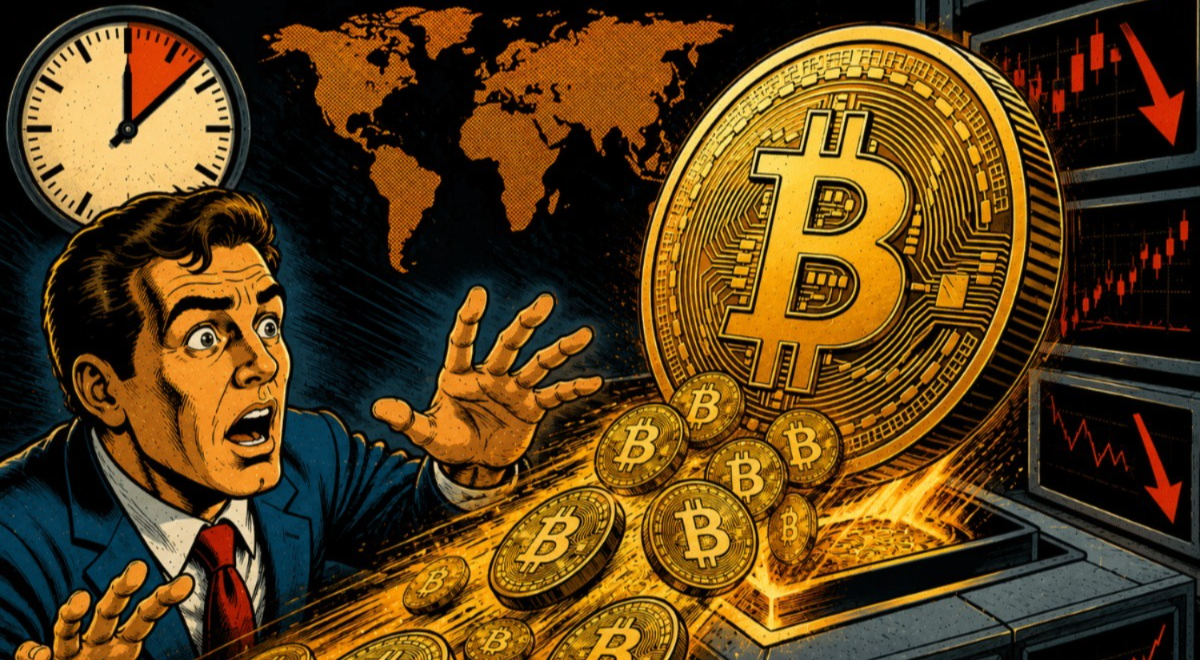
On September 1, 2026, according to reports from multiple media outlets citing a single source, Trump publicly targeted the Federal Reserve again: on one hand claiming that the US GDP growth rate could soar to 14%, 15%, 16%, or even 20%, while on the other hand demanding that the Federal Reserve should not raise interest rates in such a "high growth" scenario, but instead should lower rates or at least halt rate hikes, proclaiming that "the United States should have the lowest interest rates in the world." The problem is that the real US economy does not exist on the high growth curve he depicts—current actual growth is only about 1.5%, and the July PCE inflation year-on-year is about 3.7%, far above the Federal Reserve's 2% inflation target. In a traditional macroeconomic framework, this set of data resembles a textbook example that requires the central bank to maintain or even extend a tight monetary policy. The extreme annual GDP growth of nearly 20% in the US post-World War II only occurred once during a brief rebound following the pandemic, and now, in an environment where inflation remains relatively high, Trump throws this combination of "20% growth + the world's lowest interest rate" as a political demand into the market, actually facing off against the narrative of the Federal Reserve's independence centered on price stability. Briefing materials indicate that the Federal Reserve has not yet provided a new policy decision or formal response to this statement; the battlefield temporarily remains at the "expectation level": on one side is the reality of high interest rates indicated by a 1.5% growth and 3.7% inflation, while on the other side is the political slogan of "lowest rates, super growth." Under the tug of these two narratives, the US interest rate path and the market pricing of dollar liquidity begin to oscillate, and crypto traders viewing BTC and ETH as high-beta tools for liquidity and inflation expectations must also reassess how this presidential and central bank game will rewrite risk preferences and capital flows in the coming quarters.
Verbal QE: How Trump's Statements Shift Rate Expectations
When a president publicly shouts "the lowest interest rates in the world," he is not just making strong statements to the Federal Reserve, but is also attacking the macro anchor of "central bank independence." From a design perspective, the Federal Reserve should technically weigh between the 1.5% actual growth rate, the approximately 3.7% PCE inflation, and the 2% official target, providing a rational explanation for a tight interest rate path. Trump re-packages this technical issue into a political problem of achievement and employment with his narrative that "high growth should not justify interest hikes." Historical experience shows that once political pressure for easing becomes a public topic, traders in interest rate futures and US Treasury yield curves will be forced to rewrite their subjective probability distributions: even if the dot plot remains unchanged, the scenario weight of "earlier and deeper rate cuts in the next two to three years" will passively rise, leading to a discount on the Federal Reserve's nominal independence from the market.
Within this framework, Trump's statement acts like a form of "verbal QE": current rates are not lowered, and there is no new policy statement, but real rate expectations are slightly pushed down on the narrative level. Bets on "no rate hikes in the near term" at the front end of the curve, and lower terminal rate imaginations at the long end, will release part of the "unaccounted easing" through stock market valuations, credit spreads, and other channels. For the crypto market, such marginal shifts in rate expectations are enough to ignite risk appetite: traders viewing BTC and ETH as high-beta liquidity tools will interpret this type of political pressure as a forecast of a downward trend in future dollar funding costs and leverage costs, and in the face of ongoing regulatory uncertainties, will preemptively position in futures leverage, spot allocations, and cross-market arbitrage structures, treating this round of "verbal QE" as the hypothesis for the next segment of the crypto risk cycle.
From 1.5% to 20%: Growth Illusion and Inflation Shadow
With the actual growth of the US economy still around 1.5%, Trump's figures of 14%, 15%, 16%, and even 20% sound more like political narratives than a depiction of the current situation. The record of near 20% annual GDP growth in the US after World War II only occurred once during the rebound following the pandemic's low point, essentially driven by a one-off jump from the base effect, and it is hard to consider it a sustainable growth path. Packaging this extreme scenario as a sustainable prospect and tying it to "the lowest interest rates in the world" serves more to seek public legitimacy for pressuring the Federal Reserve than to respond seriously to macro constraints, especially against the backdrop of PCE inflation still around 3.7%, significantly above the 2% target.
In traditional macroeconomic frameworks, even imagining a near double-digit growth path implies extremely hot demand and rising inflation; the textbook action for the Federal Reserve would be to raise rates, not lower them. Trump’s simultaneous push for “high growth + extremely low interest rates” logically creates apparent tension: if the market genuinely treats this scenario as basic, the profit expectations resulting from high growth would lower risk premiums, but the shadows of uncontrolled inflation would push up rates and inflation compensation, raising the necessary return rate for all risk assets. Currently, the Federal Reserve has not provided a new policy response to this statement; the game focuses on expectations: part of the capital chooses to bet on the ideal combination of "growth + easing," compressing the risk premiums of high-beta assets like BTC and ETH, treating them as the first beneficiaries of liquidity re-expansion; another part of the capital is more concerned with inflation tail risks, demanding higher returns to hedge against the uncertainty of long-term currency depreciation, reducing crypto exposure or increasing volatility tolerance in their allocations. This pricing divergence itself predestines that the crypto market must endure greater expectation oscillation and risk discount under this round of "growth illusion."
Dollar Liquidity Expectations: The Benefits and Traps for BTC and ETH
When the market begins to believe that "future rates will be lower," it is essentially readjusting the discount rates of the entire asset world. Trump's demand for the US to have "the world's lowest interest rates," and his emphasis that even if the growth rate is pushed to 14%-20%, rates should not be hiked, provides traders with a simple yet crude story: dollar liquidity will once again ease, further depressing returns on cash and short-term bonds. Historical experience indicates that lower nominal and real rates often accompany upward cycles in risk assets like US stocks; BTC and ETH have been traded as high-beta assets that are extremely sensitive to liquidity through multiple previous cycles. Once the market re-prices future rate paths based on this political narrative, capital is more likely to withdraw from currency markets and defensive assets, treating crypto assets as amplifiers of a "liquidity bull market," with futures leverage and options implied volatility reflecting this renewed risk appetite.
However, all of this currently remains at the expectation level; the US July PCE is about 3.7%, significantly higher than the 2% official target. The Federal Reserve has neither acknowledged Trump’s "lowest rates" claims nor provided new easing signals. In this high inflation environment, if the market prematurely bets on significant rate cuts and drives BTC and ETH alongside the overall rise in risk assets, once inflation proves stubborn or repetitive, and the Federal Reserve is forced to tighten again, the "correction" in the discount rate will directly hit the valuation assumptions of crypto assets. High-beta characteristics will amplify declines, with on-chain and off-chain leverage potentially being continuously squeezed in a short period. For crypto traders, what is truly amplified at this stage is not the easing that has occurred but the fluctuations of the macro narrative itself—swaying between Trump’s political pressure and the reality of 3.7% inflation, making the prices of BTC and ETH seem more like they are writing options for the uncertainty of rate paths.
The Dual Game of Regulation and Currency in Crypto Funding Routes
With Trump loudly demanding "the lowest interest rates in the world" and publicly pressuring the Federal Reserve to cut rates on one side, and on the other side facing the pressures of a 3.7% PCE inflation and still high pricing pressures, institutions are being forced to rewrite their asset allocation scripts. The US regulatory environment has already been ambiguous in its attitude towards crypto assets, and now, combined with the uncertainties of the monetary policy path, traditional investment committees find themselves weighing triple risks between US Treasuries, stocks, and BTC and ETH, no longer simply a "risk curve" shift. Once the market believes more in Trump’s narrative of rate cuts than in the "long period of tightness" suggested by inflation data, some global funds will be motivated to pull long-duration risks from long-term US Treasuries and growth stocks, switching to holding high-volatility assets such as BTC and ETH to hedge against future declines in real dollar rates and currency depreciation, treating them as higher beta inflation options compared to gold.
What is truly being leveraged here is the dollar interest rate corridor. Once the federal funds rate range is expected by the market to be "lower for longer," on-chain dollar-denominated assets and crypto derivatives will react immediately: cross-border arbitrage strategies will reassess the interest differential between dollar funding costs and on-chain yields, with some dollar-denominated leveraged structures that originally depended on high spreads likely forced to de-leverage, while new capital looks for directions to amplify low-rate environments, allocating more positions to BTC and ETH-related contracts. Conversely, if inflation pressures force the interest rate corridor to remain high, on-chain dollar-denominated assets will face higher opportunity costs, with some cross-border arbitrage using crypto derivatives retreating, and the leverage structures shifting from expansion to contraction. The funds curve on BTC and ETH will depend more on whether this interest rate corridor ultimately compromises toward Trump's "lowest rates" or toward inflation reality.
Pricing Risk Between Noise and Liquidity
Trump calling for US growth to reach "14%-20%" while demanding "the lowest interest rates in the world" stands against the reality of an actual growth rate of about 1.5%, PCE at approximately 3.7%, and an inflation target still at 2%, resembling more noise that amplifies expectation divergence. As of now, the Federal Reserve has neither adjusted rates nor issued a specific response, and the hard constraints on monetary conditions remain unchanged; what has changed is the rate and liquidity paths in the minds of market participants: on one end is the political pressure for quicker and deeper easing imaginations, and on the other end is persistent inflation pushing rates to stay elevated. For crypto traders, the key is not whether to believe the story of "20% growth," but to reassess three matters: whether the rate curve can substantially decline before inflation returns to around 2%, whether the pace of PCE decline will be disrupted by political intervention, and how much independence the Federal Reserve can maintain in such a rhetorical environment. Moving forward, every surprise in inflation and PCE data, every language change in FOMC statements and dot plots, and every steepening or flattening of the US Treasury yield curve will be magnified into on-chain volatility through the price sensitivity of BTC and ETH to macro news. Historical experience has demonstrated that low real rates and easing liquidity often correspond to upward movements in risk assets; during phases where monetary policy and political noise intertwine, the probability of a rise in macro beta for crypto assets, coupled with widening volatility, increases. The trading structure needs to utilize the liquidity window provided by expected easing on one side, while managing leverage and adjusting duration and asset selections to hedge against tail risks of recurring inflation and rising rates, as ultimately the paths of BTC and ETH will be decided by the speed of inflation decline, the Federal Reserve's real response to political pressures, and the market's continuous re-pricing of these three factors.
Join our community, let's discuss and become stronger together!
AiCoin exclusive Hyperliquid benefits: https://app.hyperliquid.xyz/join/AICOIN88
AiCoin exclusive Aster benefits: https://www.asterdex.com/zh-CN/referral/9C50e2
On-chain Telegram community: https://t.me/AiCoinWhaleData
On-chain community: https://www.aicoin.com/link/chat?cid=N6OVMor5g
AiCoin on-chain Twitter: https://x.com/aicoinwhaledata
免责声明:本文章仅代表作者个人观点,不代表本平台的立场和观点。本文章仅供信息分享,不构成对任何人的任何投资建议。用户与作者之间的任何争议,与本平台无关。如网页中刊载的文章或图片涉及侵权,请提供相关的权利证明和身份证明发送邮件到support@aicoin.com,本平台相关工作人员将会进行核查。