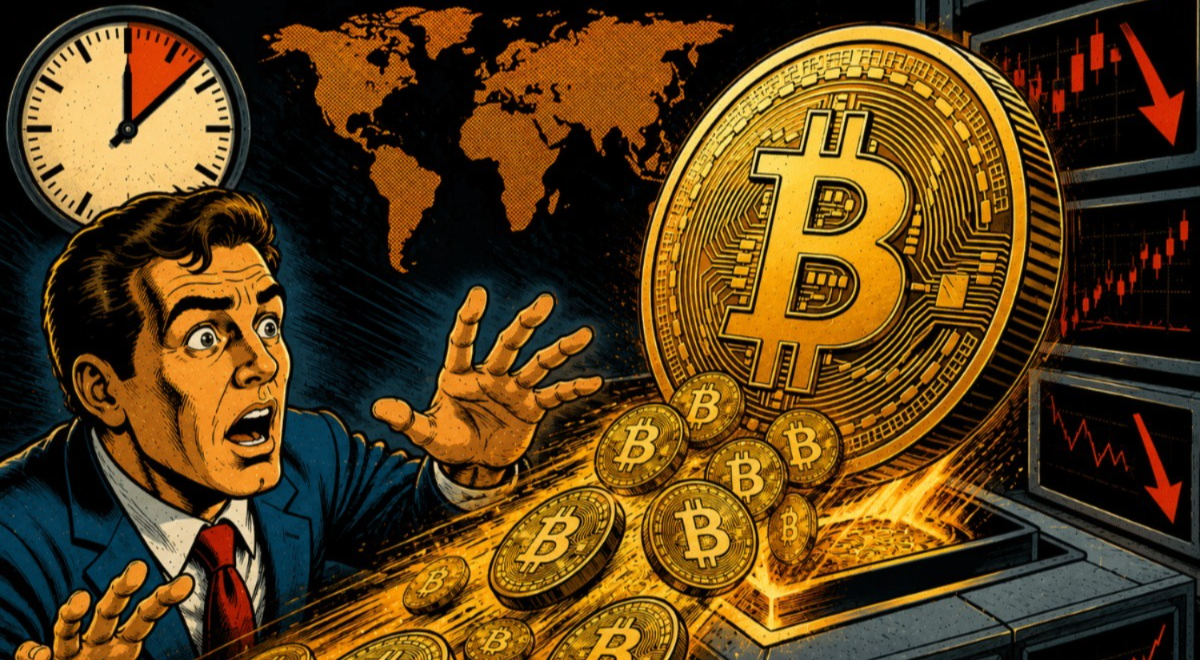
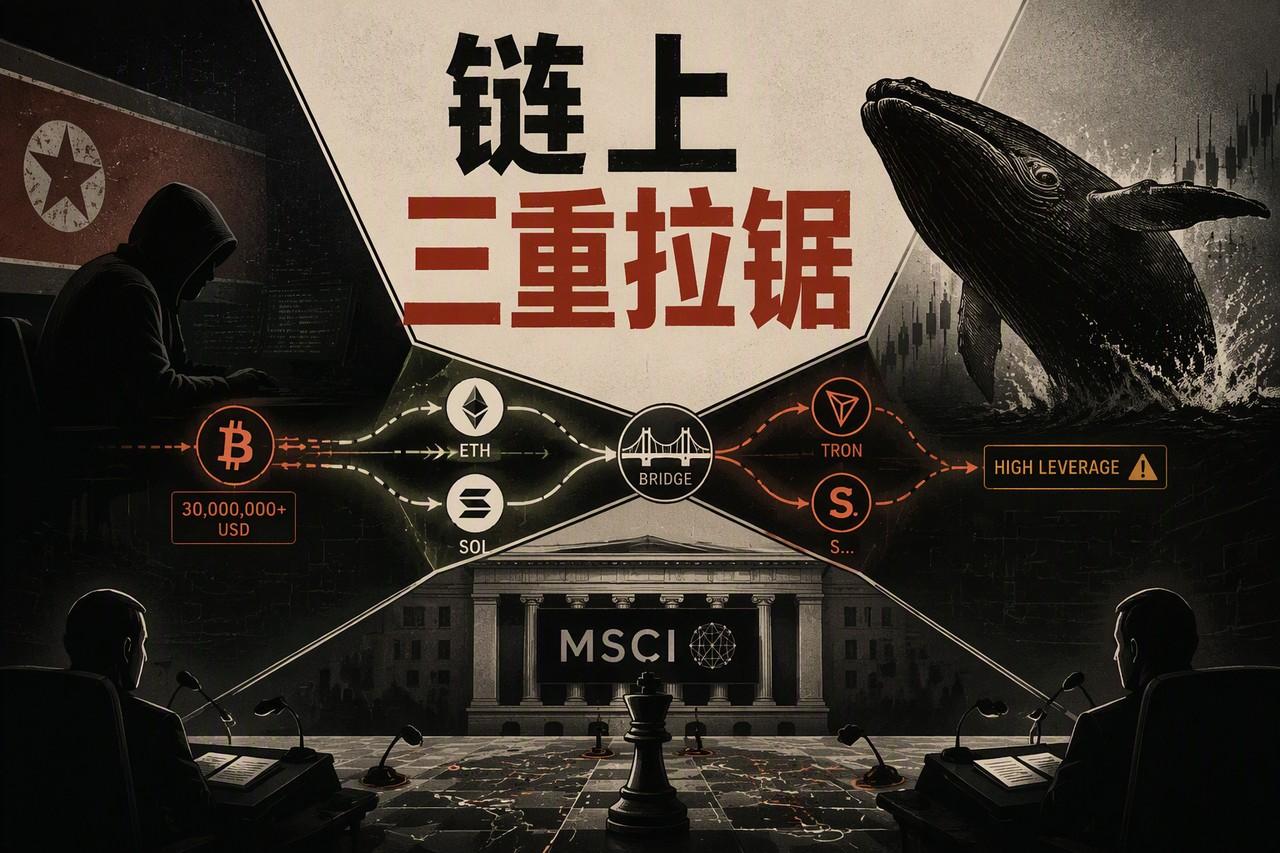
When The Wall Street Journal disclosed on September 1, 2026, that 1789 Capital planned to invest approximately $300 million in Polymarket and lead a new round of financing totaling about $1 billion, the market's first reaction was not "another big venture capital deal," but rather the realization that on-chain prediction markets were being fully integrated into the landscape of American political family capital: if the transaction is completed, Polymarket's post-money valuation will jump to about $21 billion, elevating it from a platform that garnered attention during the 2024 U.S. elections due to a surge in election contract trading volume to a capital scale sufficient to compete with the traditionally regulated prediction market Kalshi. Even more striking is that among the partners at 1789 Capital is Donald Trump Jr., which, combined with a political conservative background and heavy bets on on-chain dollar assets like USDC and margin assets like BTC and ETH, inevitably casts regulatory scrutiny on potential conflicts of interest and market manipulation within the pricing of on-chain event contracts and associated crypto assets, forcing investors to reassess the regulatory pathways, risk premiums, and capital allocation logic between prediction markets and other crypto risk assets as "politics moves on-chain."
$300 Million Financing: Prediction Markets Entering the Mainstream
When 1789 Capital was preparing to lead a round of financing totaling approximately $1 billion with about $300 million, the market was not truly shaken by the size of the single check, but rather by the subsequent valuation anchoring: after the transaction is completed, Polymarket's post-money valuation may rise to about $21 billion. For a sector focused on event contracts, this means a leap from "a few hundred million-dollar niche business" to a narrative framework of "trillion-dollar financial infrastructure." Once the valuation anchor is established, subsequent capital entering this sector will begin to reverse-engineer a reasonable market value based on the potential trading scale of event contracts and their pricing value for macro and political risks, thereby directly expanding the imaginative space for prediction markets within the crypto world and introducing a new "valuation reference" into the chain of risk assets.
This repricing of valuation is underpinned by a narrative switch: Polymarket is no longer just a "corner of on-chain gambling" bet by a few speculators on elections or sports, but is packaged as a price discovery platform for political, sporting, and even macro events. During the 2024 U.S. elections, it already displayed this function in the trading volume of election contracts, and now the concentrated betting of capital equates to formally including event contracts in the candidate list of "mainstream pricing tools." The impact of this on crypto risk assets is mainly manifested in three pathways: first, large-scale financing improves the platform's liquidity and market depth, continuously thickening the pools surrounding on-chain dollar assets like USDC and margin assets like BTC and ETH, with high leverage and complex structured event trading diverting some of the originally flowing risk appetite towards spot and other derivatives; second, the price signals of political and macro events move from the margins to the forefront, with traditional financial participants beginning to view the contract prices of platforms like Polymarket as "on-chain polls" for the risks of elections, policies, and sports, thereby more actively hedging or amplifying these signals in their allocation of BTC, ETH, and related tokens; third, once prediction markets are lifted into the mainstream in terms of valuation, the pricing linkage with other on-chain risk assets will strengthen — the trading and holding changes of event contracts may gradually become necessary variables for explaining the volatility of BTC and ETH and the flow of on-chain dollar funds, making this potential financing not just a round of valuation news, but setting a new risk preference coordinate for the on-chain trading structures surrounding macro and political events in the years to come.
Political Capital Enters: Regulatory Risk Premium Rises
When 1789 Capital was designated as a potential lead investor, with Donald Trump Jr.'s partnership repeatedly emphasized, the narrative was no longer just "money entering prediction markets," but rather "political capital directly embedded in the price discovery infrastructure." U.S. regulators are typically highly sensitive to the participation of political figures in financial platforms, and this identity overlay on Polymarket is naturally interpreted as an amplifier of conflict of interest and manipulation risk: on one side is an event contract platform that has already validated its user mobilization ability around the 2024 elections, and on the other is family capital with a clearly conservative background. The question regulators need to answer is no longer just "is it compliant?" but rather "will political participation change market outcomes and their spillover effects?" Such questions in themselves will create a "regulatory risk premium" throughout the prediction market space; even if not yet concretely established as rules, they will be pre-emptively factored into asset discount rates and transaction structures.
This layer of premium has internal comparisons within the industry: Kalshi follows the traditional path of CFTC regulatory approval while Polymarket adjusted its U.S. user strategy around 2024 due to regulatory issues, showing structural friction with U.S. regulators. Now, with the obvious participation of Trump family capital added, the pricing difference on the two paths will be magnified: on one hand, institutions betting on Polymarket and market-making wallets must incorporate a higher compliance discount in their strategies — for instance, raising yield requirements on on-chain dollar assets like USDC to compensate for potential regulatory shocks or isolating U.S. legal risks through cross-border structures; on the other hand, the use of BTC and ETH as margin assets will more clearly differentiate between "compliance-first" and "yield-first" funding pools: the former may compress exposures to politically sensitive contracts during times of regulatory ambiguity in the U.S., leaving more exposure in BTC and ETH, seen as neutral assets, while the latter would demand higher fees and annual returns to bear the additional uncertainty of prediction markets being deeply tied to political capital. Ultimately, this regulatory risk premium driven by political participation will be concretely embedded in the microstructure of on-chain transactions through margin ratios, cross-border structural designs, and required return rate curves, becoming a new parameter that cannot be ignored when explaining the fluctuations of BTC, ETH, and the flow changes of on-chain dollar funds.
Kalshi Counterpart: Compliance and On-Chain Dual Tracks
On one hand, there is Kalshi, which has obtained CFTC licensing requiring all contracts to be embedded within the U.S. futures and derivatives regulatory framework, while on the other is Polymarket, operating through cryptocurrencies and on-chain contracts while circumventing regulatory pressures by limiting U.S. users and access strategies. This dual oligopoly structure of U.S. prediction markets has now formed. The former uses regulatory certainty as a core selling point: event contracts look more like small futures or options, with clear texts on settlement, margin, and risk disclosure; the latter maximizes on-chain liquidity and global accessibility, using assets like USDC, BTC, and ETH for collateral and settlement, integrating political, sports, and macro events into the on-chain price trajectory. When 1789 Capital prepares to lead a financing of about $1 billion with $300 million, the market almost assumes that Polymarket's capital strength and voice will be significantly amplified, beginning to overshadow the presence of traditional compliant pathways in the dual oligopoly.
The direction of capital and user migration is likely to diverge along the two dimensions of risk appetite and compliance constraints. Institutions subject to heavier U.S. regulatory burdens and funds sensitive to political capital participation are more inclined to keep their exposures on compliant platforms like Kalshi, viewing predictive positions as part of a regulated derivatives portfolio; whereas traders seeking high leverage, global access, and on-chain hedging efficiency will focus further on Polymarket after financing completion, using USDC and BTC, ETH as margin to directly hedge uncertainties of election cycles, macro data, and geopolitical events. The result is that the pricing of prediction contracts on the compliance track will increasingly anchor to regulatory red lines and traditional derivatives valuation frameworks; while on the on-chain track, related tokens, structured derivatives, and funding pools will create a valuation system more reliant on risk appetite, cross-border arbitrage, and on-chain interest rate differentials under the combined influence of political capital, regulatory tensions, and liquidity premiums, with this interplay between compliance and on-chain dynamics locking in the valuation systems of prediction market-related tokens and derivatives to the continuously tugging curves of regulatory expectations and on-chain risk appetites.
BTC/ETH and USDC: How Trading Structures Are Being Redefined
In on-chain markets centered around event contracts, on-chain dollar assets like USDC naturally fulfil the triple roles of "accounting unit + margin + settlement funds." Its low volatility and high programmability are highly attractive to funds seeking stable returns: it allows for stacked strategies beyond prediction contracts, like lending interest arbitrage and cross-platform fee rate arbitrage; it also provides a convenient financing pool for leveraged funds — using BTC and ETH as collateral to obtain USDC for betting on macro and political events, magnifying stakes without directly exposing directional risks. As platforms like Polymarket are bolstered by substantial capital, these on-chain dollar assets will increasingly become the base currency for macro bets, determining which funds migrate from traditional brokers and OTC derivatives to the on-chain event contract ecosystem.
On the other end, ETH and related public chains and L2 serve as the execution and settlement foundation for these event contracts. Platform expansion signifies increased interaction frequency and Gas consumption, amplifying ETH's dual attributes as a "technical foundation + margin asset": in investment portfolios, BTC/ETH are no longer just "macro positions" to hedge dollar liquidity, inflation expectations, or tech stock risks, but will also be included in event-driven portfolio trading — simultaneously buying contracts on a prediction market for a political or regulatory outcome while hedging direction or volatility in BTC/ETH, constructing spread and correlation trades. As political and macro events are systematically brought on-chain, a quantifiable linkage structure will gradually form between BTC, ETH prices and the order books of prediction contracts, where the strength and speed of migration become key observational variables for determining how crypto assets are repriced in the dual layers of "macro narratives — on-chain events."
From Capital to Regulation: What Signals Should We Pay Attention to Next
1789 Capital is ready to bet $300 million on Polymarket, potentially pushing its valuation to about $21 billion, stepping almost directly from the originally marginal on-chain prediction market to a scale "requiring serious pricing by regulators and macro capital": behind the valuation premium is a re-assumption of regulatory tolerance, as well as a rearrangement of the funding structure with on-chain dollar assets and BTC/ETH as margin. Next, the first layer of signals to watch is whether this financing round totaling about $1 billion truly materializes — currently, public information has not revealed a delivery timetable or regulatory approval status; any delays, reductions, or structural adjustments would be a direct vote by U.S. institutions and political capital on the risk attitude towards the combination of "political family + event contracts + on-chain assets." The second layer is regulatory stance: Polymarket had adjusted its U.S. user strategy due to compliance pressure, while Kalshi followed the CFTC regulatory path, so in the future, whether concerning potential conflicts of interest from political figure participation or the qualitative definition of event trading itself, there may be "differential treatment of on-chain platforms versus local compliant platforms," creating different risk premiums and funding discounts between the two markets. The third layer lies within the on-chain data itself: the trading volume of prediction contracts, the net inflows and outflows of on-chain dollar assets (like USDC), and the changes in the proportion of BTC/ETH as margin assets will inform us whether existing crypto speculative positions are maneuvering internally or if new political and macro funds are migrating from traditional systems; meanwhile, the noise surrounding cloud computing or U.S. stock indices on the same day is more like background sound and will not change these core variables. As political and macro events are systematically priced in, platforms like Polymarket will embed on-chain assets into a higher-dimensional political economic game, and the volatility and risk premium of BTC and ETH will increasingly revolve around "who is betting, who is regulating, and who is rewriting the rules."
Join our community to discuss and grow stronger together!
AiCoin exclusive Hyperliquid benefits: https://app.hyperliquid.xyz/join/AICOIN88
AiCoin exclusive Aster benefits: https://www.asterdex.com/zh-CN/referral/9C50e2
On-chain Telegram community: https://t.me/AiCoinWhaleData
On-chain community: https://www.aicoin.com/link/chat?cid=N6OVMor5g
AiCoin on-chain Twitter: https://x.com/aicoinwhaledata
免责声明:本文章仅代表作者个人观点,不代表本平台的立场和观点。本文章仅供信息分享,不构成对任何人的任何投资建议。用户与作者之间的任何争议,与本平台无关。如网页中刊载的文章或图片涉及侵权,请提供相关的权利证明和身份证明发送邮件到support@aicoin.com,本平台相关工作人员将会进行核查。