On July 7, 2026, SpaceX joined the NASDAQ 100 through the newly amended "15 trading day fast track" rule; however, the S&P Dow Jones Indices Committee issued a public announcement rejecting any fast track proposal for SpaceX after conducting public market consultations, insisting on the strict standard of "positive GAAP net profit for four consecutive quarters," meaning that SpaceX may not truly enter the S&P 500 until 2027 at the earliest. The same company is faced with three entirely different timetables from the three major index systems: S&P 500, NASDAQ 100, and FTSE Russell. How exactly are indices compiled? What types of companies can be added to an index? When the constituents of an index change, why does the market always experience obvious fluctuations? The following series of articles on indices and ETFs will unveil the principles of passive investing step by step.
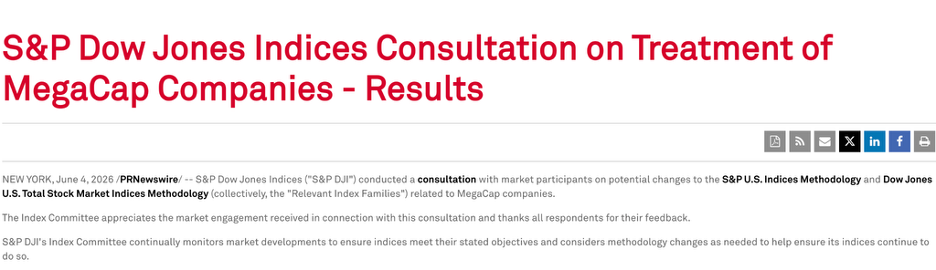
The "Rashomon" surrounding SpaceX's selection is essentially not a divergence in market sentiment, but rather the different admission rules set by the three index systems—NASDAQ 100 opened the green light with the newly revised rules, while the S&P 500's strict profit threshold pressed the pause button. To understand what is happening behind such hot news, it is necessary to understand the opportunities and risks that each index adjustment may bring in the future. The unavoidable first lesson is to understand the methodology of index construction itself: what are its components? Who decides whether a company can be included and when it can be included?
Is the methodology of index construction the core commercial secret?
The essence of an index is a product that requires "credibility." It must be recognized by the market, and fund companies must be willing to spend money to purchase authorization to develop ETFs linked to it, which requires credibility. However, the methodologies of mainstream indices are publicly available materials, subject to scrutiny and oversight by everyone! This is why indices compiled by institutions like S&P Dow Jones Indices, Nasdaq, and FTSE Russell occupy a mainstream position—they have transparent stock selection rules, a long history, and sample representativeness that has been repeatedly tested by the market. Before selecting an ETF, the first thing to confirm is not how much this fund has increased in the past, but whether the index it tracks can accurately follow the target market and whether the methodology adheres to industry best practices.
Here are some well-known indices' original methodologies (complete links can be found in the end "References" section) organized from the index company websites for everyone, and if anyone is interested in the methodologies of other ETF-linked indices, feel free to discuss in the comments section:
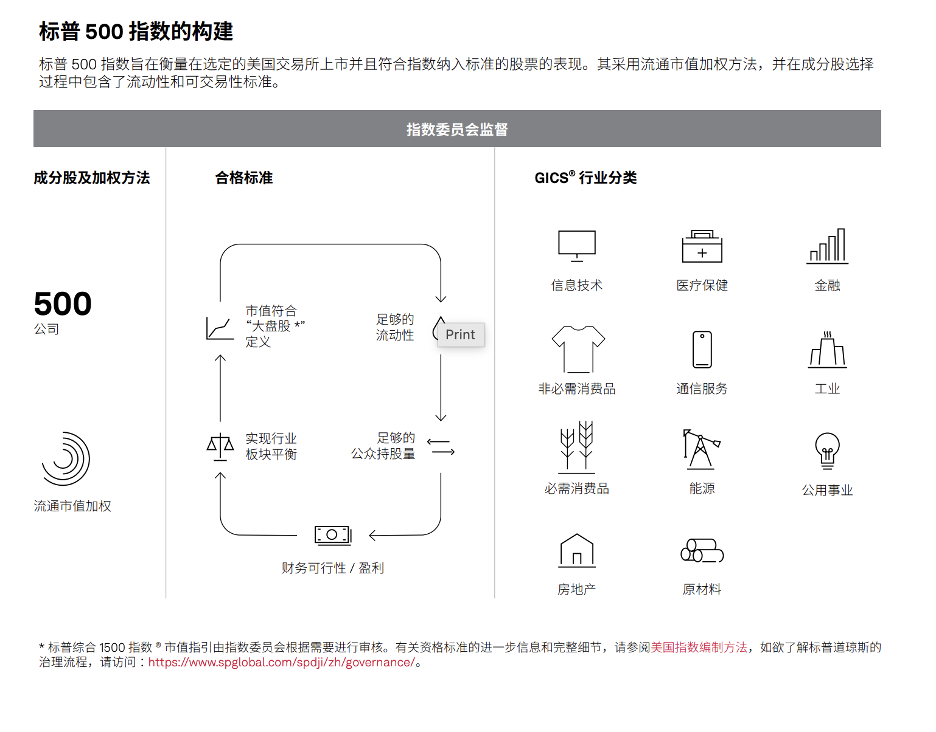
The methodology of an index consists of four components:
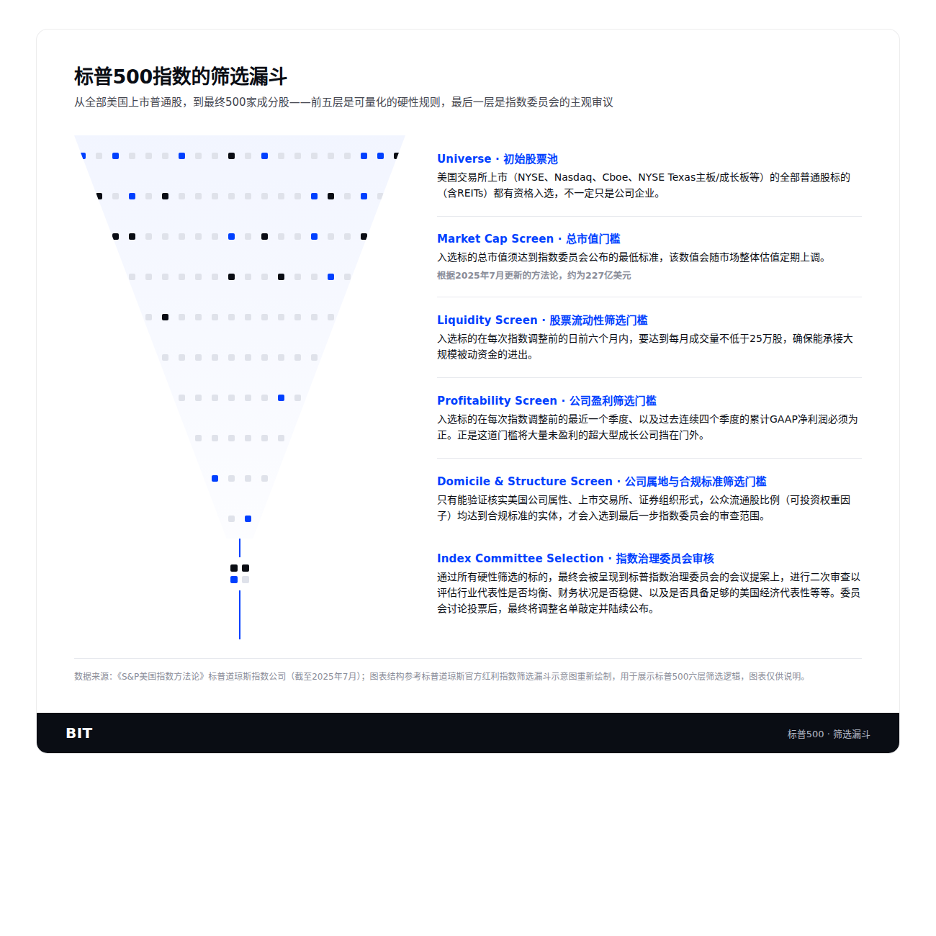
Construction: Determines which securities are included and which are excluded. Specific criteria may include market capitalization size, company headquarters location, trading currency, liquidity, price-to-earnings ratio, or dividend yield and other financial indicators. The screening method for the S&P 500 is as shown in the figure below. The reason SpaceX did not join the S&P 500 is that it failed to pass the fourth layer of the diagram, the "Profitability Screen," which requires that the GAAP net profit must be positive for the most recent quarter as well as for the cumulative four consecutive quarters.
Weighting: Determines the impact of each constituent stock on the overall performance of the index. Common methods include market capitalization weighting, float-adjusted market capitalization weighting, equal weighting, fundamental weighting, and factor weighting. Indices describing the same market can have entirely different constituent stock lists and index trends due to different weighting methods: for example, the S&P 500 index uses float-adjusted market capitalization weighting, only including the market value of freely tradable shares, so the larger the market capitalization and the more tradable shares a company has, the higher its weighting; the S&P 500 equal weight index, on the other hand, treats all 500 constituent stocks equally and is rebalanced regularly; while the historically oldest Dow Jones Industrial Average still uses price weighting, meaning that the higher the stock price of a constituent stock, the larger its weighting, which has no relation to the company's market value size.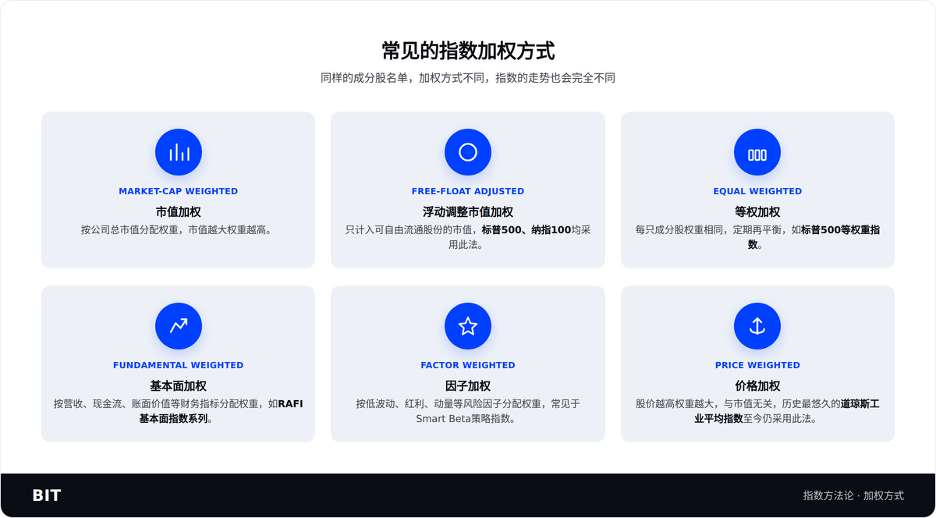
Calculation: Converts constituent stock data into a specific index point. The basic logic is: single stock market value = stock price x floating shares, total index market value = total market value of all constituent stocks, index point = total index market value ÷ index divisor. The "divisor" is a specially designed technical parameter used to convert large market capitalization into an easily readable point number and is adjusted accordingly during major corporate actions like stock splits, dividends, spin-offs, etc., ensuring that such corporate actions do not cause artificial jumps in index points—the adjustments usually happen after the close, ensuring continuity between the closing value of that day and the opening value the next day.
Rebalance Review: An index is not a static list compiled once for all time; it needs to periodically (usually quarterly or annually) execute the stock selection process again, removing companies that no longer meet admission standards, adding companies that rank higher, and updating the floating share data to accurately reflect the actual tradable share size. Common reasons for the removal of constituent stocks include no longer meeting qualification requirements, being replaced by a company with a higher ranking, or undergoing corporate events such as mergers, privatizations, or delistings. The list is ultimately determined by the S&P Index Committee—composed of full-time managing directors within S&P Dow Jones Indices, not including any executives from publicly listed companies or external independent individuals. The committee meets regularly to review according to publicly disclosed rule frameworks, but the specific discretionary processes for the inclusion or exclusion of individual constituent stocks are not disclosed one by one, which is why the market always pays extra attention before the results of each adjustment are announced.
Why does everyone care so much about who can be included?
On May 12, 2025, S&P Dow Jones Indices announced that Coinbase would officially be included in the S&P 500 on May 19, becoming the first cryptocurrency company ever selected for the index. After the news was announced, its stock price surged 8.8% in after-hours trading. For many entrepreneurs and investors, being included in the S&P 500 index has become a symbolic moment of formal recognition by the mainstream financial system.
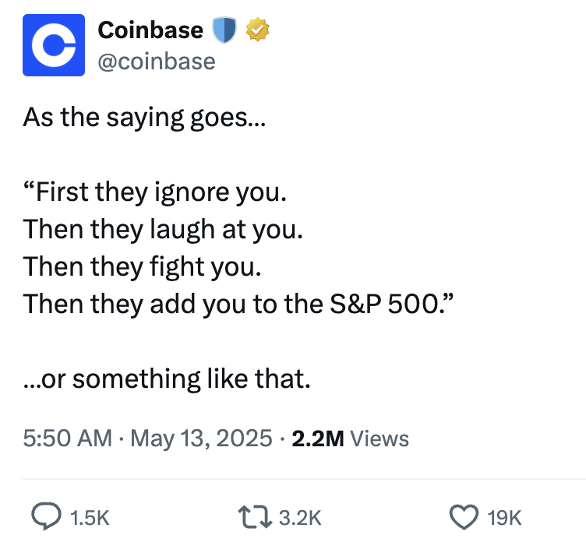
Image source: Coinbase official X (Twitter) account @coinbase, May 13, 2025; caption: "First they ignore you, then they laugh at you, then they fight you, then they add you to the S&P 500."
However, at that time, there was much discussion in the market about MicroStrategy, which held a large amount of Bitcoin and had a similarly high market recognition, but it did not meet the S&P 500 index threshold due to a GAAP net loss of $4.2 billion in the first quarter of 2025. Upon examining both companies' financial performances, the reason Coinbase was selected was not merely because of the "hype of cryptocurrency," but due to a genuine net profit of $65.6 million in the first quarter and a 24% revenue growth rate year over year; while MicroStrategy, despite all its "crypto narrative," was kept out solely because its financial statements showed a loss, which kept it outside the profit threshold of the index construction rules.
Does inclusion in the index guarantee a rise in stock price?
According to the methodology of index construction, the S&P 500 index undergoes quarterly adjustments on the third Friday of March, June, September, and December each year. On the agreed adjustment effective date, the index construction rules trigger mechanical buy and sell orders; passive funds tracking this index must buy or sell the companies that are newly added or removed. The quantifiable flow of real funds often reaches billions or even hundreds of billions of dollars. However, to turn this "whale" of the S&P 500 around, the index adjustment mechanism is designed meticulously to avoid excessive market volatility during adjustments. Yet every time information about adjustments is released, the focus and trading sentiment from the market intensify the pursuit of the "inclusion hot spots" for short-term trading, leading to the easy misconception that "inclusion in the index = stock price must rise."
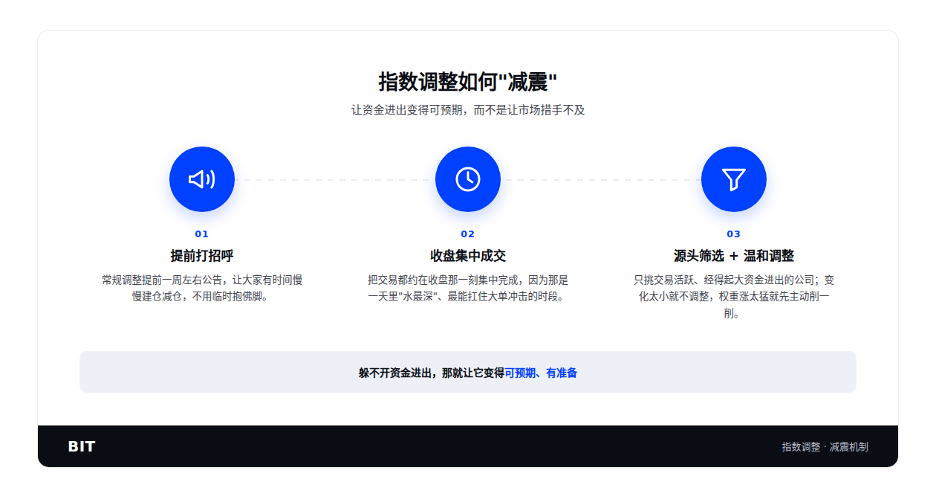
Just like two weeks ago (August 14, 2026), when the S&P Dow Jones Indices announced that Reddit would officially be included in the S&P 500 index before the market opened on August 18, the stock price surged 15% in after-hours trading. However, the reality is much more complicated. A significant part of this 15% rise actually came from "short covering"—about 13% of Reddit's float was shorted, and after the news broke, these short positions were forced to buy back, creating a technical spike unrelated to "passive fund buying." Furthermore, active fund managers had anticipated this adjustment in advance and built their positions earlier, so by the time passive money entered on August 18, the price had already absorbed most of the reaction.

However, apart from short-term effects, inclusion in an index increases its long-term funding flow and liquidity. Moreover, due to the social recognition and attention brought by the S&P 500, it serves as the most powerful endorsement of a company's overall strength! The New York Fed conducted a statistical analysis of companies added to the S&P 500 index from 1989 to 2009, revealing that those included had already exhibited stronger momentum prior to being added, and the rise after inclusion is largely just a continuation of this "the rich get richer" momentum, rather than the constituent stocks creating value out of thin air. This research was later widely cited as the "S&P 500 Index Effect," becoming one of the most extensively referenced empirical evidences in academia and the market when discussing whether index inclusion can truly create value out of nothing!
References
S&P Dow Jones Indices Official Announcement: S&P Dow Jones Indices Consultation on Treatment of MegaCap Companies – Results: https://press.spglobal.com/2026-06-04-S-P-Dow-Jones-Indices-Consultation-on-Treatment-of-MegaCap-Companies-Results
S&P 500 Index and S&P U.S. Index Series Methodology (Chinese version): https://www.spglobal.com/spdji/zh/documents/methodologies/methodology-sp-us-indices-chinese.pdf
S&P 500 Index and S&P U.S. Index Series Methodology (English version): https://www.spglobal.com/spdji/en/documents/methodologies/methodology-sp-us-indices.pdf
NASDAQ 100 Index Methodology (English version): https://indexes.nasdaq.com/docs/Methodology_NDX.pdf
Dow Jones Industrial Average Methodology (English version): https://www.spglobal.com/spdji/en/documents/methodologies/methodology-dj-averages.pdf
Hang Seng Tech Index Methodology (English version): https://www.hsi.com.hk/static/uploads/contents/en/dl_centre/methodologies/IM_hsteche.pdf
S&P Dow Jones Indices Official Announcement: Reddit Added to S&P 500 (August 13, 2026): https://www.spglobal.com/spdji/en/documents/indexnews/announcements/20260813-1484396/1484396_avb54wbs.pdf
New York Fed Research Report: "The S&P 500 Index Effect" (Staff Report No. 484): https://www.newyorkfed.org/research/staff_reports/sr484.html
Disclaimer
This content is for informational and educational reference only, and does not constitute investment advice, investment offer, or any invitation to purchase or sell any financial products. The indices, ETFs, securities, and market views mentioned in this article are solely for the introduction of index construction and passive investment mechanisms, and do not represent BIT's recommendation or endorsement. Past performance and market responses brought about by index adjustments do not represent future performance. Investing involves risk, and prices of securities and ETFs may fluctuate. Investors may lose part or all of their principal and should exercise caution based on their circumstances. Related services and products are subject to legal regulations, oversight, and geographical restrictions of the applicable jurisdictions.
免责声明:本文章仅代表作者个人观点,不代表本平台的立场和观点。本文章仅供信息分享,不构成对任何人的任何投资建议。用户与作者之间的任何争议,与本平台无关。如网页中刊载的文章或图片涉及侵权,请提供相关的权利证明和身份证明发送邮件到support@aicoin.com,本平台相关工作人员将会进行核查。


