Powell's tough speech in 2022 at Jackson Hole once sent shockwaves through the market. Four years later, Walsh takes the same stage for the first time, but the market logic has changed.
Written by: Zheng Yao, Jinshi Data
Federal Reserve Chair Walsh is about to speak at the Jackson Hole Global Central Bank Annual Symposium. For Wall Street, the biggest focus of this speech is not whether Walsh is “hawkish” or “dovish,” but how his statements will reprice U.S. Treasury yields and U.S. equities.
The market is currently in a highly sensitive state. The S&P 500 index has fluctuated since hitting a record high two weeks ago; the 10-year U.S. Treasury yield remains around 4.66%, and the 30-year Treasury yield briefly rose to 5.34% last Monday, the highest level since the global financial crisis, and was still around 5.20% during the Asian trading session on Friday.
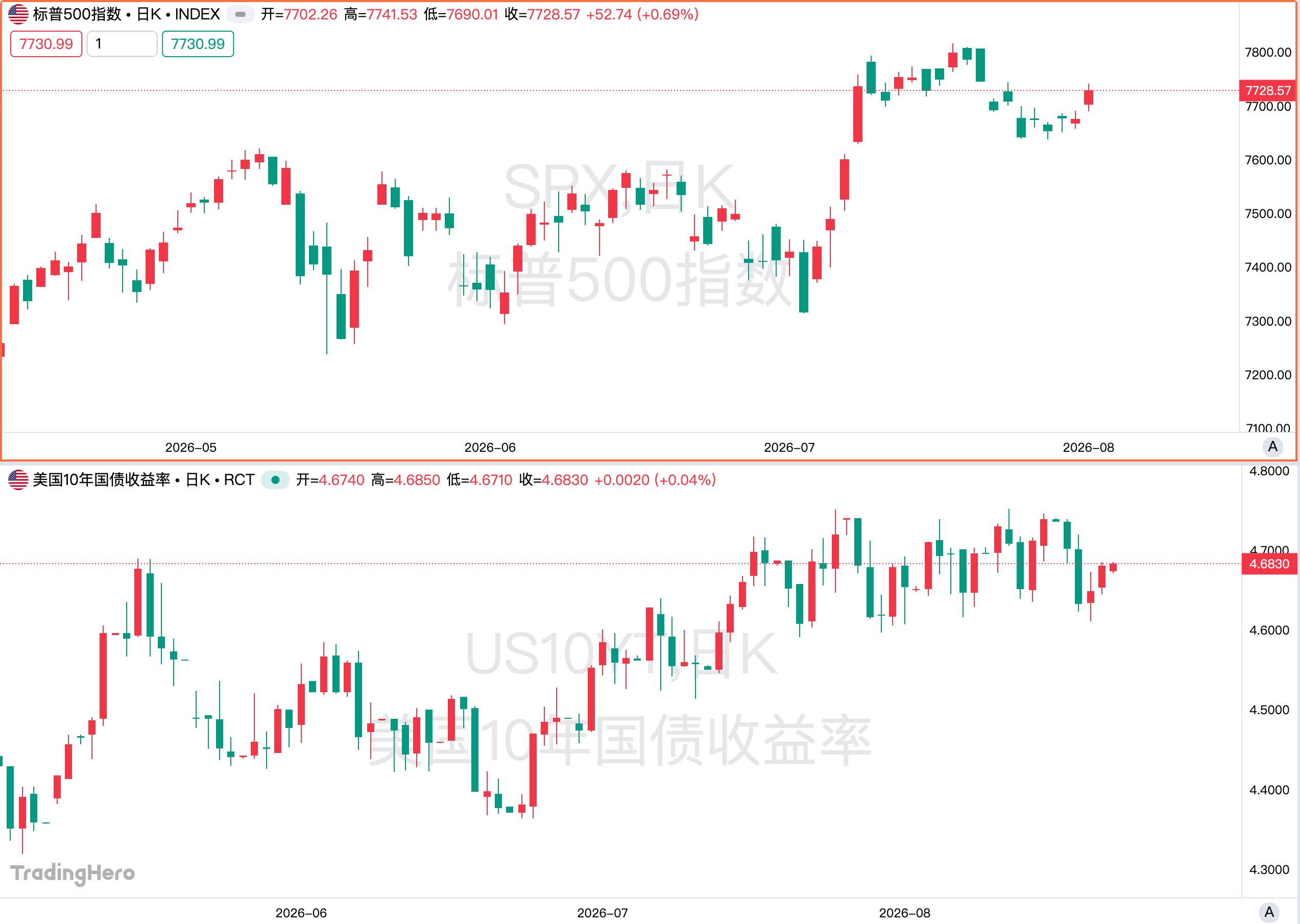
Meanwhile, the PCE inflation index anchored by the Federal Reserve rose 3.7% year-on-year in July, significantly above the 2% target. Currently, the market estimates that the probability of a 25 basis point interest rate hike by the Federal Reserve in September is about 34%.
The market fears not hawkishness, but continued ambiguity
Since taking office in May, Walsh has emphasized reducing forward guidance while promising to bring inflation back down to 2%, but has rarely explained the specific policy path. At the press conference following the July Federal Reserve meeting, he declined to clarify how the Federal Reserve would act under different economic scenarios, and some statements even sparked speculation in the market about whether the 2% inflation target would be adjusted, leading to a sell-off in long-term Treasuries.
Therefore, what the market is currently most worried about is not Walsh's clear emphasis on fighting inflation, but his failure to provide a clear framework once again.
Torsten Slok, Chief Economist at Apollo Global Management, believes that Walsh does not need to hint at the next interest rate decision in advance, but should at least explain how he views inflation and employment. If he continues to refuse to provide a policy framework, long-term rates may see a larger increase.
The more aggressive Walsh is, the less likely long bonds will drop
One important distinction is that this time the market does not simply follow the logic of “hawkish speech—Treasuries down—yields up.”
Market participants from JPMorgan, Apollo Global Management, and Morgan Stanley believe that if Walsh clearly maintains the 2% inflation target and convinces investors that controlling prices is the Federal Reserve's top priority, it might actually enhance the Federal Reserve's credibility and lead to buying of 30-year Treasuries.
Priya Misra, a portfolio manager at JPMorgan Investment Management, stated that if Walsh is able to reinforce market confidence in the Federal Reserve's ability to combat inflation, the worries surrounding the Federal Reserve's credibility will decrease.
This directly relates to the term premium. The New York Fed's measure of the term premium for long bonds is currently close to the highest level since 2014, meaning investors are demanding higher compensation to hold long-term U.S. Treasuries.
Vishal Khanduja, head of fixed income at Morgan Stanley Investment Management, believes that if the Federal Reserve regains its credibility in fighting inflation, the term premium could decline significantly. This means that even if Walsh's speech leans hawkish, the 30-year yield might still fall.
The real focus for U.S. stocks is the yield curve
Therefore, after Walsh's speech on Friday, the market might experience one of the following three scenarios.
First, if Walsh clearly maintains the 2% inflation target while providing a credible policy framework, long-term Treasuries may rise, the 30-year yield and term premium may decline, and U.S. stocks, especially overvalued tech stocks, may catch a breather.
Second, if Walsh directly reinforces expectations for further rate hikes, short-term yields may rise first, putting more immediate valuation pressure on U.S. stocks.
Third, if Walsh continues to be ambiguous, the market may further question the Federal Reserve's credibility in combating inflation, and long-term Treasuries will become the biggest risk factor. The 30-year yield may challenge recent highs again, dragging down U.S. stocks through financing costs and valuation pressure.
The Jackson Hole meeting in 2022 remains the most direct reference for Wall Street. At that time, Federal Reserve Chair Powell made a short and tough speech against inflation, leading to a 3.4% drop in the S&P 500 index on that day, and a cumulative decline of 9.92% a month later.
However, the issues facing the market this year are more complex. The scale of U.S. Treasuries has exceeded $40 trillion, fiscal deficits and long-term bond supply continue to push up the term premium, and massive financing for artificial intelligence companies is also increasing capital demand. Slok warns that, under the influence of these factors, “the entire yield curve has upward risks.”
What Walsh truly needs to achieve on Friday is not necessarily to provide the market with a clear answer on interest rate hikes or cuts, but to convince investors that the Federal Reserve still possesses a credible framework for fighting inflation. For U.S. stocks, the most important signal may not be how tough Walsh sounds, but whether long-term Treasury yields will fall or continue to soar.
免责声明:本文章仅代表作者个人观点,不代表本平台的立场和观点。本文章仅供信息分享,不构成对任何人的任何投资建议。用户与作者之间的任何争议,与本平台无关。如网页中刊载的文章或图片涉及侵权,请提供相关的权利证明和身份证明发送邮件到support@aicoin.com,本平台相关工作人员将会进行核查。


