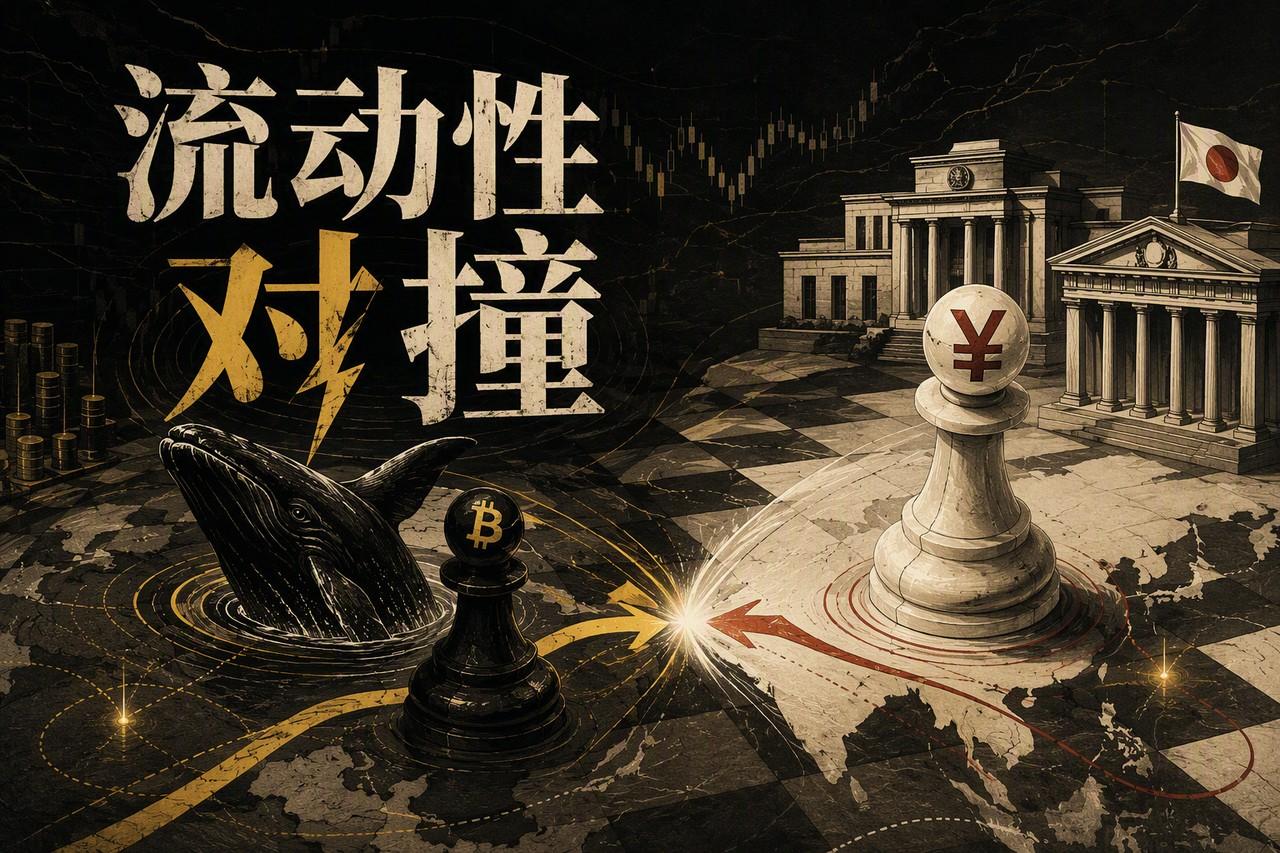
On August 3, 2026, John Williams, the President of the New York Fed, placed himself at the center of the market narrative once again during a public speech focusing on inflation outlook, monetary policy stance, and risks to financial stability. He first reiterated in a “textbook” manner that the Federal Reserve's official goal remains to bring inflation back to 2%, emphasizing that this is a task the monetary authority is highly committed to achieving; but then he quickly shifted his tone, giving the most sensitive line — if inflation does not fall back along the expected path or significantly deviates from the trajectory of returning to the 2% target, the Federal Reserve will “take action,” clearly keeping the option of raising interest rates again if necessary. This statement was quickly amplified by several crypto and financial media outlets such as techflow, PANews, and Rhythm: on one side is the public confidence in the decline of inflation, while on the other is the implicit threat of tightening again; which side truly reflects the underlying policy tone is the signal that participants in risky assets must understand in the upcoming narrative.
A Shadow of Rate Hikes in Dovish Remarks
If we only extract sentences from the speech like “inflation will gradually ease” and “the impact of shocks will weaken,” Williams appears almost as a textbook moderate: he repeatedly states that the Federal Reserve is “highly committed” to bringing inflation back to the long-term goal of 2%, but there is no panic in his tone, rather a significant confidence in inflation falling back along the expected path; he strongly supports the FOMC's latest interest rate decision, yet intentionally refrains from mentioning which direction this decision took or how big the steps were, giving a feeling more of endorsing the existing path than actively rallying for a next step increase.
What truly makes the market anxious is the other half of his sentence — also the safety valve he deliberately left in place: should inflation “not evolve along the expected path” or clearly deviate from the trajectory of returning to the 2% target, the Federal Reserve will “take action,” including potentially restarting rate hikes if necessary. Within the current framework defined by officials as “data-dependent, with two-sided risks,” this amounts to laying both upward and downward inflation risks on the table: it neither commits to easing soon nor rules out further tightening. This combination of “dovish tone + hawkish warning” pulls the interest rate path from a generally predictable line to a highly sensitive zigzag line reacting to each inflation data release — each set of inflation data published in the coming months could become a direct verdict on whether the Federal Reserve will utilize the extreme option of rate hikes.
Market Prices Are Loud, Fed Maintains Its Rhythm
In this tense atmosphere where “every piece of data could rewrite the interest rate path,” traders are fixated on the real-time fluctuating rate futures, treasury yields, and exchange rate curves, with those prices almost re-evaluated with every macro data point and every official statement. But Williams intentionally hit the brakes in his speech: market pricing provides “valuable information” to the Federal Reserve, but it is not the “autopilot” for the FOMC; the Federal Reserve “does not need to simply follow market pricing” when making policy. In other words, asset prices can be loud, but the real decision-makers are the Federal Reserve’s own assessments of inflation and the economy, not the after-hours closing prices on the Chicago exchange.
This is not an impromptu statement. Historically, the Federal Reserve has often chosen to “sing against the market expectations,” either raising or pausing more than what was bet on, or keeping rates unchanged to emphasize its own judgment, adhering to a consistent logic of policy independence. Williams merely reiterated the old position this time, but within the current context, this deliberate mismatch between officials and market expectations means that price volatility and communication difficulty would be amplified around each interest rate meeting: the market first tells a story based on data and remarks and then waits for the FOMC to correct the narrative with its decisions. For high-volatility assets such as cryptocurrencies, only looking at the bets on rate cuts or hikes from the rate futures without comparing them to the Federal Reserve's own assessment of the inflation path is like building risk pricing on shifting sands that could be overturned by an official's remark at any moment.
Is the Middle East Conflict Receding? The Geopolitical Challenge of Inflation Remains
While the market and the Federal Reserve each tell their own inflation stories, Williams pulled the focus back to a variable that no one dares ignore — the Middle East. According to his remarks, the conflict in the Middle East remains a potential source of upward inflation risk: whether crude oil supply is smooth, whether transportation costs will be squeezed again, and whether risk premiums need to be re-evaluated will all be transmitted to global prices through energy prices. However, his judgment is not purely pessimistic — he expects the impact of this round of shocks to gradually weaken, but then quickly emphasized that the geopolitical situation itself is full of uncertainties that could disrupt the inflation path that had just stabilized.
According to a single source, Williams added a key piece of information: if energy prices and trade tariffs have peaked, and the overall economy remains robust, then the main factors that have driven up inflation in the past year and a half will no longer play such an important role. The logic here is straightforward — once the external shocks of energy and tariffs begin to fade, the sustained pressure on overall and core inflation will weaken, allowing room for prices to gradually converge towards the 2% target. The real challenge lies in how this seemingly smooth path of decline is highly linked to real-world geopolitical situations: if the Middle East situation deteriorates again, leading to another spike in oil prices and transportation costs, not only will the Federal Reserve refer to the “rate hike option” more frequently in its statements, but it may also be forced to turn that option from a verbal deterrent into actual action. For all funds betting on “natural declines” in inflation, the ability to accurately capture these geopolitical and energy inflection points will directly determine whether they are aligned with the Federal Reserve or betting against inflation risks.
Is There an AI Bubble? Regulators Are Not Alarmed
Beyond traditional inflation variables like energy and tariffs, Williams rarely brought up the topic of artificial intelligence. He explicitly stated that investments in the AI field “do not pose a risk to financial stability,” while adding that he would not be surprised by fluctuations in the AI industry. These two statements lay the regulators' attitudes bare: even if AI-related companies and assets have expanded rapidly and experienced significant price swings in recent years, he still views it as a manageable “sector volatility,” far from the point of needing to deploy macro tools like rate hikes to extinguish fires.
Behind this is a clear prioritization. Financial stability has always been an important pillar of the Federal Reserve's monetary policy and macroprudential framework, but when Williams publicly downplays the systemic threat of AI investments, the market is effectively told: the current policy focus remains on inflation and employment; as long as the valuation fluctuations in the tech sector do not evolve into widespread credit contractions, they will not directly influence the interest rate decision function. For crypto and tech assets, this is a subtle signal — the policy side is more willing to view the technological wave as manageable volatility rather than a bubble that needs to be “broken down” immediately, which raises the potential trading space for risk appetite while reinforcing a constraint: the interest rate path will ultimately still be dominated by inflation data, not by the rise and fall of any high-beta asset.
The Rate Hike Option Hangs in the Air, Risk Assets Must Learn to Coexist
Piecemeal, Williams is sending out a clear yet uncomfortable signal: the 2% inflation target has no room for negotiation, and the Federal Reserve's commitment to pull prices back toward this path remains solid; once future data shows inflation deviating from the expected path, the option to “raise rates if necessary” will always be on the table. The current framework is “data-dependent, with two-sided risks” — it neither closes the door on rate hikes nor provides any explicit timetable or magnitude for rate cuts, meaning that whether it's a one-sided bet on “immediate significant rate cuts” or a belief that “high rates must be locked for many years,” both can likely be countered by the next round of data or the next speech. In such an environment, high-volatility assets — from the stock market to cryptocurrencies — can hardly be interpreted with simple “positive/negative” binary labels regarding policy; the details of each inflation data release, the marginal changes in energy and freight prices due to the Middle East situation, and the shifts in sentiment on AI investments will all alter the market's pricing for the Federal Reserve's next steps. Williams discussing inflation, financial stability, geopolitical conflicts, and AI simultaneously only sets the narrative tone for the forthcoming period of policy games, and for participants in risky assets, what truly needs to be closely monitored are those variables that will be directly incorporated into the decision-making function, rather than rushing to label the market with any eternal “positive” or “negative” tags after each speech.
Join our community, let's discuss and grow stronger together!
Exclusive Hyperliquid benefits for AiCoin: https://app.hyperliquid.xyz/join/AICOIN88
Exclusive Aster benefits for AiCoin: https://www.asterdex.com/zh-CN/referral/9C50e2
On-chain Telegram community: https://t.me/AiCoinWhaleData
On-chain community: https://www.aicoin.com/link/chat?cid=N6OVMor5g
AiCoin on-chain Twitter: https://x.com/aicoinwhaledata
免责声明:本文章仅代表作者个人观点,不代表本平台的立场和观点。本文章仅供信息分享,不构成对任何人的任何投资建议。用户与作者之间的任何争议,与本平台无关。如网页中刊载的文章或图片涉及侵权,请提供相关的权利证明和身份证明发送邮件到support@aicoin.com,本平台相关工作人员将会进行核查。