Oil prices have risen from the energy market to impact inflation and interest rates in the United States.
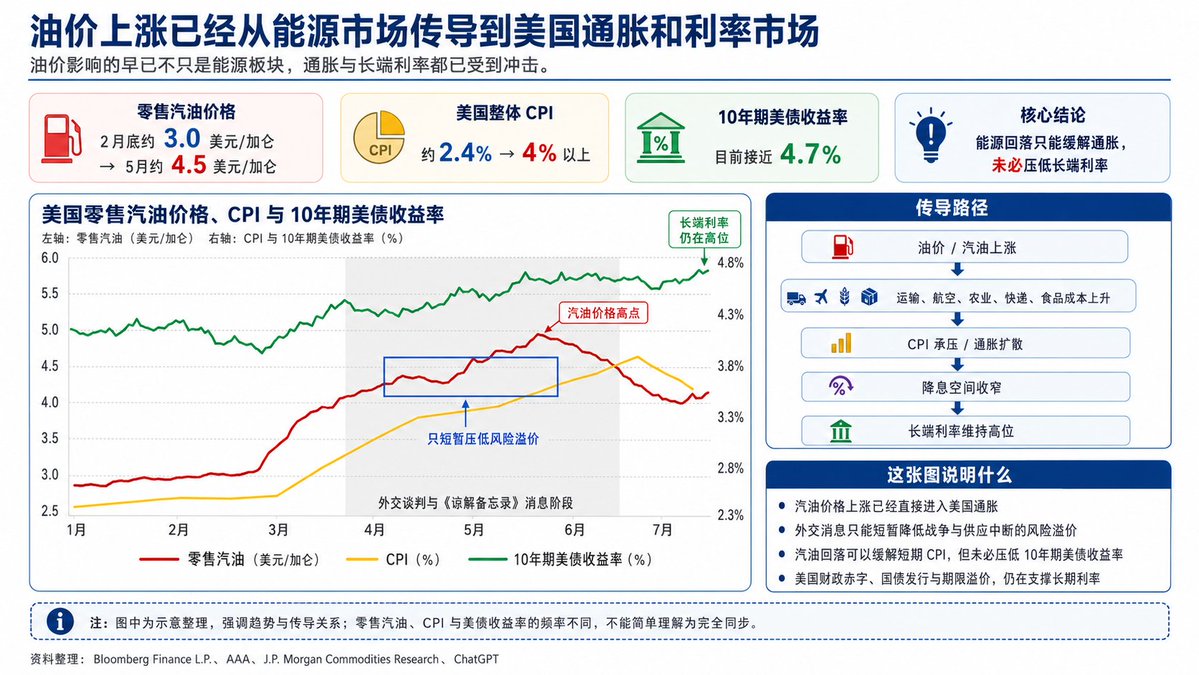
The retail gasoline prices in the United States have quickly increased from about $3 per gallon at the end of February to nearly $4.5 in May. During the same period, the overall CPI in the U.S. rose from about 2.4% to over 4%, with energy prices directly contributing to inflation.
After the gas price hike, the impact was not limited to just fueling costs. Transportation, aviation, agriculture, express delivery, food, and commodity prices will continue to rise, reducing the Federal Reserve's room for interest rate cuts. The longer oil prices remain high, the more evident the spread of inflation to other sectors becomes.
From April to May, news of diplomatic negotiations between the U.S. and Iran and the restoration of the memorandum of understanding briefly caused gasoline prices to drop, but they quickly rose again. The market only temporarily reduced the risk premium associated with war and supply disruptions, not believing that a memorandum of understanding could truly resolve energy supply issues.
Entering June, gasoline prices fell from about $4.5 to around $3.8, and the CPI also began to decline. However, the yield on the U.S. 10-year Treasury bonds continued to rise, now approaching 4.7%.
This indicates that a drop in energy prices can only solve part of the problem. Although gasoline becomes cheaper and the overall CPI exhibits a downward trend, the U.S. fiscal deficit, Treasury bond issuance, term premiums, and the pressure on the Federal Reserve to maintain high interest rates still exist, which is why Treasury yields have not followed suit.
In simple terms, rising gasoline prices rapidly increase inflation, but a drop in gasoline prices does not mean that interest rates will decrease immediately. Short-term inflation can improve with better energy prices, but long-term rates still have to confront issues with U.S. fiscal and Treasury supply.
The most troubling aspect of the U.S. market is here. If gasoline prices rise again, the CPI and expectations for interest rate cuts will worsen, and if gasoline prices continue to decline, Treasury yields may not necessarily drop. The pressure of high interest rates on U.S. stock valuations, real estate, and consumer spending is far from over.
@Gate Crypto, U.S. stocks, Hong Kong stocks, Korean stocks, gold, CFD, one-stop trading for prediction markets
免责声明:本文章仅代表作者个人观点,不代表本平台的立场和观点。本文章仅供信息分享,不构成对任何人的任何投资建议。用户与作者之间的任何争议,与本平台无关。如网页中刊载的文章或图片涉及侵权,请提供相关的权利证明和身份证明发送邮件到support@aicoin.com,本平台相关工作人员将会进行核查。


