Ceasefire or full-scale war - The choice window for the US-Iran conflict enters its final days.
Axios reveals that the US and Israel have narrowed down the outcome of the Iran war to two options.
The first is to accept the ten-day ceasefire proposed by regional countries and reopen the Strait of Hormuz.
The second is for the US and Israel to launch larger-scale joint military actions in an attempt to force Tehran to make full concessions.
Trump has not yet made a final decision, but US officials believe that a decision on whether the war will go toward a ceasefire or escalate fully will be made in the coming days.
This ceasefire proposal was not unilaterally put forward by Iran, but was jointly promoted by regional mediators including Qatar, Egypt, Pakistan, and Oman, and has now been submitted to both the US and Iran.
The US is studying the proposal and has requested Israel to temporarily refrain from taking actions that would close diplomatic channels, but at the same time, the US military has already reinforced the Middle East with dozens of fighter jets and aerial tankers, and the Israeli military is also on high alert, prepared to rapidly expand military operations in the event that negotiations fail.
The most critical dispute is whether Iran can charge fees for the Strait of Hormuz.
The proposal discussed by mediators does not allow Iran to impose transit fees directly on all passing vessels but permits Iran to charge reasonable fees for maritime security, environmental protection, and other specific services, referring to the model of the Malacca Strait.
Another option is to place the fees into a joint fund managed with the participation of the International Maritime Organization, which would allow Iran to retain some revenue while also preventing the Strait of Hormuz from becoming a private toll station controlled by Iran.
Currently, neither the US nor Iran has accepted the ceasefire, and both sides want to continue to increase their negotiating leverage through military actions before a ceasefire.
The US has bombarded Iran for ten consecutive nights but has still not broken Iran's control over the Strait of Hormuz. At least three US soldiers have died in the latest round of conflict, and Trump has demanded that the Pentagon make Iran pay multiple times for each US soldier's death.
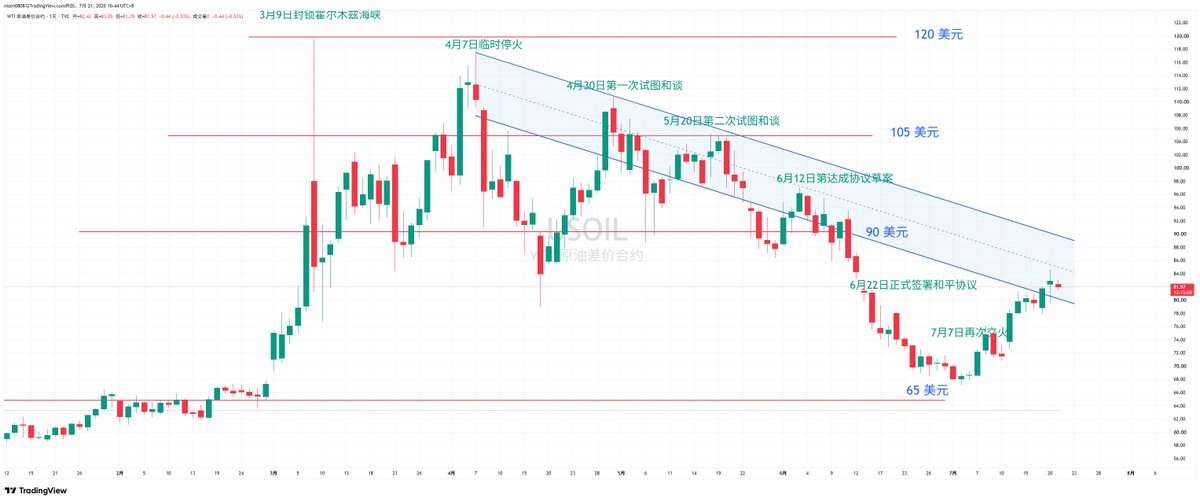
Iran continues to attack merchant vessels and Gulf energy facilities, with oil prices briefly surpassing 90 dollars per barrel, while the Houthis have announced a blockade of Saudi ports, and the war is spreading from the Strait of Hormuz to the Red Sea and the entire Gulf.
If negotiations fail in the coming days, the US and Israel are likely to directly enter a larger-scale joint military operation; if negotiations succeed, fees for the Strait of Hormuz and a long-term navigation mechanism will become the real focus of the next phase.
However, no matter what, high oil prices will not be sustained for long; if it is full-scale war, then in the short term, it may indeed push up oil price trends, but the outcome will inevitably lead to the opening of the Strait of Hormuz and a crackdown on Iran's firepower; if peace is maintained, it would be simpler.
Moreover, I personally do not believe that full-scale war will occur; it is more likely to obtain political negotiation capital through localized wars. Currently, the trend of oil prices also indicates that the market leans toward the belief that the US and Iran will not enter full-scale war, as oil prices are starting to fall.
Shorting WTI and Brent remains the correct choice.
@Gate Crypto, US stocks, Hong Kong stocks, Korean stocks, gold, CFD, one-stop trading for prediction market.
免责声明:本文章仅代表作者个人观点,不代表本平台的立场和观点。本文章仅供信息分享,不构成对任何人的任何投资建议。用户与作者之间的任何争议,与本平台无关。如网页中刊载的文章或图片涉及侵权,请提供相关的权利证明和身份证明发送邮件到support@aicoin.com,本平台相关工作人员将会进行核查。


