Original | Odaily Planet Daily (@OdailyChina)
Author | Azuma (@azuma_eth)
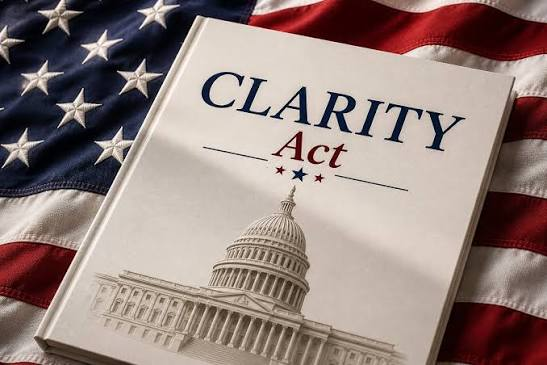
On July 21, Beijing time, multiple industry insiders revealed that the Trump administration has agreed to add an ethics provision to the "Clarity Act" (Digital Asset Market Structure Act), and the relevant text has been submitted to some Senate Republican lawmakers. Although the specific details of the provisions have not been fully disclosed, industry participants generally believe that this development may clear the way for updates to the bill text (expected to be announced in the coming days) and subsequent Senate votes.
In the past year, negotiations surrounding the "Clarity Act" have progressed slowly. After various parties reached compromises on early disagreements regarding stablecoin yields and DeFi regulation, the largest remaining dispute is how to address potential conflicts of interest between U.S. government officials and the cryptocurrency industry. With the White House expressing a willingness to compromise on the ethics provision, the final barrier that has long hindered the advancement of this bill may be coming to a resolution.
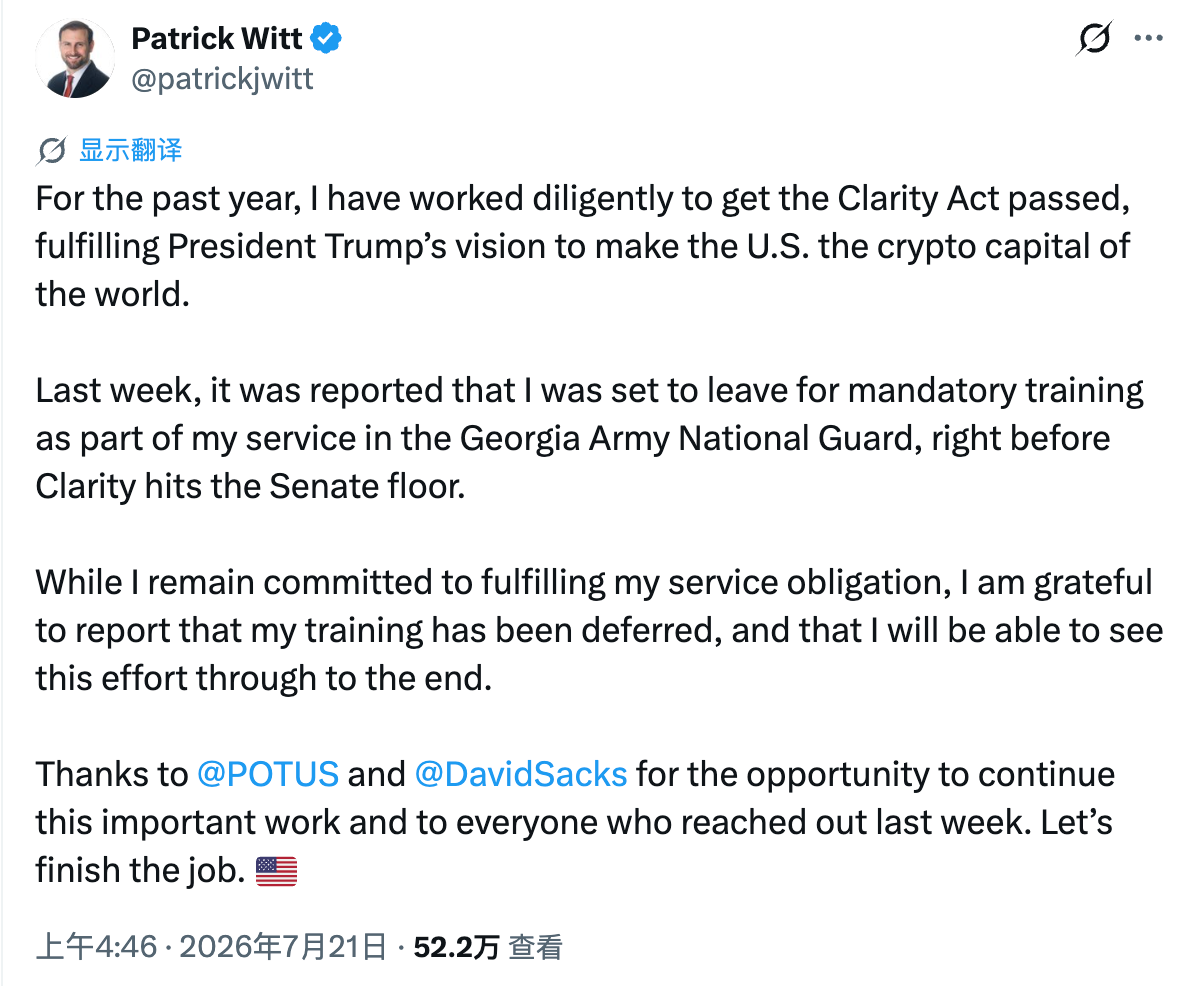
Apart from the progress on the ethics provision, another positive signal about the "Clarity Act" emerged this morning: Patrick Witt, the executive director of the White House Digital Asset Advisory Committee responsible for promoting the bill, has confirmed he will continue in his role to help complete the final push for the bill. Previously, reports indicated that Witt might leave his position before the "Clarity Act" reached a critical phase in the Senate due to obligations to fulfill training requirements with the U.S. Army National Guard, causing concerns in the industry about the pace of the bill's advancement. However, Witt has now confirmed that his training duties will be postponed, allowing him to continue participating in the legislative process.
For the entire cryptocurrency industry, the latest developments may signify that this regulatory struggle, which has lasted nearly a year, is finally reaching a crucial turning point.
Content and Significance of the Clarity Act (Skip if familiar)
As one of the core legislative efforts of the Trump administration to make the U.S. the "global crypto center", the "Clarity Act," officially titled the "Digital Asset Market Clarity Act of 2025," aims to establish a unified federal regulatory framework for the U.S. digital asset market.
The core objective of this bill is to address the long-standing regulatory ambiguity facing the U.S. cryptocurrency industry over the past few years — clarifying the legal attributes of different digital assets and redefining the regulatory responsibilities between the U.S. Securities and Exchange Commission (SEC) and the Commodity Futures Trading Commission (CFTC).
Specifically, the Clarity Act seeks to establish a classification system for digital assets, distinguishing them into digital commodities, investment contract assets, and permitted payment stablecoins. Among these, digital commodities with blockchain network functionalities will primarily be regulated by the CFTC; investment contract assets involving fundraising issuance will continue to be overseen by the SEC; while stablecoin issuers will mainly be subject to banking regulatory oversight.
The significance of this framework lies in ending the long-standing competition between the SEC and CFTC over the regulation of digital assets, providing the industry with clearer compliance pathways. In the past, under former SEC Chairman Gary Gensler, the SEC tended to classify a large number of digital assets as securities based on the Howey test and expanded its regulatory scope through enforcement actions; while the CFTC argued that some digital assets with higher levels of decentralization are more akin to commodities and should be regulated by it. The long-existing regulatory border conflict has kept U.S. crypto companies, trading platforms, and developers in an uncertain environment.
If the Clarity Act is ultimately passed, the U.S. cryptocurrency industry may usher in its first comprehensive market structure regulatory framework. In the short term, its impact on the market may lie in improving market sentiment through policy expectations, but more long-term significance lies in reducing regulatory uncertainty, providing a more defined institutional basis for traditional financial institutions and long-term capital to enter the digital asset space.
The Final Disputes, Ethical Controversy
Reaching this stage with the Clarity Act has not been easy. On July 17 last year, the Clarity Act was passed in the U.S. House of Representatives with a vote of 294 to 134, gaining support far beyond the simple majority requirement. However, unlike the GENIUS Act, which advanced smoothly around the same time and was ultimately signed by Trump, the Clarity Act has encountered more complex political maneuvering after being handed over to the Senate.
Compared to the House of Representatives, although the Republicans still hold a majority in the Senate, the Clarity Act, as a significant regulatory bill impacting the entire digital asset market structure, still requires a certain level of bipartisan support to complete the final vote. This means that the bill faces a complex negotiation in the Senate surrounding regulatory direction, industry interests, and political demands.
Over the past year, disputes concerning the Clarity Act have primarily focused on three areas — stablecoin yield rules, DeFi regulatory boundaries, and potential conflicts of interest between the Trump administration and the cryptocurrency industry. Now, the first two major disputes have gradually cooled as negotiations progressed, with the previously sharpest disagreement regarding stablecoin yields also arriving at a compromise solution of “prohibiting yield solely from holding stablecoins, but allowing rewards based on actual activity.”
As of now, the only remaining issue on the negotiation table is the final dispute: ethical concerns. Throughout the negotiations in the past year, lawmakers and the White House have spent significant time negotiating moral provisions aimed at restricting the President, Vice President, lawmakers, and other federal officials from profiting from digital assets while in office (refer to “Trump’s ‘paycheck’ exposed: $1.4 billion in cryptocurrency income, over 22,000 stock trades”), and now, with the latest developments emerging this morning, it signifies a new breakthrough in the final political struggle surrounding the "Clarity Act."
A More Urgent Issue Than Content Disputes is Time
However, compared to disputes over the content of the bill, another more urgent issue facing the "Clarity Act" is time. The U.S. Congress typically enters its summer recess around mid-August, leaving only a few working days for both parties to complete text coordination and push the Senate deliberation.
Kristin Smith, CEO of the Blockchain Association, which has played a crucial lobbying role in the "Clarity Act" process, stated yesterday: “This is the critical moment.”
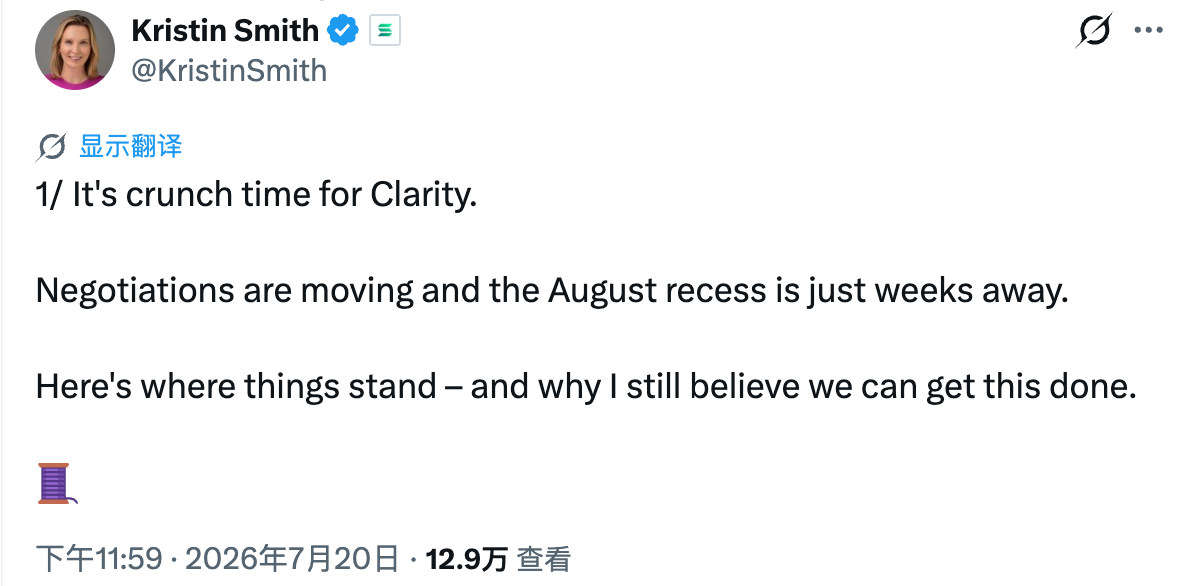
Smith emphasized, “The Clarity Act has come a long way; the current version includes stronger illicit financial regulation provisions, improved consumer protection measures, and enhanced regulatory requirements for spot trading platforms. This is one of the most comprehensive digital asset market structure frameworks I have seen.” If both sides can resolve ethical-related disputes in the coming weeks, the "Clarity Act" may have an opportunity to achieve a critical breakthrough before Congress recesses on August 10; but if negotiations fall into a stalemate again, this cryptocurrency regulatory framework that has been brewing for over a year may have to wait for a new political window.
A Historic Turning Point for Cryptocurrency Regulation?
Of course, there is still one final step before the "Clarity Act" can truly come to fruition. Even if the White House has confirmed acceptance of the ethics provisions, uncertainties still remain regarding the subsequent text publication, Senate deliberation, and final bipartisan coordination. However, based on the signals currently being released, this digital asset market structure bill, having undergone over a year of negotiation, is already getting closer to the finish line.
If the "Clarity Act" can achieve a breakthrough before the August 10 recess, it may become an important turning point in the history of cryptocurrency regulation in the U.S. and even globally. In recent years, one of the biggest challenges facing the global cryptocurrency industry has not been a lack of market demand but rather the absence of a clear, stable, and predictable regulatory framework. Different jurisdictions exhibit significant differences in the attributes of digital assets, responsibilities of trading platforms, and issuance rules, forcing businesses and capital to constantly seek development paths in a shifting regulatory environment.
The significance of the "Clarity Act" lies in its attempt to establish a clearer set of rules for digital assets through legislation. Once implemented, this framework could serve as an important reference model for global markets. For trading platforms, it means clearer registration and operational pathways; for developers, it implies a more predictable innovation environment; for traditional financial institutions, it represents a clearer compliance foundation when entering the field of digital assets.
This is not just an upgrade of the U.S. regulatory system but also signifies that the global digital asset market is gradually moving from the early stage of regulatory exploration to a more mature and institutionalized development phase.
Recommended Reading:
免责声明:本文章仅代表作者个人观点,不代表本平台的立场和观点。本文章仅供信息分享,不构成对任何人的任何投资建议。用户与作者之间的任何争议,与本平台无关。如网页中刊载的文章或图片涉及侵权,请提供相关的权利证明和身份证明发送邮件到support@aicoin.com,本平台相关工作人员将会进行核查。


