Original | Odaily Planet Daily (@OdailyChina)
Author|Azuma (@azuma_eth)
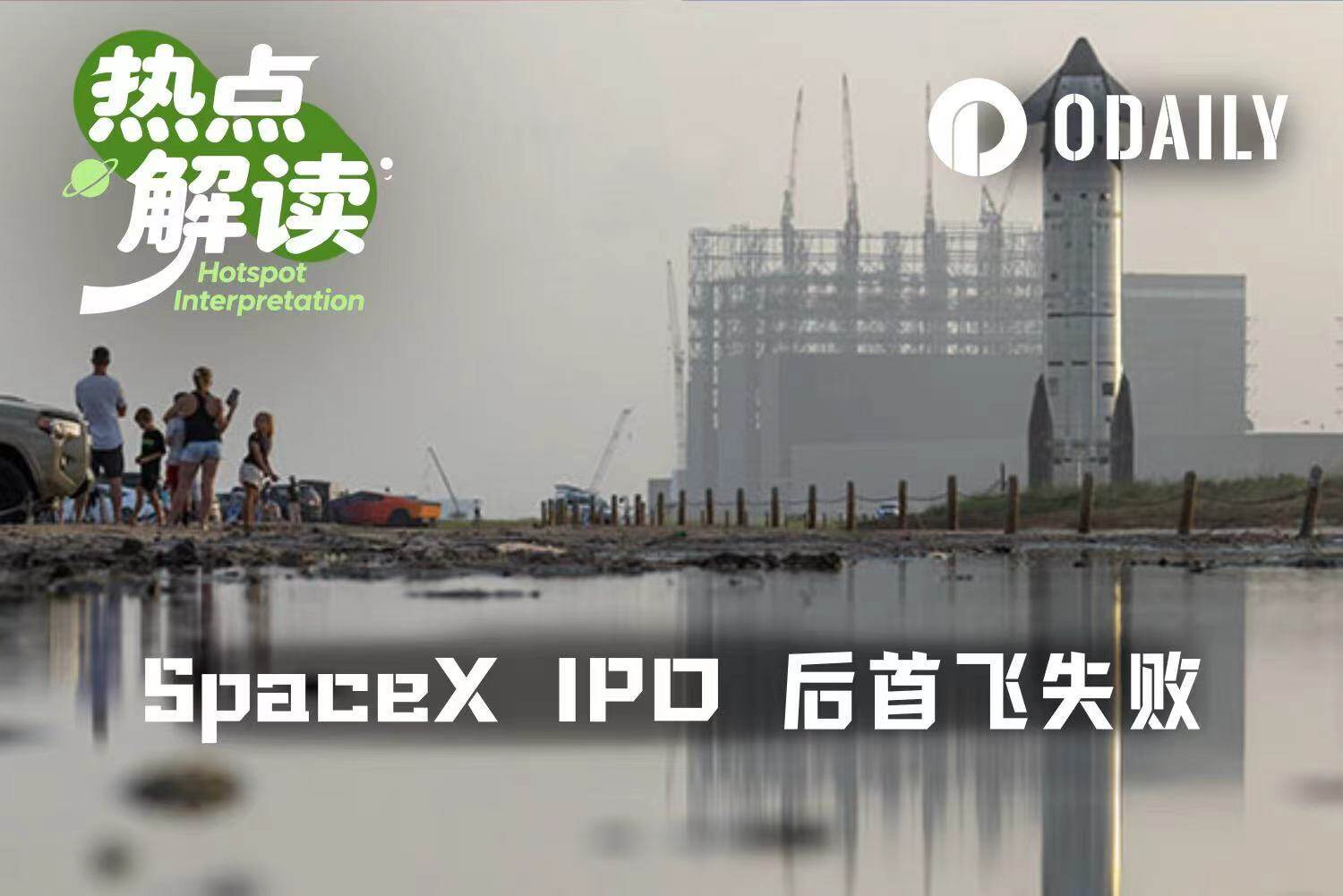
Beijing time, on July 17, SpaceX originally planned to conduct the 13th flight test of Starship. However, just as the launch countdown entered the final ignition phase, the automatic launch abort procedure was triggered because some Raptor engines failed to start as expected, and this flight test had to be canceled.
Elon Musk stated that in order to ensure the flight goes smoothly, SpaceX will remove and replace two Raptor engines, hoping to make another launch attempt in a few days, with the most likely launch time being early next week.
Before this flight test, SpaceX's stock price had just dipped below the IPO issue price, with the largest decline since going public approaching 40%. As the first Starship flight test after the SpaceX IPO, the market originally expected to validate the latest progress of Starship through this test, injecting a shot of encouragement into the persistently sluggish stock price recently. However, the failure of the launch dealt another blow to SpaceX's stock price—SPCX plummeted shortly after trading, currently reported at $127.07.
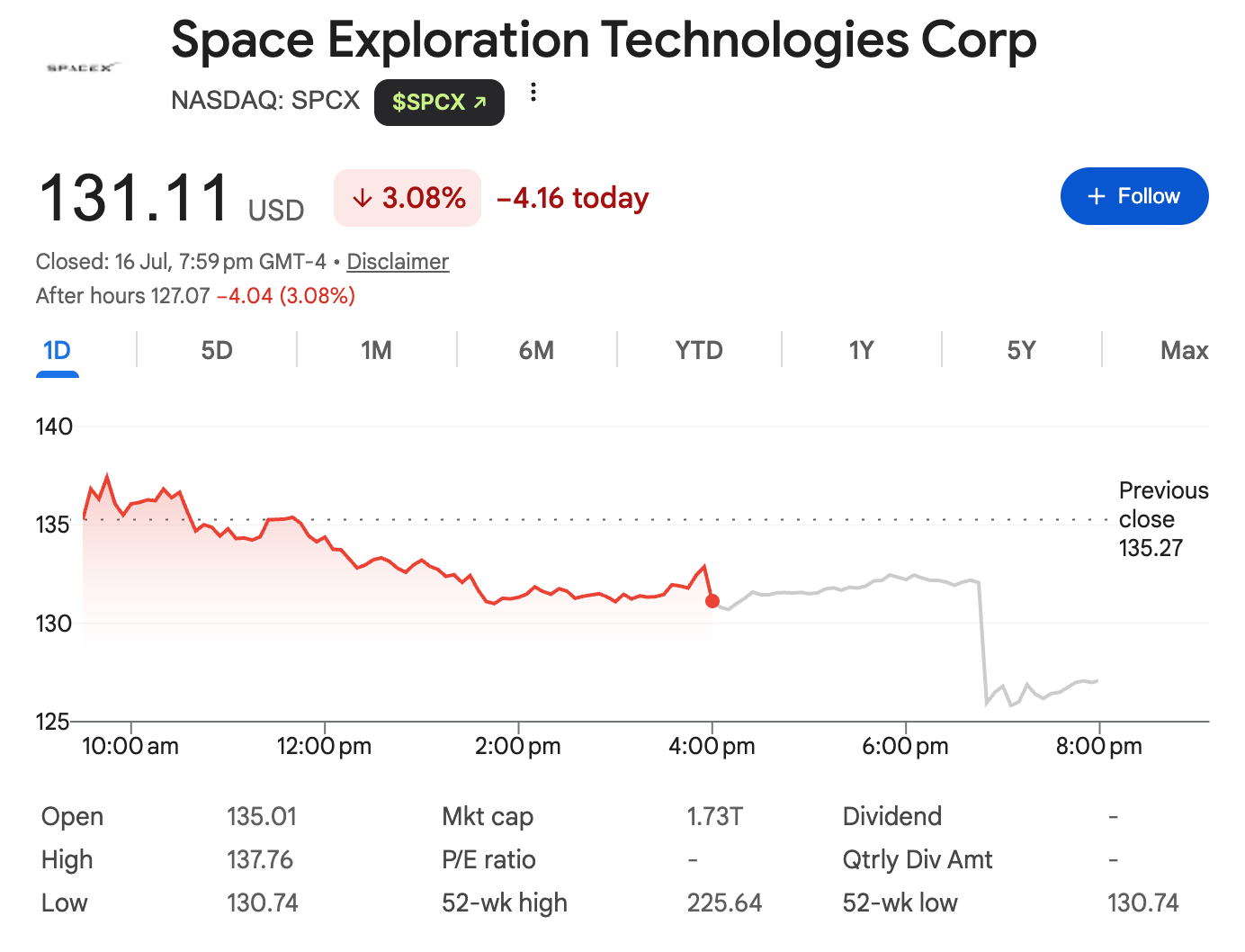
The failure of the flight test is not new for SpaceX, but from the feedback of the secondary market this time, investors are clearly re-evaluating a question: After going public, can SpaceX still afford the luxury of “unlimited trial and error”?
The failure of the flight test is not new, but today is different from the past
If we rewind a few years, every failure of Starship's flight tests was almost viewed as part of engineering progress. Discussions within the community about Elon Musk “blowing up rockets” were mainly humorous but also carried some respect.
For SpaceX, the company has always adhered to a Silicon Valley-style R&D philosophy—rapid manufacturing, rapid testing, rapid failure, and then rapid iteration. Instead of completing all verifications on the ground, SpaceX prefers to get the rocket into the air as soon as possible, acquiring data through real flight, and continuously optimizing the design. Because of this, in the past ten or so Starship flight tests, various unexpected issues have threaded through the entire R&D process, from mid-air disintegration, booster recovery failures to obstacles in orbital verification, but these setbacks did not hinder the continuous advancement of Starship.
In the primary market era, this R&D model has also gained widespread recognition from investors. Whether institutional shareholders or employee stockholders, they value the sustainability of the R&D pace and the accumulation of technological barriers more than whether a flight test is succeeded or failed. For them, one failure means obtaining a new batch of flight data, which means getting one step closer to final commercialization, and fundamentally it remains part of the R&D cost.
However, after going public, the way the capital market views Starship has begun to change. For secondary market investors, Starship is no longer just an R&D project; it has become an important variable affecting the company's valuation. A failed flight test not only means needing to replace engines and rearrange launch windows, but it could also mean delays in commercial deployment timelines, slower income realization, and adjustments to future cash flow forecasts. In the past, engineers saw a test accumulating data; now, Wall Street is watching whether growth expectations can be fulfilled on time.
This change does not mean that the capital market demands SpaceX to “only succeed, not fail” but means that every failure will be incorporated into the valuation system for recalculation. Especially in the context of the company already listed and the market giving a high growth premium, any event that could affect the Starship commercialization timetable is more likely than ever to trigger stock price fluctuations.
Going public is both a drive and a constraint
A month ago, SpaceX just completed the largest IPO in human history.
For any asset-heavy, high-investment tech company, the greatest significance of entering the capital market is to obtain a more stable and lower-cost financing capability. For SpaceX, which is still in a rapid expansion phase, whether it’s continuously building the Starlink constellation, advancing Starship R&D, or laying out a much larger commercial space network in the future, all mean substantial capital expenditure. The financing channel brought by the IPO can undoubtedly provide more ample "fuel" for these long-term plans.
However, the capital market never provides anything for free. As more and more public investors become shareholders, what SpaceX needs to face is no longer just simple engineering problems but the ongoing scrutiny of the capital market concerning growth, profits, and realization pace.
In the past, Musk could tell investors: "Failure is part of R&D."
Now, every delay, every launch abort, every flight test accident could quickly reflect on the stock price, further affecting the company's financing ability, market sentiment, and even potentially squeezing management's decision-making space. The capital market inherently seeks certainty while the biggest feature of aerospace R&D is exactly its uncertainty; there has always been an irreconcilable tension between the two.
For SpaceX, going public means not only obtaining more abundant funding but also bearing an increased weight of pressure.
The importance of next week's retry
Fortunately, this flight test was not a failure after the rocket took off (at least it didn’t blow up), but the launch was proactively aborted during the ignition phase, with the problem relatively clearly identified. According to Musk’s latest statement, SpaceX will attempt to launch again early next week.
For SpaceX engineers, this may just be another ordinary launch delay; but for the newly public SpaceX, this retry carries significance that far exceeds mere technical validation.
If the retry is successful, market concerns about the pace of Starship development may be alleviated, and the persistently under pressure stock price could welcome an emotional recovery; conversely, if there’s an unexpected incident again, SPCX may delve deeper.
免责声明:本文章仅代表作者个人观点,不代表本平台的立场和观点。本文章仅供信息分享,不构成对任何人的任何投资建议。用户与作者之间的任何争议,与本平台无关。如网页中刊载的文章或图片涉及侵权,请提供相关的权利证明和身份证明发送邮件到support@aicoin.com,本平台相关工作人员将会进行核查。


