Original Author: Dong Jing
Original Source: Wall Street Watch
U.S. tech stocks are caught in a dilemma that leaves investors in a bind: stellar earnings reports fail to boost stock prices, while poor performance leads to sharp declines. This asymmetrical market reaction is shaking Wall Street's confidence in the AI investment narrative and accelerating the withdrawal of funds from overvalued tech stocks.
Taiwan Semiconductor Manufacturing Company (TSMC) reported a staggering 77% year-on-year increase in quarterly net profit last Thursday, setting a historical record, and raised its revenue growth forecast for 2026 to over 40%, but its U.S. stock still closed down 2.3%. Meanwhile, IBM issued a profit warning, and on Tuesday it plummeted more than 20% in a single day, with losses even surpassing those of "Black Monday" in 1987. Vital Knowledge analysts pointed out the current predicament:
"Tech stocks seem to be losing in every way—surpassing expectations does not trigger a rise, while earnings blowups result in heavy losses."
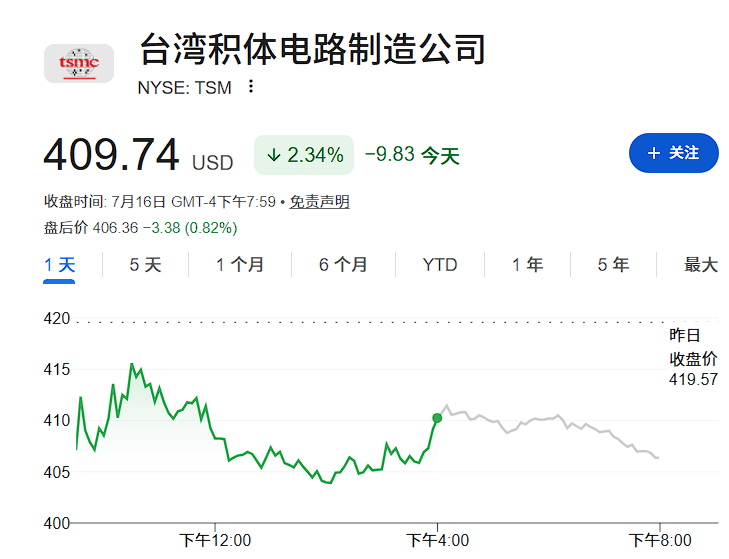
Market analysts believe that investors are concerned about the high valuations and substantial expenses related to AI, as the high expectations for performance result in a serious divergence between fundamentals and stock prices. Furthermore, the market is undergoing systemic deleveraging and the collapse of momentum trading, where the prevailing trends are no longer driven by fundamentals but rather by position structures.
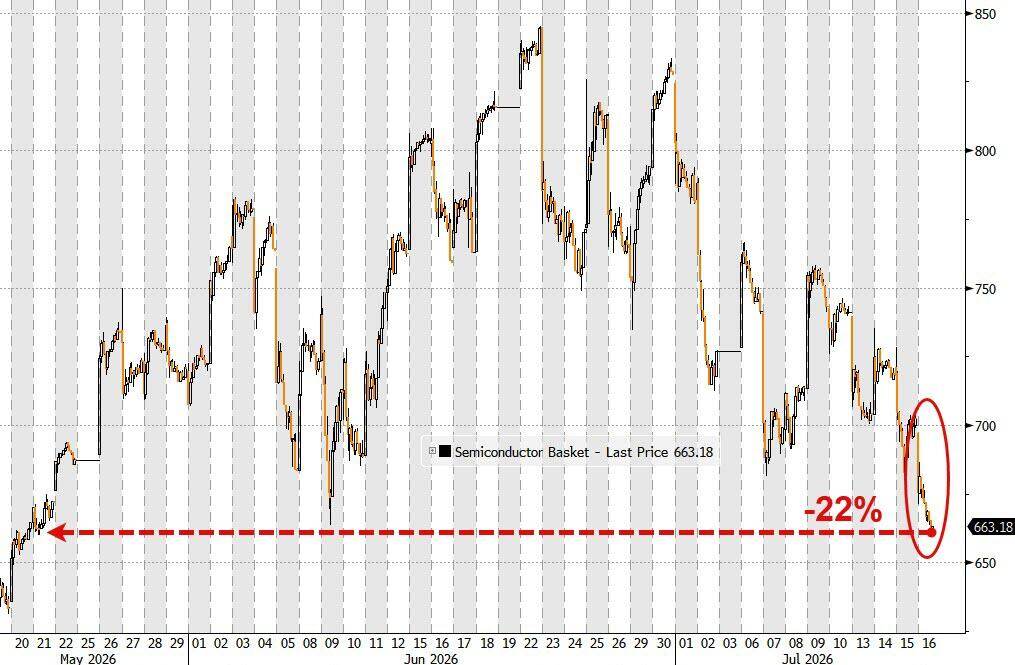
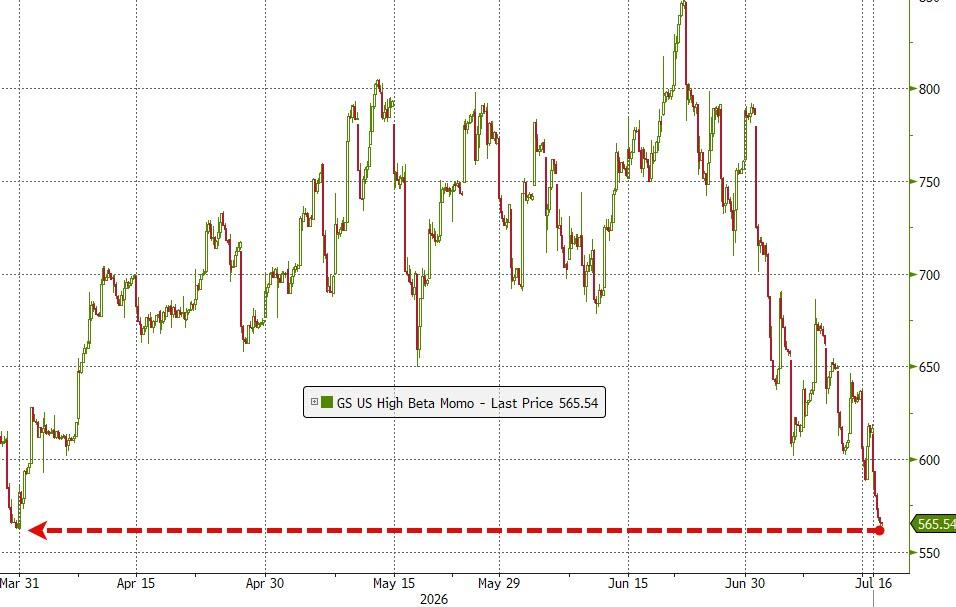
The Nasdaq Composite Index fell 1.5% last Thursday, with storage and chip stocks leading the decline. SanDisk, Western Digital, and Seagate all dropped more than 9%, while Intel and Micron each fell about 6%. The U.S. semiconductor sector has cumulatively dropped about 22% from its mid-June peak, officially entering a technical bear market. Goldman Sachs' "momentum stocks" index declined 6% in a single day last Thursday and has lost one-fifth of its market value since the beginning of the month.
Good performance meets "cold reception," market logic has changed
What alerts the market most in this round of tech stock adjustment is the serious divergence between strong fundamentals and stock price movements.
According to an article in Wall Street Watch, TSMC not only saw its Q2 net profit soar 77% year-on-year to a record NT$706.6 billion (approximately USD 22 billion), with a gross margin of 67.7%, but also raised its capital expenditure forecast for 2026 to USD 60 billion to USD 64 billion. ASML had also recently reported "better-than-expected results and raised guidance." Micron's latest quarterly results also significantly exceeded expectations, yet its stock price has retreated about 25% from its peak.
Market analysts believe that the performances of these three companies further reinforce the narrative that AI-driven demand is accelerating. However, semiconductor and storage stocks are still falling in the face of such positive catalysts, indicating that the current predominant factors influencing price trends may no longer be fundamentals, but rather position structures and factor dynamics—also meaning that the performance expectation hurdles for the hardware sector have been raised extremely high.
It is worth noting that SpaceX, once seen as a symbol of the AI boom, has not been spared from difficulties.
Last month, SpaceX completed its IPO at a record USD 86 billion valuation, with an initial price of USD 135, which once soared to a high of USD 225.64, attracting a wave of retail funding. However, last Thursday, its stock price fell again by 3.1% to USD 131.11, dropping below the issue price.
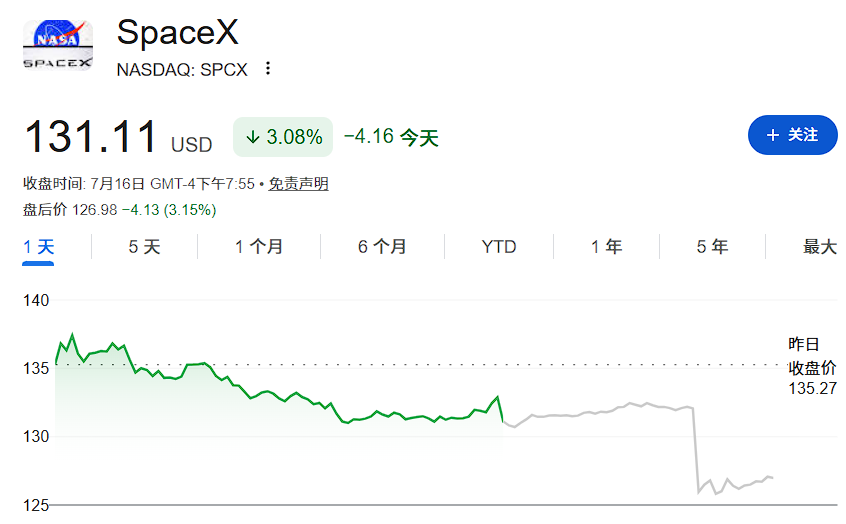
This trend reflects a widespread reflection among investors regarding the high valuations of AI-related companies. According to the Financial Times, some investors are increasingly concerned about when the massive expenditures of U.S. tech giants on data centers will yield substantive returns.
Google's stock price fell 4.4% on Thursday, Amazon dropped 1.2%, and bonds issued by "hyperscale cloud providers" have recently come under pressure due to skepticism regarding their substantial borrowing and spending plans.
Chip stock trends as a market barometer
Amid multiple pressures, the direction of the semiconductor sector has become a core observation indicator for the entire stock market.
Analysts believe that "the future movement of chip stocks remains the most important question in the stock market. They are showing some clear cracks, so a strong and sustainable rebound must be seen quickly; otherwise, it will issue a true warning signal."
Currently, the semiconductor sector has overall dropped about 22% from its mid-June peak, officially entering a technical bear market. Against the backdrop of stocks like ASML, Micron, and Samsung exceeding expectations and then facing sell-offs, high beta momentum strategies have once again been considerably undermined.
The implied correlations in the market remain close to historical lows, decoupling significantly from the VIX index, indicating that current volatility is more sourced from the repricing of structural factors rather than systemic panic—though this does not mean the risk has been cleared.
Continuing deleveraging wave, accelerated collapse of momentum trading
The current round of selling stems from a systemic deleveraging process that began in June.
J.P. Morgan strategist Nikolaos Panigirtzoglou stated, "The deleveraging phase for investors that began in June seems to still be ongoing. We believe that there is still more deleveraging space in leveraged equity ETFs, options, and margin accounts, which will continue to be a headwind for the stock market."
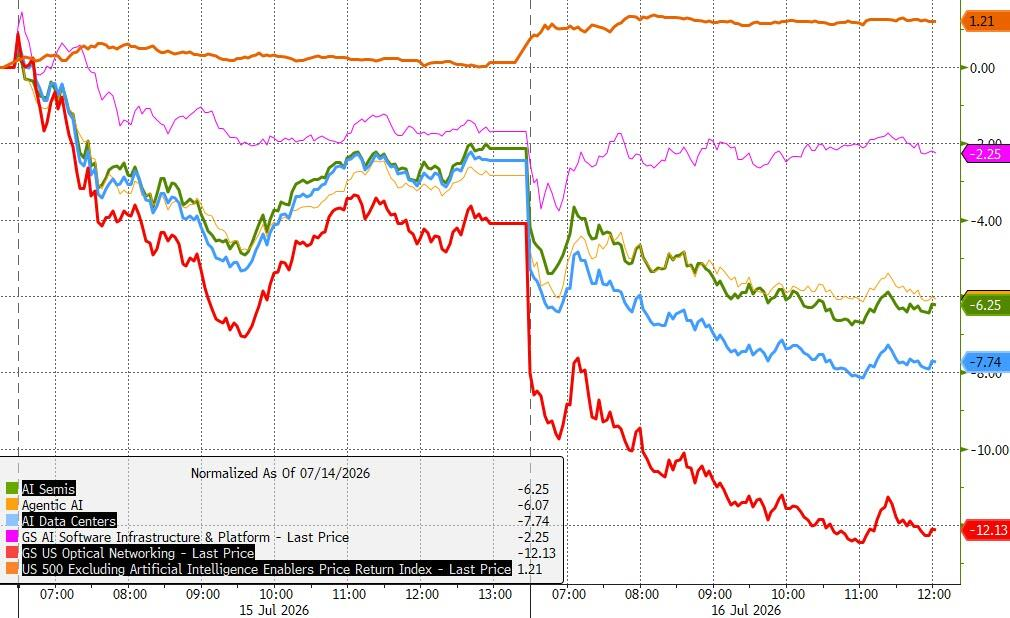
Goldman Sachs data shows that the entire AI sector is under pressure, with the optical interconnect, AI semiconductor, and data center segments all declining by 5% to 12% in the past two days.
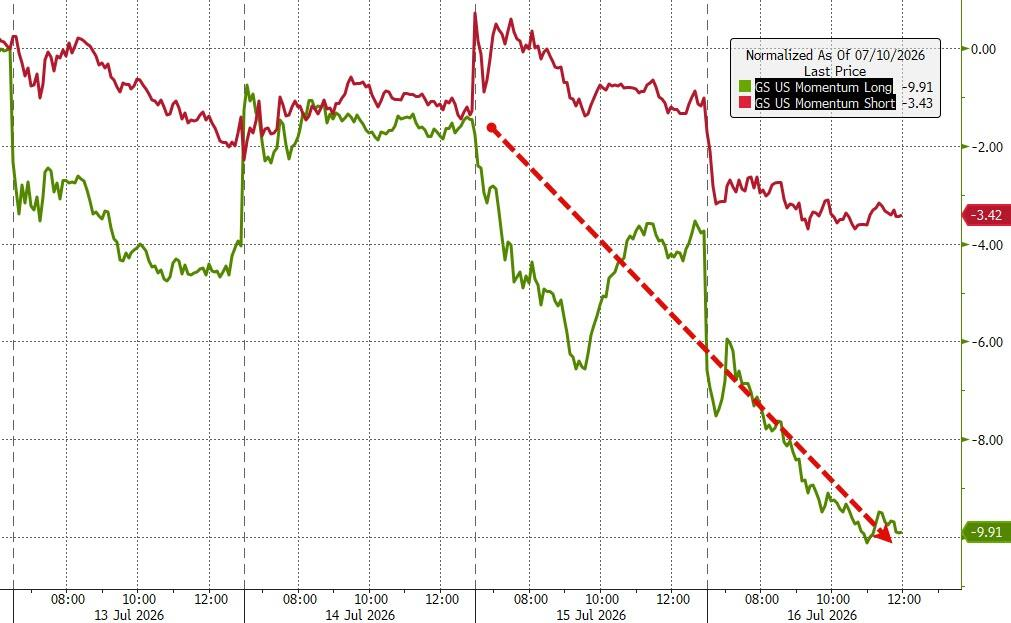
Goldman Sachs' tracked momentum stock index has declined about 20% this month, and according to Goldman Sachs analysis, the volatility of this factor has risen to a five-year high after adjustment for volatility, approaching ten times the volatility achieved by the S&P 500 over three weeks.
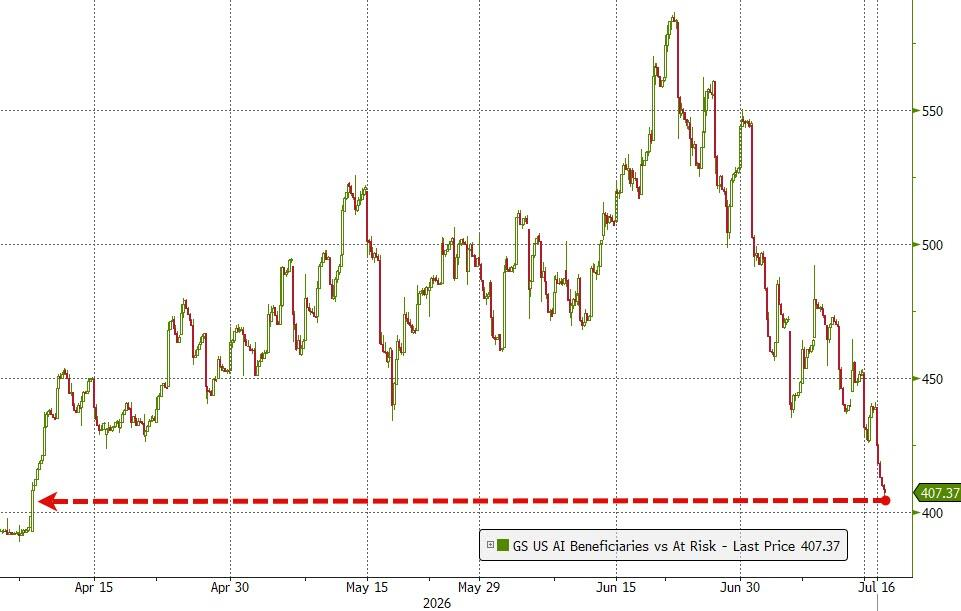
Some analysts have pointed out that price movements showing "wrong direction" have appeared between AI-related stocks and "AI risk" stocks, hedge fund-heavy stocks and short stocks, and high beta 12-month winners and losers, indicating that there is notable disorder within the market's internal structure.
免责声明:本文章仅代表作者个人观点,不代表本平台的立场和观点。本文章仅供信息分享,不构成对任何人的任何投资建议。用户与作者之间的任何争议,与本平台无关。如网页中刊载的文章或图片涉及侵权,请提供相关的权利证明和身份证明发送邮件到support@aicoin.com,本平台相关工作人员将会进行核查。


